


This blog post was written by Sanjay Arora of Nextopia Software Corporation. Nextopia is the #1 global provider of eCommerce onsite search and navigation solutions. Fully compatible with any eCommerce platform, Nextopia has proven track record of helping over 1,700 happy clients. With a price point that can fit into any retailer’s budget, Nextopia Software Corporation prides itself on its incredibly responsive customer service and support team.
Since 1999, Nextopia’s search technology has helped shoppers navigate eCommerce sites comfortably and confidently. Sites that have implemented Nextopia have returning customers who are able to find the products they are searching for, dramatically improving retailers’ most important metrics, such as sales and sales velocity, average order value, number of products per order and time on site. To learn more visit www.nextopia.com or contact us at 800-360-2191.
Start NOW. Although Black Friday and Cyber Monday are a month away, it is never too early to prepare your eCommerce store for the holiday season. Customers who are looking for product information are most likely doing their research. Correspondingly, the National Retail Federation has found that over 40% of customers begin doing their Holiday shopping in October.
With the Holiday season quickly approaching, many retailers are looking to enhance their eCommerce stores in order to capitalize on the influx of traffic for the next couple of months. As retailers see a shift in consumer purchasing patterns moving online, preparation of retailers’ eCommerce websites has become essential.
Blitz sales, traditionally celebrated by big box and brick-and-mortar stores, are now seeing the transition online. This year Black Friday falls on November 27th and Cyber Monday on November 30th. Analysts predict that Cyber Monday will most likely become the year’s biggest eCommerce event, projected to surpass the total of $2 Billion U.S. dollars spent in 2014 alone.
With the Holidays quickly approaching, how can small online retailers capitalize on this trend as well? Below, are listed 4 simple strategies to help enhance your online store for the Holidays.
1. Plan Ahead
It is never too early to get started with the Holiday Planning Process.
Ensure you have the proper inventory levels to handle the increase in demand. Examine your inventory levels from last year and track your product sales to date to gauge demand. The last thing a retailer wants to do is miss out on potential sales due to mismanagement of inventory levels.
Test your website ahead of time to reflect the surge in traffic. There is no worse feeling for a customer than trying to access a website and having it be down due to an overloaded server. With the influx of traffic having the potential of bogging down your site, test your server load capacity before the big day; even consider potentially increasing your server size.
2. Merchandise
Effective merchandising is necessary to promote certain products, run marketing campaigns, highlight new or on sale products, and create keyword-triggered banners, badges or buttons for the Holidays.
Create enticing promotional banners. Advertise your products and holiday sales using promotional banners on your website. These can be created using simple software integrated through the back end of your eCommerce store.
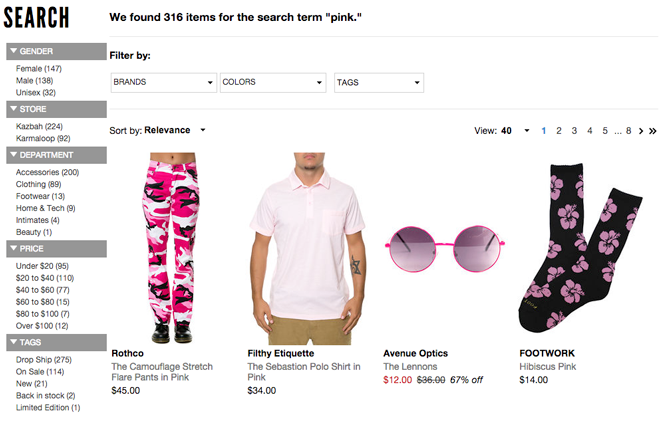
Merchandise Your Search Results. Search results pages present an opportunity for retailers to optimize the user’s experience and give retailers a chance to display products and offer suggestions. You can merchandise the buyer through search functionality. Take a look at the picture below. KarmaLoop capitalizes on merchandising features by providing large pictures and suggested results to their customers. With over half the visitors using your search bar as their primary form of navigation, ensure your customer is seeing what you want them to. By providing effective and helpful navigation and filters, you well help your products sell themselves.
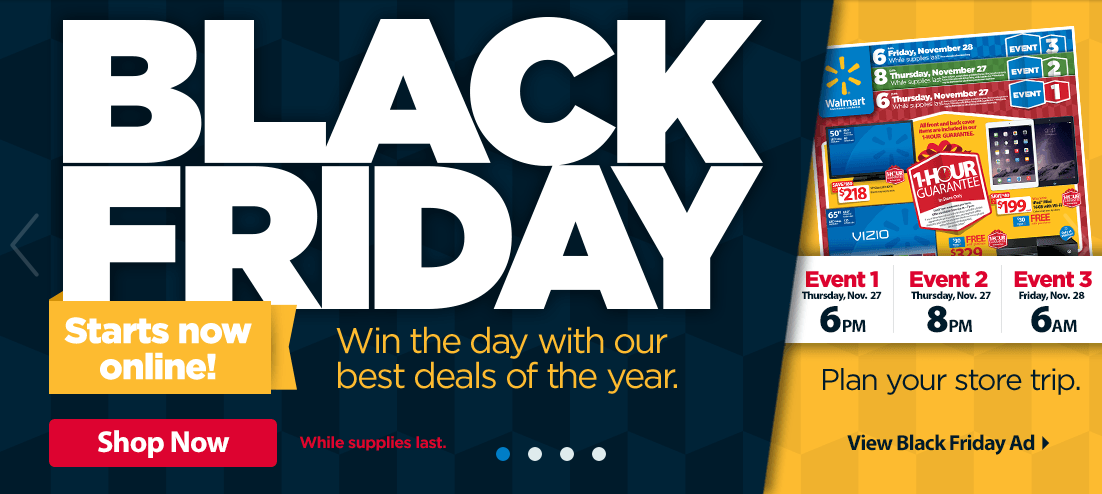
Create anticipation around your upcoming sale. Leverage social media, email marketing and advertising campaigns. By creating buzz and anticipation around your upcoming sale with advertising and marketing campaigns, you are more likely to drive higher rates of traffic of more committed shoppers (those who have already done their research and are further along in the purchase cycle).
3. Optimize Your Website
In order to optimize your website for the Holiday Season, ensure that your eCommerce site includes the following features – all in place to reach and respond to the widest range of customer needs.
Ensure your site is mobile responsive. This element is key to any successful eCommerce website. More and more, consumers are shopping on the go. Often, consumers shop on multiple devices before making a purchase. As more consumers are reaching for their mobile devices to make a purchase, ensure your site is optimized for such customer experience.
Consider Cart Abandonment strategies. Use of cart abandonment tools or additional software might be beneficial to reduce cart abandonment rates. Think about all that extra revenue sitting in the virtual carts of customers. By introducing cart abandonment emails, you can create compelling campaigns to drive the customer back to your site to complete the purchase.
Integrate Live Chat. When you integrate a live chat option on your eCommerce site, it allows you to automatically respond to customer requests. Around the Holiday season, consumers are often not making purchases for themselves and may have specific questions in mind. Alleviate the shopping experience by offering a live chat option.
4. Analyze the Data
The job doesn’t end as soon as you have created your merchandising campaigns. The key is to be responsive throughout the Holiday season and update your strategies accordingly.
Look at your Site Search data. Understand what people are looking for when they come to your website. Use a site search solution provider in order to track and analyze the traffic going directly to the search bar.
Turn your seasonal shoppers into year-round customers. Ensure you are taking steps after the holidays to nurture the customers who purchased your products during the holiday season. Keep in contact with these customers via social media and email marketing campaigns in order to entice them to become year-round customers instead of just one-time customers.
There will be an influx of site visitors to your eCommerce store. As shoppers are making their lists and checking them (online!) twice, it is critical to ensure that your eCommerce store is optimized for the Holidays. There is really no such thing as too much preparation – follow these simple tips to make the most out of your busy holiday season.
This blog post was brought to you by Sanjay Arora of Nextopia Software Corporation. Nextopia is the #1 global provider of eCommerce onsite search and navigation solutions. Fully compatible with any eCommerce platform, Nextopia has proven track record of helping over 1,700 happy clients. With a price point that can fit into any retailer’s budget, Nextopia Software Corporation prides itself on its incredibly responsive customer service and support team.
Since 1999, Nextopia’s search technology has helped shoppers navigate eCommerce sites comfortably and confidently. Sites that have implemented Nextopia have returning customers who are able to find the products they are searching for, dramatically improving retailers’ most important metrics, such as sales and sales velocity, average order value, number of products per order and time on site. To learn more visit www.nextopia.com or contact us at 800-360-2191.
Why Mobile Optimization and Black Friday Strategy Matter for SEO
Having multiple H1 tags on a single page can confuse search engines and dilute the relevance signals that help your content rank. A well-structured page should use one clear H1 that defines the primary topic, supported by H2 and H3 subheadings that organize supporting content.
The Impact of Proper Heading Structure on Search Rankings
Search engines like Google use heading tags to understand the hierarchy and context of your content. When a page contains more than one H1, crawlers may struggle to determine which topic is most important, potentially reducing your visibility in search results during high-traffic shopping events like Black Friday and Cyber Monday.
Best Practices for Heading Tags on Retail and E-Commerce Pages
- Use a single H1 tag that clearly describes the main purpose of the page
- Organize strategies, tips, or subtopics under H2 headings
- Use H3 tags for supporting details within each H2 section
- Include relevant keywords naturally within your headings without stuffing
- Ensure your heading structure reflects a logical, readable outline for both users and search engines
By correcting your heading hierarchy before the holiday shopping season, you give your content a stronger foundation to compete for valuable search traffic when consumer intent and spending are at their peak.
Black Friday and Cyber Monday represent two of the biggest shopping opportunities of the year. Retailers and online businesses alike can dramatically increase their revenue by preparing the right strategies well in advance. Below are four proven ways to make the most of this high-traffic shopping season.
1. Start Your Promotions Early
Shoppers begin researching deals weeks before Black Friday arrives. By launching teaser campaigns and early-access promotions ahead of time, you can capture buyer intent before your competitors do. Email subscribers and loyal customers especially appreciate getting first access to exclusive discounts.
2. Optimize Your Website for High Traffic
A slow or crashed website during peak shopping hours means lost revenue. Ensure your hosting can handle traffic spikes, compress images, and streamline your checkout process. A smooth user experience encourages shoppers to complete their purchases rather than abandoning their carts.
3. Create Irresistible Bundle Deals
Instead of simply discounting individual products, consider bundling complementary items together at a special price. Bundles increase your average order value while giving shoppers the feeling they are getting exceptional value for their money.
4. Leverage Social Media and Paid Advertising
Use targeted social media ads to reach shoppers who are actively looking for deals. Retargeting campaigns are particularly effective during this period, reminding previous visitors about products they viewed but did not purchase. A well-timed ad can convert a hesitant browser into a confirmed buyer.
- Plan your ad budget weeks in advance to avoid last-minute cost increases
- Use countdown timers to create urgency around limited-time offers
- Segment your email list to send personalized deal recommendations
- Monitor your analytics in real time so you can adjust campaigns quickly
The common thread across all four is lead time. Every one of these tactics needs to be in place before traffic arrives, because Black Friday is when you harvest demand, not when you build the infrastructure to capture it. Stores that start in November are optimizing for next year.
Pick the two that map to your biggest current gap rather than attempting all four badly. If you are not sure which those are, we can look at your store against last season's numbers and tell you where the money is actually leaking.