

Web Design for Contractors & Home Services
Contractor Web Design Built to Book Jobs
You don't need to know what platform your website should run on. You need a site that proves you're licensed, shows the work, covers the towns you serve, and makes it effortless to call you from a phone at 7pm. That's what we design.
Trusted by 400+ Brands · Certified Partners




Years in eCommerce
Of results, scale, and quality at the enterprise level.
Expert Team
Specialists across SEO, AI SEO, PPC, design, dev, and strategy.
US Core + Global Talent
US core team for clear communication; vetted global specialists for international client work.
Reputation Score
Rated 4.9/5 across 941+ verified client reviews.
Reviewed by the 1Digital® Design TeamLast updated:
Stop Shopping for a Platform. Start With the Job.
Most agency web-design pages are organized around software - one page for one platform, another for another. That framing is useless to a contractor. You are not choosing a content management system; you are choosing whether the next homeowner with a failed water heater, a hail-damaged roof, or a kitchen they have been putting off for three years calls you or calls the company two towns over.
So we start from the job, not the stack. A contractor website has a narrow, unforgiving set of responsibilities: establish legitimacy in seconds, prove competence with evidence rather than adjectives, make the geography of your service area unambiguous, and shorten the distance between “I think these people can help” and a phone ringing in your office. Everything else - the typography, the animation, the hero photo - is in service of those four things or it is decoration you are paying for.
Because contractors are a service business rather than a store, the destination we recommend is WorkspaceCMS - the platform our own team builds and operates. There is no cart, no catalog, and no checkout to maintain, which means none of the cost or fragility that comes with them. What you get instead is a managed site where the pages that actually earn calls - service pages, service-area pages, project galleries - are structured, fast, and editable without you learning anything. 1Digital® is the team behind it. You can read about how we build if you want the engineering detail, or skip it entirely - that is rather the point.
Contractor web design, step by step
One site that works on every screen
Most contractor customers find you on a phone. We plan each page so it rearranges for the screen in front of them rather than shrinking, then build it fast and accessible, with the call to action exactly where the visitor is ready to get in touch.
- ›Layouts planned around how contractor customers decide
- ›Mobile-first, fast loading and accessible from the start
- ›Built for search from the first wireframe, not bolted on later
The Four Conversion Paths a Contractor Site Must Serve
Homeowners do not arrive in one mode. They arrive in four, and a site tuned for only one of them leaks the other three. Good contractor web design gives each its own path, visible from any page.
Emergency
Burst pipe, no heat, water coming through the ceiling. This visitor reads almost nothing. They need a tap-to-call number fixed in view, an unambiguous statement of whether you answer after hours and on weekends, and the town they are standing in named on the page. Anything that delays the call - a slideshow, a cookie wall stacked on a chat bubble, a phone number rendered as an image - costs you the job outright.
Planned replacement
An aging furnace, a roof at the end of its life, windows that need doing before winter. This visitor is comparison shopping over days, often across several tabs. They want scope clarity, warranty and workmanship terms, financing if you offer it, and enough photographic evidence to believe you have done this exact job before. They convert on a form, usually in the evening, usually on a phone.
Remodel and high-consideration project
Kitchens, baths, additions, hardscape. The deciding factor is trust built over a long browse: full project stories with before, during, and after; who from your crew will actually be in their house; how you handle change orders and timelines. This path needs depth, and it is the one most contractor sites abandon after three stock photos.
Commercial, property-management, and referral traffic
A facilities manager or a realtor arriving with a different vocabulary and different requirements - certificates of insurance, net terms, scheduling around tenants, prevailing-wage familiarity. They need a distinct entry point, not a homepage written entirely for homeowners.
Trust Signals and the Compliance Constraints Nobody Warns You About
Contracting is one of the few web-design verticals where the trust layer is partly a legal obligation. Many states and municipalities require a licensed contractor to display a registration or license number in advertising - and a website is advertising. Requirements vary by state, by trade, and sometimes by city, and they change; we design a dedicated, persistent place for license and registration numbers, confirm the current requirement with you and your counsel or licensing board before launch, and keep the field editable so a renewal is a two-minute edit rather than a support ticket to a developer.
The same discipline applies to the rest of your credibility stack. Insurance and bonding, manufacturer certifications, trade association membership, background-check policy, warranty language, and financing disclosures all belong in fixed, predictable locations - reachable from any page, not buried on an “About” page nobody visits. Review content is displayed as it was written, with attribution; we do not design layouts that invite invented quotes, and we do not build incentivized-review mechanics, because those violate platform policies and can suspend the advertising channels your lead flow depends on.
Accessibility is part of the same conversation. Home-services sites reach an unusually broad public, including older homeowners and people with temporary or permanent impairments, and inaccessible sites attract demand letters. We design to WCAG 2.2 AA - contrast, focus states, keyboard operation, semantic structure, real text instead of text baked into images - because it lowers legal exposure and, bluntly, because a phone number that a screen reader can announce is a phone number that gets dialed. See our accessibility practice for how we audit it.
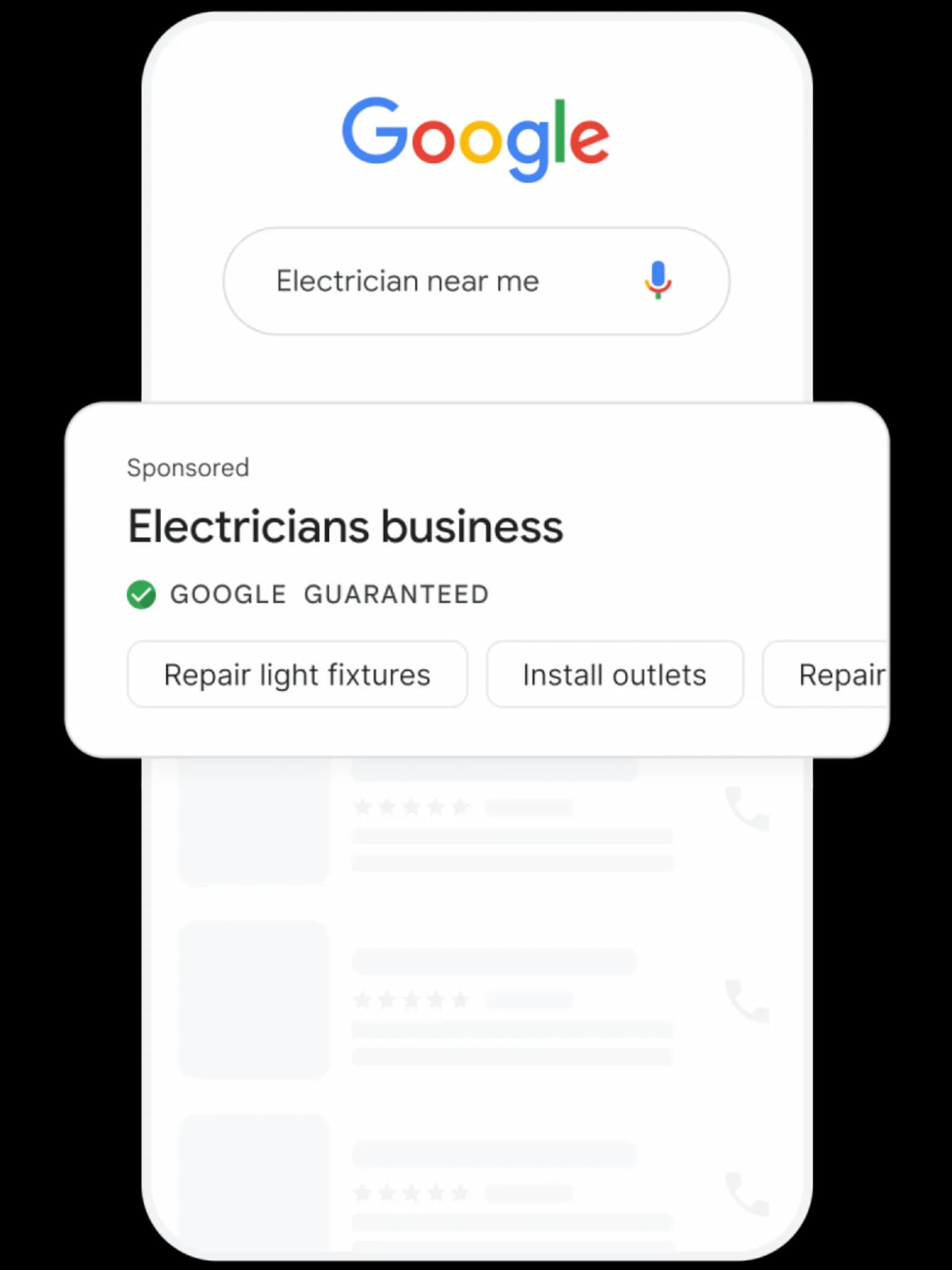
Credentials read as proof only when they sit where a homeowner is already looking - on the phone, next to the call button, not on an About page.
How a Bad Contractor Website Fails
Failures in this vertical are boringly consistent. Recognizing yours is usually enough to know what to fix.
Stock photography of somebody else’s crew.Homeowners recognize stock imagery instantly, and it silently converts your strongest asset - proof you did the work - into a signal that you have none.
A vague service area.“Serving the greater metro area” forces every visitor to guess whether they qualify. Some guess wrong in your favor and waste your dispatcher’s time; more guess wrong against you and leave.
One page listing every trade.A single “Services” page with twelve bullet points cannot rank for any of them and cannot answer a specific question. Each service a customer would search by name deserves its own page.
Contact forms as the only path.In an emergency nobody fills out a form. In a remodel nobody wants to call first. Sites that offer only one channel lose whichever half of the audience it does not fit.
Slow, image-heavy pages on cellular.Your visitors are frequently in a basement or a driveway on a weak signal. Uncompressed hero galleries are the most common reason a contractor site tests fine in the office and fails in the field.
A site nobody can update.Seasonal availability, new certifications, a renewed license, this month’s finished job - if changing them requires a developer, they stop happening within a quarter, and the site slowly becomes wrong.
Business details that disagree with your listings.A phone number or address on the site that differs from your Google Business Profile undermines both, and it is the single most common cause of a contractor’s local visibility quietly stalling.
The Page Architecture We Build For Contractors
Architecture is where design decisions become search decisions. The shape below is deliberately repetitive - it scales as you add trades and towns without turning into a maze.
- ›Home. Who you are, what you do, where you do it, proof, and both contact paths - resolved above the fold on a phone.
- ›One page per service. Named the way a customer says it, not the way the trade says it. Scope, what’s included, what it depends on, typical sequence, relevant photos, and the questions you answer on every estimate call.
- ›One page per town or service area you genuinely serve. Written, not spun: what you actually do there, jobs you have completed there, local considerations such as permitting or housing stock. Thin duplicated city pages are a liability, not a strategy.
- ›Service × area intersections, only where they earn it. A dedicated page for your highest-value trade in your strongest town is worth building. Multiplying every service by every town is how contractor sites become unmaintainable.
- ›Project gallery with real case detail. Before and after, scope, timeframe, location, materials. This is the highest-converting content on most contractor sites and the most consistently neglected.
- ›Credentials and reviews. License and registration numbers, insurance, certifications, associations, and reviews shown with attribution.
- ›Commercial or property-management entry point, if you serve that market, with its own language and its own contact route.
- ›Estimate request. Short by default, with progressive detail. Ask for the minimum you need to route the job; every extra field is a chance to lose a lead you already earned.
How These Design Decisions Feed Local SEO and AI Visibility
Local search and AI answer engines are both reading the same thing: a machine-readable claim about who you are, what you do, and where you do it, corroborated across your site and your listings. Design either produces that claim clearly or muddies it.
Concretely: one page per service gives each trade a heading, a URL, and a body of text that can match a specific query - a single combined page gives none of them anything to match. Named service-area pages with genuine local content give both Google and an AI assistant a defensible reason to associate you with that town. Business name, address, and phone rendered as real text and kept identical to your Google Business Profile reinforces the same entity rather than splitting it in two. Structured data - LocalBusiness, Service, areaServed, FAQ - states those relationships explicitly instead of hoping they are inferred. Accessible semantic markup makes the whole document parseable by the systems doing the summarizing. Fast pages get crawled more thoroughly and abandoned less often.
Write the pages the way a customer asks the question, and you also produce the passages an AI assistant can quote back when someone asks it who to call. That is not a separate content exercise; it is the same clarity, applied consistently. The design work described on this page is what makes local SEO possible - and once the site is right, it becomes the landing surface for contractor marketing, including Local Services Ads and LSA optimization. Running paid lead generation into a site that fails the four paths above is the most expensive mistake in this vertical.
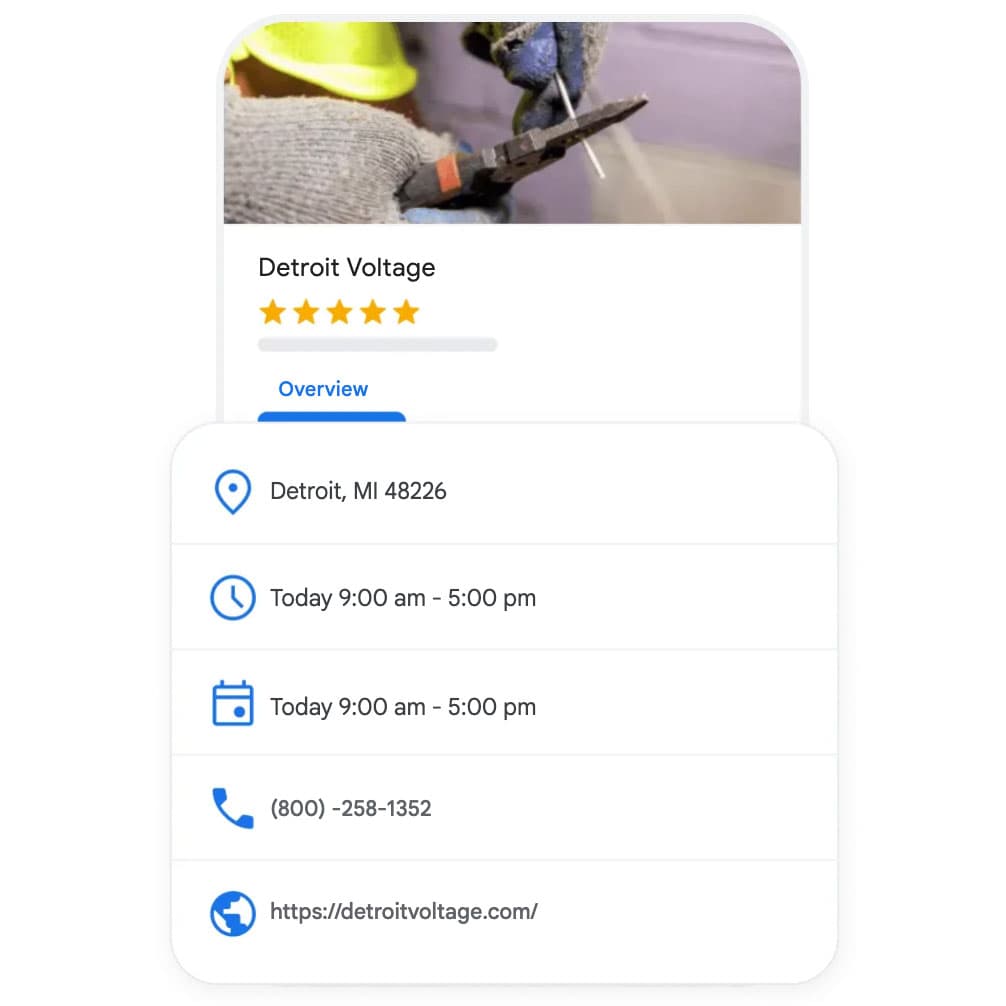

Built on
Contractor Sites We Have Already Built
Three WorkspaceCMS builds running the architecture described above - finished-job evidence, named service areas, and a call path that survives a phone in a driveway. Open any of them and use them the way a homeowner would.
- homebuilder.workspacecms.ai
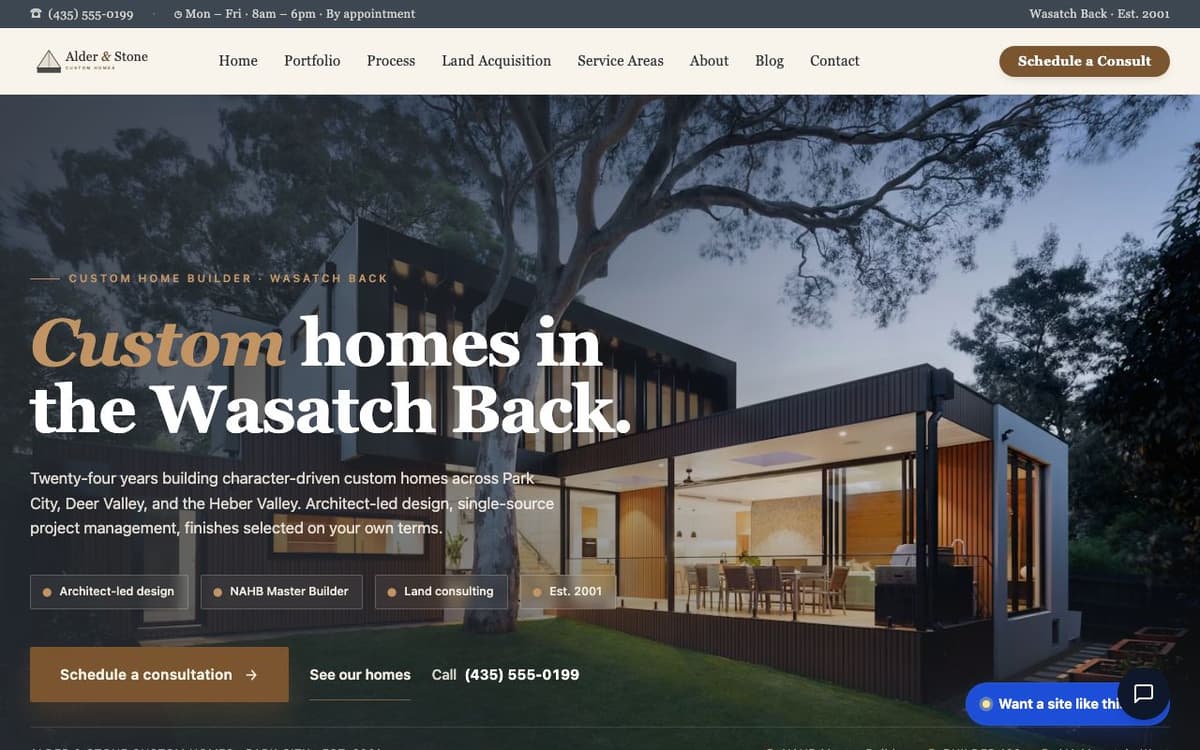 View the live demo →
Cornerstone Builders
Project stories doing the selling, not a twelve-bullet services list
- roof.workspacecms.ai
 View the live demo →
Summit Ridge Roofing
Storm-season variant with an emergency path fixed in view
- landscaping.workspacecms.ai
 View the live demo →
Fernhill Landscape Co.
Seasonal service mix with a design-build gallery carrying the trust
What running one costs you
What the Entry WorkspaceCMS Plan Actually Covers
The demos above run on WorkspaceCMS, so the next question is usually what it takes to keep one going once the busy season starts. This walkthrough covers the Essentials plan - hosting, the managed edits that keep your license details and finished-job photos current, and where the line sits before you need more.
Introducing
Your Industry. Your CMS. Managed for You.
- Unlimited managed edits - shipped on your plan's SLA
- SEO baked into every page, post, and location
- Technical SEO on every plan; AI schema and internal linking on Premium & Ultra
What a 1Digital® Contractor Website Engagement Includes
- ›Discovery grounded in your job mix. Which trades carry your margin, which towns you actually want to drive to, which calls you would rather not take. Architecture follows that, not a template.
- ›Design system, not one-off pages. A service page pattern, a service-area pattern, and a project pattern you can extend for years without a redesign.
- ›Mobile-first, field-first engineering. Compressed responsive imagery, restrained scripts, and tap targets sized for a hand in a work glove.
- ›Photo direction for your own job imagery. What to shoot, from where, and how to keep a before/after library growing without adding a task nobody does.
- ›Credential, license, and disclosure placement designed as a first-class part of the layout and kept editable.
- ›Structured data and listing alignment so your site and your profiles describe one business, not two.
- ›WCAG 2.2 AA accessibility designed in from the first wireframe rather than patched with an overlay.
- ›Managed WorkspaceCMS hosting with edits handled for you - you send the change, we ship it. See CMS plans.
- ›Post-launch iteration. Which pages produce calls, which forms get abandoned, and what to change next - see conversion optimization.
Request a proposal
Tell us about your trades and your service area
Share the trades you run, the towns you cover, and whether you take emergency calls. A senior strategist replies within one business day with a pricing band and a draft site map.
Contractor Web Design - FAQ
What platform should my contractor website be built on?
For a service business - no cart, no catalog, no checkout - we build on WorkspaceCMS, the platform our own team develops and operates. It keeps the surfaces that earn calls (service pages, service-area pages, project galleries) structured and fast, and it removes the maintenance burden of ecommerce machinery you will never use. More to the point, it is managed: you send us a change and we ship it, so the site does not drift out of date the way self-serve builders do once the busy season starts.
How many pages does a contractor website actually need?
Enough to give every service a customer searches by name its own page, plus a page for each town or area you genuinely serve, plus a project gallery and a credentials page. That is usually more pages than a five-page brochure site and far fewer than the hundreds produced by multiplying every service against every town. We build the intersections that earn their keep - your strongest trade in your strongest market - and stop there, because thin duplicated pages hurt more than they help.
Do I have to display my contractor license number on my website?
In many jurisdictions, yes - a website is advertising, and numerous states and municipalities require licensed contractors to display a license or registration number in advertising. The specifics vary by state, by trade, and sometimes by city, and they change over time, so we do not guess: we design a persistent, prominent place for license, registration, and insurance details, confirm the current requirement with you and your licensing board or counsel before launch, and keep the field editable so renewals take minutes.
Why is a vague service area such a big problem?
Because it forces every visitor to guess whether you will come to them, and it forces search engines and AI assistants to guess too. Homeowners who guess wrong in your favor waste your dispatcher's time; homeowners who guess wrong against you leave without contacting you at all. Naming the towns you serve - as real pages with real local content, not a footer list - resolves the question for people and for the systems that recommend you.
Will a redesign hurt my existing rankings?
It can, if it is done carelessly - the usual causes are dropped URLs with no redirects, content removed during the rebuild, and business details that end up inconsistent with your listings. We map every existing URL to its new destination, keep the text that was earning visits, preserve and extend structured data, and verify that name, address, and phone match your Google Business Profile exactly. That work is part of the engagement, not an add-on.
How does contractor web design differ from your ecommerce work?
The conversion event is a phone call or an estimate request rather than a checkout, so the entire design brief changes: credibility and geography carry the weight that product photography and cart UX carry in retail, and the highest-value page on the site is a project gallery rather than a product page. Our ecommerce practice is described on our custom website design page; this page is the service-business counterpart, and the two share engineering standards but almost none of their layout logic.
Ready for a Website That Earns the Call?
Tell us what you build and where you build it. We will come back with a site map, a design direction, and a plan for turning your finished jobs into the proof that wins the next one. If you would rather compare approaches first, our custom website design and responsive design pages cover the craft side in more detail.