


Creating A Mobile Site Is The Best Thing To Do For Your eCommerce Business
If you want to truly compete with all the top names and other competitors in your eCommerce industry, then creating a mobile is the best thing you can do. The majority of companies have made mobile marketing an integral part of their overall marketing strategy, and even more business owners and marketers feel that mobile marketing is essential to their business. Companies across the globe are even creating teams dedicated to their mobile marketing. And with over 80% of internet users owning a smartphone, a responsive design for a mobile site is the best thing you can do for your business.
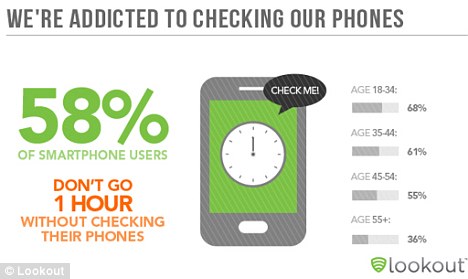
But, is creating a mobile site for your eCommerce business necessary? While you may be succeeding in traffic and sales with your eCommerce business, you will find a dramatic increase when your website is optimized for mobile. It is the trend at the forefront of the eCommerce industry, and the smart business decision is to stay ahead of it to stay competitive. So many eCommerce businesses have taken advantage of a mobile site or mobile apps, that now it is essential to do the same for your own business to keep up. And with a new mobile site, you will need to be aware of the changes in marketing as well as customer behavior that come along with mobile users. Read on to find out benefits of a mobile site, and ways to utilize mobile marketing for your new responsive design.
The Benefits of a Mobile Site
Between tablets, gaming devices, smartphones, and even watches, the access to the internet in these times are changing rapidly, and are becoming increasingly popular ways to shop online. That’s why, as an eCommerce business owner, it is crucial to the success of your business to stay up-to-date with a website that is optimized for mobile use. It will also help your SEO ability; back in 2015 Google adapted its search rankings algorithm for mobile searches based on websites that were more mobile friendly.
There are a number of benefits that come with developing a mobile site for your eCommerce business, but the first is that you will improve the user experience. If someone has been sent a link to a website from a friend that they try to open on their mobile device, and it isn’t optimized for mobile, they are much more likely to abandon the page because of the problems they encounter.
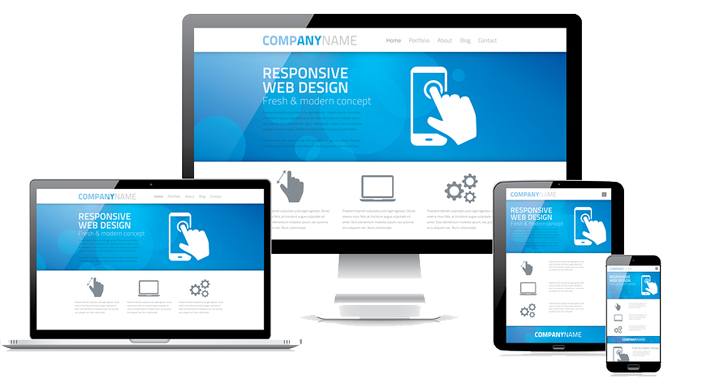
The next benefit is that having a responsive and optimized mobile site will increase the average time a visitor spends on your website. And as an eCommerce business owner, you know that more time on your website means a higher rate of conversion. Your customers will also experience faster website load speed when they are using an optimized mobile site on their mobile device; if you try to open a website that isn’t optimized for mobile on a mobile device, it will often take longer to load or won’t load at all.
How To Utilize Your Mobile Site for Mobile Marketing
With your newly optimized mobile site for your eCommerce business, make sure you are filling it with mobile-friendly content as a way to increase your mobile marketing! The way a mobile visitor and smartphone user views a website is different than when they are on their laptop. This is a factor that you need to think about ahead of time, and adapt your mobile sit to fit these expectations about mobile user behavior. When a visitor is coming to your mobile site, they will most likely be avoiding the content heavy sections like “About us,” because they are more interested in why they came there in the first place. A great way is to keep your headlines concise and captivating to draw mobile visitors in.
Another way to optimize your mobile marketing is by adapting your SEO strategies to be designed for mobile. Research has found that mobile users tend to use more specific keywords and phrases in their searches, and so it’s important that you adapt your practices to fit mobile user’s behavior. You should also enhance your mobile site with SMS, or text message marketing. The majority of smartphones users keep their phones handy and at the ready to respond to texts, find information, or browse social media. Almost half of mobile phone and smartphone users use it for texting over talking, which means that SMS marketing can directly target where they are looking at their phone the most.
Another huge way to target smartphone users is by creating a mobile app. While this isn’t always within the budget or the capability of every business, it is certainly a goal to strive for, particularly for eCommerce business owners. An app is an ultimate way to optimize your eCommerce business to mobile, and an app will stay on the forefront of a potential customer’s mind more than a browser tab.
How 1 Digital Agency Can Help You Develop a Mobile Site
At 1 Digital Agency, we are a full-service eCommerce agency. Our team can handle anything you throw at them, from design and development to digital and mobile marketing or SEO campaigns. We have perfected eCommerce responsive website design for browser and for mobile devices, to make sure that your customer will have a beautiful and fluid experience no matter what device they’re looking at your website on. And our teams can create apps for IOS, Android, and Windows phone. In 2014 eCommerce apps grew 174%, so you know that it is a key way to stay competitive in the eCommerce industry. We offer app creation to small business who thought they wouldn’t be able to afford it, to larger enterprises with specific needs and requirements.
Whatever your needs, here at 1 Digital Agency we can handle them. Our full-service eCommerce agency is dedicated to helping you reach success, and our teams are full of experts who have the experience to do it. Contact us today to find out more about how we can keep you up-to-date with an optimized mobile site and more!
Editorial note: this article was originally published in 2017 and cited adoption figures from that era. Those dated statistics have been left in their original context as a snapshot of when the piece was written; the guidance below brings the mobile commerce discussion current, since mobile is now the majority of eCommerce traffic rather than an emerging trend.
Mobile Is No Longer a "Version" of Your Store - It Is the Store
When this article was first written, a mobile site was framed as a competitive add-on. That framing is now obsolete in the best possible way: for most online stores, mobile is where the majority of traffic and a large share of revenue already happens, and search engines index the mobile version of a site as the primary one. The practical consequence is that "mobile-friendly" is no longer a feature to add - a store that is anything less than excellent on a phone is simply a store that underperforms by default. The strategic question has shifted from "should we have a mobile site" to "is our mobile experience actually good enough to convert the traffic it already receives."
The Mobile Issues That Actually Cost Sales
Most mobile revenue is lost to a short, recurring list of problems, and naming them is faster than a vague "improve mobile UX." Slow load on a mid-range phone on a cellular connection is the largest single leak - mobile users abandon faster than desktop users and search ranking now reflects mobile performance directly. Tap targets and forms designed for a mouse are the second: checkout fields, buttons, and filters that are fiddly on a thumb quietly kill conversion at the highest-intent moment. Intrusive interstitials and pop-ups that cover the content on a small screen are the third. And a checkout that wasn't specifically designed for one-handed phone use is the fourth and most expensive, because it fails exactly where the money is. Every one of these is fixable without rebuilding the brand - they are implementation problems, not aesthetic ones.
How to Prioritize Mobile Improvements
With limited time, sequence the work by proximity to revenue. Fix mobile checkout first - it is closest to the sale and usually the worst offender. Then mobile product and category pages, since that is where most buyers spend their session and decide. Then site-wide performance on a real device and connection, because speed multiplies the value of every other fix. Then remove anything that obstructs content on a small screen. Treat app development, if relevant at all, as a later and separate decision - a great mobile web experience captures the vast majority of mobile revenue, and an app cannot rescue a store whose mobile site converts poorly.
Measuring Mobile the Right Way
Look at mobile and desktop as separate stories rather than a blended average, because a healthy desktop number routinely hides a broken mobile one. Compare mobile conversion rate against desktop on the same store: a large gap is the clearest signal of mobile-specific friction and a direct map to recoverable revenue. Watch mobile bounce and exit on product and checkout pages, and validate real-world load time on a mid-tier phone, not just a fast desktop test. The goal is not parity for its own sake but closing the specific gaps where mobile visitors are dropping out of an otherwise willing purchase.
Frequently Asked Questions
Do I need a separate mobile site or a responsive one? A well-built responsive site is the standard approach for most stores - one codebase, consistent content, and what search engines expect. The key is that it is genuinely optimized for touch and speed, not merely resized.
Is a mobile app worth building? Usually only after the mobile web experience is excellent and there is a clear retention case. An app rarely fixes a store that converts poorly on mobile web; it adds cost without addressing the underlying problem.
What's the single biggest mobile conversion killer? A checkout not designed for one-handed phone use, closely followed by slow load on a real cellular connection. Both are fixable without a redesign.
Mobile is now the default context for eCommerce, which means the upside is in execution, not awareness. If you want a mobile experience engineered to convert the traffic you already have, the eCommerce design team at 1Digital Agency builds and optimizes responsive storefronts for exactly that. Call 888-982-8269.