

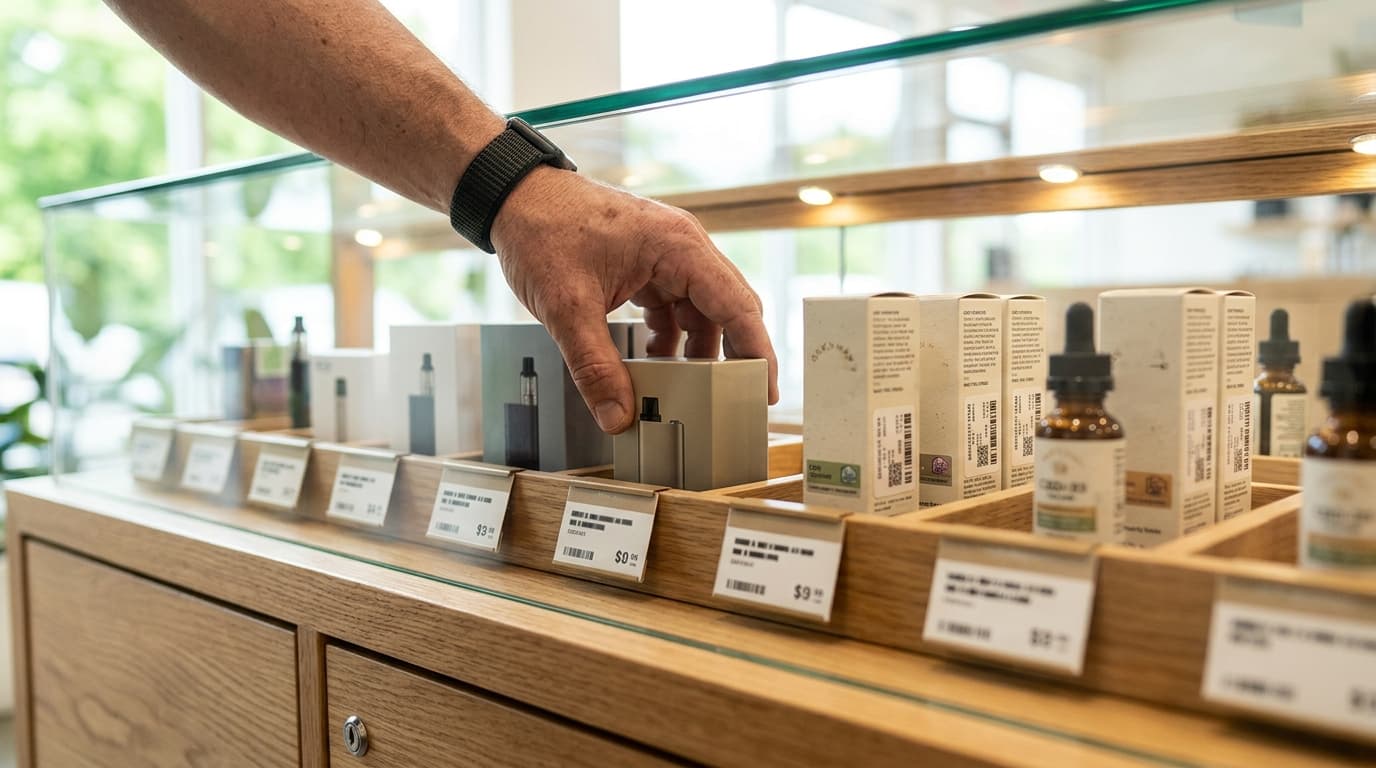
SEO for regulated products, including CBD, vape, and alcohol brands on Shopify, requires a distinct framework: build organic visibility through compliant content and technical signals while working around paid ad restrictions, age-gate requirements, and platform policy limits that don't apply to standard ecommerce.
Why Regulated Product SEO Demands a Different Playbook
Standard ecommerce SEO advice assumes you can run Google Shopping ads to test which product pages convert, use remarketing to recapture visitors, and run aggressive brand-awareness campaigns across Meta and Google. For vape, CBD, and alcohol brands, those channels are either fully blocked or heavily restricted. That forces organic search to carry far more of the acquisition load than it does for most Shopify stores.
The consequence is structural: your SEO investment is not supplementary, it is the primary growth lever. A CBD brand that ranks for "best CBD oil for sleep" on page one is capturing high-intent buyers that a competitor spending $50,000/month on paid media cannot easily reach. This makes technical precision and content compliance non-negotiable, not best practices.
At the same time, Google's quality rater guidelines place health-adjacent products under YMYL (Your Money or Your Life) scrutiny. Pages about CBD tinctures, nicotine products, or alcohol get evaluated for expertise, authoritativeness, and trustworthiness signals far more rigorously than a page selling kitchen utensils. This raises the bar for every piece of content you publish.
Age-Gate Implementation That Does Not Destroy Crawlability
Age gates are a legal and platform requirement for vape and alcohol brands selling online. The implementation method you choose directly determines whether Googlebot can index your site.
The wrong approach: a JavaScript-rendered age gate that completely blocks page content until the user clicks through. If the gate intercepts Googlebot before any HTML content loads, your product pages and category pages will not be indexed. This is a common reason vape shops rank for almost nothing despite having large product catalogs.
The correct approach is a cookie-based age gate that presents the verification prompt to human visitors but does not block the HTML content from being served to crawlers. Google's crawlers do not execute cookies, so your page content remains accessible. Structurally, the age gate should be a CSS/JavaScript overlay that sits above fully-rendered page content in the DOM, not a server-side redirect or a blank template.
Practical Shopify implementation: use a lightweight age gate app that inserts the prompt via JavaScript after the core HTML loads. Verify it is working correctly by fetching your homepage and a product page using Google Search Console's URL Inspection tool. If the rendered HTML in that report shows your product descriptions and structured data, the gate is not blocking indexation.
For alcohol brands, the age gate must also comply with state-level regulations in states like Alabama and Utah, where direct-to-consumer shipping has additional compliance layers beyond the gate itself. Document your compliance approach in your site's legal and privacy pages; these pages contribute to the trustworthiness signals Google evaluates.
Content Compliance: Health Claims, Drug Claims, and What You Can Actually Say
The single fastest way to trigger a Google manual action or a Shopify policy review is publishing content that makes prohibited health or drug claims. For CBD brands, the FDA has been clear since 2019 that claiming CBD treats, cures, or mitigates any disease is a drug claim that violates federal law. Google's search quality team flags this content explicitly.
This does not mean you cannot publish substantive, valuable content. It means the framing must shift from therapeutic claims to educational content about the product, its sourcing, and the consumer's decision-making process.
| Content Type | Non-Compliant Example | Compliant Alternative | SEO Viability |
|---|---|---|---|
| CBD product description | "Treats anxiety and chronic pain" | "Full-spectrum hemp extract, third-party tested, 30mg per serving" | High |
| Blog post angle | "CBD cures insomnia" | "What to look for in a CBD product for nighttime routines" | High |
| Vape product copy | "Helps you quit smoking" | "Nicotine-free options available; designed for adult vapers" | Medium |
| Alcohol content | "Reduces stress and improves mood" | "Tasting notes, production method, food pairing suggestions" | High |
For vape brands, the FDA's 2024 PMTA enforcement actions narrowed the permissible marketing language for nicotine products significantly. Copy that suggests vaping is safer than smoking without citing FDA-authorized research creates regulatory and ranking risk simultaneously. Stick to product specifications: device wattage, coil resistance, e-liquid composition, and flavor profiles.
Alcohol brands have arguably the most content latitude. Detailed editorial content around terroir, distillation processes, cocktail culture, and food pairing generates strong topical authority without touching any health claim territory. This is why craft spirits and wine brands can build remarkably robust organic presences despite the ad restrictions they face.
Technical SEO Priorities Specific to High-Risk Shopify Stores
Beyond age gates, three technical areas require specific attention for regulated product stores on Shopify.
Structured data for products: Use Product schema with full attribute markup: brand, SKU, gtin, aggregateRating, and offers. Do not use schema markup that includes health benefit claims in the description field; schema content gets read by Google's quality systems the same way body copy does. For CBD products, the category field should be "dietary supplement" or "hemp extract," not a disease-specific term.
Canonical handling for product variants: Shopify creates URLs for every product variant by default (color, size, strength). A CBD tincture with four potency options generates four URLs with near-identical content. Set canonical tags pointing all variant URLs to the primary product URL, or use Shopify's built-in variant management to prevent duplicate content dilution across what can easily become hundreds of pages.
robots.txt and indexation hygiene: Shopify's default robots.txt blocks crawling of /collections filtered views and /search pages, which is correct. Review whether your theme generates faceted navigation URLs that escape this block. Filtered category pages for regulated products (for example, "/collections/cbd-oils?potency=3000mg") that are indexed create thin-content and duplicate-content risk at scale.
Building Topical Authority When Backlink Acquisition Is Harder
Many high-authority publications and link-building prospects refuse to accept guest posts or link to CBD, vape, or alcohol brands due to their own editorial policies. This restriction compresses the available link-building universe and forces a more deliberate approach.
The highest-ROI link sources for regulated product brands fall into three categories:
- Industry trade publications: Cannabis Business Times, Vape Business, Distillery Trail, and similar vertical publications actively cover brands and accept contributed content. A single contextual link from a domain with DR 60+ in your vertical is worth more than ten generic guest posts on tangentially related blogs.
- Lab and certification partners: If your CBD products are third-party tested, your lab's website should link to your brand's page. ISO-certified labs and accreditation bodies often maintain supplier directories or brand listings. These links carry strong trust signals specifically for YMYL product categories.
- Local and regional press: Alcohol brands especially can leverage local business press, tourism content, and regional food and beverage coverage. A feature in a regional magazine's "best local distilleries" article generates a high-authority backlink and often ranks for branded queries independently.
Digital PR campaigns built around original data (customer survey results, sales trend data, third-party lab result comparisons) generate coverage that general brands use influencers to achieve. A CBD brand that publishes a genuine transparency report showing COA (Certificate of Analysis) data across its product line creates a linkable asset that journalists in the wellness and cannabis space will reference.
Keyword Strategy: Targeting Queries That Convert Without Triggering Restrictions
Keyword research for regulated product SEO requires filtering your target list through two lenses simultaneously: search intent and compliance risk.
High-intent, low-risk queries for CBD brands include: "buy CBD oil online," "full spectrum vs broad spectrum CBD," "CBD tincture 1000mg," and "CBD for dogs." These queries reflect product-evaluation or purchase intent without implying therapeutic use. Queries like "CBD for anxiety disorder" or "CBD PTSD treatment" carry health claim association risk in the content they require and should be avoided.
For vape brands, product-specific queries ("lost mary vape flavors," "disposable vape 5000 puffs," "nicotine salt e-liquid") outperform broad category queries in both conversion rate and compliance safety. The broader queries often attract regulatory attention; the specific ones attract buyers.
Alcohol brands can target a rich long-tail universe: production method queries ("how is rye whiskey made"), comparative queries ("bourbon vs scotch flavor profile"), and occasion-based queries ("best wine for pairing with lamb") that require zero compliance consideration and build topical authority that lifts all category pages.
Regulated Product SEO FAQ
Will Google penalize a CBD website for existing in the industry?
No. Google does not apply algorithmic penalties based on product category alone. Ranking suppression for CBD sites typically comes from one of three sources: prohibited health claims in content, poor technical implementation (particularly age gates blocking crawlers), or thin content on product pages. Fixing these issues produces measurable ranking improvements.
Can a Shopify store sell CBD and alcohol products on the same domain?
Technically yes, but it creates compliance complexity. Shopify's terms permit CBD in states where it is legal and alcohol with the appropriate licensing, but combining them on one store means your age gate, terms of service, and shipping logic must satisfy the requirements of both product categories simultaneously. Most brands separate these into distinct storefronts for operational clarity and cleaner topical authority signals.
How long does it take regulated product SEO to generate meaningful traffic?
Realistically, 6–9 months for a new domain in a regulated category to begin ranking for mid-competition keywords. The YMYL scrutiny Google applies means the authority-building period is longer than general ecommerce. Established domains with existing authority can see movement in 90–120 days after a structured content and technical audit.
Does schema markup help CBD and vape product pages rank better?
Yes, specifically Product schema with complete attribute sets. Rich results for regulated products are limited (Google does not show star ratings for some supplement categories), but the structured data improves crawl interpretation and can enable rich snippets in SERPs where Google does permit them. Always audit schema fields for inadvertent health claim language before deploying.
What is the biggest SEO mistake vape brands make on Shopify?
Publishing large product catalogs with manufacturer-copied descriptions across every variant URL without canonical tags or original descriptive content. This creates a site that Googlebot identifies as low-quality and thin at scale, which suppresses rankings site-wide, not just for the affected pages. Original product copy and proper canonical implementation on variant URLs is the fastest way to recover from this pattern.