Wine · Spirits · Beer · DTC
Alcohol SEO Agency
Wine, Spirits, Beer & DTC SEO for a Three-Tier Industry
Grow organic traffic, DTC shipping conversions, and AI-engine citation share for wineries, distilleries, craft breweries, online liquor retailers, RTD brands, and alcohol delivery platforms - across a TTB-regulated, state-ABC-fragmented market where age-gated paid ads work but organic compounds harder.
Free Build
Ready to get your Alcohol websitebuilt - free?
1Digital® builds your alcohol site on WorkspaceCMS.ai at no cost - AI-first, SEO-first, live in a few days to a few weeks*. Flat monthly plans from $89/mo.
We Design It
Questionnaire-driven, AI-first, free
You Approve
Review before launch
Go Live
In days to weeks, no cost
No setup fees · 12-month commitment · 4.9★ from 941+ reviews
* Timing depends on how quickly we receive your questionnaire answers and content.
Trusted by 400+ Brands · Certified Partners




Years in eCommerce
Of results, scale, and quality at the enterprise level.
Expert Team
Specialists across SEO, AI SEO, PPC, design, dev, and strategy.
US Core + Global Talent
US core team for clear communication; vetted global specialists for international client work.
Reputation Score
Rated 4.9/5 across 941+ verified client reviews.
Ask AI for a business like yours. Are you in the answer?
ChatGPT, Claude, and Perplexity only recommend sites they can read - and most can't read yours. Scan it free and see exactly where you stand.
Free · no signup · scores the 15 signals AI uses to find you · ~20 seconds
Industry Showcase
Alcohol SEO, step by step
Climb the searches your buyers make
Here is a typical alcohol search playing out. Expert writers and strategists build the category and product pages that move your store up the results, and the clear answers that get it cited in Google's AI Overview above them.
- ›Pages written by people who know the search behind the sale
- ›Structure and schema that AI Overviews can read and quote
- ›Rankings tracked search by search, not as one blended average
Why Alcohol Brands Need Specialized SEO
Paid alcohol ads work - but organic compounds harder. Unlike CBD, cannabis, and vape, alcohol advertising is permitted on Google, Meta, and (with restrictions) TikTok - but with strict demographic targeting, age-gating, creative review, and category-specific limits. The bigger SEO opportunity is structural: the three-tier system (producer → wholesaler → retailer) creates layers of intermediaries between brands and shoppers, and DTC shipping rules vary radically by state, by category (wine vs. spirits vs. beer), and by license type. Organic search, AI-answer surfaces, and DTC shipping content are where direct producer-to-consumer revenue actually compounds - and where most alcohol brands underinvest. Every alcohol SEO engagement is directed by a senior human strategist who knows the three-tier and DTC shipping landscape - accelerated by WorkspaceCRM, our proprietary AI platform that compresses audit timelines and tracks citation share across Google AI Overviews, ChatGPT, and Perplexity.
Managed Websites by 1Digital®
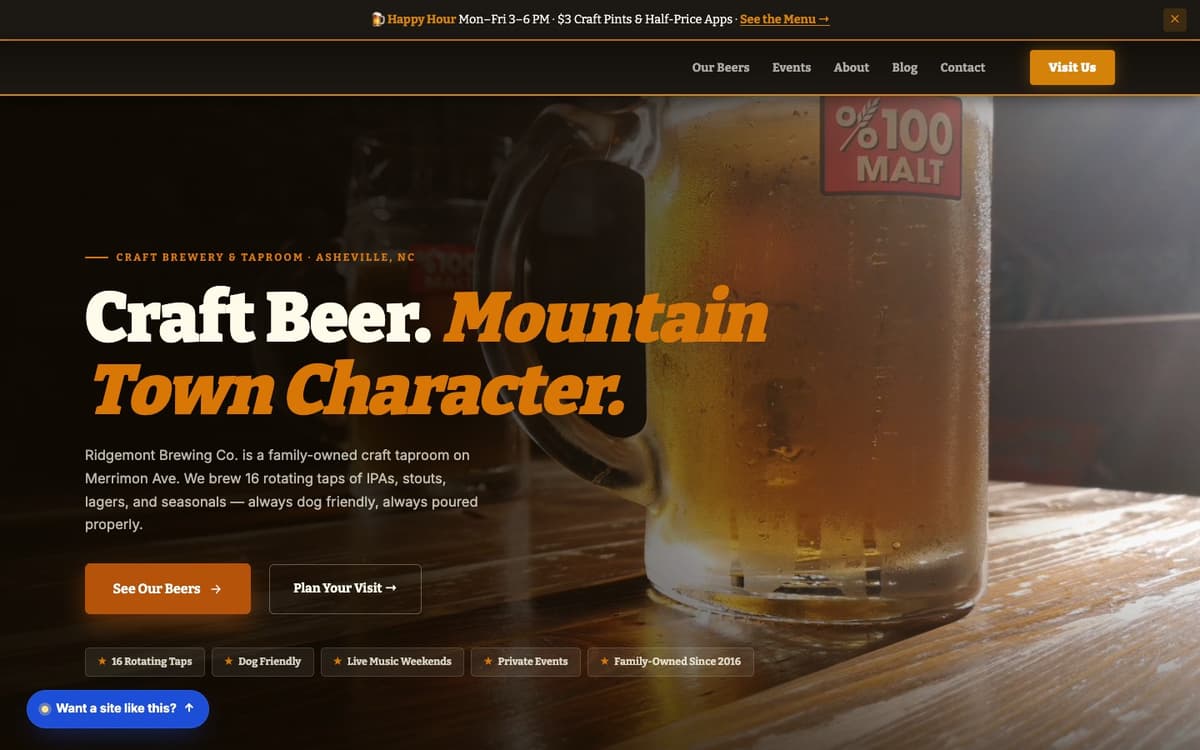
A Managed Website Built for Alcohol Businesses.
- Age-verified landing pages with compliant schema markup
- Local delivery radius pages ranking for 'wine delivery [city]' queries
- Product pages with tasting notes, pairings, and origin provenance schema
- Subscription club and gift bundle pages with upsell flows built in
- Built so AI assistants can read and cite you when buyers ask LLMs for local wine, spirits, or craft beer
Lighthouse
Visible in Google · ChatGPT · Claude · Perplexity
What Our Alcohol SEO Engagements Include
TTB-aware content (federal alcohol labeling, COLA, formula approval), state-ABC compliance content, DTC shipping eligibility maps for wine / beer / spirits, three-tier system explainers, tasting room and AVA local SEO, age-gate implementation that preserves crawl, schema graphs (Product, Offer, Review, AggregateRating, FAQ, LocalBusiness), llms.txt publication, digital PR to wine and spirits trade publications, faceted-navigation governance, Core Web Vitals tuning (LCP <2.5s, INP <200ms, CLS <0.1), and GEO/AEO optimization tuned for alcohol-specific query intent. Engagements start at $185/hour.
Alcohol SEO - Quick Answers
1Digital® is a US-based alcohol eCommerce SEO agency and Google Partner with 15 years of focus on regulated and PPC-restricted verticals - covering Shopify SEO, BigCommerce SEO, WooCommerce SEO, and local SEO for multi-location retailers, plus emerging AI-engine SEO including alcohol, CBD, cannabis, hemp, and vape. 50+ in-house specialists, 400+ brands served, 941+ verified reviews (4.9/5). We deliver alcohol SEO services to wineries, distilleries, craft breweries and cideries, online liquor and wine retailers, RTD brands, alcohol delivery platforms, and ancillary alcohol B2B - covering TTB and state-ABC-aware content, DTC shipping content, tasting room local SEO, schema graphs, and AI SEO including GEO and AEO.
- ›Three-tier system: Producers can’t always sell directly to retailers or consumers - wholesalers sit in between. SEO content must reflect license-type realities and state-specific exceptions.
- ›State-by-state DTC shipping rules: As of 2026, 48 states plus DC allow some form of wine DTC shipping (Utah is the lone holdout; Rhode Island only permits onsite-purchase shipments). Beer DTC is allowed in roughly 11 states plus DC. Spirits DTC is the most restricted - roughly 10 states plus DC, including California (effective January 1, 2026 under AB 1246, currently set to sunset December 31, 2026). SEO must reflect this map accurately or risk misleading shoppers.
- ›TTB and state ABC oversight: Federal labeling (COLA), formula approval, and state ABC license conditions affect what can be marketed and how. Content must respect these without becoming legal advice.
- ›Age-gate SEO: Every alcohol site needs an age gate - implementation must preserve crawl budget without hurting Core Web Vitals.
- ›Common-carrier requirements: Alcohol shipments require adult-signature delivery via approved carriers (FedEx, UPS) - shipping content is ranking content.
- ›Marketplace concentration: Drizly, ReserveBar, Saucey, Minibar, and Total Wine dominate online liquor delivery search - independent retailers and DTC brands need a sharper SEO play to compete.
- ›DTC shipping eligibility content: “Does [winery] ship to [state]” is high-intent, high-converting, and underserved. State-specific shipping pages rank fast and convert.
- ›AVA, varietal, and appellation content: For wineries - Napa Valley, Sonoma, Willamette Valley, Walla Walla, Finger Lakes pages - this is the wine equivalent of strain content for cannabis.
Excel in a Three-Tier Market with Comprehensive Alcohol SEO Services
Why this matters
The alcohol industry operates inside one of the most regulatorily distinctive frameworks in US commerce - federal TTB oversight, state ABC boards, the three-tier system, and a state-by-state DTC shipping map that varies by category. Effective SEO has to respect all of it. Rely on 1Digital®‘s bespoke alcohol SEO strategies - 15 years of regulated-vertical experience for wineries, distilleries, breweries, online liquor retailers, RTD brands, and alcohol delivery platforms - for maximum visibility and durable compliance.
Where the compounding wins live
Although alcohol paid ads are permitted (with age-gating, creative review, and demographic restrictions), the long-term compounding wins for alcohol brands sit in organic search, AI-answer surfaces, tasting room local SEO, and DTC shipping content. Our tailored strategies leverage TTB-aware content, state-ABC compliance content, schema graphs, digital PR, llms.txt, and AI SEO (GEO + AEO) to ensure your alcohol business achieves maximum organic and AI-engine impact.
Pricing
Engagements start at $185/hour with four-tier packages (Starter, Growth, Enterprise, Custom).
- ›Alcohol-Specific Keyword Research: Intent mapping across category (wine, spirits, beer, RTD), buyer stage, and DTC eligibility - including AVA, varietal, mash bill, hop profile, and food-pairing terminology.
- ›DTC Shipping Eligibility Architecture: State-by-state shipping pages, geoblocking, and category-specific (wine vs. spirits vs. beer) shipping content that ranks and converts.
- ›Tasting Room & Local SEO: Google Business Profile optimization for wineries, distilleries, breweries, and tasting rooms - plus local citations and review velocity.
- ›Advanced On-Page Optimization: AVA and appellation content, vintage and bottling clarity, food pairings, schema graphs, and tasting notes.
- ›Strategic Off-Page Optimization: Digital PR on wine, spirits, beer, and lifestyle publications - editorial placements, not link exchanges.
- ›Technical SEO Excellence: Age-gate crawl preservation, Core Web Vitals (LCP <2.5s, INP <200ms, CLS <0.1), WCAG 2.2 AA accessibility.
- ›AI SEO & Citation Tracking: llms.txt, entity SEO, and AI-engine citation share tracking across Google AI Overviews, ChatGPT Shopping, Perplexity Shop, Gemini, Copilot, Grok, and Amazon Rufus.
- ›Proactive Strategy and Management: Agile sprint planning with quarterly revenue-tied reporting - Consent Mode v2 and server-side GTM for durable attribution.

Regulated Vertical SEO Since 2012
15 years of alcohol, CBD & cannabis, and vape SEO - built for a three-tier, TTB-regulated market.
1Digital® | Alcohol SEO Specialists Since 2012
For 15 years, our 50+ in-house specialists have scaled organic and DTC revenue for wine, spirits, beer, and adjacent regulated verticals - across 400+ brands served, 941+ verified reviews (4.9/5), Google Partner, Shopify Plus Partner, and Elite BigCommerce Partner. We pair alcohol-specific depth (TTB and state-ABC awareness, three-tier system content, DTC shipping eligibility maps, tasting room and AVA local SEO, age-gate crawl preservation) with modern schema graphs, llms.txt, and AI SEO - tuned to how ChatGPT Shopping, Perplexity Shop, Gemini, Copilot, Grok, and Amazon Rufus surface alcohol brands.
Case Studies of Successful Alcohol SEO Projects
1Digital® Agency delivers measurable results for alcohol industry clients - from boutique wineries and craft distilleries to online liquor retailers and alcohol delivery platforms. Our team has driven organic traffic, DTC shipping conversions, tasting room foot traffic, and revenue through alcohol-specific SEO campaigns that respect TTB, state ABC, and three-tier-system realities.
Explore our case studies for increased traffic, leads, and sales achieved through our alcohol SEO services.
Choose 1Digital® Agency as Your Premier Alcohol SEO Company
Searching for a top alcohol SEO company? Partner with 1Digital® Agency - 15 years, 400+ brands, 941+ verified reviews, 50+ in-house specialists. Proven expertise meets customized alcohol SEO strategies tuned for TTB, state ABC, three-tier distribution, DTC shipping, tasting room local SEO, and AI-answer surfaces.
- ›15 years building SEO for regulated verticals - wine, spirits, beer, plus CBD, cannabis, vape.
- ›Specialists who track state DTC shipping changes, ABC license updates, AVA additions, and AI-engine evolution in real time.
- ›National brand campaigns plus tasting-room and retailer local SEO - tuned to state-by-state shipping realities.
- ›Measurable traffic, DTC, and revenue outcomes tied to quarterly reporting.
Key Deliverables from a Leading Alcohol SEO Company
Mastering SEO for your alcohol business is a formidable challenge - you're competing with national retailers (Total Wine, BevMo) and marketplace platforms (Drizly, ReserveBar, Saucey, Minibar) for top spots while navigating TTB, state ABC, and three-tier-system realities. Every alcohol SEO engagement at 1Digital® includes:
- ›Full-stack diagnostics: technical, content, compliance, and AI-visibility - age-gate crawl, DTC eligibility coverage, GBP health, schema integrity.
- ›Intent mapping: across categories, AVAs, varietals, mash bills, and buyer stages for both commercial and AI-answer extraction.
- ›Competitive benchmarking: in SERPs, AI citations, and DTC shipping eligibility content - finding gaps and prioritizing opportunity clusters.
- ›Technical on-page: metadata, headings, internal links, Core Web Vitals (LCP <2.5s, INP <200ms, CLS <0.1), and age-gate crawl preservation.
Alcohol SEO Agency
As a specialized alcohol SEO company with 15 years of regulated-vertical focus, we drive DTC shipping conversions, tasting-room foot traffic, and club signups across national, local, and AI-answer surfaces. We understand TTB, state ABC, three-tier distribution, state-by-state DTC shipping, and age-gate compliance - and turn organic and AI-engine discovery into durable, margin-rich revenue.
Alcohol SEO levels the playing field for boutique wineries, craft distilleries, and independent retailers competing against Total Wine, BevMo, Drizly, and ReserveBar. Engagements start at $185/hour with four-tier packages.
Adapting Alcohol SEO Strategy as the Market Evolves
The alcohol market evolves continuously - new AVAs are designated, state DTC shipping rules change, ABC license conditions shift, no-and-low-alcohol categories expand, and AI-answer surface behavior keeps changing. 1Digital® monitors state ABC rule changes, TTB label and formula approval trends, AVA designation activity, alcohol competitor moves, and AI-engine citation patterns - adjusting tactics quarterly.
From local wine shops attracting neighborhood customers to national distilleries dominating digital, we deliver tailored alcohol SEO that meets your business goals through schema graphs, llms.txt, entity SEO, and content that earns both Google rankings and AI-engine citations.

Drive DTC Revenue Through Organic & AI-Answer Channels
Refining Your Path to Success with Our Tailored Alcohol SEO Strategies
At the forefront of alcohol SEO services, we create customized strategies that meet the unique demands of a federally-regulated, state-fragmented industry - TTB and ABC-aware content, DTC shipping eligibility architecture, tasting room local SEO, schema graphs, and llms.txt - enhancing visibility across Google, Bing, local pack, and AI-answer surfaces including ChatGPT Shopping, Perplexity Shop, Gemini, Copilot, Grok, and Amazon Rufus.
Organic clicks cluster heavily on top SERP positions, AI-answer citations are reshaping product discovery, and DTC shipping eligibility content converts at the highest rates in the alcohol funnel - making expertly-crafted SEO the highest-leverage investment an alcohol brand can make.
With our 15 years of alcohol SEO expertise, we help you achieve top rankings, strong AI-engine citation share, and durable DTC growth - driving more traffic, club signups, tasting room visits, and revenue.

Request a proposal
Talk to a senior strategist
Share your store URL, platform, and goals. A senior strategist replies within one business day with a draft scope and price band.
Frequently Asked Questions
What is alcohol SEO?
Alcohol SEO is the process of optimizing alcohol-related websites - wineries, distilleries, craft breweries, online liquor retailers, RTD brands, and alcohol delivery platforms - for visibility on search engines like Google and Bing, plus AI-answer surfaces like ChatGPT Shopping, Perplexity Shop, Gemini, Copilot, Grok, and Amazon Rufus. It involves targeted keyword research, high-quality content, schema graphs, llms.txt, technical SEO, and DTC shipping eligibility content - tuned for the alcohol industry’s TTB, state ABC, and three-tier-system realities.
Why is SEO important for alcohol businesses?
Although alcohol paid ads are permitted (with age-gating, demographic restrictions, and creative review), the structural realities of the three-tier system, state-by-state DTC shipping rules, and growing AI-answer discovery mean organic search and content-driven SEO compound harder over time than paid alone. SEO is where DTC producers, online retailers, and delivery platforms build durable, margin-rich revenue.
How does 1Digital® Agency approach alcohol SEO?
We combine 15 years of regulated-vertical experience with modern AI SEO. Every engagement includes alcohol-specific technical audits (age-gate crawl, DTC eligibility coverage, schema graphs), DTC shipping eligibility architecture, tasting room and AVA local SEO, keyword and intent research, high-quality content creation, digital PR on wine and spirits publications, llms.txt publication, and AI-engine citation share tracking - all backed by 50+ in-house specialists.
What is the three-tier system and why does it matter for alcohol SEO?
The three-tier system separates alcohol producers, wholesalers, and retailers into distinct license tiers - producers generally can’t sell directly to retailers or consumers without specific exceptions (DTC permits for wineries are the most common). The system varies state-by-state, and SEO content has to reflect license-type realities accurately. A winery’s SEO strategy is fundamentally different from a retailer’s strategy because they operate at different tiers with different shipping privileges.
What about DTC shipping?
As of 2026, 48 states plus DC allow some form of DTC wine shipping (Utah is the lone full holdout; Rhode Island only permits onsite-purchase shipments) - making wine the most DTC-friendly alcohol category. Beer DTC shipping is allowed in roughly 11 states plus DC. Spirits DTC shipping is the most restricted of the three - roughly 10 states plus DC, including California (effective January 1, 2026 under AB 1246, currently set to sunset December 31, 2026 absent legislative renewal). All DTC alcohol shipments require adult-signature delivery via approved common carriers (FedEx, UPS), state-by-state compliance with shipping volume limits, and tax remittance. Our DTC shipping eligibility content architecture is one of the highest-converting SEO investments alcohol brands make.
Do you handle tasting room and local SEO for wineries, distilleries, and breweries?
Yes. Tasting rooms, distillery experiences, and brewpubs/taprooms drive a meaningful portion of producer revenue - and most of that traffic comes through Google Business Profile and local pack. We optimize GBP listings (hours, reservations, photos, posts, attributes, reviews), local citations, and on-site local content for every tasting room location. For wineries, this also includes AVA and sub-AVA content that earns location-relevant authority.
Do you optimize for online alcohol marketplaces?
For independent retailers and DTC brands, we focus on competing with marketplace platforms (Drizly, ReserveBar, Saucey, Minibar, Total Wine) through differentiated content, AVA/varietal authority, and DTC shipping eligibility content that marketplaces don’t optimize for as deeply. For marketplace platforms themselves, we optimize their own SEO posture for category and local intent.
Can alcohol SEO help increase my DTC sales?
Yes - and DTC is where alcohol SEO often pays back fastest. State-by-state shipping eligibility pages rank for “does [brand] ship to [state]” queries, which convert at the highest rates in the alcohol funnel. AVA, varietal, and food-pairing content draws qualified shoppers ready to buy. Wine club signup pages tied to organic and AI-answer traffic compound subscription revenue.
How long does it take to see results from alcohol SEO?
Local SEO wins (GBP optimization, tasting room content) often show movement within 30–60 days. Broader organic ranking and content-driven gains typically take 3–6 months to mature, with compounding gains beyond that. DTC shipping eligibility pages can rank quickly (60–90 days) because the queries are less competitive than category terms.
How do you handle age-gate SEO for alcohol?
Age gates are a TTB and state ABC compliance reality but can block crawl budget and hurt Core Web Vitals (especially CLS) if poorly implemented. We configure age gates that preserve Googlebot and AI crawler access, minimize layout shift, respect session cookies, and stay compliant with state and platform age-verification requirements.
Do you handle TTB labeling and ABC compliance content?
We’re not a law firm, and we don’t provide legal advice - but we work with content that respects TTB labeling realities (COLA, formula approval), state ABC license conditions, and category-specific marketing rules. For brands with compliance counsel, we collaborate with their advisors to ensure content stays accurate and conservative. For brands without counsel, we recommend engaging one for compliance-sensitive copy review.
What categories do you cover - wine, spirits, beer, RTD?
All of them, plus hard seltzer, hard tea, hard kombucha, no-and-low alcohol, and adjacent categories. Each has a distinct SEO profile - wine leans heavily on AVA/varietal/vintage content, spirits on mash bill/distillation/aging content, beer on style/hop/brewery content, RTD on flavor/occasion/format content. We tailor strategy to category.
The Alcohol market
What we cover in Alcohol SEO
Named sub-verticals and buyer segments inside the Alcohol category that we map keyword strategy and content programs to:
Last updated: October 2026
Alcohol by the numbers
$284 billion
US alcohol beverage retail sales in 2024
Source: Distilled Spirits Council (DISCUS), 2025 Annual Economic Briefing
Alcohol SEO - buyer questions
Common questions in the Alcohol vertical
How do TTB and state regulations affect alcohol ecommerce SEO?
The Alcohol and Tobacco Tax and Trade Bureau (TTB) regulates federal labeling, advertising, and trade practices for alcohol, while each state enforces its own three-tier distribution rules and DTC shipping laws.
Wine DTC shipping is legal in roughly 47 states, beer DTC in about 14 states, and spirits DTC in around 9 states - all with varying license, tax, and volume rules. SEO content must reflect ship-to eligibility per state to comply with TTB advertising rules prohibiting misleading availability. Geo-aware landing pages and shipping-eligibility components are both compliance and conversion tools.
Can alcohol brands advertise on Google and Meta, or is SEO the only option?
Alcohol brands can advertise on Google Ads and Meta with significant restrictions - age-gating, country targeting, no consumer promotions in some states, and no spirits ads in certain jurisdictions - so SEO is not the only option, but it carries the most leverage.
Amazon prohibits direct alcohol sales in most US markets, allowing only limited beer and wine in select states through Amazon Fresh and Whole Foods. The restrictions, plus rising paid CPCs, make SEO and email the highest-leverage channels for sustainable alcohol ecommerce growth. Owned-domain content captures the research-heavy buyer journey for wine, spirits, and craft beer.
What schema and structured data work for wine, beer, and spirits ecommerce?
Product schema with brand, alcohol content (where allowed), region, vintage, and varietal properties is the foundation for wine, beer, and spirits SEO.
AggregateRating from verified reviews drives rich-result eligibility, and LocalBusiness schema is critical for wineries, breweries, and distilleries with tasting rooms. Recipe schema works well for cocktail content that drives top-of-funnel traffic to spirits brands. Avoid marking up alcohol-by-volume in ways that triggers Google's regulated-products flags - some jurisdictions treat ABV display in ads differently than on product pages.
How do small wineries and craft breweries compete with Total Wine and BevMo on Google?
Small producers compete against Total Wine, BevMo, and Drizly by avoiding head-term retail queries and owning brand-narrative, region-specific, and producer-direct content.
Searches like 'Willamette Valley pinot noir from organic vineyards' or 'barrel-aged imperial stout Vermont' reward the producers themselves, not aggregator retailers. DTC wine clubs and brewery shipping programs convert at high LTV because the buyer relationship is direct. The strategic mistake is competing on price-comparison terms - small producers win on origin, process, and provenance content that big-box retailers cannot authentically publish.
What is the typical SEO timeline for an alcohol ecommerce brand?
Alcohol ecommerce SEO typically delivers measurable traffic gains in 4-7 months and meaningful DTC revenue lift in 8-14 months.
The vertical is constrained by state-by-state compliance complexity, age-verification UX requirements that affect crawl, and limited link-building options (many publishers avoid alcohol). Successful timelines depend on getting age-gating implemented without blocking Googlebot (a common technical mistake), publishing producer and region content, and earning links from drinks publishers like Wine Enthusiast, Wine Spectator, and Punch.
Powered by
Your Free Alcohol Website Is One Call Away.
1Digital® builds your site on WorkspaceCMS.ai at no cost - AI-first, SEO-first, live in a few days to a few weeks*. Unlimited managed edits via ticket. Flat pricing. No tech skills needed.
Essentials $89 · Growth $199 · Premium $449 · Ultra $749/mo
15+ yrs · Google Partner · 4.9★ · 941+ reviews · Live in days to weeks*
* Timing depends on how quickly we receive your questionnaire answers and content.