

SEO vs. PPC for Ecommerce: A False Choice
For eCommerce, the choice between SEO and PPC is a false one; the correct strategy integrates both channels, using PPC for immediate sales and data, while SEO builds long-term, compounding asset value. The internet loves a zero-sum fight, and SEO vs. PPC is a classic. Agencies pitch one against the other, usually depending on which service they sell. It is a useless framing.
The real question isn't which one to choose. It's about what the right mix is for your business right now, and how to make the two channels feed each other instead of competing for budget. One builds a permanent asset; the other buys immediate attention. You need both.
SEO Builds an Asset; PPC Rents Attention
The fundamental distinction is simple. SEO is an investment in a business asset; PPC is an operational expense.
Search Engine Optimization (SEO) is the work of earning visibility in organic search results. It involves technical site structure, content that matches search intent, and building authority through legitimate citations and links. When it works, it generates traffic without a per-click cost. This traffic is the return on an asset you've built: your website's topical authority.
Pay-Per-Click (PPC) advertising, primarily through platforms like Google Ads, is renting space at the top of the search results page. You pay every time someone clicks. It delivers traffic immediately. The moment you stop paying, the traffic stops. The visible ad changes; the invisible substrate of your site’s authority does not.
The honest tradeoff is about time versus money. SEO requires significant upfront investment in time and resources before it delivers a return, but that return compounds over years. PPC delivers results today but requires continuous spending to maintain them. One is slow ownership; the other is fast rental.
PPC Is a Go-To-Market Engine, Not Just a Sales Button
Most stores use PPC incorrectly, and the failure mode is consistent enough to name. They treat it as a sales faucet, pouring money into cold audience targeting and wondering why conversion rates are low. They're not just trying to be seen - they're trying to be remembered and chosen, and that requires more than a single click.
The mistake to avoid is running ads without a plan to capture data. A campaign that doesn't teach you anything about your customers is just a leaky pipe. In practice, PPC's greatest value is as a source of market intelligence.
Use PPC when you need to:
- Launch a New Store or Product. SEO takes months. You need traffic and sales now. PPC is the only reliable way to get immediate, targeted visitors to a new product page.
- Validate Demand and Messaging. Before you invest six months building SEO content around a product line, spend $1,000 on Google Ads to see if anyone actually searches for it and clicks. Test different value propositions in your ad copy to see what resonates.
- Harvest High-Intent Buyers. For bottom-of-the-funnel searches like "men's waterproof boots size 13" or brand names, PPC is unmatched. It lets you capture customers at the exact moment of purchase intent.
- Gather Keyword Conversion Data. PPC provides direct, undeniable data on which keywords lead to sales. This is invaluable intelligence for prioritizing your long-term SEO efforts.
SEO Is Your Compounding Moat
The primary failure mode for eCommerce SEO is impatience. A business invests for three months, sees little movement, and pulls the plug right before the compounding phase begins. They get spooked by an algorithm update or chase shiny new tactics instead of focusing on the durable foundation: technical excellence, helpful content, and real authority.
SEO is your long-term defense against rising ad costs and platform dependency. It is the work of becoming the canonical answer for a specific set of problems your customers have. That position, once earned, is difficult for competitors to displace.
Invest in SEO when you want to:
- Lower Customer Acquisition Cost (CAC) Over Time. As your organic traffic grows, your blended CAC decreases. Every organic conversion is one you didn't have to pay Google for directly.
- Build Trust and Authority. Ranking organically signals to users that Google considers your site a credible result. This builds a level of trust that ads, by their nature, cannot.
- Dominate an Information-Driven Niche. If your customers do extensive research before buying (think mattresses, skincare, technical equipment), your content is the sales tool. Ranking for informational queries builds your audience and fills the top of your funnel.
- Create a Resilient Business. Markets change and ad costs rise. A strong organic footprint provides a stable, predictable baseline of traffic and revenue that makes your business less fragile.
A Unified Search Strategy Beats Siloed Channels
Here’s the thing. The most effective eCommerce brands don't choose between SEO and PPC. They build a flywheel where each channel makes the other stronger. The data from one informs the strategy for the other.
This is how you combine them in practice:
- Use PPC Data to De-Risk SEO. Your Google Ads "Search Terms" report shows you the exact queries that led to clicks and, more importantly, conversions. These are not guesses; they are market-validated keywords. Your highest-converting paid keywords should become the top priority for your SEO content and optimization efforts. You are using PPC to find the gold, then using SEO to build a mine.
- Test Landing Pages with PPC Before SEO. Wondering which page layout or call-to-action will convert best? Don't wait months for SEO traffic to find out. Use PPC to run an A/B test with paid traffic. Drive 1,000 visitors to each variant and see which one performs better. Once you have a statistically significant winner, you can confidently point your long-term SEO efforts toward that proven page.
- Dominate the SERP for "Money" Keywords. For your most valuable commercial keywords, you want to be everywhere. Owning the top ad spot and the number one organic result creates an overwhelming brand presence. It builds immense trust and can capture over 50% of the total clicks on the page, boxing out competitors entirely.
- Remarket to SEO Visitors with PPC. A visitor who lands on your blog post "How to Choose a Coffee Grinder" (SEO) is a high-quality prospect. Use remarketing audiences to show them targeted Google Shopping or display ads for your best-selling grinders (PPC) as they browse other sites. You are guiding them from initial research to final purchase.
- Let Organic Rankings Inform Ad Copy. Identify the meta descriptions and page titles from your best-performing organic pages. What language are you using that resonates with users and earns a high click-through rate? Use that proven messaging in your PPC ad headlines and descriptions to improve relevance and Quality Score.
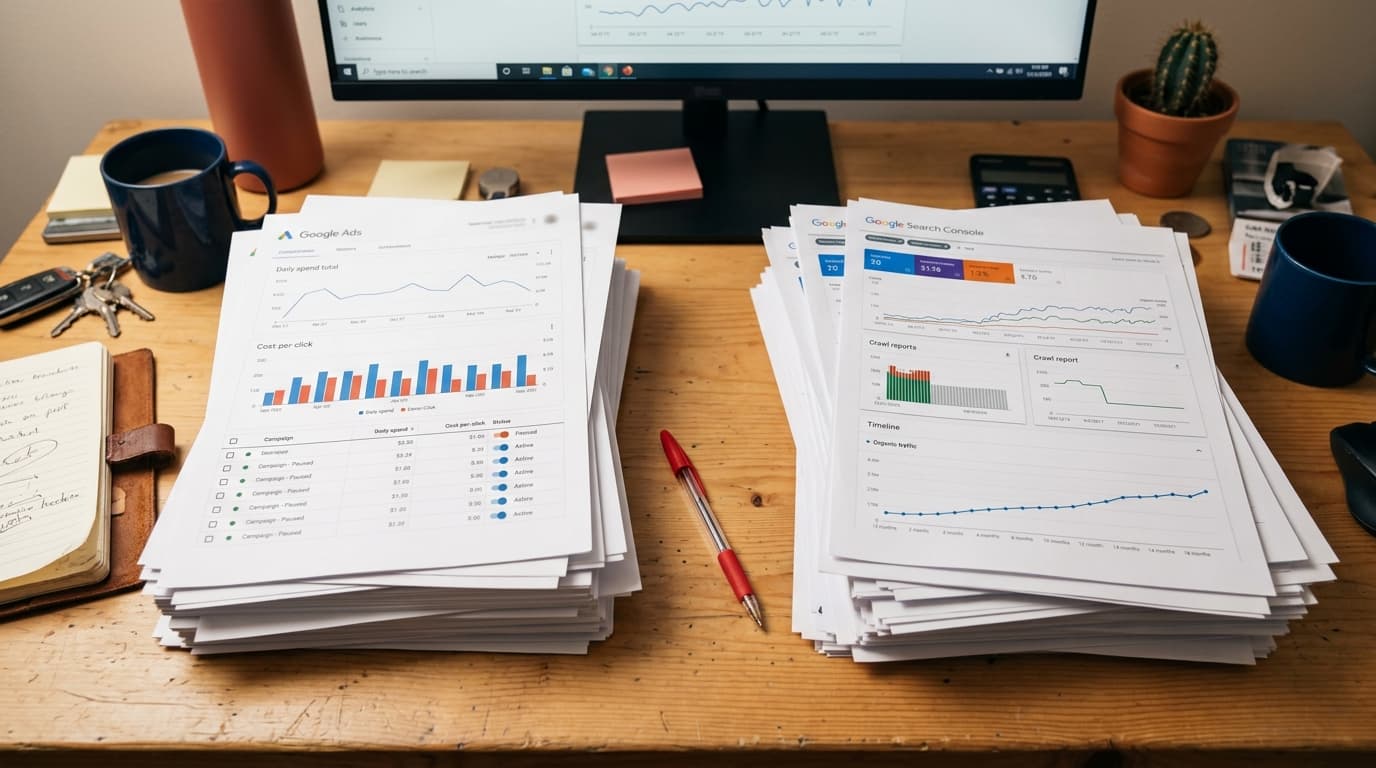
The first step is to break down the data silo. Pull your Google Ads conversion data and your Google Search Console query data into a single view. The overlap - keywords that you both pay for and rank for - is the starting point for your integrated strategy.
SEO vs. PPC for Ecommerce: When to Use Each (and How to Make FAQ
Which is better for a brand new eCommerce store, SEO or PPC?
Start with PPC. A new store has no authority and needs traffic and sales immediately to validate the business model. Use PPC to drive initial sales and gather crucial data on which keywords and products convert. Begin foundational SEO work - like technical site setup and core page optimization - in parallel, but expect PPC to be your primary growth driver for the first 6-9 months.
Can good SEO improve my PPC performance?
Yes, indirectly. A core component of Google's Ad Quality Score is "Landing Page Experience." A well-structured, fast-loading, and relevant page - all hallmarks of good technical SEO - will result in a better Quality Score. This, in turn, can lower your cost-per-click (CPC) and improve your ad position.
How long does SEO take to work for an eCommerce site?
For a new site in a moderately competitive niche, expect to see meaningful traffic and revenue from SEO in 6 to 12 months. The first 3-4 months are typically focused on technical fixes and building a content foundation, with results beginning to compound after the six-month mark. Anyone promising page-one rankings in two months is selling something you don't want.
Is it a waste of money to run ads for keywords I already rank #1 for?
No, it is often a smart defensive and offensive strategy. Having both the top ad and the top organic result increases your total share of clicks, pushes competitor listings further down the page, and reinforces your brand's authority. Studies have shown that the total clicks from owning both positions are higher than the sum of owning each one individually.