
Salesforce Commerce Cloud SEO: SiteGenesis vs SFRA URL Controls
SFCC's URL and routing model is unlike anything else. The SiteGenesis-to-SFRA transition changed it again. Here is how to ship clean SEO on either.
Real strategists. Real AI tools. Real growth. - 1Digital® since 2012
333 posts tagged ecommerce seo.

SFCC's URL and routing model is unlike anything else. The SiteGenesis-to-SFRA transition changed it again. Here is how to ship clean SEO on either.

Shopify's platform isn't built for local discovery - so physical retailers must configure local SEO deliberately. This guide covers every step, from Google Business Profile optimization to structured data setup.

Google ranks ecommerce sites on store-specific factors beyond general SEO - including Product schema, crawl budget, page experience, and trust signals. Here's what matters most for online stores.

A well-structured Shopify store uses its collection structure as a permanent architectural foundation, not just a way to bucket products. Getting it wrong creates chaos and keyword cannibalization, so it's critical to build a logical hierarchy from the start for maximum SEO and UX.

Category page SEO hinges on collection descriptions that give search engines unique, keyword-rich content while giving shoppers a reason to keep scrolling. This guide shows you exactly how to write them.

Google rewards breadth and depth over keyword density. This Shopify-specific framework shows you how to build topical authority through structured content clusters that connect your blog, collections, and product pages.

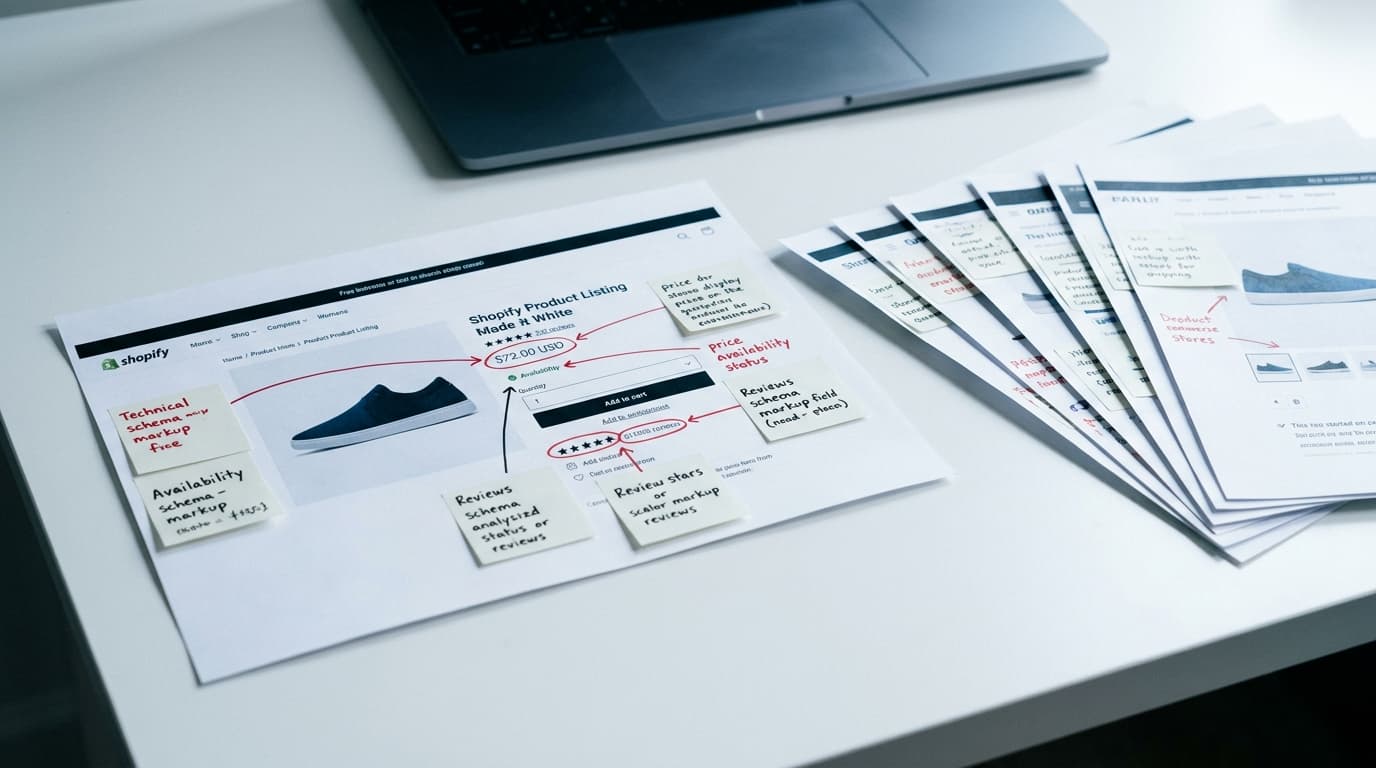
Product schema markup gives AI systems like Google AI Overviews and LLMs the structured, machine-readable facts they need to cite your products confidently. Without it, your listings lose ground to schema-equipped competitors.

Entity SEO for ecommerce is the process of building clear, machine-readable signals about your brand to establish it as an authoritative entity in Google's Knowledge Graph. It isn't a complex trick; it's the foundational work of making your brand unambiguously understandable to a machine.

Automotive parts SEO demands a structured approach to Year-Make-Model data, URL architecture, and schema markup. This guide covers the technical mechanics of turning fitment data into rankings on Shopify.

AI shopping agents skip product pages they cannot parse. These 10 optimizations cover structured data, spec tables, and semantic markup that make your product detail pages agent-ready in 2026.

Yes, you should add content to Shopify collection pages for SEO, but only if it's concise, helpful, and placed above the product grid. The old practice of dumping a keyword-stuffed essay at the bottom of the page is a waste of time and no longer effective.

A ranked guide to the top 10 automotive SEO companies serving Miami in 2026, covering both auto parts and accessories ecommerce SEO and dealership SEO.

Most Shopify blogs are content islands, generating traffic but no sales because they lack strategic links to product pages. A blog only improves SEO when it's treated as a distribution network for authority. This guide shows you how to build internal links that drive sales.

Beauty Heroes is a leading clean beauty retailer located in California with the hopes of expanding its subscription-based services to a mass audience in the online world. The company holds the most stringent ingredient standards in the beauty industry in order to provide its cust

Entity SEO for ecommerce means structuring your brand and product data so LLMs and search engines recognize you as a distinct authority. Brands with strong entity signals appear in AI-generated answers and zero-click results.

When a product goes out of stock, the wrong SEO move costs you rankings and revenue. This 2026 playbook gives you a structured decision tree covering 404s, 301 redirects, and keep-live strategies based on three key variables.

Handling faceted navigation is a common way ecommerce stores kill their own SEO. Uncontrolled filters on platforms like Shopify lead to index bloat, wasted crawl budget, and diluted authority. The solution isn't more pages, but deliberately controlling which ones Google can see.

After crawling 10,000 active Shopify stores across 14 verticals, we identified the ranking factors that most reliably predict first-page Google placement for product and category pages - with structured product schema leading the way.

Shopify automatically generates duplicate content through product URLs, variant parameters, and collection filters. Learn how to audit your store and fix these issues using canonical tags, robots.txt rules, and URL consolidation.

Faceted navigation SEO demands a clear three-tier strategy: index high-demand filter pages, canonicalize near-duplicates, and block parameter strings that waste crawl budget. This definitive 2026 guide shows you exactly how to execute each decision.

Google AI Overviews now dominate ecommerce search results, surfacing product answers and category summaries before users click. Here's how your product and category pages are affected - and what to do about it.

Squarespace 7.x's export tooling is more limited than most merchants realize. Here are the data migration patterns we use to move products, customers, orders, and content from Squarespace Commerce to Shopify without losing fidelity.

A 50-point ecommerce technical SEO audit checklist covering crawlability, indexability, site speed, structured data, and URL architecture - built for Shopify, WooCommerce, BigCommerce, and custom stores in 2026.

Our 2025 study of 57 top Shopify stores reveals how the highest-growth sites increase search traffic. We found growth came from a disciplined focus on programmatic SEO, systematic content refreshes, and building topical authority with expert content.