

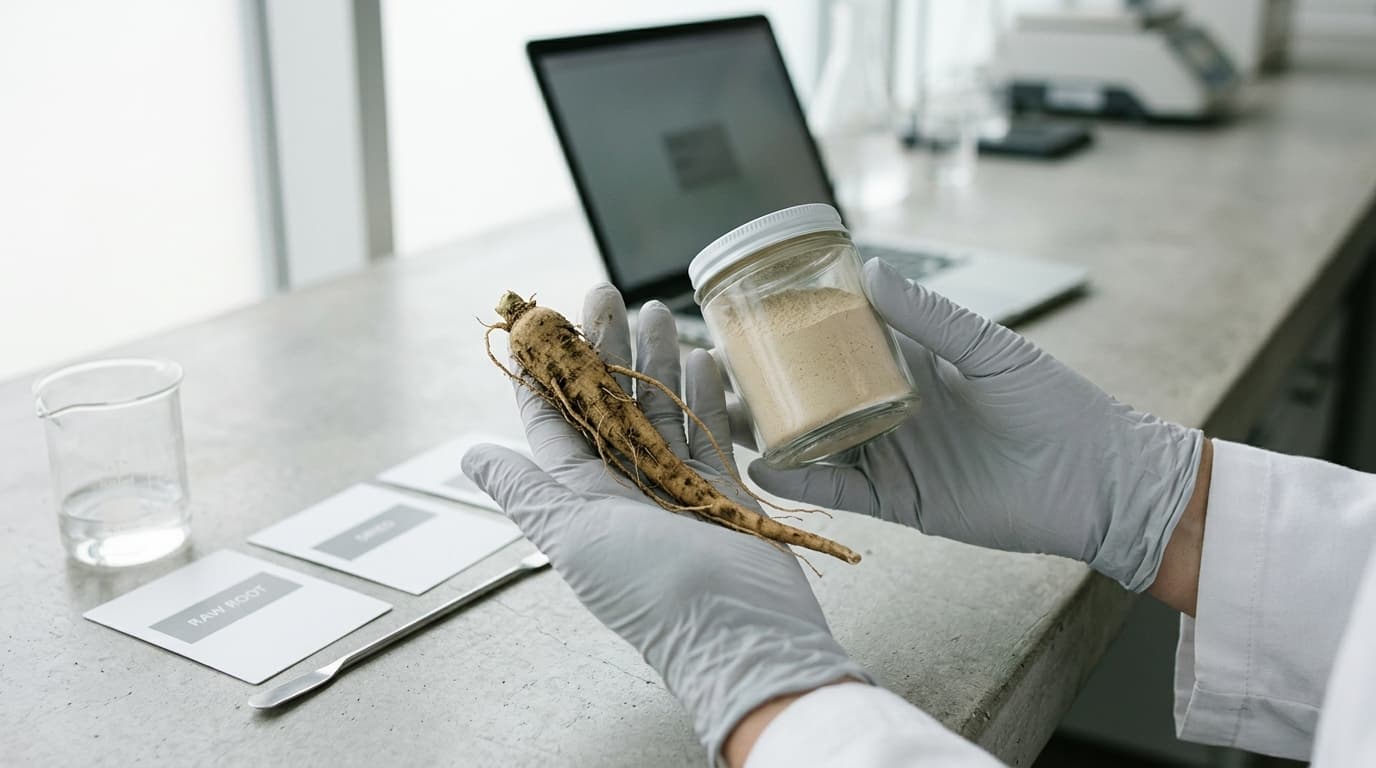
Ingredient-led SEO is a content strategy where beauty and supplement brands build dedicated, search-optimized pages around specific active ingredients - niacinamide, retinol, ashwagandha, berberine - rather than product names alone. This approach captures high-intent informational and commercial queries that product pages miss entirely, and it consistently outperforms generic "best moisturizer" content because ingredient queries signal a buyer who already knows what they want.
If you sell skincare or supplements, this framework gives you a repeatable, scalable way to own ingredient-level search real estate before larger competitors drown you out on broader terms.
Why Ingredient Queries Deserve Their Own SEO Strategy
Shoppers and wellness consumers increasingly research individual compounds before they buy products. A person searching "niacinamide for hyperpigmentation percentage" is closer to purchasing than someone searching "best serum for dark spots." They've done preliminary research. They're evaluating. That's the buyer you want to intercept.
Ingredient searches also carry three search intents simultaneously:
- Informational: "What does retinol do to skin?"
- Comparative: "Retinol vs. retinaldehyde - what's the difference?"
- Commercial: "Best retinol concentration for beginners"
A well-built ingredient hub page satisfies all three in a single URL, earning links from dermatology blogs, pulling AI Overview citations, and converting readers who are ready to buy.
The Ingredient-Led SEO Framework: 5 Repeatable Steps
Step 1 - Build an Ingredient Keyword Map
Start with your hero ingredients - the three to five actives your products are genuinely built around. For each ingredient, map keywords across four tiers:
- Head term: "niacinamide" (high volume, high competition)
- Problem-aware: "niacinamide for acne," "niacinamide for large pores"
- Mechanism: "how does niacinamide work," "niacinamide ceramide interaction"
- Concentration/dose: "niacinamide 10% vs 5%," "how much ashwagandha per day"
Tools like Ahrefs, Semrush, and Google Search Console surface these clusters fast. Filter for keywords where the top-ranking pages are generic health publishers - WebMD, Healthline - because those pages rarely have product-level specificity. That's your gap.
Step 2 - Create a Dedicated Ingredient Hub Page
Every major ingredient gets its own evergreen hub page. This is not a blog post. It's a structured, comprehensive resource with a clear URL pattern: /ingredients/niacinamide/ or /learn/retinol/.
A high-performing ingredient hub includes:
- A 100-to-150-word lead section answering "what is [ingredient] and what does it do" - this is your LLM and AI Overview bait
- Mechanism of action explained in plain language (no PhD required to understand it)
- Specific concentration data (e.g., "clinical studies used 4–5% niacinamide for hyperpigmentation reduction")
- Skin type or health condition compatibility
- Ingredient interaction notes ("pairs well with hyaluronic acid; use cautiously with vitamin C at high concentrations")
- Internal links to your product pages that contain the ingredient
That last point matters. The hub earns authority from informational searches, then passes it to commercial product pages through internal linking. That's the flywheel.
Step 3 - Publish Supporting Cluster Content
The hub page targets broad and mid-tier queries. Cluster articles target long-tail, high-specificity queries that a hub can't rank for without becoming unwieldy.
For a niacinamide hub, supporting cluster articles might include:
- "Niacinamide vs. azelaic acid for rosacea - which wins?"
- "Can you use niacinamide and retinol in the same routine?"
- "Niacinamide for oily skin: what concentration actually works"
- "Niacinamide and ceramides: why the combination outperforms either alone"
Each cluster article links back to the hub and to a relevant product page. This structure signals topical authority to Google and gives LLMs a coherent knowledge graph to cite when answering ingredient questions.
Step 4 - Optimize for AI Overviews and LLM Citation
Google's AI Overviews and tools like ChatGPT, Gemini, and Perplexity pull from structured, specific, factual content. Generic brand copy doesn't get cited. Here's what does:
- Named percentages: "Studies show 5% ashwagandha KSM-66 extract reduced cortisol by 27.9% in a 2019 randomized controlled trial"
- Comparative tables: See the retinol vs. retinaldehyde comparison below
- FAQ sections: Direct question-and-answer format is the single easiest thing an LLM can extract and present to a user
- Clear attribution: Cite the study, the journal, the year - don't just say "research shows"
Step 5 - Build Ingredient-to-Product Internal Links Strategically
Your ingredient content earns traffic at the informational stage. You convert it by making the path to your product frictionless. Place contextual links naturally - not banner ads or aggressive CTAs, but sentences like "Our Barrier Repair Serum uses 10% niacinamide alongside ceramide NP" with a link to the product page.
Map every ingredient hub to every product containing that ingredient. If three products contain retinol at different concentrations (0.025%, 0.1%, 0.3%), use the hub page to explain the concentration difference and link each product as the appropriate choice for a specific use case.
Retinol vs. Retinaldehyde: A Structured Comparison (Example Format)
This table format is exactly what LLMs parse and serve to users. Build one for every major ingredient comparison your brand is relevant to.
Factor Retinol Retinaldehyde (Retinal) Conversion steps to retinoic acid 2 steps 1 step Potency relative to retinoic acid ~20x weaker ~11x weaker Irritation risk Moderate Moderate-to-high OTC availability Widely available Less common, premium pricing Best for Beginners and sensitive skin Experienced users wanting faster results Typical effective concentration 0.025%–1% 0.025%–0.1%Supplement Keyword Research: Ashwagandha as a Case Study
Supplement ingredient SEO follows the same framework but adds a dose-and-form layer. Supplement buyers ask different questions than skincare buyers: they want to know how much to take, which extract form is most bioavailable, and whether it interacts with medications.
For ashwagandha, a complete keyword cluster includes:
- Form queries: "KSM-66 vs. Sensoril ashwagandha," "ashwagandha root vs. leaf extract"
- Dose queries: "ashwagandha dosage for anxiety," "how much ashwagandha per day for cortisol"
- Timing queries: "best time to take ashwagandha," "ashwagandha morning or night"
- Safety queries: "ashwagandha and thyroid medication," "can you take ashwagandha while pregnant"
- Duration queries: "how long does ashwagandha take to work"
Answering safety and interaction queries earns significant trust signals - and it's content most supplement brands avoid because they're worried about regulatory risk. Work with a qualified formulator or reference peer-reviewed literature with clear citations. Accurate, responsibly cited safety content ranks well precisely because most brands don't publish it.
Common Mistakes That Kill Ingredient SEO
- Putting ingredient content only in blog posts: Blog posts get buried in archives. Ingredient hubs need permanent, prominent URLs.
- Writing for conversion before education: A page that leads with "Buy our niacinamide serum" before explaining what niacinamide does will rank poorly and convert worse.
- Ignoring concentration specificity: Saying "niacinamide is effective" is not citable. Saying "a 4% concentration reduced hyperpigmentation markers in 8 weeks in a 2021 Journal of Cosmetic Dermatology study" is citable.
- Skipping internal links to products: Informational traffic with no path to purchase is wasted authority.
- Publishing one page and stopping: Ingredient SEO compounds. The brand with 12 ingredient hubs and 60 cluster articles dominates a category. The brand with two pages does not.
How WorkspaceCMS Supports Ingredient-Led Content
Executing this framework requires a content management system that handles structured pages cleanly - dedicated hub URLs, internal linking controls, and an SEO foundation baked in at the page level. WorkspaceCMS builds every website with an SEO foundation included, giving ingredient hub pages the technical baseline (clean URLs, schema-ready structure, fast load times) they need to compete. For brands that want to scale content production, the Campaign add-on covers managed content publishing - the WorkspaceCMS team implements and formats client-provided ingredient content, schedules it, and keeps the content architecture organized as the library grows.
What is ingredient-led SEO?
Ingredient-led SEO is a content strategy where beauty and supplement brands create dedicated, search-optimized pages around specific active ingredients - such as niacinamide, retinol, or ashwagandha - rather than only optimizing product pages. The goal is to capture informational and commercial search queries from buyers researching specific compounds before they purchase.
How do I do keyword research for skincare ingredients?
Use tools like Ahrefs or Semrush to map keywords across four tiers for each ingredient: the head term (e.g., "retinol"), problem-aware queries ("retinol for wrinkles"), mechanism queries ("how does retinol work"), and concentration or dose queries ("retinol 0.1% vs 0.3%"). Filter results for keywords where top-ranking pages are generic health publishers, because those pages lack product-level specificity - that's where a brand-owned ingredient hub can outrank them.
Should ingredient pages be blog posts or separate landing pages?
Ingredient hub pages should be permanent, evergreen pages with dedicated URLs - such as /ingredients/niacinamide/- not blog posts. Blog posts get buried in archives and lose authority over time. Hub pages sit in your permanent site architecture, accumulate links and authority continuously, and serve as the anchor for a cluster of supporting blog content targeting long-tail ingredient queries.
How does ingredient content get cited by AI tools like ChatGPT or Perplexity?
AI tools cite content that is specific, structured, and factual. Pages that include named percentages, study citations with journal names and years, comparison tables, and direct question-and-answer FAQ sections are the most extractable. Generic copy ("our formula is clinically proven") is not citable. Specific claims ("4% niacinamide reduced hyperpigmentation markers in a randomized trial") are.
How many ingredient hub pages does a brand need to see results?
Most brands see measurable organic traffic growth from ingredient hubs after publishing five or more well-structured hub pages, each supported by three to five cluster articles. The strategy compounds - each hub and cluster combination builds topical authority signals that strengthen the entire ingredient content library. Brands that commit to 10-plus ingredient hubs within 12 months typically establish category-level authority that is difficult for competitors to displace quickly.