

For Plumbing Contractors
Plumbing PPC That Fills the Dispatch Board
A burst supply line does not wait for a nurture sequence. Plumbing paid search is won in the ninety seconds between the search and the phone ringing - which means bid strategy, call routing, and who answers after 9pm matter more than any creative test. We run Search, Local Services Ads, and call-only campaigns against one number: the cost of a lead your dispatcher can actually book.
Trusted by 400+ Brands · Certified Partners




Years in eCommerce
Of results, scale, and quality at the enterprise level.
Expert Team
Specialists across SEO, AI SEO, PPC, design, dev, and strategy.
US Core + Global Talent
US core team for clear communication; vetted global specialists for international client work.
Reputation Score
Rated 4.9/5 across 941+ verified client reviews.
The 1Digital® Difference
AI in our toolkit. Humans in the driver’s seat.
Our strategists, designers, developers, and writers are human. The proprietary AI we built makes them faster and sharper - not the other way around.
- Human strategy
- Human copywriting
- Our own AI tools
- Real growth
Paid Search for a Trade Where the Buyer Is Already Standing in Water
Most paid media advice assumes a considered purchase - a shopper who browses, compares, abandons a cart, and gets retargeted into buying. Plumbing breaks that model in half. One half of your demand is an emergency: a homeowner standing over a spreading puddle, phone in hand, who will call the first credible business that answers and will never look at a second tab. The other half is planned work - a repipe, a tankless conversion, a bathroom renovation, a water heater the homeowner knows is on borrowed time - and it behaves like a normal B2C research purchase, with quotes collected over days or weeks.
An account that treats those two as one campaign will fail both. The emergency half needs maximum presence at the top of the page, a phone number that is tappable in one motion, and an ad schedule that matches when somebody actually answers. The planned half needs a landing page that survives comparison, financing and warranty messaging, and the patience to convert on a second or third touch. We separate them structurally, budget them separately, and hold them to different targets - because a shared cost-per-lead goal quietly starves whichever side is more expensive per call, even when that side sells the bigger jobs.
This is a service account, not a store. There is no catalogue to feed, no ROAS to report, and no checkout to optimize. The whole discipline lives in cost per qualified lead, the ratio of qualified leads to booked jobs, and the value of the jobs those leads turn into. That is also why plumbing PPC pairs so directly with plumbing marketing services and Local Services Ads optimization - the same lead, arriving through three different doors, needs one consistent answering and follow-up process behind it. A senior strategist owns the structure and the bidding calls; WorkspaceCRM, our in-house AI, watches search terms, call outcomes, and pacing between reviews so nothing drifts for a month unnoticed.
Plumbing PPC, step by step
Pay for the clicks that become leads
Every click moves from the ad to your page to a lead, and some fall away at each step. The search terms report shows why: the plumbing searches that turn into calls earn more budget, and job seekers and freebie hunters are added as negatives.
- ›Search terms read by a senior strategist, not left to automation
- ›Negative keywords that stop paying for searches that never convert
- ›Budget moved toward the services and searches that book
Campaign mix
Where Plumbing Budget Actually Goes
The channel order matters more than the channel list. Local Services Ads charge per lead and sit above the auction, so they get funded first and Search is sized around the demand LSA cannot reach. Everything else earns its place by job type - never by what the platform is currently promoting.
Funded first
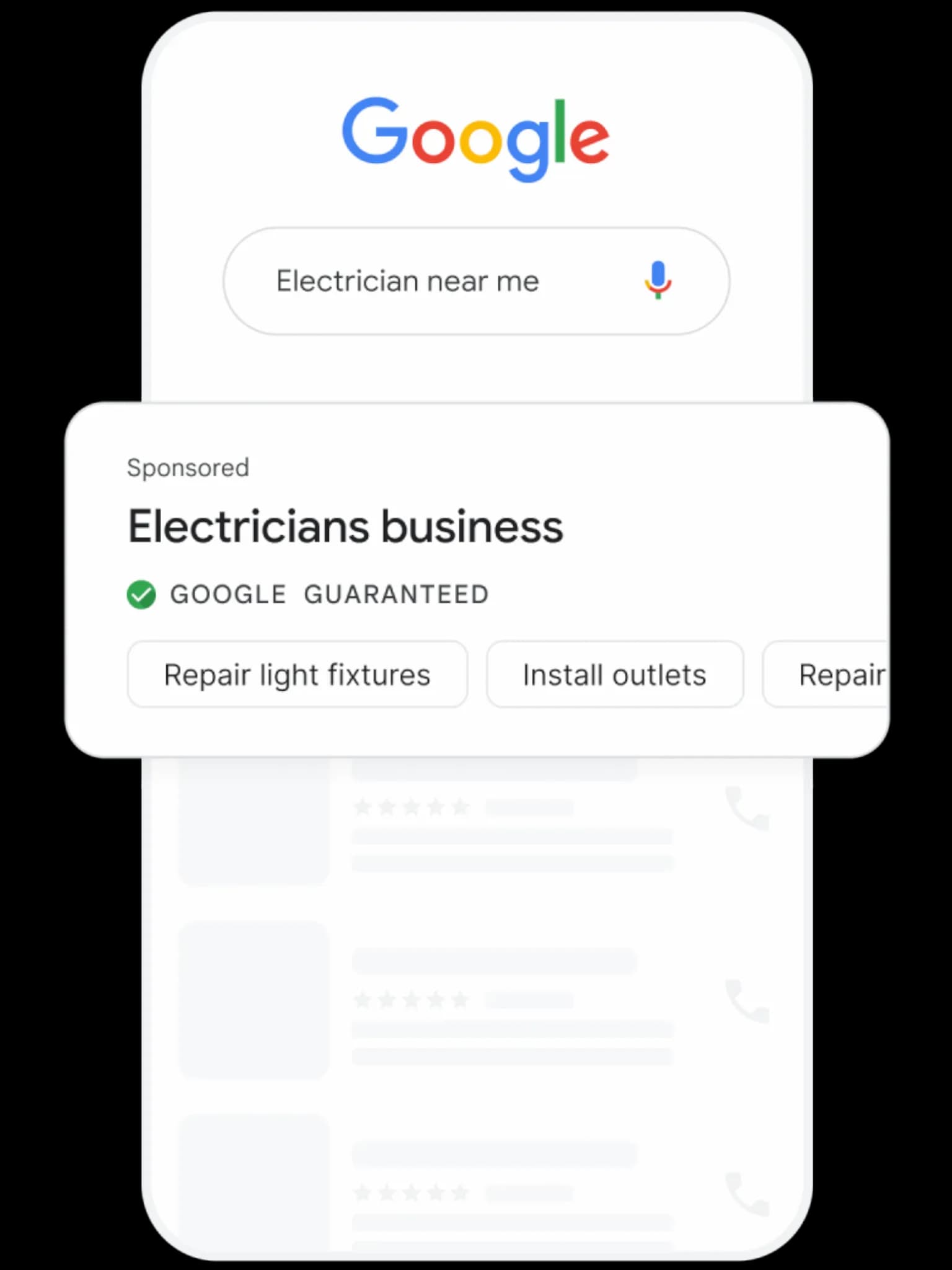
Local Services Ads
Pay-per-lead, above everything else on the page, and matched by category rather than keyword. For emergency plumbing terms LSA is usually the cheapest booked job in the account - so it gets funded first, and the Search budget is sized around what LSA cannot absorb.
Funded second
Search (high-intent core)
Tight exact and phrase coverage on emergency and replacement language: burst pipe, no hot water, sewer backup, water heater replacement, repipe. Separate campaigns per job type, because a drain clearing and a sewer line replacement cannot share a bid.
Emergency hours
Call-only
For emergency terms on mobile, a landing page is friction. Call-only strips the click-to-page-to-tap chain down to a single tap, and runs on its own schedule so it only serves in the hours a human - yours or your answering service - actually picks up.
Steady pacing
Planned-work Search & Demand Gen
Repipes, water heater upgrades, fixture and bathroom work, tankless conversions, whole-home filtration. This demand is researched, not panicked, so it tolerates a landing page, a longer consideration window, and remarketing to people who priced you and stalled.
Always on
Brand defense
Competitors and lead aggregators bid on plumbing brand names because the searcher is already sold and just needs a number. A cheap brand campaign keeps that traffic - and the reviews you earned - from being resold back to you as a shared lead.
Planned work only
Remarketing, used sparingly
Nobody re-considers a plumber three weeks after their basement flooded. Remarketing earns its budget on planned work and on maintenance-plan enrollment, not on emergency traffic, where the job was won or lost the same afternoon.
Lead quality & call tracking
A Call Is Not a Conversion Until Somebody Books It
The single most common failure in plumbing accounts is optimizing toward call volume. Smart bidding is obedient: tell it a fifteen-second ring counts, and it will find you an endless supply of wrong numbers, warranty questions, tenants who need their landlord, and other contractors selling you something. Every one of those is recorded as a win, the reported cost per lead falls, and the number of trucks leaving the yard does not move.
Calls scored, not counted
A call is not a conversion. We listen to a sample every week and tag outcomes - booked, quoted, out of area, warranty, wrong trade, sales call - then feed the booked ones back as the conversion action the bidding actually optimizes toward.
Job type at the keyword level
Cost per lead is a useless average across a trade where one call is a $200 snake-out and the next is a five-figure sewer replacement. We report CPL by job type so the high-ticket campaigns can be paid for properly instead of being throttled by a blended target.
Out-of-area waste
Radius targeting sells drive time you can't afford. We shape geography around real dispatch routes, exclude the fringes that generate calls your techs decline, and let bid modifiers reflect which zips your crews reach fastest.
LSA lead disputes
Pay-per-lead means you pay for the spam too. Disputing mis-categorized, out-of-area, and non-job leads is unglamorous weekly work, and skipping it quietly inflates every LSA cost figure you report to yourself.
After-hours reality
Ad schedules should match answering capacity, not office hours. If 2am calls go to voicemail, we either fund an answering service or stop buying 2am clicks - paying for an emergency call nobody answers is the most expensive line in most plumbing accounts.
Form fills, ranked below calls
Forms convert well on planned work and poorly on emergencies. We keep them, route them with the same speed-to-lead urgency as a call, and never let a form-heavy campaign look successful just because the raw conversion count is high.
What a wasted click looks like
- Broad match sends a “plumbing school” search to an emergency ad.
- The tap lands on a slow page, and the phone number is below the fold.
- The call rings out at 11pm because nothing is answering.
- It still reports as a conversion, so bidding buys more of the same.
What a converting click looks like
- A job-type campaign matches the search to the crew that runs it.
- The tap reaches a fast page with the number and service area first.
- A human answers inside the ad schedule the campaign runs on.
- The booked outcome is tagged and fed back as the conversion action.

Budget & service area
Budget Is Capped by Drive Time, Not by Ambition
A retailer can scale spend until the margin runs out. A plumbing company runs out of trucks first. Your ceiling is the number of jobs your crews can reach and complete, and every dollar spent past that ceiling buys a lead that waits too long, cancels, and leaves a review about it. So we size budget from the service map outward: drive-time zones rather than a radius, bid modifiers that favour the zips your crews reach fastest, and hard exclusions on the fringe territory that generates calls your dispatcher declines.
Pacing follows weather and season instead of the calendar. Freeze events, heavy storms, and long holiday weekends compress a month of emergency demand into a couple of days, and a flat daily cap is guaranteed to be exhausted by mid-morning on exactly the day the market is richest. We hold reserve budget for those windows, lift caps ahead of a forecast, and recover the spend from the flat weeks - while planned-work campaigns run at a steady pace all year, because a repipe decision is not weather-driven.
Compliance Is a Copywriting Constraint, Not a Legal Footnote
Contractor advertising is regulated at the state and often municipal level. Depending on where you operate, the license number may have to appear in the advertisement itself, and guarantee, warranty, discount, and flat-rate claims may be restricted in ways that a generic ad-copy template ignores entirely. Local Services Ads add a second layer: license and insurance documentation that has to be current for the ads to keep serving, and a verification process that is slower for plumbing than for lower-risk categories. Copy that ignores either layer gets disapproved, paused, or - worse - runs happily until somebody complains.
We write to those constraints from the first draft rather than editing them in after a rejection, and we keep the account’s documentation calendar visible so a lapsed certificate never takes your top-of-page placement down in the middle of a cold snap.
How Paid and Organic Divide the Work
Paid owns the emergency. Nothing organic responds fast enough to a burst pipe at 11pm, and no amount of ranking helps if the map pack is pushed below three Local Services Ads. Organic owns the researched work - the water-heater comparisons, the repipe cost questions, the neighbourhood pages that build the trust an emergency searcher relies on when they scan the results. Our plumbing marketing services team runs that half; the two share one lead pipeline, one set of call-outcome data, and one definition of a booked job.
If you want the diagnosis before the proposal, a free PPC audit will tell you where the wasted spend is sitting - usually in broad match, in geography, or in a conversion action that counts rings instead of jobs. You can also compare how we approach other verticals across our PPC by industry work and the wider PPC services practice.
Managed Websites by 1Digital®
The Site Your Plumbing Ads Point At
Every campaign on this page ends at a web page, and that page decides whether the click becomes a dispatch. A homeowner standing in water will leave a slow or unconvincing site before it finishes loading. WorkspaceCMS builds and manages that site for you - free on a 12-month plan - so the money you spend on plumbing clicks lands somewhere built to answer them.
- Tap-to-call in the first screen, on every emergency landing page
- Fast mobile pages built for a homeowner searching mid-leak
- Service-area and drive-time zones stated plainly, before the call
- Quote forms and calls routed straight to your dispatcher
Free build on a 12-month plan. Managed hosting and updates included.
 Explore RapidFlow Plumbing & Drain →
Request a proposal
Tell us about your service area and crews
Share your territory, the job types you want more of, and how calls are answered after hours. A senior strategist replies within one business day with a pricing band and a draft campaign structure.
Plumbing PPC - FAQ
How is plumbing PPC different from eCommerce PPC?
There is no cart, no product feed, and no return-on-ad-spend figure to hide behind. The conversion is a phone call or a form fill, and the money is only real once a dispatcher books it, a truck rolls, and the job closes. That means the account is judged on cost per qualified lead and booked-job cost, not on revenue attributed inside the ad platform. It also means capacity is a constraint an eCommerce account never has: you can only sell as many jobs as your crews can physically run this week.
Should we run Local Services Ads, Google Ads, or both?
Both, in that order of funding. Local Services Ads sit above the paid results and charge per lead rather than per click, so for emergency categories they usually produce the least expensive booked job available. But LSA inventory is capped by your category, your service area, and Google’s matching - it will not absorb a full budget on its own. Search picks up the demand LSA misses, covers the job types LSA matches poorly, and lets you control message and landing experience on planned, higher-ticket work.
How does seasonality affect a plumbing ad budget?
Plumbing demand is spiky in ways almost no other advertiser deals with. A hard freeze, a heavy storm, or a holiday weekend can produce more qualified searches in forty-eight hours than the preceding fortnight. Flat monthly pacing means you run out of budget on exactly the days the market is richest. We hold reserve budget for weather events, raise caps ahead of forecast cold snaps, and pull back during flat stretches - while keeping the planned-work campaigns steady, since repipes and water-heater upgrades follow a much calmer curve.
What does call tracking need to look like?
Dynamic number insertion on the site so paid calls are separated from organic and direct, call recording where your state permits it, and a minimum call duration before anything counts as a conversion. Then the part most accounts skip: outcome tagging. Somebody has to mark which calls became booked jobs and push that signal back into the platform, because smart bidding will happily optimize toward whatever you tell it a conversion is - including wrong numbers and sales pitches.
Are there compliance limits on what plumbing ads can say?
Yes, on two fronts. State and municipal licensing boards regulate contractor advertising - many jurisdictions require the license number to appear, and restrict guarantee, warranty, and pricing claims. Separately, Local Services Ads carry their own verification requirements, including license and insurance documentation that has to stay current or the ads stop serving. We write ad copy to survive both, and treat “free,” “guaranteed,” and flat-price language as claims that need substantiation rather than as headline filler.
What is a sensible starting budget for a plumbing account?
It is set by your service area and your crew capacity, not by a benchmark. A single-truck shop covering a few suburbs needs a fraction of what a multi-location operation covering a metro needs, and spending past capacity just buys leads you cannot service - which damages your reviews. We size the budget from your drive-time footprint, the job types you want more of, and the number of calls your team can genuinely answer and book, then scale only where booked-job cost holds.