

FOR PARTY & EVENT SUPPLY RETAILERS
Party Supplies SEO: Win Theme, Occasion & Seasonal Searches
Nobody shops your brand - they shop an occasion. "Dinosaur first birthday decorations," "bachelorette sash and veil set," "sage green tableware for 50." Party and event supply catalogs are enormous, thin-variant, licensed, and violently seasonal, which is exactly the combination generic SEO agencies handle badly. 1Digital® builds theme-level collection architecture, variant and feed hygiene across thousands of color and character SKUs, and seasonal ranking runways that are live months before Halloween or graduation demand arrives.
Ready to get your Party Supplies CMSbuilt - free?
1Digital® builds your party supplies CMS front-end on WorkspaceCMS.ai at no cost - AI-first, SEO-first, live in a few days to a few weeks*. Shopping cart and checkout integration is custom-quoted. Your free build credit applies toward any package.
No setup fees · 12-month commitment · 4.9★ from 941+ reviews
* Timing depends on how quickly we receive your questionnaire answers and content.
Trusted by 400+ Brands · Certified Partners




Years in eCommerce
Of results, scale, and quality at the enterprise level.
Expert Team
Specialists across SEO, AI SEO, PPC, design, dev, and strategy.
US Core + Global Talent
US core team for clear communication; vetted global specialists for international client work.
Reputation Score
Rated 4.9/5 across 941+ verified client reviews.
Ask AI for a business like yours. Are you in the answer?
ChatGPT, Claude, and Perplexity only recommend sites they can read - and most can't read yours. Scan it free and see exactly where you stand.
Free · no signup · scores the 15 signals AI uses to find you · ~20 seconds
How Party Supplies SEO Turns Theme Demand Into Ecommerce Revenue
Party retail runs on a calendar, not a funnel. The National Retail Federation's annual Halloween spending survey has recorded US Halloween spending above $10 billion every year since 2021, with costumes, décor and party goods carrying most of that total - and it all lands in roughly a six-week window. Graduation, Cinco de Mayo, Super Bowl, New Year's, quinceañeras and an unending stream of kids' birthdays each have their own runway. Rankings earned in September do nothing for a Halloween catalog; the crawl, index and authority work has to be finished before the season opens, and the same collection URLs have to be re-merchandised rather than rebuilt every year.
The second problem is catalog shape. A single solid-color tableware line can generate hundreds of near-identical SKUs across 40 shades, and licensed character goods add MAP rules plus resale language you cannot freely rewrite. 1Digital® has optimized BigCommerce, Shopify Plus and Magento catalogs since 2012, and on party sites the work is concrete: consolidate color and size into true variants instead of indexable duplicate products, build theme and occasion collection pages that actually deserve to rank, clean Google Merchant Center feeds so color, age group and character attributes are populated, and handle the fact that helium balloons are a local-pickup product that national shipping pages quietly cannibalize.
- ›Theme and occasion collection pages built to rank, not thin tag archives
- ›Variant consolidation across color, size and count to kill duplicate product URLs
- ›Seasonal ranking runways published months ahead of Halloween and graduation demand
- ›Merchant Center feed hygiene for character, color, age group and party-count attributes
- ›Licensed character merchandise copy that respects MAP pricing and brand resale restrictions
- ›WorkspaceCRM citation tracking when shoppers ask AI for party theme ideas
Party Supplies SEO, step by step
Climb the searches your buyers make
Here is a typical party supplies search playing out. Expert writers and strategists build the category and product pages that move your store up the results, and the clear answers that get it cited in Google's AI Overview above them.
- ›Pages written by people who know the search behind the sale
- ›Structure and schema that AI Overviews can read and quote
- ›Rankings tracked search by search, not as one blended average
The Party & Event Supplies market
What we cover in Party & Event Supplies SEO
Named sub-verticals and buyer segments inside the Party & Event Supplies category that we map keyword strategy and content programs to:
Last updated: October 2026
Party & Event Supplies by the numbers
$10 billion+
US consumer Halloween spending recorded every year since 2021, the party category's largest seasonal spike
Source: National Retail Federation annual Halloween Spending Survey, conducted with Prosper Insights & Analytics
Party & Event Supplies SEO - buyer questions
Common questions in the Party & Event Supplies vertical
What keywords actually drive revenue for a party supplies store?
Occasion and theme keywords outperform product-type keywords, because shoppers are buying an event rather than an individual item.
Phrases combining a theme, milestone and sometimes a guest count - 'construction birthday party supplies,' 'graduation decorations 2026' - carry the strongest commercial intent and the largest average cart. Product-type terms still earn long-tail replenishment traffic, but they belong beneath occasion collections as refinement layers rather than competing as top-level pages.
How should a party supplies site structure its category navigation for SEO?
Occasion first, then theme, then product type, with color and character exposed as crawl-controlled filters rather than separate indexable URLs.
That gives every genuinely searched concept one strong page and avoids the sprawling auto-generated tag archives most party carts produce by default. Faceted combinations stay crawl-controlled so they do not consume budget in peak season, while facets with real standalone demand get promoted into curated collections carrying unique copy, imagery and merchandising.
Do party supply retailers still need local SEO if they sell online?
Yes - helium balloons, last-minute pickups and same-day decorating are local-only products that national catalog pages cannot fulfill.
A complete Google Business Profile with accurate holiday hours, listed balloon and pickup services, and photos of the current seasonal display captures 'party store near me' demand that converts the same day. Retailers doing both should keep local landing pages distinct from national shipping collections so fulfillment promises stay accurate.
How do you keep a Google Shopping feed healthy across thousands of party SKUs?
Fix attribute coverage, MAP compliance and seasonal activation first - feed hygiene lifts Shopping impressions faster than on-page work.
Party feeds break in predictable ways: missing GTINs on private-label décor, empty color and age-group fields, licensed items priced below MAP, and out-of-season inventory left active for months. Mapping theme and character data into custom labels also lets paid campaigns be segmented cleanly by occasion.
What platform suits a growing party and event supplies catalog?
BigCommerce and Shopify Plus handle variant-heavy catalogs well, while Magento fits retailers running wholesale tiers alongside retail.
The deciding factors are variant limits, how cleanly the platform builds bundles and party kits, and whether it supports separate pricing groups for planners and caterers buying in bulk. Any migration must preserve long-standing seasonal collection URLs, since losing an established Halloween collection often costs more than the replatform saves.
How do party supply retailers compete after the Party City store closures?
The Party City US retail wind-down orphaned local search and in-person balloon demand that independents can claim now.
Independents capture it by claiming the local queries those closures left unserved, expanding balloon and event-services content, and building the theme collection depth that national competitors still treat shallowly. The window is time-limited, since large online marketplaces are actively expanding their own party assortments into the same gap.
Party Supplies SEO - FAQ
Should party supply sites build collections by theme or by product type?
Both, but theme wins the traffic. Shoppers search "mermaid birthday party supplies," not "paper napkins," so theme and occasion collections capture the head demand and act as the natural landing page for a whole cart. Product-type collections still matter for refinement and internal linking once someone is inside the theme. The failure mode we fix most often is a store with 900 auto-generated tag pages, none of which carry unique copy, imagery or curation, splitting authority across near-duplicates instead of concentrating it.
How do you handle huge color and size variant catalogs without duplicate content?
Solid-color tableware and balloon lines routinely produce hundreds of pages that differ by one word. We consolidate them into a single canonical product with real variant options, keep only genuinely distinct pages indexable, and push color as a filterable attribute rather than a separate URL. Where a color truly has search demand - "sage green wedding tableware" - it earns a curated collection instead of a stranded product page. The result is fewer, stronger URLs and a crawl budget that reaches your seasonal pages.
When should seasonal party SEO work actually start?
Roughly four to six months before the season. Halloween revenue lands in a six-week window, but the pages that capture it need time to be crawled, indexed and linked before competitors flood the SERP. We keep evergreen seasonal URLs live year-round rather than deleting and rebuilding them each cycle - a Halloween costume collection that has held the same URL for four years ranks far faster than one launched in August. Off-season, those pages get re-merchandised and internally re-linked instead of unpublished.
Can balloon and helium products realistically rank and convert online?
Yes, but they need their own treatment. Inflated helium balloons cannot ship, so those pages should target local intent - "balloon bouquet delivery [city]" - and route to pickup, local delivery or in-store inflation, backed by an accurate Google Business Profile. Flat latex and foil balloons ship fine and belong in the national catalog. Mixing the two on one page is the common mistake: it produces national rankings for a product you can only fulfill locally, and a checkout full of cancellations.
How do licensing and MAP rules affect party supply SEO?
Licensed character goods come with brand guidelines that limit how you describe products and often with MAP pricing you cannot undercut in feeds or ads. Since price and copy are partly locked, differentiation has to come from curation and content: complete party bundles, per-guest count planning, coordinating color guides, and how-to content built around the theme. Feed compliance matters too - a MAP violation or wrong brand attribute can suspend a Merchant Center account during your peak selling week.
Does party supply search show up in AI answers?
Heavily, because party planning is exactly the open-ended, advice-shaped question people bring to ChatGPT, Perplexity and Google's AI Overviews: theme ideas, quantities per guest, what to buy for a 30-person graduation. Those answers cite sources with clear, structured, genuinely useful planning content - checklists, per-guest math, color palettes - far more often than a bare product grid. We build that content layer and track which of your pages get cited across the major answer engines.
Get a free proposal
Talk to our Party Supplies marketing team
Tell us about your business and goals. A senior strategist replies within one business day with a pricing band and a draft plan. No long-term contracts.
4.9/5 from 941+ reviews
Managed Websites by 1Digital®
A Managed Website Built for Party Supplies Businesses.
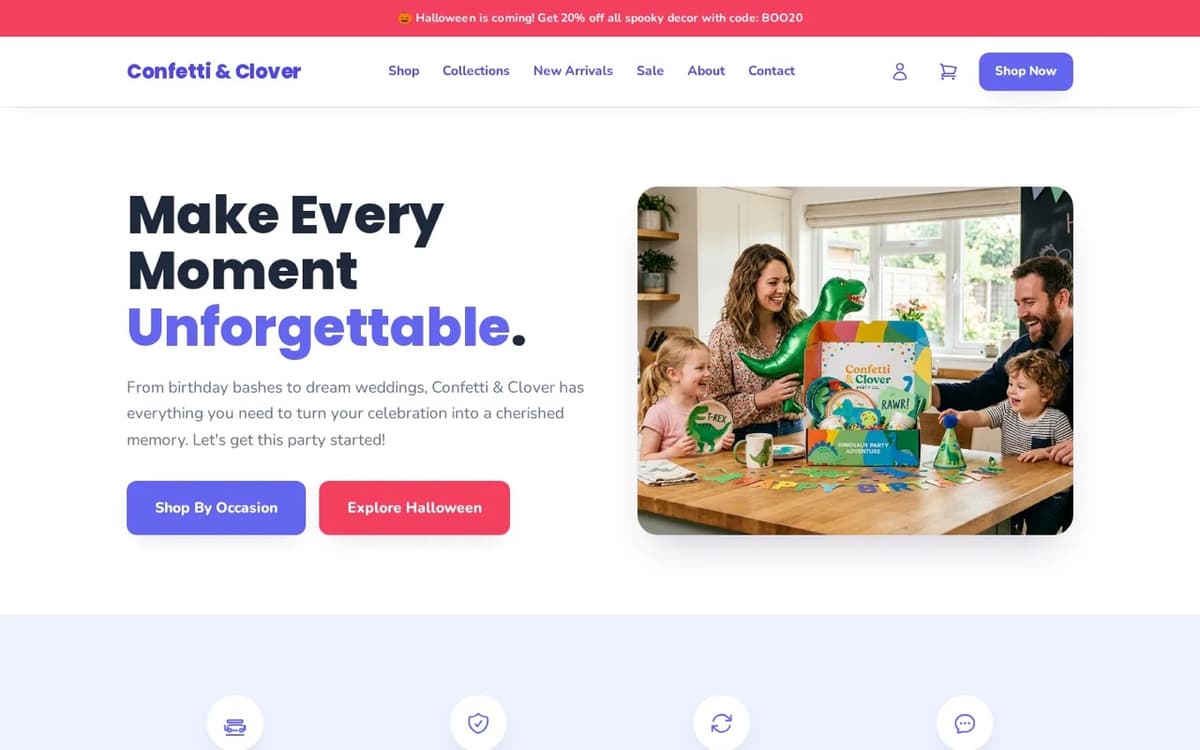
- Shop-by-theme and shop-by-occasion grids that match how people actually search
- Party kit bundles priced per guest count, built into the product flow
- Seasonal collection pages that stay live and re-merchandise year over year
- Balloon and local pickup pages with store schema and accurate holiday hours
- AI visibility tracking across ChatGPT, Claude, Perplexity & Gemini (Premium & Ultra)
Lighthouse
Visible in Google · ChatGPT · Claude · Perplexity
Powered by
Your Party Supplies CMS Is One Call Away.
1Digital® builds your party supplies site’s CMS front-end on WorkspaceCMS.ai at no cost - AI-first, SEO-first, and ready for Google and every major LLM from day one. Shopping cart and checkout integration is custom-quoted. Your free build credit applies toward any custom package.
15+ yrs · Google Partner · 4.9★ · 941+ reviews · Live in days to weeks*
* Timing depends on how quickly we receive your questionnaire answers and content.