

FOR STAFFING & RECRUITING AGENCIES
Staffing Agency PPC That Buys Job Orders, Not Applicants
Most staffing accounts quietly spend their budget on candidates. The same keyword roots serve an HR director with open requisitions and a warehouse associate looking for Monday work - and the applicant almost always clicks first. We build paid search for recruiting firms around employer intent, branch coverage, and calls that a recruiter can actually convert into a signed job order. The scoreboard is cost per qualified lead and placements, never impressions.
Trusted by 400+ Brands · Certified Partners




Years in eCommerce
Of results, scale, and quality at the enterprise level.
Expert Team
Specialists across SEO, AI SEO, PPC, design, dev, and strategy.
US Core + Global Talent
US core team for clear communication; vetted global specialists for international client work.
Reputation Score
Rated 4.9/5 across 941+ verified client reviews.
The 1Digital® Difference
AI in our toolkit. Humans in the driver’s seat.
Our strategists, designers, developers, and writers are human. The proprietary AI we built makes them faster and sharper - not the other way around.
- Human strategy
- Human copywriting
- Our own AI tools
- Real growth
Why Paid Search Behaves Differently for a Staffing Firm
Staffing is a two-sided marketplace running on one domain, and paid media is where that tension gets expensive fastest. Every dollar you put behind “staffing agency” plus a city is bid against by national brands buying candidate supply, franchise branches buying employer demand, and job aggregators buying both. Google cannot tell from the query which side of the marketplace the searcher is on. That determination has to be made by your account structure - campaign splits, negative lists, ad copy, and landing pages - or you will fund a candidate pipeline you never asked to advertise for. Our PPC services team treats that split as the first architectural decision, before a single bid is set.
The second difference is that demand arrives in two completely different shapes. Planned demand is budgeted: a distribution center approves seasonal headcount months ahead, a health system schedules travel contracts on 13-week cycles, a manufacturer plans a second shift for a new line. That demand rewards patient, mid-funnel work - comparison content, remarketing, and steady Search presence during the weeks a buyer is shortlisting. Emergency demand is the opposite: a shift lead called out, a project got pulled forward, someone quit on a Friday. That searcher is on a phone, will call the first three agencies that look local and credible, and is gone in an hour. One account has to serve both, and the bidding, scheduling, and creative for each look nothing alike.
Third, the unit economics run on gross margin, not revenue. A staffing placement bills at a rate you only keep the spread on, so a campaign that looks profitable against invoiced revenue can be underwater against margin. Assignment length compounds the problem in your favor when you measure it and against you when you do not - a light industrial contract that runs eleven weeks is worth several multiples of one that ends after four, and direct-hire fees behave differently again. We set conversion values from your own spread and average assignment duration so automated bidding optimizes toward the placements that actually pay for the branch.
Finally, there is a compliance ceiling on what recruitment advertising can say and who it can be shown to. Employment is a restricted category on the major ad platforms, with limited demographic and geographic targeting options and heightened scrutiny of creative. Copy that reads as a preference for a protected class is a legal problem, not just a policy one, and license-bound specialties - allied health, CDL, skilled trades - carry credential claims you have to be able to substantiate. Good staffing PPC is written to be defensible in an audit and still convert.
- Employer and candidate campaigns separated at the account level, each with its own budget and negatives.
- Specialty-by-geography ad groups mapped to the branches that can actually fill the order.
- Call tracking and recording scored against job orders, not raw call volume.
- Conversion values built from spread and assignment length, so bidding chases margin.
- Ad schedules matched to branch coverage and after-hours answering reality.
- Creative reviewed against employment-advertising policy and EEO norms before launch.
Staffing PPC, step by step
Pay for the clicks that become leads
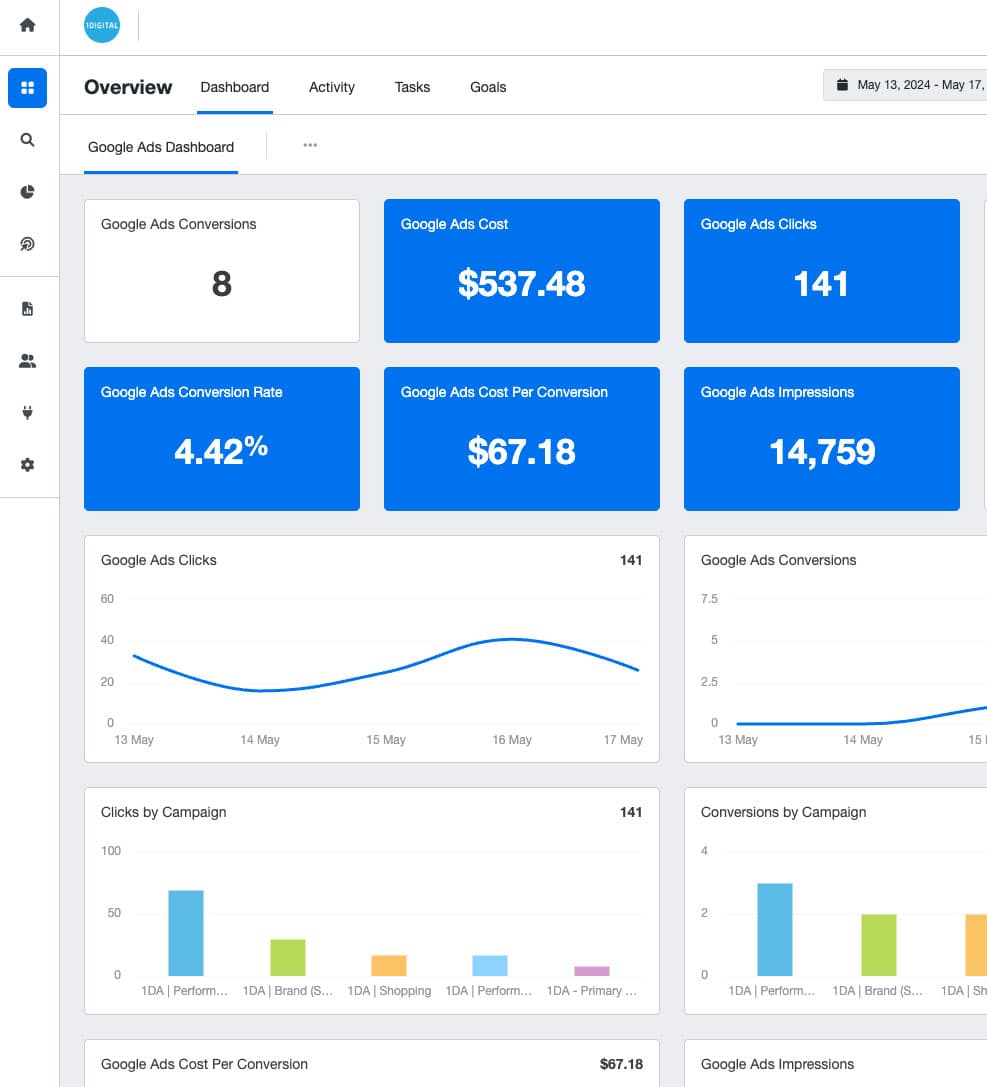
Every click moves from the ad to your page to a lead, and some fall away at each step. The search terms report shows why: the staffing searches that turn into calls earn more budget, and job seekers and freebie hunters are added as negatives.
- ›Search terms read by a senior strategist, not left to automation
- ›Negative keywords that stop paying for searches that never convert
- ›Budget moved toward the services and searches that book
Campaign Mix
Where a Recruiting Firm’s Budget Actually Belongs
There is no product feed here and no cart to optimize. The channels that move a staffing account are the ones that produce a conversation.
Employer-Intent Search
The core of the account. Tight ad groups around specialty plus geography - "light industrial staffing agency," "allied health staffing firm," "contract-to-hire IT recruiters" - with landing pages written for a hiring manager, not an applicant.
Call-Only & Call Assets
A supervisor who needs twelve pickers on Monday does not fill out a form. Call-only campaigns and call assets run on mobile during branch hours, with ad schedules that stop bidding the second nobody is there to answer.
Local Services Ads
Where LSA categories and markets support staffing-adjacent services, the pay-per-lead unit sits above paid search and bills on contact rather than click. We manage the profile, the dispute queue, and the review velocity that drives the ranking.
Demand Gen & Retargeting
Job orders rarely close on first touch. Demand Gen and remarketing keep your firm in front of HR directors and plant managers across the weeks between the first search and the requisition actually being released.
Pay-per-lead placements deserve their own operating discipline - profile completeness, response time, review velocity, and an active dispute habit all feed the ranking and the effective cost per lead. That work is covered in depth on our Google Local Services Ads optimization page, and we run it alongside Search rather than as an afterthought. Firms whose growth depends primarily on inbound forms and calls should also read our lead generation PPC approach.
Lead Quality Is the Whole Game
An eCommerce account can be judged on the checkout it produced. A staffing account cannot - the conversion is a conversation whose value is unknown until a recruiter has qualified it, and often not until a candidate has actually started. If the platform only ever sees “form submitted” and “call over 60 seconds,” Smart Bidding will happily buy you more of your worst leads, because your worst leads are cheap and plentiful. Closing that loop is the highest-leverage work in the account, and it is the first thing we build.
Employer vs. Candidate Split
The single largest source of waste in a staffing account is paying for applicants. Candidates outnumber employers by orders of magnitude on the same keyword roots, so we build negative lists around apply, hiring, jobs near me, resume, and part-time intent, and split the remainder into their own campaigns with their own budgets.
Call Tracking & Recording
Dynamic number insertion attributes every call to the campaign, ad group, keyword, and landing page that produced it. Recordings are then scored so the account optimizes toward calls that became job orders instead of calls that lasted ninety seconds.
Offline Conversion Import
A form fill is not a placement. We push ATS and CRM stages back into Google Ads as offline conversions so Smart Bidding learns from qualified job orders and filled roles, not raw lead volume.
After-Hours Coverage
Emergency staffing demand does not respect branch hours. We map ad schedules to who actually answers, route overflow to an answering service or scheduling flow, and pull budget out of the hours where calls go to voicemail.
Lead-Value Modeling
A single 40-hour contract role and a direct-hire executive search are not worth the same lead. Value-based bidding needs conversion values that reflect gross margin per placement - spread, bill rate, and expected assignment length - not a flat $1 per form.
Compliant Ad Copy
Recruitment advertising carries policy and legal exposure that eCommerce copy never touches. We keep employment-related targeting and creative inside platform rules and EEO norms, and steer clear of copy that reads as a protected-class preference.


Budget Follows the Service Area, Not the Catalogue
A retailer can scale spend by adding SKUs. A staffing firm cannot: your ceiling is the radius your recruiters can actually service and the roles your bench can actually fill. Bidding on a metro your nearest branch is ninety minutes from produces leads you will decline, and declining leads still costs the click. So budget gets allocated the way a branch manager thinks - market by market, specialty by specialty - with radius targeting drawn around real commute patterns for the workers you place, not around a tidy circle on a map.
That geographic cap has an upside: it makes the account knowable. In a defined service area you can see the full competitive set, the whole set of viable queries, and the point at which impression share stops being worth buying. Once a market saturates, more money does not buy more job orders - it buys the same job orders at a worse price. We would rather open the next specialty or the next branch territory than push a market past its efficient frontier, and we say so in the reporting.

Seasonality then decides the pacing. Fulfillment and light industrial demand builds through the peak-season ramp, hospitality and retail follow their own calendars, healthcare turns over on assignment cycles, and professional search restarts hard when new headcount budgets open. Flat monthly spend across all of that is a rounding error masquerading as a strategy. We build a pacing plan backward from when your clients approve budget, hold reserve for the emergency spikes, and pull back in the weeks where the queries are researchers rather than buyers.
Click Quality
What a Wasted Click Looks Like
Wasted click
- An applicant searching for weekend shifts fills out your request-talent form.
- The click comes from a metro no branch of yours can service.
- A shift-change emergency call rings out to voicemail at 6am.
- Bidding chases the cheapest form fills because that is all the platform can see.
Converting click
- A hiring manager with an open requisition lands on a page written for employers.
- Radius targeting is drawn around the commute patterns your workers actually travel.
- Ad schedules follow branch coverage, and overflow routes to someone who answers.
- ATS and CRM stages feed back in, so bidding learns from job orders and placements.
Paid and Organic, Working the Same Two Funnels
Paid search buys the emergency call today; organic compounds the employer-side authority that wins the RFP next quarter. The two share the same architecture problem - separating employer demand from candidate supply - so it is wasteful to solve it twice. Our staffing agency SEO program builds the specialty and branch pages that paid campaigns then send traffic to, and the search-term data from Ads feeds the organic content calendar. Firms running multiple service lines often extend the same structure through our B2B PPC practice, and you can see how we handle other service verticals across PPC by industry.
Senior-Led, AI-Accelerated
A senior strategist owns your account end to end - the campaign splits, the negative-list discipline, the lead-value model, and the conversations about which markets to stop funding. WorkspaceCRM, our proprietary AI platform, handles what humans are bad at doing weekly: search-term drift, call-transcript scoring at volume, and flagging the ad groups whose lead quality is degrading before the monthly report would have caught it. Start with a free PPC audit and we will show you, campaign by campaign, how much of your current spend is buying applicants.

Reporting
Reported in Job Orders, Not Clicks
Cost per qualified lead by specialty and branch, call outcomes tied back to keyword, and the share of spend that reached an employer rather than an applicant - the numbers a staffing owner can act on.
Request a proposal
Tell us your specialties and territories
Share the branches you staff from, the disciplines you fill, and what a placement is worth to you. A senior strategist replies within one business day with a pricing band and a draft campaign structure.
Managed Websites by 1Digital®
Your Ads Are Only as Good as the Site They Land On
Every paid click on a staffing campaign lands on a page a hiring manager judges in seconds. If it loads slowly, buries the branch phone number, or reads like a job board, the click is spent and the requisition goes to the next agency. WorkspaceCMS gives your firm a managed, fast site built free on a 12-month plan - designed for employer intent, not applicant traffic.
- Click-to-call branch numbers sit above the fold on every mobile screen.
- Fast mobile loads for emergency staffing searches that happen on a phone.
- Service areas and specialties stated plainly, so employers self-qualify.
- Request-talent forms route straight to the recruiter who covers that branch.
Free build on a 12-month plan. Managed hosting and updates included.
 Explore Stratos Cloud →
Staffing Agency PPC - FAQ
How do you stop our ads from attracting job seekers instead of employers?
Structurally, not with a keyword tweak. Employer and candidate intent get separate campaigns, separate budgets and separate landing pages, and the employer side carries an aggressive negative list built around apply, hiring near me, resume, part-time, entry-level and job-title-only queries. Ad copy does the rest of the filtering: headlines that name fill rates, submittal timelines and request-talent language repel applicants on their own. We then watch the search-term report weekly, because candidate phrasing drifts constantly and a list built once decays within a quarter.
Are Local Services Ads worth it for a staffing firm?
Where the category and market support them, they can be the most efficient unit in the account, because you are billed per lead rather than per click and the placement sits above paid search. The catch is that LSAs are an operations product as much as a media product: ranking responds to profile completeness, review velocity, proximity and how fast you answer. A firm that lets leads go to voicemail will get worse placement and pay for leads it never worked. We manage the profile, the response workflow and the dispute queue for mischarged or out-of-area leads.
How should we measure success - cost per lead or something else?
Cost per lead is the starting metric and a poor finishing one, because leads vary wildly in value. We report cost per qualified lead, cost per job order, and ultimately cost per placement with margin attached, using offline conversion imports from your ATS or CRM. That distinction matters most in bidding: when Google only optimizes toward form fills, it finds the cheapest ones, which are usually candidates or out-of-area employers. Feeding qualification stages back is what turns automated bidding from a liability into an advantage.
What does after-hours and emergency demand require from the account?
Two things: honest ad scheduling and a real answer path. Emergency staffing searches spike early morning, at shift change, and on Friday afternoons - precisely when a missed call goes to a competitor within minutes. We map bid adjustments to the hours you actually answer, route overflow to an answering service or a mobile-first scheduling page, and cut bids in the windows where calls historically go unanswered. Buying clicks you cannot service is the most avoidable waste in a staffing account.
How does budget work across multiple branches and specialties?
Geography caps a staffing account the way catalogue size caps a retail one. Each branch gets its own campaign or ad-group set with radius targeting drawn around real commute patterns for the workers you place, not a uniform mileage ring. Specialties are split too, because a light industrial lead and an executive search lead have different values and different sales cycles. Once a market approaches its efficient impression share, we recommend opening the next territory or discipline rather than paying escalating prices for the same job orders.
Are there advertising restrictions specific to recruitment?
Yes, and they are stricter than most advertisers expect. Employment sits in a restricted category on the major platforms, with limited demographic, age and location targeting and heightened review of creative. Copy implying a preference for a protected class creates legal exposure, not just a disapproval. Licensed and credentialed specialties - allied health, CDL, skilled trades - add substantiation requirements to any claim about screening or certification. We review creative against platform policy and EEO norms before launch and keep claim language tied to processes you can document.