

FOR HVAC CONTRACTORS
HVAC PPC That Books Trucks, Not Clicks
An HVAC account does not sell a product - it sells a technician’s calendar. The conversion is a ringing phone or a dispatch-ready form, the ceiling is how many trucks you can put on the road, and the buying window opens the hour a system fails. We build Local Service Ads, Search, and call-only campaigns around booked jobs and cost per qualified lead, calibrated to your service area and to both demand peaks.
Trusted by 400+ Brands · Certified Partners




Years in eCommerce
Of results, scale, and quality at the enterprise level.
Expert Team
Specialists across SEO, AI SEO, PPC, design, dev, and strategy.
US Core + Global Talent
US core team for clear communication; vetted global specialists for international client work.
Reputation Score
Rated 4.9/5 across 941+ verified client reviews.
The 1Digital® Difference
AI in our toolkit. Humans in the driver’s seat.
Our strategists, designers, developers, and writers are human. The proprietary AI we built makes them faster and sharper - not the other way around.
- Human strategy
- Human copywriting
- Our own AI tools
- Real growth
Why HVAC Paid Search Behaves Differently
Most paid-media playbooks are written for retailers: a catalogue, a cart, a return-on-ad-spend number that settles within a checkout session. HVAC breaks all three assumptions. There is no inventory to feed and no basket to attribute - there is a homeowner without cooling in August, a landlord with a no-heat call in January, and a finite number of technicians who can reach either of them today. That reframes every decision in the account. Reach is capped by drive time rather than by SKU count; the honest scoreboard is booked jobs and cost per qualified lead; and a campaign that produces a flood of cheap clicks from outside your territory is a loss, not a win. We run HVAC accounts as dispatch-fill engines, alongside the organic and local program on our HVAC marketing side and the broader PPC services practice. A senior strategist owns the account while WorkspaceCRM, our proprietary AI, watches call outcomes and search terms between reviews.
Emergency demand versus planned demand
HVAC search intent splits into two economies that should never share a campaign. Emergency intent - no cool air, no heat, a frozen line, a burning smell - arrives with almost no comparison shopping and enormous willingness to pay for whoever answers first. It rewards call-first formats, tight geography, aggressive hours, and short ad copy that promises a same-day arrival window. Planned intent - system replacement, heat-pump conversion, ductwork, maintenance agreements, indoor air quality - carries a far larger ticket but a research cycle measured in weeks, with financing questions, efficiency comparisons, and multiple in-home estimates in between. Blend them into one campaign and the replacement bids get judged against emergency conversion rates, then get throttled by an automated strategy that never sees the revenue they actually produced. We separate them structurally, budget them separately, and measure them on different clocks.
Seasonality is a schedule, not a slider
Heating and cooling demand is dual-peak - cooling through the warm months, heating through the cold ones, with shoulder seasons where the searches that remain are maintenance plans, tune-ups, and replacement research. A flat monthly budget quietly does the worst possible thing in both directions: it runs out of money during the heat wave that would have paid for the year, and it spends the same amount in October on intent that will not close. Worse, the first hot week of the season resets the auction - competitors return, CPCs move, and an automated bid strategy that just spent six weeks learning on low-urgency traffic needs to be steered rather than trusted. We plan HVAC budgets as a calendar with named peaks, pre-warm campaigns before the weather turns, and pull spend toward replacement and maintenance offers when emergency volume drops.
- Emergency and replacement intent split into separate campaigns with separate targets.
- Budgets built as a seasonal calendar, with headroom reserved for heat waves and cold snaps.
- Geography drawn from actual drive time and permit-eligible territory, not a radius guess.
- Bidding steered toward booked jobs, so replacement leads are not judged on service-call math.
- Ad copy kept inside licensing, warranty, and manufacturer-claim boundaries.
HVAC PPC, step by step
Pay for the clicks that become leads
Every click moves from the ad to your page to a lead, and some fall away at each step. The search terms report shows why: the HVAC searches that turn into calls earn more budget, and job seekers and freebie hunters are added as negatives.
- ›Search terms read by a senior strategist, not left to automation
- ›Negative keywords that stop paying for searches that never convert
- ›Budget moved toward the services and searches that book
The HVAC Campaign-Type Mix
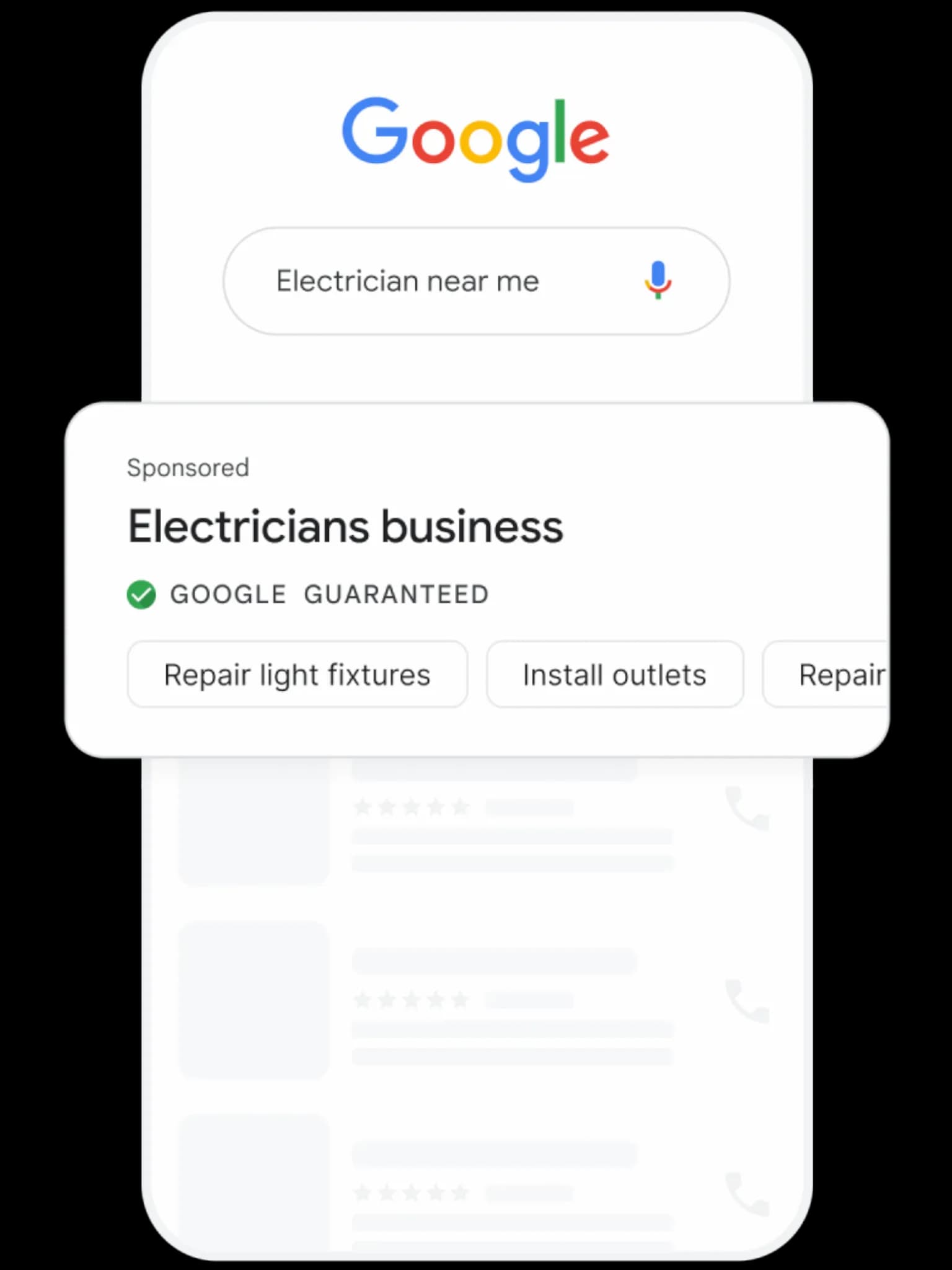
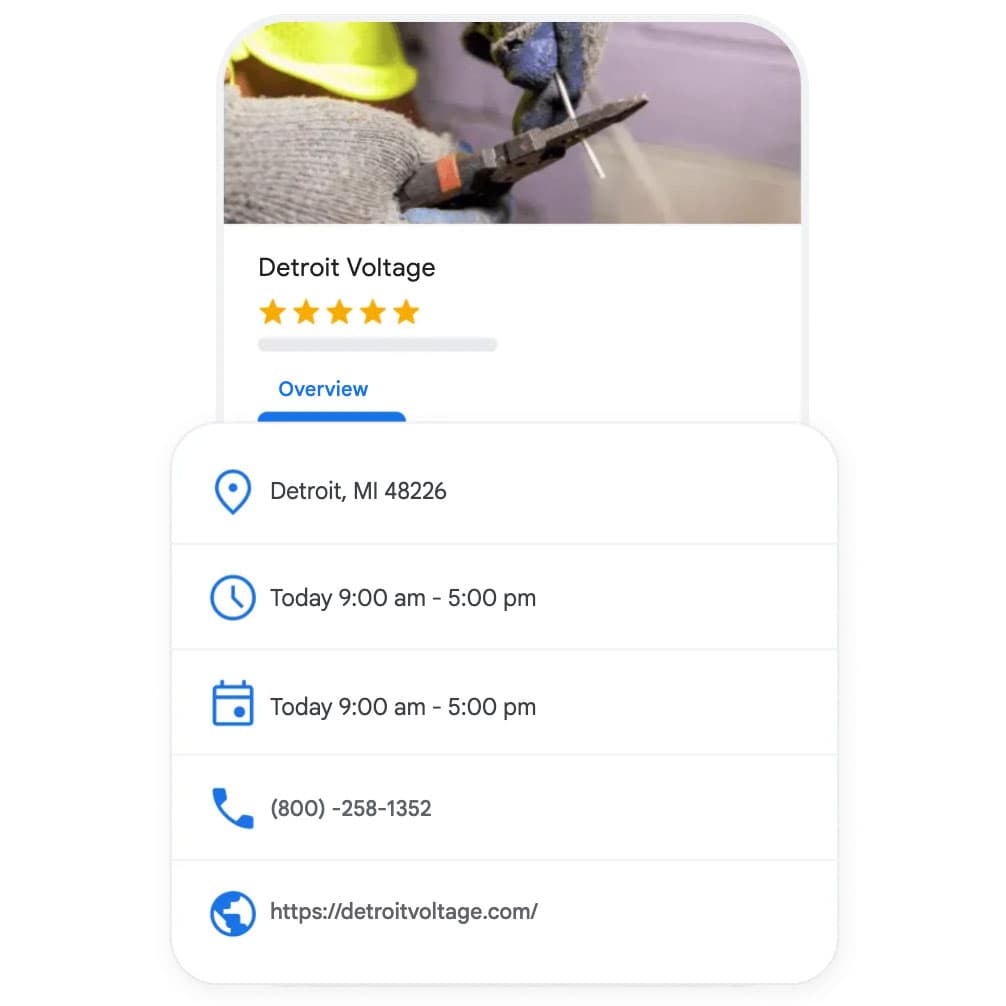
Above the paid results sits Local Services Ads, where you are billed per lead rather than per click and where the Google Guaranteed badge does most of the persuading. HVAC sits in the tier of LSA categories that requires the deeper verification path - background checks, licensing and insurance documentation, principal interviews - which is exactly why the unit is worth defending: the queue is short, and contractors who never finish verification are simply absent from it. LSA also lets you dispute leads that fall outside your service area or trade, which makes disciplined dispute hygiene a real lever on effective cost per lead. We handle onboarding, budget and territory settings, and the review cadence that feeds LSA ranking; our Local Services Ads optimization team runs that surface end to end.
Below it, Search still carries the ambiguous and high-ticket queries LSA does not serve well - brand defense, heat-pump and furnace replacement research, commercial rooftop work, specific equipment lines you are certified on. Call-only campaigns take the mobile emergency slice where a landing page is friction the caller does not want, and are scheduled against the hours you can actually answer. Demand Gen and paid social are optional and seasonal: they earn their place for maintenance-plan enrollment, financing-led replacement offers, and staying visible in a neighborhood after a storm - never as a replacement for intent capture. Nothing in that mix is a Shopping feed, and we will not sell you one.
How the account is laid out
Local Services Ads
Billed per lead, Google Guaranteed badge, verification and dispute hygiene managed.
Search
Brand defense, replacement and heat-pump research, commercial and equipment-specific queries.
Call-only
The mobile emergency slice, scheduled strictly against the hours a human answers.
Demand Gen & paid social
Maintenance plans, financing-led replacement offers, post-storm neighborhood presence.
Lead Quality, Call Tracking, and the After-Hours Problem
In a service account the platform can only see a phone call, not what happened on it. Left alone, it will happily optimize toward whichever ads generate wrong numbers, tenants who cannot authorize work, warranty questions, sales calls, and homeowners two counties away. The fix is to close the loop: dynamic number insertion on landing pages, distinct tracking numbers per channel so LSA, Search, and call-only are separable, call recording and scored dispositions, and offline conversions pushed back from the CRM or field-service software so that a booked job - not a ninety-second ring - is what bidding learns from. Once that is live, the account is optimizing toward revenue that actually got installed.
Then there is the answer rate, which is usually the single largest lever we find. Paid demand in this trade is overwhelmingly a phone call, and a caller with no heat will dial the next contractor before your voicemail finishes. We audit missed and abandoned calls by hour before touching bids, then align ad scheduling to real answering capacity, add a call-answering or dispatch-answering service where after-hours volume justifies it, and route overflow rather than paying to send it to voicemail. It is common for a portion of what looks like a bidding problem to turn out to be an unanswered-phone problem, and no amount of budget fixes that. Our lead-generation PPC approach treats the phone as part of the campaign.
What a wasted click looks like
- ·Click from two counties away, outside the territory a truck can reach.
- ·Call rings out after hours and lands in voicemail.
- ·Tenant or warranty question no one on site can authorize.
- ·One shared number, so no channel can be told apart in reporting.
- ·Bidding learns from the ring, not from what the ring produced.
What a converting click looks like
- Homeowner present in a core ZIP, on a symptom-based emergency query.
- Dynamic number insertion ties the call to the campaign that earned it.
- A human answers inside the hours the ads were scheduled for.
- Disposition scored, so a booked job is separable from a wrong number.
- Offline conversion pushed back from the CRM, so bidding chases installs.
Budget and Service-Area Strategy
Your ceiling is geography and headcount, not catalogue size, so budget planning starts from truck capacity and drive time. We map the territory you can profitably reach, tier it - core ZIPs where you win on response time, secondary ZIPs worth bidding on only for replacement work, and edges you should exclude entirely - and exclude by presence rather than by interest so you stop paying for clicks from people merely searching about your city. Where you hold licenses or manufacturer certifications that competitors do not, that becomes both a bidding tier and a copy angle. Compliance matters here too: license numbers, warranty language, guarantee and financing claims all belong in ad copy only where they are true and substantiated on the page they land on.
Because HVAC lead value spans a diagnostic fee to a full system replacement, a single blended cost-per-lead target hides everything worth knowing. We set separate targets by job type, watch the ratio of maintenance to replacement in the booked mix, and treat maintenance-agreement enrollment as the compounding asset it is - those customers are the ones who call you first when the system finally fails. Reporting is a booked-jobs conversation: leads by campaign and channel, qualified rate, answer rate, and cost per booked job, reviewed on a cadence that matches the season. See PPC by industry for how we adapt this to adjacent trades.

What we review
A Free HVAC Paid-Media Audit
We look at LSA verification status and dispute hygiene, campaign separation between emergency and replacement intent, geography and exclusions, call tracking and answer rate by hour, and whether bidding is learning from booked jobs or from ringing phones. You get the findings whether or not you hire us - start with a free PPC audit.
Request a proposal
Tell us about your service area and crew
Share your territory, technician count, and the job mix you want more of. A senior strategist replies within one business day with a pricing band and a draft campaign structure.
Managed Websites by 1Digital®
Your Ads Are Only As Good As The Site They Land On
Every paid click in this trade lands somewhere, and a slow or unconvincing page turns an emergency caller into a competitor's booked job. WorkspaceCMS gives HVAC contractors a managed website built to take that traffic - designed, hosted, and maintained by 1Digital, and built free on a 12-month plan. It is the same site your Local Services Ads, Search, and call-only campaigns point at.
- Tap-to-call and a dispatch-ready form above the fold on every page
- Fast mobile load for the no-heat caller searching from a phone
- Service-area pages that make your covered towns and ZIPs obvious
- Emergency, replacement, and maintenance requests routed to the right inbox
Free build on a 12-month plan. Managed hosting and updates included.
 Explore NorthPeak Heating & Air →
HVAC PPC - FAQ
Should HVAC budget go to Local Services Ads or Google Search first?
Usually both, in that order of priority. LSA sits above the paid results, bills per lead instead of per click, and carries the Google Guaranteed badge that homeowners in a hurry look for - so it is the cheapest source of emergency calls once you are verified. It will not cover everything, though: brand defense, replacement and heat-pump research, commercial work, and specific equipment queries all live in Search. We typically fund LSA to the point where lead volume plateaus, then put the remaining budget into Search campaigns split by intent.
How do you keep unqualified HVAC leads from training the campaigns?
By making the platform see outcomes instead of phone rings. We put distinct tracking numbers on each channel, record and score calls by disposition, and push offline conversions back from your CRM or field-service software so a booked job counts and a wrong number does not. On LSA we keep dispute hygiene tight - out-of-area, out-of-trade, and spam leads get contested consistently. Within a few weeks bidding is chasing installs and service calls rather than whichever ad produced the most noise.
How should an HVAC budget change between summer, winter, and shoulder season?
Treat it as a calendar rather than a monthly average. Cooling and heating peaks each deserve headroom so a heat wave or cold snap does not exhaust the daily budget by mid-afternoon, and campaigns should be warmed up before the weather actually turns so the bidding strategy is not learning during the surge. Shoulder months are not for pausing - that is when replacement research, maintenance agreements, and tune-up offers are worth funding, at lower cost, with the leads that become next season’s emergency calls.
Are call-only campaigns worth running for HVAC?
Yes, for the emergency slice specifically. A homeowner with no heat on a mobile phone does not want a landing page; they want a contractor on the line. Call-only removes that step and tends to convert best on urgent, symptom-based queries. Two conditions make or break it: schedule the ads strictly against the hours a human answers, and route overflow to an answering or dispatch service rather than voicemail. Paying for a call you do not pick up is the most expensive mistake in this account type.
What can and cannot go in HVAC ad copy?
Anything you claim has to be verifiable on the page it lands on. License numbers, insurance and bonding, and Google Guaranteed status are strong trust signals when accurate. Guarantees, warranty terms, financing offers, rebate and tax-credit language, and manufacturer certifications need to match what you can actually honor and what your dealer agreements permit. We keep claims substantiated on the landing page, because unsupported guarantee or pricing language risks both ad disapprovals and the kind of complaint that costs far more than the click.
How do you decide the service area to bid on?
From drive time and license coverage, not a radius drawn on a map. We tier the territory: core ZIPs where you can beat competitors on response time, secondary ZIPs worth bidding only on higher-ticket replacement work, and outer areas excluded so you stop paying for calls you would decline. Location targeting is set to people present in the area rather than merely interested in it, which alone removes a meaningful share of wasted spend. As crew capacity changes, the map changes with it.