

FOR APPLIANCE REPAIR COMPANIES
Appliance Repair PPC Built for Booked Service Calls
A broken appliance is a same-hour decision made on a phone, and the job behind it is a service call - not a five-figure install. That single fact drives the whole account: cost per qualified lead has to sit under the margin on one repair, routes have to stay dense enough to be profitable, and DIY and parts traffic has to be kept out. We build Local Services Ads, Search, and call-only campaigns around booked jobs.
Trusted by 400+ Brands · Certified Partners




Years in eCommerce
Of results, scale, and quality at the enterprise level.
Expert Team
Specialists across SEO, AI SEO, PPC, design, dev, and strategy.
US Core + Global Talent
US core team for clear communication; vetted global specialists for international client work.
Reputation Score
Rated 4.9/5 across 941+ verified client reviews.
The 1Digital® Difference
AI in our toolkit. Humans in the driver’s seat.
Our strategists, designers, developers, and writers are human. The proprietary AI we built makes them faster and sharper - not the other way around.
- Human strategy
- Human copywriting
- Our own AI tools
- Real growth
Why Appliance Repair Paid Search Is Its Own Problem
Almost every paid-media playbook in circulation was written for a store: a catalogue to feed, a cart to attribute, a return-on-ad-spend figure that resolves inside one session. An appliance repair company has none of those. What it has is a technician’s route, a homeowner standing in front of a warm refrigerator, and a ticket the size of a diagnostic fee plus a part. That last detail is what separates this trade from every other home service we advertise. A roofer or an HVAC contractor can absorb an expensive lead because one job behind it might be five figures; a repair shop cannot. The margin on a single repair sets a hard ceiling on what a lead may cost, and every structural decision in the account - geography, keyword tier, ad format, hours - exists to keep spend under that ceiling. We run these accounts alongside the organic program described on our appliance repair SEO page and the wider PPC services practice. A senior strategist owns the account; WorkspaceCRM, our proprietary AI, watches call outcomes and search terms between reviews.
Your biggest source of waste is not out-of-area clicks
In most local-service accounts the largest leak is geography. Here it is intent. The same phrases a panicked homeowner types are typed in far greater volume by people who intend to fix it themselves, by people hunting a drain pump or a door gasket, and by people looking up an error code out of curiosity. Parts retailers, manuals sites, and video channels compete for that traffic and are perfectly happy to pay for it; you are not. An appliance account that has not been aggressively negated will quietly spend a third of its budget educating strangers. We build the negative architecture first - DIY and how-to modifiers, part numbers and part nouns, manual and diagram language, price-of-a-new-unit shopping terms, recall and class-action queries - then keep pruning it weekly from the search terms report, because new model numbers and new failure codes enter the language constantly.
Three demand curves, not one
Residential emergency demand is the bulk of it and behaves like a fire alarm: no comparison shopping, no research phase, and a decision that expires within the hour. Sitting quietly underneath is the recurring commercial and property-management side - landlords, apartment managers, laundromats, and restaurant kitchens - where a single won relationship produces dispatches for years and is worth far more than a blended cost-per-lead target can express. And then there is the seasonal overlay: refrigeration and freezer failures cluster into hot weather when condensers work hardest, ranges and ovens spike into holiday cooking, and laundry runs closer to flat all year. Blend all three into one campaign and the platform will optimize for whichever produces the most cheap phone rings, which is invariably the least valuable of them.
- Negative architecture aimed at DIY, parts, manual, and error-code lookups before anything else.
- Residential emergency, commercial contract, and seasonal appliance demand kept structurally separate.
- Lead-cost ceilings set from the margin on one repair, not from a catalogue-era ROAS target.
- Brand and appliance-type keyword tiers matched to the parts you can actually source.
- Manufacturer names handled inside Google’s trademark rules for your authorization status.
Appliance Repair PPC, step by step
Move the budget to the searches that call
The search terms report decides where the money goes. The appliance repair searches that turn into calls earn more of the budget, and the ones that never will are cut back and added as negatives, so you stop paying for them.
- ›Search terms read by a senior strategist, not left to automation
- ›Negative keywords that stop paying for searches that never convert
- ›Budget moved toward the services and searches that book
The Campaign-Type Mix for a Repair Company
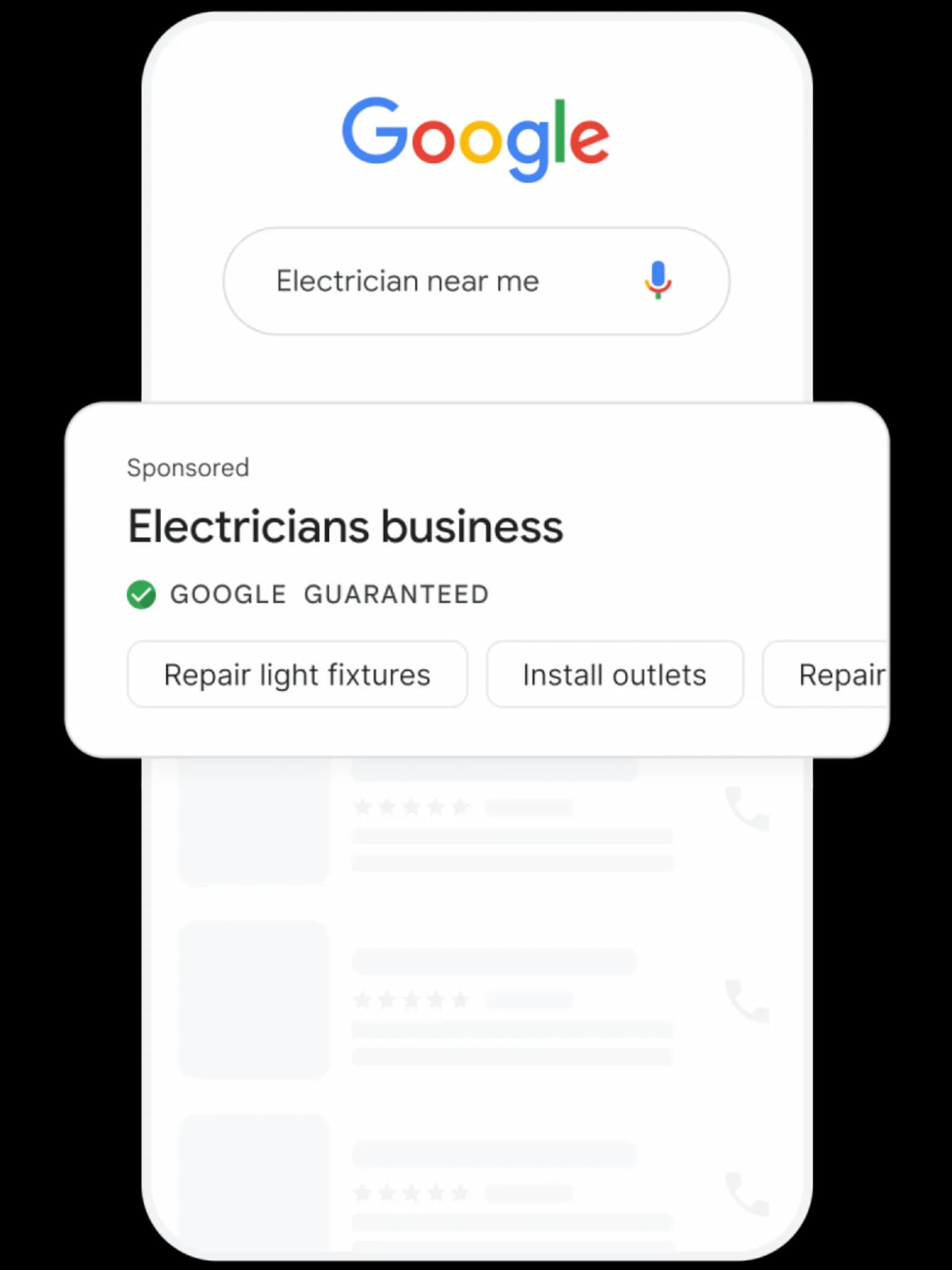
Where Local Services Ads are available for your category and market, they belong at the top of the plan: the unit sits above the paid results, bills per lead rather than per click, and carries a Google-verified badge that does most of the reassurance work for a homeowner letting a stranger into the kitchen. Because billing is per lead, the levers are different from Search - verification and background checks have to be completed and kept current, service categories and territory have to be set narrowly enough that you are not paid-matched to jobs you would decline, and leads that arrive out of area, out of category, or as pure spam have to be disputed consistently rather than shrugged off. Dispute discipline is one of the few places in this trade where a few minutes a week measurably lowers effective cost per lead. Our Local Services Ads optimization team runs that surface end to end.
Search sits below it and carries everything LSA cannot: brand-and-appliance queries for the lines you are factory-authorized on, high-end kitchen equipment where the searcher is deliberately avoiding a generalist, commercial and property-management terms, and defense of your own business name against aggregators bidding on it. Call-only campaigns take the mobile emergency slice, where a landing page is friction the caller does not want, and they run strictly against the hours a human answers. Demand Gen and paid social are secondary and situational here - useful for dryer-vent and maintenance offers, for staying in front of a neighborhood you already serve, and for commercial account development, but never as a substitute for intent capture. There is no Shopping feed in this plan and no Performance Max campaign pretending to be one; you are not selling appliances, you are selling a technician’s next open slot.
How the account is stacked
Tier 1
Local Services Ads
Per-lead billing above the paid results, verified badge, disputes worked weekly.
Tier 2
Search
Brand-authorized, built-in and commercial terms, plus defense of your own name.
Tier 3
Call-Only
The mobile emergency slice, scheduled strictly to hours a human answers.
Situational
Demand Gen & Social
Maintenance offers, neighborhood presence, commercial account development.
No Shopping feed, no Performance Max standing in for one - there is no catalogue to sell.
Lead Quality, Call Tracking, and Qualifying on the Phone
The ad platform can see that a call happened. It cannot see that the caller was still under manufacturer warranty and expected free service, or was assigned to a home-warranty network that dispatches someone else, or owns a brand you cannot get parts for, or was only ever going to ask your diagnostic fee and then call the next listing. Left to itself, bidding will happily chase whichever ads produce the most of those. We close the loop: dynamic number insertion on landing pages, separate tracking numbers per channel so LSA, Search, and call-only stay separable, recorded calls scored against dispositions written for this trade - booked, warranty, unserviceable brand, price shopper, wrong area - and offline conversions pushed back from your CRM or field-service software so a dispatched job, not a ninety-second ring, is what the algorithm learns from.
Qualification also belongs in the ad copy, which is unusual advice and specific to this economics. Stating the diagnostic fee, and whether it is credited toward the repair, filters out the callers who were never going to pay it while reassuring the ones who assumed the worst. Naming the brands you are authorized on does the same in reverse. Then there is answer rate, routinely the largest single lever we find in an appliance account: the buying window is short, the caller has three other tabs open, and voicemail is a lost job you already paid for. We audit missed and abandoned calls by hour before touching a bid, align scheduling to real answering capacity, and add answering or dispatch support where after-hours volume justifies it. Our lead-generation PPC approach treats the phone as part of the campaign.
What a wasted click looks like
- A part number query that wanted a drain pump, not a technician.
- A caller still under manufacturer warranty expecting free service.
- A home-warranty assignment that dispatches somebody else.
- A ring at 7pm that reached voicemail and never called back.
- A crosstown address the route cannot absorb for one repair.
What a converting click looks like
- A symptom search inside the dense core of your service area.
- A brand you are authorized on and can source parts for.
- A caller who saw the diagnostic fee and called anyway.
- A call answered live and dispositioned as booked.
- A property manager whose first dispatch becomes a standing account.
Budget, Service Area, and Route Density
Small tickets make drive time an economic constraint rather than a preference. A long crosstown run for one repair can consume the margin on the job before the technician opens the toolbox, so we do not bid a metro evenly. We tier the territory into a dense core where you can stack several calls into one route, a secondary ring worth bidding on only for higher-value work such as built-in refrigeration or commercial equipment, and edges excluded outright. Targeting is set to people present in the area rather than merely interested in it, which alone removes a meaningful slice of waste. Where you hold factory authorization or sealed-system refrigeration credentials that local competitors lack, that becomes both a bidding tier and the honest differentiator in your copy - with the caveat that manufacturer names in ad text are governed by Google’s trademark policy, so what you may say depends on your actual authorized status.
Budgeting follows the calendar, not a monthly average. Refrigeration budgets need headroom before the first sustained hot stretch, not after it, because a daily cap that empties by early afternoon during a heat wave hands the rest of the day to whoever planned ahead. Cooking-appliance spend earns its keep in the run-up to the holidays. Shoulder periods are not for pausing - they are when commercial and property-management development is cheapest and when maintenance offers can be funded at low cost. Reporting is a booked-jobs conversation: leads by campaign and channel, qualified rate, answer rate, cost per booked job, and the share of revenue coming from recurring accounts. See PPC by industry for how we adapt this to adjacent trades.

What we review
A Free Appliance Repair Paid-Media Audit
We check how much budget is leaking to DIY and parts searches, whether LSA verification and lead disputes are current, how residential and commercial demand are separated, geography against real route density, answer rate by hour, and whether bidding is learning from booked jobs or from ringing phones. You get the findings either way - start with a free PPC audit.
Request a proposal
Tell us about your routes and your brands
Share your service area, technician count, the brands you are authorized on, and the job mix you want more of. A senior strategist replies within one business day with a pricing band and a draft campaign structure.
Managed Websites by 1Digital®
The Site Your Repair Ads Land On
Every appliance repair click is bought at emergency prices, and the homeowner behind it decides in seconds whether you are the one to call. A slow page, a buried phone number, or a vague service area sends that click back to the results. WorkspaceCMS gives your shop a managed site built free on a 12-month plan, designed to turn urgent repair traffic into dispatched jobs.
- Tap-to-call number fixed above the fold on every repair landing page.
- Fast mobile pages so a panicked homeowner never waits on a load.
- Service area, appliance types and brands you service stated up front.
- Booking form and reviews routed straight to your dispatcher's inbox.
Free build on a 12-month plan. Managed hosting and updates included.
 Explore Volta Electric Co. →
Appliance Repair PPC - FAQ
How do you stop DIY and parts searches from eating the budget?
With a negative keyword architecture built before the campaigns go live, then maintained weekly. The same words a homeowner uses in a crisis are used far more often by people who intend to fix the machine themselves or buy a component, so we exclude how-to and repair-it-yourself modifiers, part nouns and part numbers, manual, schematic and wiring language, replacement-appliance shopping terms, and recall queries. After launch the search terms report is the real work: new model numbers and new error codes enter the vocabulary constantly, and each one arrives as a fresh leak.
Should we run Local Services Ads or Google Search first?
Where Local Services Ads are offered for your category and market, fund them first. Billing is per lead rather than per click and the verified badge carries real weight with someone deciding whether to let a stranger into their kitchen. It will not cover everything, though. Brand-authorized work, built-in and high-end kitchen equipment, commercial and property-management terms, and defense of your own business name all live in Search. We typically push LSA until lead volume plateaus, then move remaining budget into Search campaigns split by intent.
Can we use manufacturer brand names like Sub-Zero or LG in our ads?
Carefully, and the answer depends on your authorization status. Bidding on a manufacturer term as a keyword is generally permitted; using that trademark inside ad text is governed by Google’s trademark policy and by whatever your dealer or service agreements allow. Authorized servicers usually have the most room, and it is worth using, because a brand-qualified searcher converts well above a generic one. We keep the claim on the landing page consistent with the ad, so an approval never rests on wording that your actual service authorization does not support.
How do we keep warranty and home-warranty calls from training the campaigns?
By scoring outcomes rather than counting rings. A caller under manufacturer warranty, or one assigned through a home-warranty network that dispatches its own contractor, produces a phone call the platform reads as a success and your dispatcher reads as a dead end. We record and disposition calls against categories written for this trade, push booked jobs back from your CRM as offline conversions, and dispute out-of-scope LSA leads consistently. Within a few weeks bidding is chasing dispatched work instead of whichever ad generated the most conversation.
Are call-only campaigns worth running for appliance repair?
Yes, for the emergency slice specifically. Someone standing in front of a leaking dishwasher on a phone does not want to read a landing page, and removing that step lifts conversion on urgent symptom queries. Two conditions decide whether it pays. Schedule the ads strictly against hours a human actually picks up, and route overflow to an answering or dispatch service rather than voicemail. Paying for a call that goes unanswered is the most expensive mistake available in this account type, and it is common.
How should the budget move through the year?
Treat it as a calendar. Refrigeration and freezer failures cluster into hot weather as condensers work hardest, so that budget needs headroom in place before the first sustained hot stretch, not added in reaction to it. Ranges and ovens draw attention ahead of holiday cooking. Laundry runs closer to flat. Shoulder periods are not for pausing: they are the cheapest window to develop property-management and commercial accounts and to fund maintenance offers, and those relationships become the recurring dispatches that steady the next peak.