

Headless Commerce Development
Headless Commerce Storefronts
on Next.js - for Any Backend
We build the storefront. You keep - or pick - the backend. Shopify, BigCommerce, Adobe Commerce, commercetools, Medusa, or your own GraphQL. Frontend-led headless without a full replatform.
Stack we ship on
Backends we integrate
Reviewed by the 1Digital® Development TeamLast updated:
The Storefront Layer, Decoupled
Most SaaS commerce platforms ship a backend you love and a storefront you tolerate. Headless commerce splits the two. We build a fast, modern Next.js storefront - branded, accessible, AI-search-ready, edge-rendered - and plug it into the commerce engine you already run.
Keep Shopify Plus, BigCommerce, or Adobe Commerce as the backend. Or pick a composable engine like commercetools or Medusa.js. Either way, the storefront is yours: every byte, every component, every analytics event, every schema entry.
If you're considering a full backend rebuild too, jump to custom platforms. If you need to replatform first, see platform migrations.
Headless commerce development, step by step
Headless commerce code that is tested before it goes live
Every Headless commerce change is written, built and checked before it reaches your store. Speed and accessibility checks run on each release, and nothing ships until they pass, so the live store stays fast and stable while it grows.
- ›Headless commerce themes, apps and integrations built by specialists
- ›Speed and accessibility checked on every release
- ›Launched to your live store only once the checks pass
Shopify or BigCommerce storefronts on a monthly plan
Skip the build project. Get a storefront built and managed for you
A new storefront for your Shopify or BigCommerce store, designed and built free on your plan. Products, search and cart sync from your store, and every change after launch is made for you.


- LaunchSemi-custom design and build for your store$499/mo
- GrowthMOST POPULARAdvanced semi-custom design and every AI agent$799/mo
- ScaleExpanded semi-custom design and a monthly session with our team$1,299/mo
Bigger build or another platform? Enterprise from $1,999/mo, or a fully custom project.
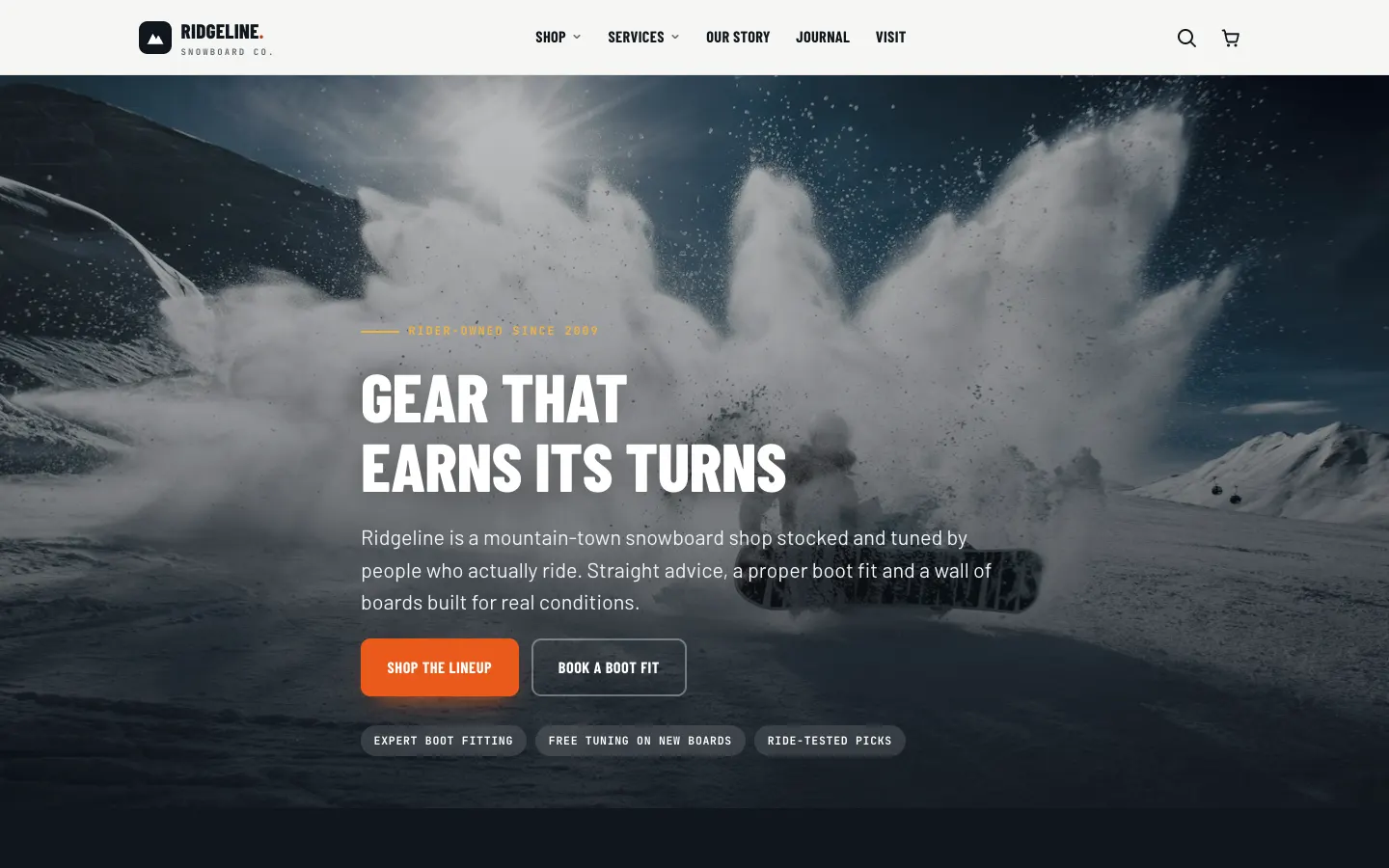



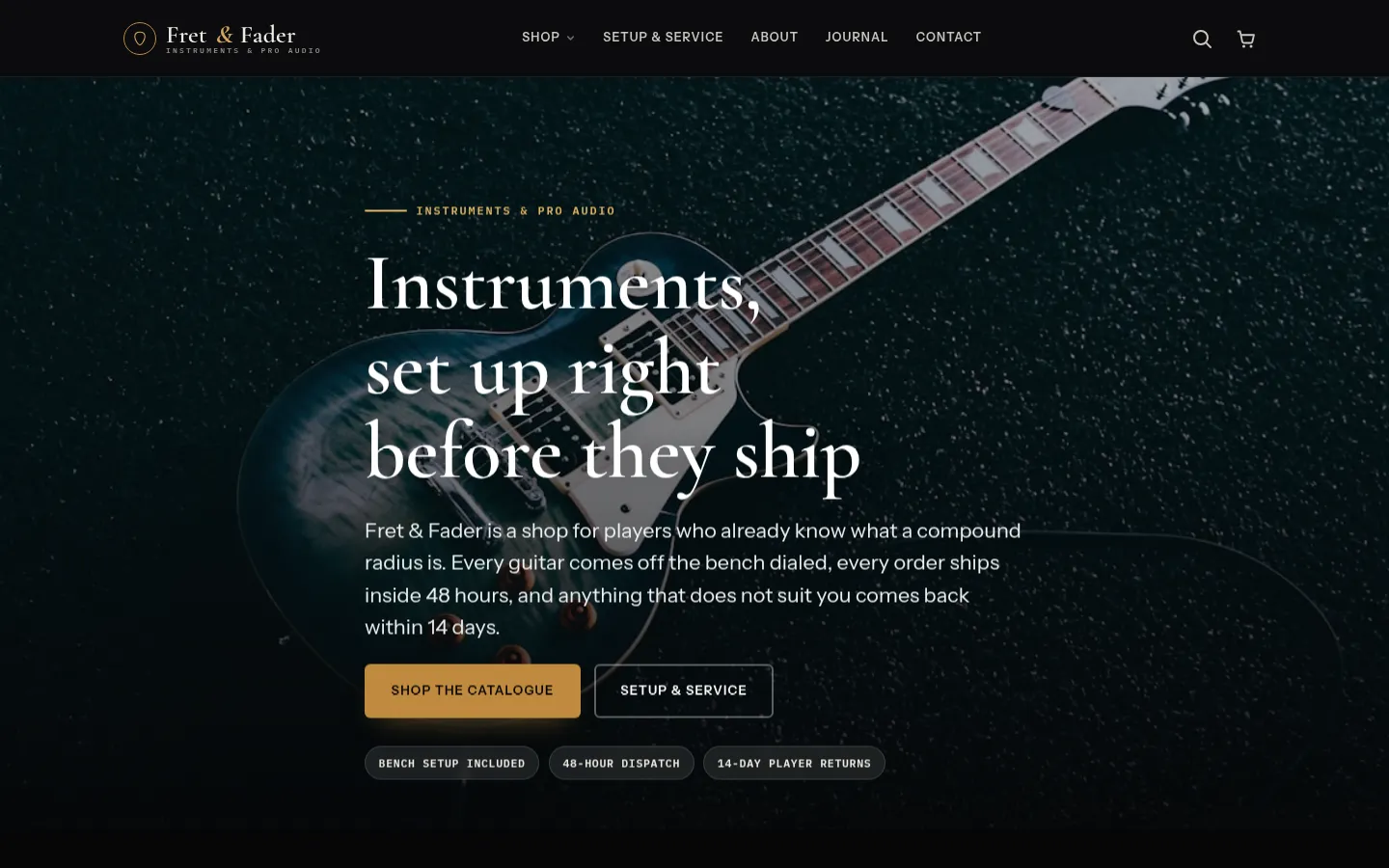
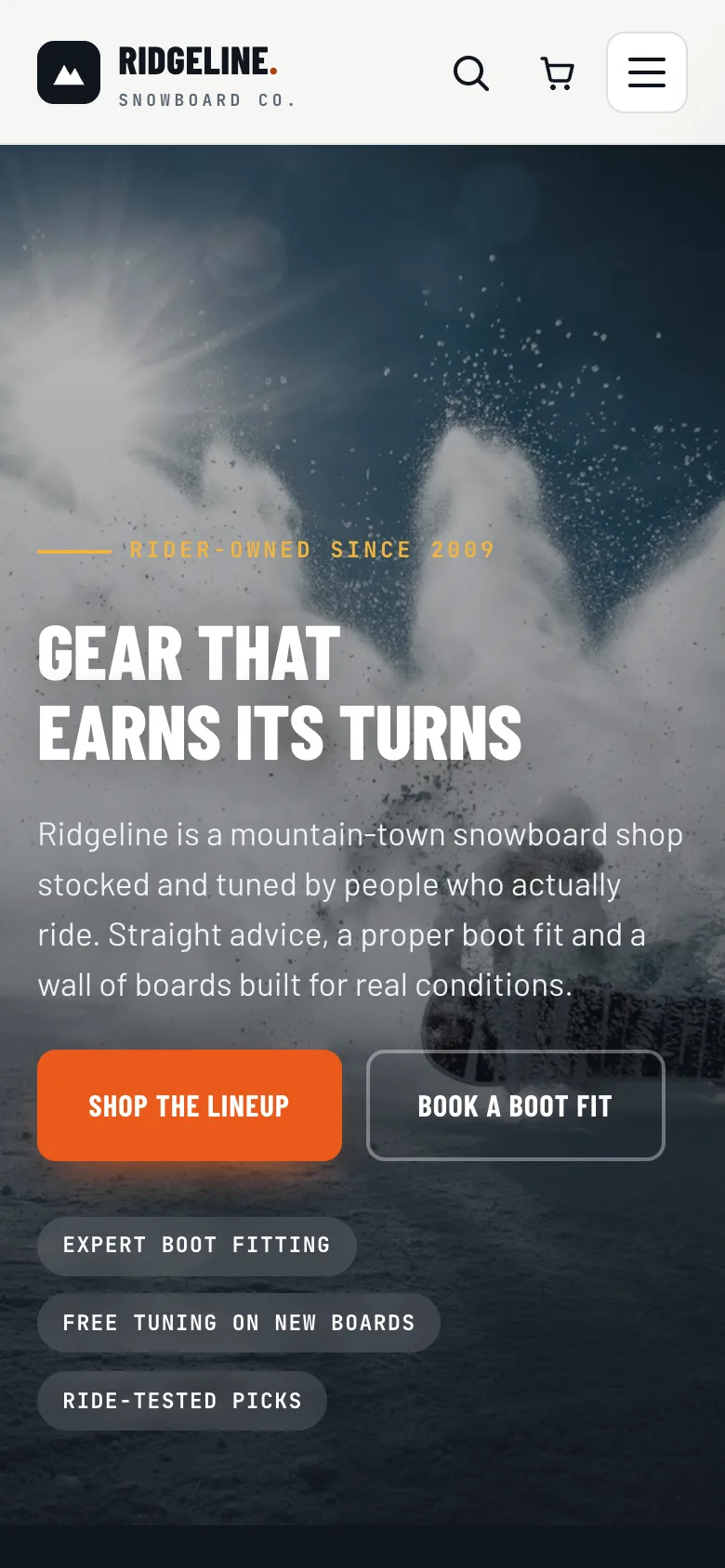



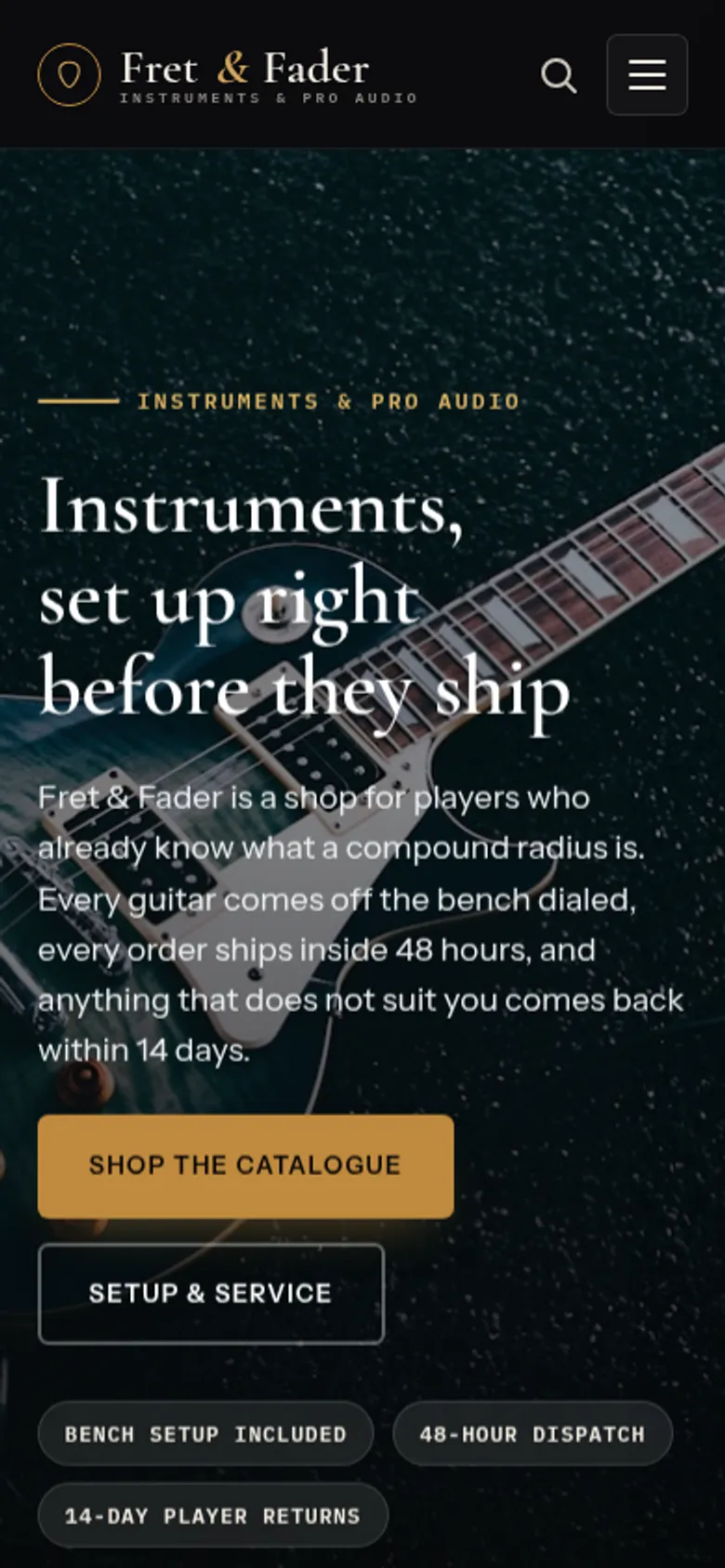
- 01 MockupYour homepage and key pages, laid out
- 02 DesignStyled to your brand by our designers
- 03 MobileBuilt mobile-first, checked on every screen
- 04 LaunchLive on your store, then improved monthly
Now showing: Ridgeline Board Co., a board shop demo store built on WorkspaceCMS. Open the demo
Prefer to watch?
See how the three store plans work, from first mockup to the changes we make every month.
When headless is the right call
The Six Signals
- ›SaaS theme limits are throttling conversion.Theme extensibility caps, app conflicts, checkout UX you can't touch - your platform's frontend is now a measurable drag on conversion, AOV, or content velocity.
- ›Core Web Vitals are bleeding revenue.Monolithic SaaS frontends carry render-blocking apps and bloated CSS. Sub-1.5s LCP at the 75th percentile is achievable on Next.js - and Google rewards it.
- ›Multi-brand, multi-region, B2B in one cart.Tiered pricing, account-gated catalogs, region-specific tax/duty, and consumer checkout under one storefront - composable on top of one commerce engine.
- ›AI-search readiness is non-negotiable.ChatGPT, Perplexity, and Gemini cite pages with clean SSR, full schema graphs, and extractable copy. Heavy-JS SaaS themes hide your catalog from the crawlers that matter now.
- ›Developer velocity is gated by theme deploys.Every change blocks on a platform-managed release. Headless = your team ships to Vercel preview URLs in minutes, not days.
- ›You're not ready to replatform - but you need a modern UX.Keep the backend that's working. Replace the storefront that isn't. Full replatform later, after you've proven the storefront.
When it isn't
When to Skip Headless
- ×You're under $2M GMV with a simple catalog.A polished SaaS theme will out-ship headless on TCO, speed-to-market, and team velocity. The operational overhead of a decoupled storefront rarely pays back at that scale.
- ×You don't have product engineering capacity.Headless storefronts need owners. If there's no internal team - or budgeted partner retainer - to steward the build, the SaaS theme is the safer bet.
- ×Your moat is merchandising, not UX.If the brand wins on assortment, pricing, or community, a faster SaaS launch beats a slower headless rebuild. Every quarter the rebuild delays is revenue lost.
- ×Your roadmap is uncertain.Headless amplifies decisions - good and bad. Lock product strategy first. Build the storefront around the proven model.
Not the right fit? Start with our SaaS platform hub- we'll match you to the right backend before you spend a dollar on headless.
What ships in the storefront
The Frontend We Ship
Every headless build ships on the Next.js App Router with React Server Components, ISR + edge caching, and a typed design system. We treat performance as a feature, not a launch-night scramble - Lighthouse and Core Web Vitals are budgeted from the kickoff brief, monitored in production, and tied to revenue dashboards.
The codebase is yours from day one. Vercel deploy, your repo, your CI/CD, your environment variables. We document component boundaries so a successor team - yours or another agency - can pick up the build without a knowledge handoff tax.
Deep links into how each layer ships: design system + UX, development & engineering, conversion optimization.
Content that ships with it
Editors Ship Without a Redeploy
The storefront ships with WorkspaceCMS- our proprietary platform for editorial content, lead capture, per-page SEO overrides, and schema management. Non-technical editors update copy, swap hero imagery, and tune meta tags from a clean admin. No PR. No deploy. No ticket queue.
Schema, alt-tags, redirects, and structured data are first-class citizens. The same control panel drives our AI SEO work- your storefront is built to be cited by ChatGPT, Perplexity, and Gemini from launch day, not retrofitted after the fact.
Deep links: eCommerce SEO, answer-engine optimization, agentic-commerce readiness.
Backends we plug into
Bring Your Backend. Or Pick One.
The storefront is platform-agnostic. We've shipped headless on each of these - and we'll tell you when a SaaS theme would serve the business better than a rebuild.
BigCommerce
Open SaaS, headless-ready out of the box. Strong B2B, low TCO.
GraphQL Storefront API · BigCommerce Catalyst
Shopify
Fastest path to launch. Hydrogen + Oxygen for first-party headless, or roll-your-own Next.js on the Storefront API.
Storefront API · Hydrogen · Functions
Adobe Commerce (Magento)
Catalog depth, B2B price lists, multi-store. Decouple the frontend, keep the engine.
GraphQL · REST · PWA Studio
commercetools
Enterprise MACH backend - global, multi-currency, multi-channel. Pair with Next.js for the customer-facing layer.
API-first · headless by design
Medusa.js
Open-source headless engine on Node + TypeScript. Maximum control, plugin-based, self-hosted.
REST + admin · self-hosted on Vercel, AWS, GCP, Azure
Custom GraphQL
Already have a custom commerce engine? We build the Next.js storefront against your existing GraphQL or REST contract.
Your contract · your data shape
This site is the proof
Same Stack We Ship for Clients
Next.js 16 on Vercel. TypeScript strict. Our own WorkspaceCMS managing copy, schema, redirects, and lead routing. Claude-augmented development through every commit. Every page you're reading on this site is built the way we build for clients - because eating our own cooking is the only credible pitch.
Our AI platform. Your unfair advantage.
WorkspaceCRM is the platform we built to run every account, from SEO and content to reporting. You get the benefit on every engagement without learning the software.
Live project view
Every engagement tracked from kickoff to ongoing campaign, with your strategists named on it.
Content approvals
Each article waits for your approval before it ships. No email chains.
Executive reports
Deliverables, content and hours rolled up across the account as the work happens.
Client portal
You see the same dashboard our team works from, including the activity feed.
How we ship
Discovery to Launch in 10–16 Weeks
Six phases. Vercel preview URLs from week one. Revenue keeps running on the existing stack until parity is proven.
Discovery & architecture
Audit the existing storefront, map data contracts, and lock the integration approach for your backend. Performance budget set, schema graph drafted, success metrics agreed before a line of code.
Design system
Token-first design system in Figma + code. Components built for accessibility (WCAG 2.2 AA) and Core Web Vitals from the first prototype.
Build
Next.js App Router. Server components first. ISR + edge caching where it matters. Vercel preview URLs for every PR so stakeholders see progress weekly.
QA & performance
Lighthouse and CWV gates in CI. Cross-browser, cross-device. Real-user monitoring wired before the cutover, not after.
Launch
URL mapping, 301 redirects, schema parity, AI-crawler accessibility (llms.txt, GPTBot, ClaudeBot), analytics baselines. Quiet, boring launches are good launches.
Iterate
Post-launch retainer: CRO, AI SEO, content velocity, dependency upgrades, and the swap-in of new backends or services as the roadmap evolves.
Frequently asked
What Buyers Ask First
What is headless commerce development?
Building a decoupled storefront (typically Next.js) that talks to a commerce backend via API instead of using the backend's bundled theme layer. The storefront controls UX, performance, and SEO independently of the commerce engine.
What's the difference between headless commerce and composable commerce?
Headless decouples the frontend only. Composable (MACH) decouples every layer - frontend, cart, search, CMS, payments - into best-of-breed services. Headless is a step; composable is the full architecture.
Do I need to replatform to go headless?
No. You can keep Shopify, BigCommerce, or Adobe Commerce as the backend and only swap the storefront. That's the typical 1Digital engagement on this page.
How long does a headless commerce build take?
A production Next.js storefront on an existing backend typically takes 10–16 weeks. Full composable rebuilds with a new backend run 4–9 months.
What backends can a Next.js storefront connect to?
BigCommerce, Shopify (Storefront API / Hydrogen), Adobe Commerce (Magento), commercetools, Medusa.js, Saleor, Swell, and custom GraphQL/REST APIs.
Is headless commerce better for SEO?
Yes when done right - full SSR/ISR control, faster Core Web Vitals, and structured-data ownership. Done poorly (heavy client-side rendering, no SSR) it can be worse. Done by an SEO-led agency, the gains are large. The full playbook lives at headless commerce SEO.
What does headless commerce cost?
Every headless build is custom-scoped, so we don't publish fixed price bands. Cost is driven by integration scope (which backend, which ERP / OMS / PIM, B2B vs. consumer, multi-region), the depth of the design system, and whether the engagement is frontend-only or includes a composable backend rebuild. Tell us about the project and a senior engineer replies within one business day with a scoped estimate.
Who should NOT go headless?
Stores under ~$2M GMV with simple catalog needs and no custom UX pain - the operational overhead rarely pays back. Honest answer matters more than the sale.
Request a proposal
Tell us where the SaaS storefront is breaking
Share your current backend, the constraint you've hit, and your roadmap. A senior engineer replies within one business day with a pricing band, candidate architectures, and a draft phase plan.
Custom solutions cluster
Where to Go Next
Headless Commerce SEO
SSR/ISR rendering, edge caching, schema graphs, and llms.txt for headless storefronts.
Read moreHydrogen SEO
Shopify Hydrogen + Oxygen - schema, performance, and AI-engine accessibility.
Read moreCatalyst SEO
BigCommerce Catalyst on Next.js - schema, SSR, and structured-data ownership.
Read moreCustom Platforms
Composable, MACH, and headless backends - Medusa.js, commercetools, custom engines.
Read moreAgentic Commerce
Storefronts ready for ChatGPT Shopping, Perplexity Shop, and Gemini.
Read moreCustom Development
Senior engineers building durable, scalable platforms across the stack.
Read moreCustom Design
UX, design systems, and brand-led storefront design.
Read morePlatform Migrations
Re-platform without losing SEO, customers, or sleep.
Read moreAll Platforms
Compare every backend platform we ship on side-by-side.
Read more