

Washington SEO Agency
Helping Washington businesses win on Google and the AI engines (ChatGPT, Perplexity, Gemini, AI Overviews) that increasingly shape buyer decisions. Built on 15 years and 400+ brands of search experience.
Last updated: May 2026
Trusted by 400+ Brands · Certified Partners




Years in eCommerce
Of results, scale, and quality at the enterprise level.
Expert Team
Specialists across SEO, AI SEO, PPC, design, dev, and strategy.
US Core + Global Talent
US core team for clear communication; vetted global specialists for international client work.
Reputation Score
Rated 4.9/5 across 941+ verified client reviews.
Ask AI for a business like yours. Are you in the answer?
ChatGPT, Claude, and Perplexity only recommend sites they can read - and most can't read yours. Scan it free and see exactly where you stand.
Free · no signup · scores the 15 signals AI uses to find you · ~20 seconds
Washington SEO, step by step
Be the business Washington finds first
When someone in Washington searches for a pet groomer near them, the map and the first few listings get nearly all of the attention. We tune your Google profile, location pages, reviews and site so your pin moves to the top of that list and stays there.
- ›Google profile and maps listing kept current
- ›Pages written for the Washington areas you serve
- ›Reviews encouraged and answered
What the Washington market actually looks like
Washington, D.C. is the seat of the federal government, and its search market is unlike any other US metro: federal agencies, congressional offices, the White House and the Capitol, the World Bank and IMF, hundreds of embassies, and a dense ring of contractors, lobbyists, law firms, trade associations, and policy nonprofits across Northern Virginia and suburban Maryland dominate B2B demand.
The Dulles Technology Corridor and Tysons in Fairfax County, the intelligence-community footprint, and the K Street lobbying economy shape a market where federal procurement, GSA Schedules, SAM.gov visibility, and security-clearance signaling matter more than anywhere else in the country. Below the federal economy, Georgetown, Dupont Circle, Capitol Hill, and the H Street corridor compete in tight local packs shaped by tourism, a transient government workforce, and a heavily credentialed population, while Navy Yard and Union Market have added new retail and hospitality SERPs.
1Digital® helps DC organizations separate procurement-grade B2G work from quadrant-level neighborhood SEO across a tri-jurisdictional metro.
Serving the greater Washington metro, including
Washington by the numbers
$680B
Washington DC metro GDP in 2024 (latest BEA)
Source: BEA, December 2025 release
Inside the Washington digital economy
Economic base
Washington, D.C. anchors a metro whose economy is unlike any other in the country because its dominant industry is the federal government itself. Cabinet departments, independent agencies, congressional offices, the federal judiciary, the World Bank and IMF, and roughly 175 foreign embassies create a demand base that does not exist anywhere else, and around it sits one of the densest professional-services rings in the world - federal contractors, systems integrators, law firms, lobbying shops on and around K Street, trade associations, and policy nonprofits.
The contractor and technology economy concentrates in Northern Virginia: Arlington and the Crystal City and Pentagon City corridor, Tysons and the Dulles Technology Corridor in Fairfax County, the data-center concentration in Loudoun County that carries a large share of global internet traffic, and the intelligence-community footprint.
Procurement is the operative buying motion - NAICS codes, GSA Schedules, contract vehicles, SAM.gov, and clearance signaling matter more here than consumer keyword volume ever will.
Geography and buyer behavior
Geography is tri-jurisdictional and Metro-organized. The District is quartered into NW, NE, SE, and SW around the Capitol, and the metro spans the Potomac into Northern Virginia and north into Montgomery and Prince George's counties in Maryland, each with distinct taxes, regulation, and search behavior. The Washington Metro's color lines shape how residents and the transient government workforce describe location far more than highways do.
Within the District, the federal monumental core and the downtown business district give way to strongly identified neighborhoods - Georgetown along the Potomac and Wisconsin Avenue, Dupont Circle and Logan Circle, the H Street NE Atlas District, Shaw and the U Street corridor, Capitol Hill around Eastern Market, and the Navy Yard and Union Market redevelopment zones. Anacostia and the neighborhoods east of the river are persistently under-served.
Tourism around the National Mall, the Smithsonian, and the monuments drives a large, steady visitor economy with episodic spikes around the cherry blossoms and inaugurations. The durable strategy is procurement-grade B2G content plus jurisdiction- and quadrant-specific consumer pages tied to real Metro geography, rather than one DC template stretched across a tri-state, federally driven market.
Named districts and micro-geography
Washington's named districts each carry a distinct search identity. The Georgetown waterfront and M Street, the 14th Street and Logan Circle commercial strip, the H Street NE Atlas District, Shaw and U Street, Capitol Hill and Eastern Market, and the Navy Yard along the Anacostia near Nationals Park are not interchangeable to a local searcher.
The federal hiring and administration cycle creates recurring relocation and security-clearance-adjacent service demand, and the embassy and association economy generates specialized event and professional-services search. A brand mapping to these named corridors, Metro lines, and the Virginia and Maryland jurisdictions reaches intent that statewide and generic Beltway campaigns never localize for.
The sectors that drive Washington search demand
Where Washington-area commerce concentrates - and the local context that shapes how each sector competes in organic and AI search.
Federal government & agencies
Cabinet departments, congressional offices, the World Bank, IMF, and roughly 175 embassies create a demand base that exists nowhere else in the country.
Government contracting & systems integration
Tysons, the Dulles Technology Corridor, and Crystal City concentrate contractors and integrators where SAM.gov and contract-vehicle visibility decide B2G outcomes.
Law, lobbying & associations
The K Street corridor, major law firms, and a dense trade-association and nonprofit economy keep professional-services SERPs highly credential-sensitive.
Data centers & technology
Loudoun County's data-center concentration carries a large share of global internet traffic and anchors a regional technology and cloud-services economy.
Tourism & hospitality
The National Mall, the Smithsonian, and the monuments drive a steady visitor economy with cherry-blossom and inauguration spikes.
Who you're really competing with in Washington
Washington's organic competition is the most procurement- and credential-driven in the country, with the quadrant and corridor economy left as the only genuinely open ground.
Federal contractors, systems integrators, and law and lobbying firms field well-resourced teams, and the B2G categories are won on contract-vehicle visibility, clearance signaling, and past performance rather than keyword volume. National franchises hold the broad proximity queries across the District and the Virginia and Maryland suburbs.
The opening is the quadrant and corridor economy: independent operators along H Street NE, in Shaw and U Street, on 14th Street, around Eastern Market, and east of the river routinely run thin Google Business Profiles and weak schema, so disciplined neighborhood- and Metro-named pages can still take the map pack while the federally focused giants ignore that grain.
Washington local-search insight
The Washington, D.C. metro hosts the federal government plus roughly 175 foreign embassies and a contractor ring spanning Northern Virginia and suburban Maryland.
A demand base centered on federal procurement and a tri-jurisdictional contractor ring makes NAICS-coded, contract-vehicle-aligned content decisive in a way no consumer keyword strategy is.
Source: U.S. Department of State diplomatic list and BEA Washington-Arlington-Alexandria metro data
How a Washington brand should approach SEO
A Washington organization would not treat the metro as one market or ignore the jurisdiction lines. The disciplined approach separates the B2G and consumer sides rather than running a name-swapped clone.
Procurement-aligned B2G content
For federal sellers, NAICS-coded, contract-vehicle-aligned capability content with clearance and past-performance signaling that matches the SAM.gov profile, aimed at the contracting officers who shortlist before an RFP issues.
Corridor and quadrant pages
For the consumer side, separate, genuinely differentiated pages for Georgetown along M Street, the 14th Street and Logan Circle strip, the H Street NE Atlas District, Shaw and U Street, Capitol Hill and Eastern Market - each tied to real Metro stations and corridors rather than a name-swapped clone.
Jurisdiction-specific Virginia and Maryland pages
Distinct jurisdiction pages for Arlington, Alexandria, Tysons, and Bethesda - respecting that Virginia and Maryland customers fall under different state law (including the VCDPA in Virginia).
Two-shopper retail pages
A retailer with a Georgetown flagship and a Bethesda satellite would write two distinct pages - one for M Street tourist-and-student foot traffic, one for Montgomery County suburban Metro-and-drive regulars - instead of cloning a template across a tri-jurisdictional, federally driven market.
Verticals strong in Washington
The categories where Washington-area eCommerce concentrates - and where our playbooks already have reps.
SEO & digital marketing services we offer in Washington
- ✓Local SEO & Google Business Profile optimization
- ✓Technical SEO audits & site architecture
- ✓On-page SEO & content production
- ✓Link building & digital PR
- ✓AI Search Optimization (AEO/GEO) - ChatGPT, Perplexity, Gemini, AI Overviews
- ✓Paid media (Google Ads, Meta, retargeting)
- ✓Web design & development (Shopify, BigCommerce, WordPress, headless)
- ✓Conversion rate optimization & GA4 analytics
Free Build Offer
Get Your Washington Business Website Built Free by 1Digital®
We design & launch your site at no cost - AI-first, SEO-first, live in a few days to a few weeks. Plans from $89/mo.
Your Washington SEO partner - founded 2012, still independent.
- →Founded 2012 in Philadelphia, PA. Privately held. US-based core team plus vetted global specialists.
- →400+ brands grown across eCommerce, B2B, SaaS, local service, and lead-gen since launch.
- →4.9/5 average across 941+ verified reviews on Google, Clutch, and industry directories.
- →Proprietary platform: WorkspaceCRM - AI tooling for AEO/GEO tracking, content production, and reporting.
- →Recognized partner: Shopify, BigCommerce, Google Partner, Meta Business Partner.
- →Senior US strategist on every account, serving the greater Washington metro and clients in all 50 states.
Win the Map Pack in Washington
Map Pack positions drive the highest-intent local clicks. We optimize your Google Business Profile, build accurate citations, and craft locally relevant content so your business shows up when Washingtoncustomers search.
Before you hire an SEO agency
Common questions Washington businesses ask
Will SEO work for my business in Washington?
Yes - for almost every category. If buyers in Washington are searching for what you sell, a well-executed SEO program compounds visibility, leads, and revenue. The honest exception is hyper-niche B2B with fewer than ~50 monthly searches in your category - we'd recommend paid + outbound there and tell you so on the audit call.
What does the first 90 days with 1Digital® look like in Washington?
Days 1–14: technical + GBP audit, competitor benchmark, GA4/Search Console/rank-tracking baseline. Days 15–45: quick-win fixes deployed, strategy + content roadmap delivered. Days 46–90: monthly content + outreach cadence live, first ranking and traffic movement measured.
Discover our expertise
Washington SEO - Quick Answers
How should DC federal contractors approach B2G SEO and SAM.gov visibility?
Publish NAICS-coded service pages, contract-vehicle landing pages (GSA MAS, OASIS+, CIO-SP4, Alliant), capability statements in both PDF and HTML, and past-performance case studies tagged by agency - with a SAM.gov profile that matches the website.
Contracting officers, program managers, and prime-contractor capture teams research vendors through SAM.gov, GSA eLibrary, agency forecasts, and capability statements, not generic Google searches. Effective B2G content publishes NAICS-coded service pages, contract-vehicle landing pages (GSA MAS, OASIS+, CIO-SP4, Alliant), capability statements in both PDF and HTML, and past-performance case studies tagged by agency, with Organization and Service schema and a SAM.gov profile that matches the website. That alignment materially improves shortlisting in the way federal procurement actually evaluates vendors.
Why does the tri-jurisdictional DC metro complicate local SEO?
The District, Northern Virginia, and suburban Maryland each have their own taxes, regulations, and search behavior, so multi-location organizations need dedicated, differentiated pages per jurisdiction and Metro corridor.
The metro spans the District itself, Northern Virginia (Arlington, Alexandria, Fairfax, Loudoun), and suburban Maryland (Montgomery and Prince George's counties), each with its own taxes, regulations, and search behavior. A Bethesda resident, a Tysons worker, and a Capitol Hill resident surface different local packs and live under different state laws. Multi-location organizations need dedicated, differentiated pages per jurisdiction and Metro corridor rather than one DC page, because the legal and competitive context genuinely differs across the Potomac and the District line.
Does DC have a consumer data-privacy law that affects local business websites?
Not as of 2025 - the District has no comprehensive law equivalent to CCPA or VCDPA, but the metro spans Virginia (with VCDPA) and Maryland, so the practical posture is to comply with the strictest applicable state law.
The District has not enacted a comprehensive consumer data-privacy law equivalent to California's CCPA or Virginia's VCDPA as of 2025, though proposals have been introduced in the DC Council. DC businesses remain subject to the FTC Act's prohibition on unfair or deceptive practices, sector-specific federal rules (HIPAA, GLBA, COPPA), and the privacy laws of every state where their customers live. Because the metro spans Virginia, which has the VCDPA, and Maryland, and most organizations here serve a national or federal base, the practical posture is to comply with the strictest applicable state law.
Which DC submarkets have the most winnable SERPs?
H Street NE and the Atlas District, Shaw and U Street, Capitol Hill's Eastern Market, the 14th Street and Logan Circle strip, Navy Yard and Union Market, and east-of-the-river neighborhoods where listings are frequently thin.
Downtown, the K Street corridor, and Georgetown are saturated for professional services, law, and lobbying. The openings sit in the quadrant neighborhood economy: H Street NE and the Atlas District, Shaw and the U Street corridor, Capitol Hill's Eastern Market, the 14th Street and Logan Circle commercial strip, the Navy Yard and Union Market growth areas, and the Anacostia and east-of-the-river neighborhoods where Google Business Profiles are frequently thin. Pages tied to real corridors and Metro stations - the Red, Green, and Silver lines, Connecticut and Wisconsin Avenues, H Street NE - plus disciplined review velocity typically beat paid spend for District SMBs.
How much does an SEO agency cost in Washington?
SEO retainers typically run $1,500–$10,000+/month, consulting $100–$300/hour, and one-time technical or migration projects $5,000–$30,000. Pricing scales with scope (local-only vs. national), keyword competitiveness, and content/link volume. 1Digital® publishes scoped, fixed-fee proposals after a free audit, so there are no hourly surprises.
How long does SEO take to show results for a Washington business?
Local SEO results (map pack movement, Google Business Profile leads) typically appear within 30–90 days. Competitive organic rankings take 4–9 months, and authority-driven national terms 9–18 months. Sites with clean technical foundations move faster - onboarding starts with a technical audit specifically to shorten that runway.
Do agencies in Washington optimize for ChatGPT, Perplexity, and Google AI Overviews?
Most do not - AI search optimization (AEO/GEO) is still rare in 2026. 1Digital® offers it through our proprietary WorkspaceCRM platform, which monitors brand mentions and citation share across ChatGPT, Perplexity, Gemini, and Google AI Overviews and structures content to be cited by them, not just ranked by Google.
Request your complimentary Washington local SEO audit
Share a few details and a US-based senior strategist will review your site, GBP, citations, and local rankings - then send back a prioritized roadmap. No sales script. No junior account manager.
Brands We've Helped Grow

Eloquence
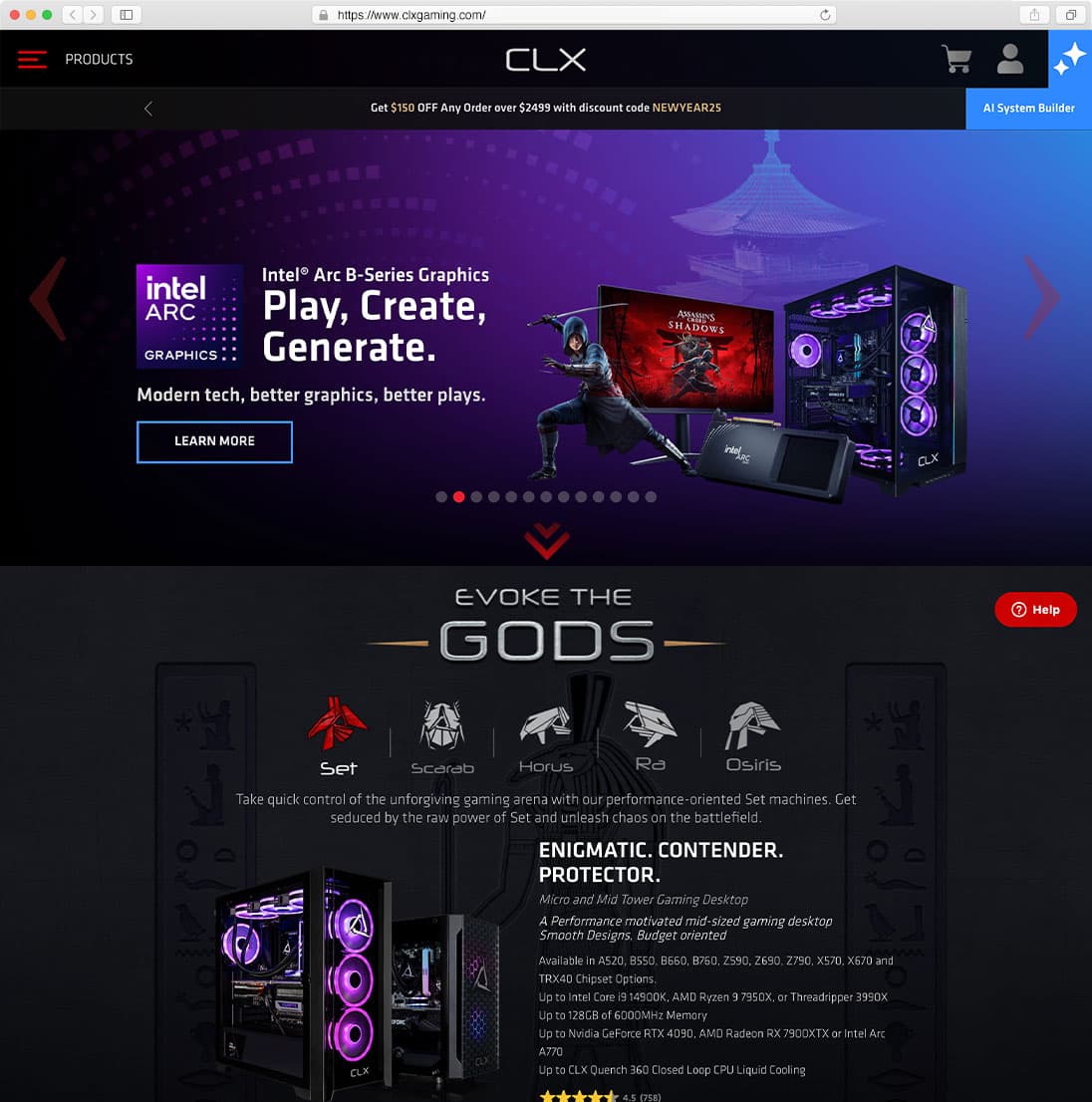
CLX Gaming
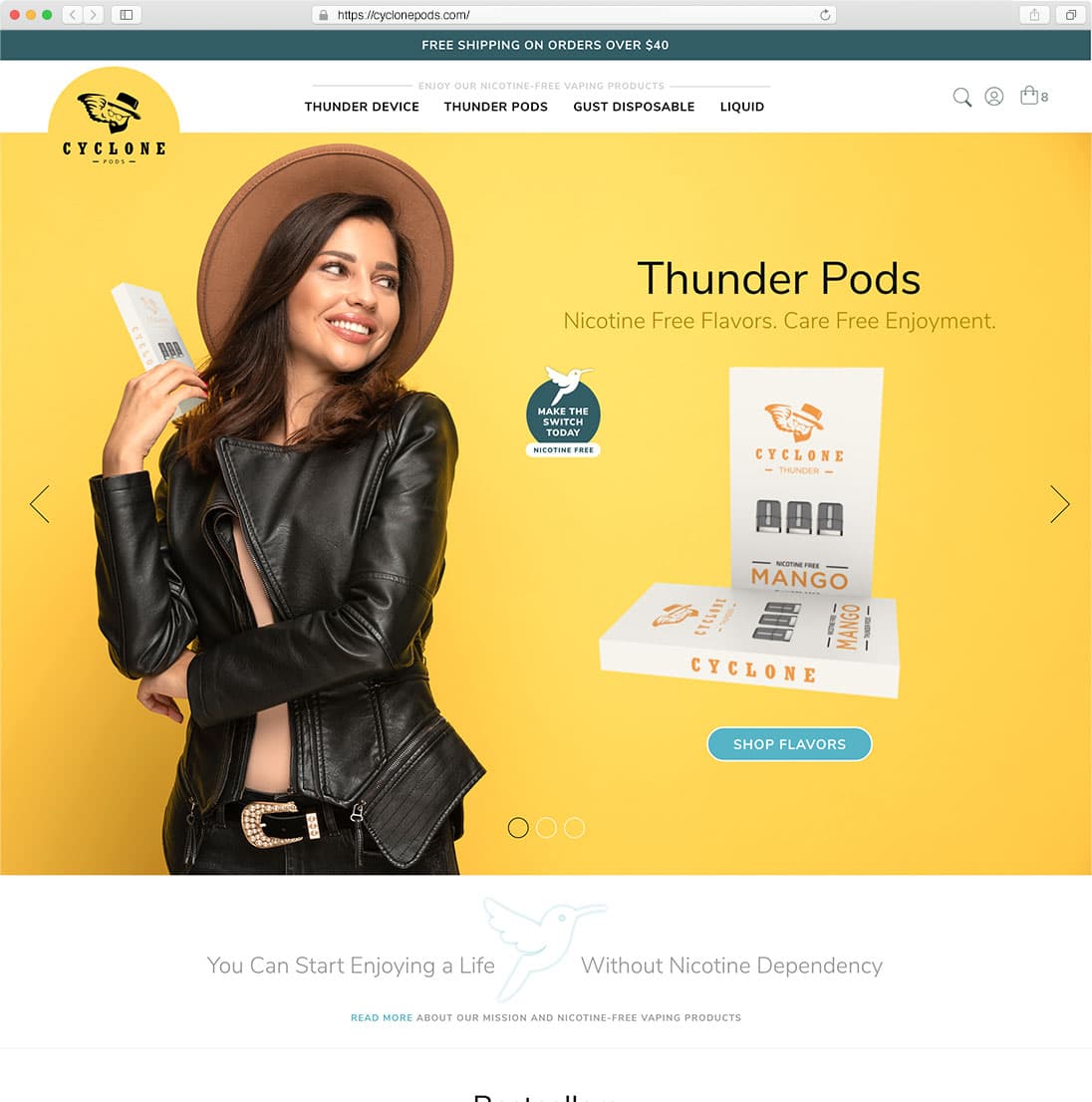
Cyclone Pods
Introducing
Your Industry. Your CMS. Managed for You.
- Unlimited managed edits - shipped on your plan's SLA
- SEO baked into every page, post, and location
- Technical SEO on every plan; AI schema and internal linking on Premium & Ultra
Note for e-commerce brands: WorkspaceCMS.ai is purpose-built for service businesses - informational, local, and professional sites. For e-commerce brands with product catalogs and shopping carts, the free CMS build applies as your headless front-end; cart and checkout integration is custom-quoted. Get a custom e-commerce quote →