
Detroit SEO Agency
Helping Detroit businesses win on Google and the AI engines (ChatGPT, Perplexity, Gemini, AI Overviews) that increasingly shape buyer decisions. Built on 15 years and 400+ brands of search experience.
Last updated: May 2026
Trusted by 400+ Brands · Certified Partners



Years in eCommerce
Of results, scale, and quality at the enterprise level.
Expert Team
Specialists across SEO, AI SEO, PPC, design, dev, and strategy.
US Core + Global Talent
US core team for clear communication; vetted global specialists for international client work.
Reputation Score
Rated 4.9/5 across 941+ verified client reviews.
Ask AI for a business like yours. Are you in the answer?
ChatGPT, Claude, and Perplexity only recommend sites they can read - and most can't read yours. Scan it free and see exactly where you stand.
Free · no signup · scores the 15 signals AI uses to find you · ~20 seconds
Detroit SEO, step by step
Be the business Detroit finds first
When someone in Detroit searches for a florist near them, the map and the first few listings get nearly all of the attention. We tune your Google profile, location pages, reviews and site so your pin moves to the top of that list and stays there.
- ›Google profile and maps listing kept current
- ›Pages written for the Detroit areas you serve
- ›Reviews encouraged and answered
What the Detroit market actually looks like
Detroit's economy still runs on the Big Three - General Motors at the Renaissance Center and its move toward the Hudson's site Downtown, Ford in Dearborn and at the Michigan Central mobility campus in Corktown, and Stellantis in Auburn Hills and at the Mack Avenue assembly plant on the east side - but the metro around them has broadened. Rocket Companies anchored the Downtown rebuild and the Bedrock-led redevelopment of Woodward Avenue, Little Caesars Arena pulled foot traffic back to The District Detroit, and a deep automotive-supplier and mobility-engineering base spreads across Macomb, Oakland, and Wayne counties.
Healthcare runs through Henry Ford Health, the Detroit Medical Center, and Beaumont, now Corewell Health, and the Wayne State and University of Michigan research base feeds a maturing tech layer. For local businesses the implication is two very different buyer journeys: B2B suppliers chasing automotive and mobility programs across the tri-county region, and consumer brands competing in a metro where Downtown, Midtown, and the Oakland County corridor behave like separate search markets.
1Digital® builds Detroit campaigns that handle both - capability-page depth on the supplier side, hyper-local pages and Google Business Profile work on the consumer side.
Serving the greater Detroit metro, including
Detroit by the numbers
$330B
Detroit metro GDP in 2024 (latest BEA)
Source: BEA, December 2025 release
Inside the Detroit digital economy
Economic base
Detroit anchors a tri-county metro whose economy is still defined by the automobile but is no longer only about assembly. General Motors, headquartered at the Renaissance Center and moving toward the Hudson's site Downtown, Ford in Dearborn and at the Michigan Central mobility campus in Corktown, and Stellantis in Auburn Hills and at the Mack Avenue plant anchor a vast supplier and mobility-engineering economy that spreads across Wayne, Oakland, and Macomb counties - the Warren tech-center belt, the Auburn Hills and Pontiac corridor, and the Dearborn engineering campuses.
This produces a deep, high-value, low-volume B2B economy in stamping, electronics, software-defined vehicle systems, and validation services where buyers are few, technical, and rarely reached by broad keywords.
Geography and buyer behavior
Geography is decisively split along county lines and the 8 Mile boundary. The urban core runs from Downtown and the Campus Martius and stadium district through Midtown, the Wayne State and Detroit Medical Center campuses, New Center, Corktown, and the Eastern Market district, but the metro's spending power is heavily suburban: Oakland County's affluent Woodward corridor through Royal Oak, Birmingham, and Bloomfield Hills; Macomb County's working manufacturing belt through Sterling Heights, Warren, and Clinton Township; and the Dearborn, Livonia, and Downriver communities in western and southern Wayne County.
Henry Ford Health, the Detroit Medical Center, and Corewell Health drive intense patient-acquisition search, Detroit Metro Airport in Romulus and the rail-and-bridge crossings to Windsor sustain logistics and cross-border freight, and the metro serves as the regional hub for much of southeast Michigan. A persistent Spanish-dominant consumer base in Mexicantown along Bagley and Vernor is under-served by English-only competitors.
What holds up is county- and city-level pages keyed to the Woodward, Gratiot, and Telegraph corridors - not one Detroit page flattened over a fragmented region.
Named districts and micro-geography
Each Detroit district reads differently to a nearby searcher. The Eastern Market produce-and-mural blocks, Corktown and the Michigan Central campus, Mexicantown in Southwest Detroit, the West Village and Jefferson-Chalmers neighborhoods, and the New Center and Milwaukee Junction areas do not blur together for a resident.
The Oakland County downtowns - Royal Oak, Ferndale, Birmingham, and Rochester - each run as their own retail markets; the Macomb County manufacturing towns of Warren and Sterling Heights form a distinct supplier belt; and Hamtramck and Dearborn carry deep, specific immigrant communities, with one of the largest Arab American populations in the country centered in Dearborn.
Wayne State, the University of Michigan in nearby Ann Arbor, and Oakland University layer in campus economies, and the Detroit Auto Show, the Movement festival, and the Comerica Park and Ford Field calendars drive seasonal spikes. Writing to these named districts and county lines captures searches that broad metro programs flatten away.
The sectors that drive Detroit search demand
Where Detroit-area commerce concentrates - and the local context that shapes how each sector competes in organic and AI search.
Automotive & mobility
GM, Ford, and Stellantis plus the Michigan Central campus and a vast Tier-1 and Tier-2 supplier base anchor a deep, technical B2B economy across the tri-county region.
Healthcare
Henry Ford Health, the Detroit Medical Center, and Corewell Health drive heavy patient-acquisition search across southeast Michigan.
Logistics & cross-border trade
Detroit Metro Airport and the rail and bridge crossings to Windsor sustain freight, 3PL, and US-Canada cross-border supply-chain demand.
Higher education & research
Wayne State, Oakland University, and the University of Michigan in Ann Arbor feed a research-vendor and maturing software base.
Immigrant & bilingual consumer services
Mexicantown in Southwest Detroit and the large Arab American community in Dearborn create distinct under-served bilingual consumer markets.
Who you're really competing with in Detroit
Detroit's daylight sits in the neighborhood and inner-ring economy, where unfinished listings and thin markup leave county- and district-level pages an open path to the local map.
Competition in Detroit sorts by who is buying. Automotive-supplier and mobility work is low-volume, high-value, and relationship-led, leaving sparse results; the Downtown and Midtown rebuild has drawn well-resourced teams into hospitality, real estate, and professional services; and the national chains take generic nearby-me queries across the suburbs.
Owner-run shops and trades through Corktown, Eastern Market, Ferndale, Royal Oak, Dearborn, and the Macomb manufacturing belt routinely leave business listings unfinished and markup thin, so tight county- and neighborhood-level copy, plus real Spanish-language pages for Mexicantown, still claims the local map while national programs miss that fine grain.
Detroit local-search insight
Dearborn, in the Detroit metro, is home to one of the largest Arab American communities in the United States, alongside the Spanish-dominant Mexicantown district in Southwest Detroit.
Genuine multilingual and bilingual content for the Dearborn and Mexicantown markets reaches durable audiences that English-only competitors and machine translation both fail to serve.
Source: U.S. Census Bureau, American Community Survey ancestry and language data for Wayne County
How a Detroit brand should approach SEO
A Detroit brand cannot run the tri-county metro as a single market. The sound method splits demand along the county-and-corridor lines locals actually drive.
County-and-corridor segmentation
Discrete, materially different pages for Downtown and Midtown, Corktown and Eastern Market, plus suburban pages for the Oakland County Woodward downtowns of Royal Oak and Ferndale, the Macomb manufacturing belt through Warren and Sterling Heights, and Dearborn and the Downriver communities - each anchored to concrete arterials like Woodward, Gratiot, and Telegraph.
Real multilingual pages
Where the brand reaches Mexicantown or the Dearborn Arab American market, real multilingual pages with correct hreflang win audiences English-only rivals miss.
Differentiated location pages
A merchant with a Midtown flagship and a Birmingham location authors two materially different pages: one for walk-in, stadium-and-campus Midtown traffic, the other for affluent Oakland County downtown drivers.
Supplier capability documentation
For automotive and mobility suppliers, the route is capability documentation and spec-sheet optimization built for the few technical buyers at GM, Ford, and Stellantis who issue programs.
Trade-press digital PR
Trade-press digital PR carries that supplier authority forward instead of chasing generic manufacturing keyword volume.
Verticals strong in Detroit
The categories where Detroit-area eCommerce concentrates - and where our playbooks already have reps.
SEO & digital marketing services we offer in Detroit
- ✓Local SEO & Google Business Profile optimization
- ✓Technical SEO audits & site architecture
- ✓On-page SEO & content production
- ✓Link building & digital PR
- ✓AI Search Optimization (AEO/GEO) - ChatGPT, Perplexity, Gemini, AI Overviews
- ✓Paid media (Google Ads, Meta, retargeting)
- ✓Web design & development (Shopify, BigCommerce, WordPress, headless)
- ✓Conversion rate optimization & GA4 analytics
Free Build Offer
Get Your Detroit Business Website Built Free by 1Digital®
We design & launch your site at no cost - AI-first, SEO-first, live in a few days to a few weeks. Plans from $89/mo.
Your Detroit SEO partner - founded 2012, still independent.
- →Founded 2012 in Philadelphia, PA. Privately held. US-based core team plus vetted global specialists.
- →400+ brands grown across eCommerce, B2B, SaaS, local service, and lead-gen since launch.
- →4.9/5 average across 941+ verified reviews on Google, Clutch, and industry directories.
- →Proprietary platform: WorkspaceCRM - AI tooling for AEO/GEO tracking, content production, and reporting.
- →Recognized partner: Shopify, BigCommerce, Google Partner, Meta Business Partner.
- →Senior US strategist on every account, serving the greater Detroit metro and clients in all 50 states.
Win the Map Pack in Detroit
Map Pack positions drive the highest-intent local clicks. We optimize your Google Business Profile, build accurate citations, and craft locally relevant content so your business shows up when Detroitcustomers search.
Before you hire an SEO agency
Common questions Detroit businesses ask
Will SEO work for my business in Detroit?
Yes - for almost every category. If buyers in Detroit are searching for what you sell, a well-executed SEO program compounds visibility, leads, and revenue. The honest exception is hyper-niche B2B with fewer than ~50 monthly searches in your category - we'd recommend paid + outbound there and tell you so on the audit call.
What does the first 90 days with 1Digital® look like in Detroit?
Days 1–14: technical + GBP audit, competitor benchmark, GA4/Search Console/rank-tracking baseline. Days 15–45: quick-win fixes deployed, strategy + content roadmap delivered. Days 46–90: monthly content + outreach cadence live, first ranking and traffic movement measured.
Discover our expertise
Detroit SEO - Quick Answers
How should Detroit-area automotive suppliers approach SEO differently?
Treat supplier SEO as account-based search aimed at the small, technical buying pool at GM, Ford, Stellantis, and the mobility players, not generic manufacturing keyword volume.
Tier-1 and Tier-2 suppliers in metro Detroit sell into purchasing managers and engineers in Corktown, Dearborn, Auburn Hills, and the Warren tech-center belt. Keyword volume is low but intent is extreme. The play is long-tail technical queries - material specs, IATF 16949 capabilities, PPAP and validation processes - structured data on capability pages, and PDF spec-sheet optimization that surfaces in AI Overviews. 1Digital® ranks for the questions a Dearborn or Warren buyer actually types.
Does Detroit's city-and-suburb split affect local SEO?
Yes - Google's local pack rarely blends across the 8 Mile line or county boundaries, so each municipality functions as its own search market.
A business in Downtown Detroit, Royal Oak, Troy, Dearborn, or Sterling Heights is in a different search market even though they share a metro. Intent shifts too: searches in Oakland County skew suburban retail and professional services along the Woodward and Telegraph corridors, while Downtown searches skew restaurant, entertainment, and stadium-district traffic around Campus Martius. Multi-location operators need a separate page per municipality with distinct NAP, profile, and content rather than one serving-metro-Detroit page that competes against itself.
Are there Michigan tax considerations Detroit eCommerce sellers should know?
Yes - Michigan requires remote sellers exceeding $100,000 in Michigan sales or 200 transactions to register and remit, applying a flat 6% sales tax with no local add-on.
Michigan's flat 6% rate with no local add-on simplifies checkout configuration relative to home-rule states. Detroit also levies a city income tax that affects businesses with a Detroit nexus, including fulfillment or staff inside the city. None of this changes ranking signals directly, but mishandled checkout tax and surprise fees drive cart abandonment and negative reviews that feed the reputation signals behind local-pack performance.
Which Detroit submarkets have the most winnable SERPs?
The neighborhood and inner-suburb economy - Corktown and Mexicantown, Eastern Market, the West Village and Jefferson-Chalmers corridor, and inner suburbs like Ferndale, Royal Oak, and Hamtramck - offers the most winnable SERPs.
Downtown and Midtown around the stadium district and the Wayne State and DMC campuses are increasingly contested for professional services and hospitality. The opening is elsewhere: those inner-ring neighborhoods frequently surface thin Google Business Profiles and weak schema. Mexicantown along Bagley and Vernor also carries a Spanish-dominant audience under-served by English-only competitors. Neighborhood- and suburb-named pages tied to real arterials - Woodward, Gratiot, Michigan Avenue - typically outperform paid spend.
How much does an SEO agency cost in Detroit?
SEO retainers typically run $1,500–$10,000+/month, consulting $100–$300/hour, and one-time technical or migration projects $5,000–$30,000. Pricing scales with scope (local-only vs. national), keyword competitiveness, and content/link volume. 1Digital® publishes scoped, fixed-fee proposals after a free audit, so there are no hourly surprises.
How long does SEO take to show results for a Detroit business?
Local SEO results (map pack movement, Google Business Profile leads) typically appear within 30–90 days. Competitive organic rankings take 4–9 months, and authority-driven national terms 9–18 months. Sites with clean technical foundations move faster - onboarding starts with a technical audit specifically to shorten that runway.
Do agencies in Detroit optimize for ChatGPT, Perplexity, and Google AI Overviews?
Most do not - AI search optimization (AEO/GEO) is still rare in 2026. 1Digital® offers it through our proprietary WorkspaceCRM platform, which monitors brand mentions and citation share across ChatGPT, Perplexity, Gemini, and Google AI Overviews and structures content to be cited by them, not just ranked by Google.
Request your complimentary Detroit local SEO audit
Share a few details and a US-based senior strategist will review your site, GBP, citations, and local rankings - then send back a prioritized roadmap. No sales script. No junior account manager.
Brands We've Helped Grow
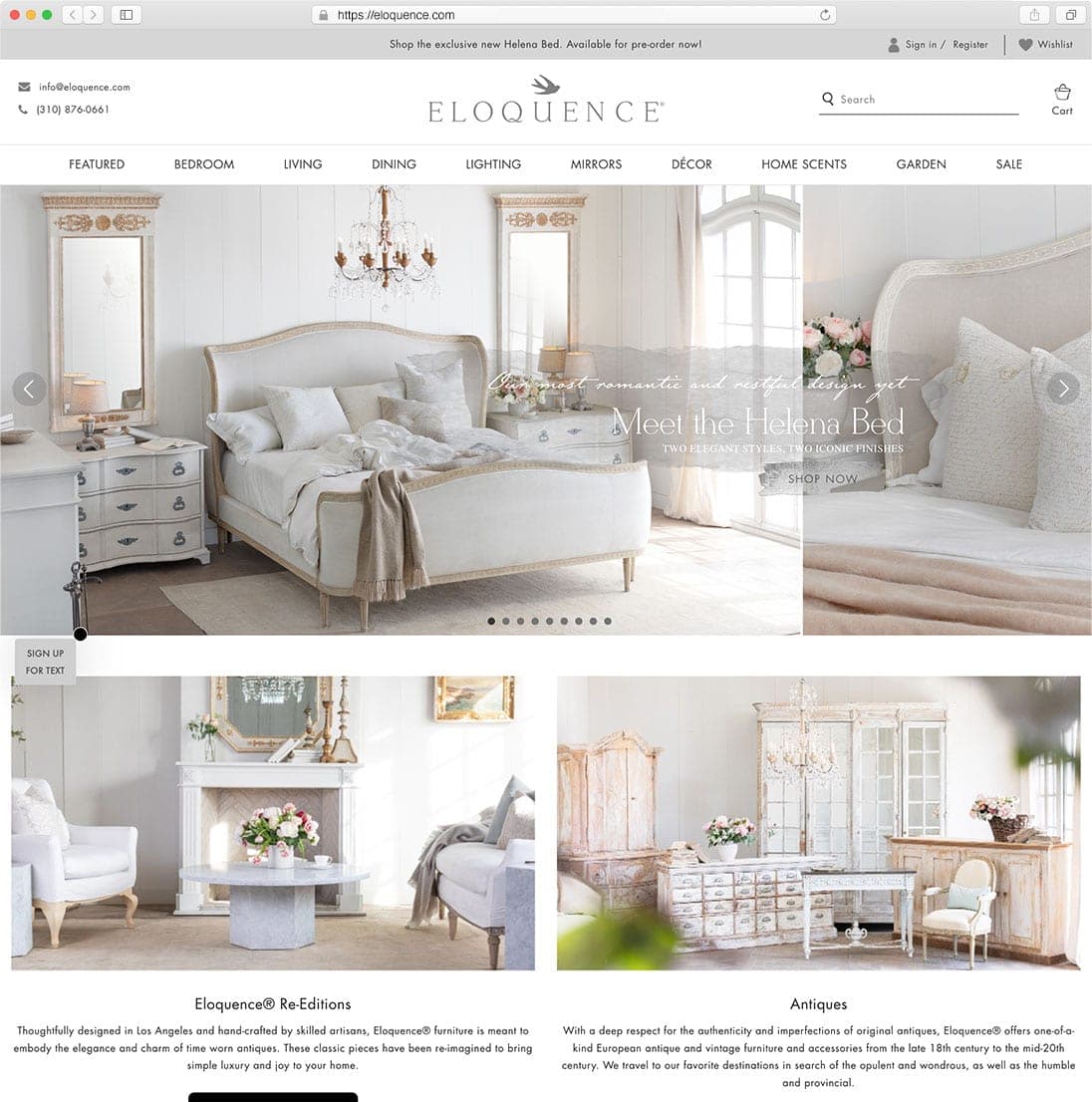
Eloquence
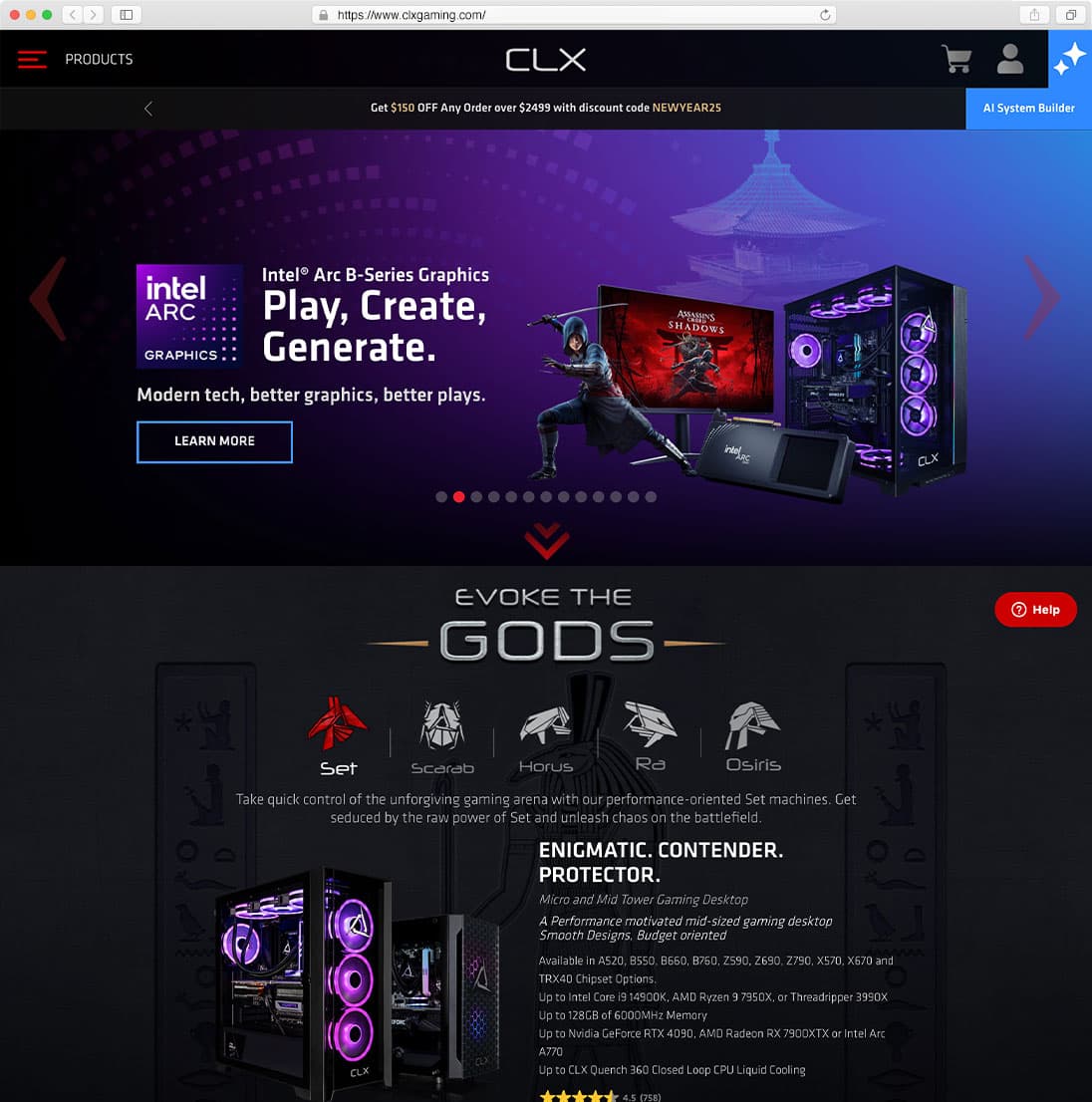
CLX Gaming
Cyclone Pods
Introducing
Your Industry. Your CMS. Managed for You.
- Unlimited managed edits - shipped on your plan's SLA
- SEO baked into every page, post, and location
- Technical SEO on every plan; AI schema and internal linking on Premium & Ultra
Note for e-commerce brands: WorkspaceCMS.ai is purpose-built for service businesses - informational, local, and professional sites. For e-commerce brands with product catalogs and shopping carts, the free CMS build applies as your headless front-end; cart and checkout integration is custom-quoted. Get a custom e-commerce quote →