

Denver SEO Agency
Helping Denver businesses win on Google and the AI engines (ChatGPT, Perplexity, Gemini, AI Overviews) that increasingly shape buyer decisions. Built on 15 years and 400+ brands of search experience.
Last updated: May 2026
Trusted by 400+ Brands · Certified Partners




Years in eCommerce
Of results, scale, and quality at the enterprise level.
Expert Team
Specialists across SEO, AI SEO, PPC, design, dev, and strategy.
US Core + Global Talent
US core team for clear communication; vetted global specialists for international client work.
Reputation Score
Rated 4.9/5 across 941+ verified client reviews.
Ask AI for a business like yours. Are you in the answer?
ChatGPT, Claude, and Perplexity only recommend sites they can read - and most can't read yours. Scan it free and see exactly where you stand.
Free · no signup · scores the 15 signals AI uses to find you · ~20 seconds
Denver SEO, step by step
Be the business Denver finds first
When someone in Denver searches for what you sell, the first few results get nearly all of the attention. We tune your Google profile, location pages, reviews and site so your business climbs into those spots and stays there.
- ›Google profile and maps listing kept current
- ›Pages written for the Denver areas you serve
- ›Reviews encouraged and answered
What the Denver market actually looks like
Denver has shifted decisively from its energy-and-mining roots to a diversified Front Range economy. Aerospace and defense are now a defining cluster - Lockheed Martin Space in Jefferson County, Ball Aerospace and the United Launch Alliance, Sierra Space in nearby Louisville, and the federal footprint at Buckley Space Force Base and the Denver Federal Center in Lakewood.
A maturing software and startup economy concentrates in RiNo, LoDo, and the Denver Tech Center along Interstate 25, healthcare runs through UCHealth, the Anschutz Medical Campus in Aurora, HealthONE, and SCL-affiliated systems, and an outdoor-recreation industry anchored by VF Corporation's outdoor brands and a deep gear-and-apparel base gives the metro a vertical few peers share. A regulated cannabis economy still drives meaningful organic demand a decade after legalization because paid platforms restrict the category.
Cherry Creek holds luxury retail, the Highlands and RiNo capture creative and food-and-beverage growth, and the DTC and Tech Center serve the office economy. 1Digital® helps Denver brands navigate one of the country's faster-evolving search markets without overpaying for category terms venture-backed and national incumbents already own.
Serving the greater Denver metro, including
Denver by the numbers
$294B
Denver metro GDP in 2024 (latest BEA)
Source: BEA, December 2025 release
Inside the Denver digital economy
Economic base
Denver anchors the Front Range and has rebuilt its economy around aerospace, software, healthcare, and the outdoor industry rather than the energy-and-mining base it was once known for. Aerospace and defense are a genuine center of gravity - Lockheed Martin Space in Jefferson County, Ball Aerospace and the United Launch Alliance, Sierra Space in Louisville, and the federal presence at Buckley Space Force Base in Aurora and the Denver Federal Center in Lakewood - creating a deep, technical B2B economy in space systems, cleared staffing, and engineering services.
Software and venture-backed startups cluster along the Interstate 25 spine through RiNo, LoDo, and the Denver Tech Center, the outdoor-recreation industry built around VF Corporation's outdoor brands gives the metro a distinct apparel-and-gear vertical, and a regulated cannabis economy still drives organic demand because paid platforms restrict the category.
Geography and buyer behavior
Geography is organized along the Front Range corridors rather than a single downtown. The urban core runs from LoDo and Union Station through RiNo, the Highlands across the South Platte, the Golden Triangle and Capitol Hill, and the Colfax Avenue and South Broadway commercial spines, but the metro's spending power is heavily suburban: Aurora to the east anchored by the Anschutz Medical Campus, Lakewood and Arvada to the west, Westminster and Broomfield up US-36 toward Boulder, and Centennial, Greenwood Village, and Highlands Ranch in the south Tech Center belt.
UCHealth, the Anschutz campus, HealthONE, and Denver Health drive intense patient-acquisition search, Denver International Airport on the eastern plains sustains logistics and the A Line transit corridor, and the metro serves as the medical, professional, and retail hub for the entire Rocky Mountain region, drawing demand from mountain towns and the Western Slope.
The durable strategy is corridor- and municipality-specific pages tied to the I-25, US-36, and light-rail geography rather than one Denver template stretched across an enormous Front Range market.
Named districts and micro-geography
Denver's named districts each carry their own search identity. The River North Art District and the RiNo galleries, the Tennyson Street and Berkeley strip, the SoBo and Baker neighborhoods along South Broadway, the Santa Fe Arts District, LoHi and the Highlands, and the Cherry Creek North shopping district are not interchangeable to a local searcher.
Boulder, 30 miles northwest, behaves as its own technology-and-research market around the University of Colorado, NIST, and NCAR; the Denver Tech Center and Greenwood Village form a corporate office node along I-25; and the foothills communities of Golden, home to the Colorado School of Mines and Coors, and Morrison near Red Rocks add distinct micro-markets.
The October cannabis-and-tourism patterns, the Great American Beer Festival, and the Colorado Convention Center and Ball Arena event calendars drive episodic spikes. A brand mapping to these named corridors, transit lines, and Front Range suburbs reaches intent national content teams chasing broad metro head terms never localize for.
The sectors that drive Denver search demand
Where Denver-area commerce concentrates - and the local context that shapes how each sector competes in organic and AI search.
Aerospace & defense
Lockheed Martin Space, Ball Aerospace, United Launch Alliance, Sierra Space, and Buckley Space Force Base anchor a deep, technical space-and-defense B2B economy.
Software & startups
A maturing venture-backed software cluster along the I-25 corridor through RiNo and the Denver Tech Center contests SaaS and tech-recruiting SERPs.
Healthcare
UCHealth, the Anschutz Medical Campus in Aurora, HealthONE, and Denver Health drive heavy patient-acquisition search across the Front Range.
Outdoor & recreation
VF Corporation's outdoor brands and a deep gear-and-apparel base give Denver a distinct national outdoor-industry vertical.
Regulated cannabis
A mature dispensary and processor economy along South Broadway and Federal Boulevard relies on organic and local search because paid platforms restrict the category.
Who you're really competing with in Denver
Denver's organic competition is tiered - SaaS is venture-funded, aerospace is relationship-driven, cannabis is crowded but paid-channel-closed, and the inner-suburb economy is wide open.
Software, fintech, and SaaS draw venture-backed in-house teams clustered in RiNo and the Tech Center, aerospace and defense supplier categories are low-volume and relationship-driven with thin SERPs, and cannabis is crowded but rewarding because paid channels are closed. National franchises hold broad proximity queries across the suburbs.
The opening is the neighborhood and inner-suburb economy: independents across the Highlands, South Broadway, Aurora, Lakewood, and Arvada routinely run incomplete Google Business Profiles and weak schema, so disciplined neighborhood- and municipality-named content takes the map pack while national teams ignore that local grain.
Denver local-search insight
Colorado was among the first states to legalize adult-use cannabis, and Denver hosts one of the densest regulated dispensary markets in the country.
Because Google Ads and Meta restrict cannabis advertising, organic and Google Business Profile visibility is the dominant acquisition channel for Denver dispensaries, making local SEO uniquely decisive in that vertical.
Source: Colorado Department of Revenue Marijuana Enforcement Division licensing data
How a Denver brand should approach SEO
A Denver brand would not treat the Front Range as one market. The disciplined approach maps demand by the I-25 and US-36 corridor geography residents actually use.
Urban core differentiation
Separate, genuinely differentiated pages for LoDo and RiNo, the Highlands and Berkeley, the South Broadway SoBo corridor tied to real arterials like Colfax Avenue, Federal Boulevard, and the light-rail and A Line stations.
Suburban municipality pages
Suburban pages for Aurora around the Anschutz campus, Lakewood and Arvada, the Denver Tech Center and Greenwood Village, and Boulder as its own technology market.
Cherry Creek versus DTC split
A retailer with a Cherry Creek flagship and a DTC satellite would write two substantively different pages - one for walkable Cherry Creek North shopping demand, one for Tech Center corporate-park and Highlands Ranch family drivers.
Profile-forward cannabis SEO
For a regulated cannabis operator, the play is compliant, profile-forward local SEO along the dispensary corridors because paid channels are closed.
Aerospace trade-press PR
For aerospace and defense suppliers, it is capability-specific, trade-press digital PR aimed at the technical buyers who issue contracts, sidestepping the saturated Tech Center SaaS SERPs.
Verticals strong in Denver
The categories where Denver-area eCommerce concentrates - and where our playbooks already have reps.
SEO & digital marketing services we offer in Denver
- ✓Local SEO & Google Business Profile optimization
- ✓Technical SEO audits & site architecture
- ✓On-page SEO & content production
- ✓Link building & digital PR
- ✓AI Search Optimization (AEO/GEO) - ChatGPT, Perplexity, Gemini, AI Overviews
- ✓Paid media (Google Ads, Meta, retargeting)
- ✓Web design & development (Shopify, BigCommerce, WordPress, headless)
- ✓Conversion rate optimization & GA4 analytics
Free Build Offer
Get Your Denver Business Website Built Free by 1Digital®
We design & launch your site at no cost - AI-first, SEO-first, live in a few days to a few weeks. Plans from $89/mo.
Your Denver SEO partner - founded 2012, still independent.
- →Founded 2012 in Philadelphia, PA. Privately held. US-based core team plus vetted global specialists.
- →400+ brands grown across eCommerce, B2B, SaaS, local service, and lead-gen since launch.
- →4.9/5 average across 941+ verified reviews on Google, Clutch, and industry directories.
- →Proprietary platform: WorkspaceCRM - AI tooling for AEO/GEO tracking, content production, and reporting.
- →Recognized partner: Shopify, BigCommerce, Google Partner, Meta Business Partner.
- →Senior US strategist on every account, serving the greater Denver metro and clients in all 50 states.
Win the Map Pack in Denver
Map Pack positions drive the highest-intent local clicks. We optimize your Google Business Profile, build accurate citations, and craft locally relevant content so your business shows up when Denvercustomers search.
Before you hire an SEO agency
Common questions Denver businesses ask
Will SEO work for my business in Denver?
Yes - for almost every category. If buyers in Denver are searching for what you sell, a well-executed SEO program compounds visibility, leads, and revenue. The honest exception is hyper-niche B2B with fewer than ~50 monthly searches in your category - we'd recommend paid + outbound there and tell you so on the audit call.
What does the first 90 days with 1Digital® look like in Denver?
Days 1–14: technical + GBP audit, competitor benchmark, GA4/Search Console/rank-tracking baseline. Days 15–45: quick-win fixes deployed, strategy + content roadmap delivered. Days 46–90: monthly content + outreach cadence live, first ranking and traffic movement measured.
Discover our expertise
Denver SEO - Quick Answers
How should Denver cannabis businesses approach SEO under platform restrictions?
Cannabis SEO in Colorado is unusually high-leverage because Google Ads, Meta, and most major paid platforms still restrict or ban dispensary advertising.
Organic search and Google Business Profile visibility are the dominant acquisition channel for dispensaries, processors, and ancillary services along corridors like South Broadway and Federal Boulevard. Compliant on-page content, profile optimization (Google permits dispensary listings in legal-use states), product and location schema, and disciplined review acquisition drive disproportionate return relative to other verticals. 1Digital® builds programs that respect platform policy while capturing the demand paid channels cannot serve.
Does Colorado's Privacy Act (CPA) apply to Denver eCommerce and SaaS businesses?
Yes, on thresholds - controlling or processing personal data of 100,000+ Colorado consumers annually, or 25,000+ while deriving revenue from selling personal data.
The CPA requires honoring universal opt-out signals via Global Privacy Control, providing accessible opt-out mechanisms for targeted advertising and data sale, and conducting data-protection assessments for high-risk processing. For Denver businesses running modern analytics, retargeting, and ad-tech, compliance touches consent management, pixel deployment, and conversion tracking - all of which affect SEO measurement and attribution accuracy and double as trust signals in YMYL categories.
Are the Denver suburbs separate local-search markets?
Yes - Aurora, Lakewood, Arvada, Westminster, Centennial, Highlands Ranch, and Boulder each carry their own Google local-pack geography and competitive set.
Google rarely blends packs across municipal lines along the Interstate 25 and US-36 corridors. Aurora skews more diverse and bilingual with the Anschutz Medical Campus anchor; Boulder is a distinct tech-and-research market 30 miles northwest; the Denver Tech Center and Greenwood Village form a corporate node of their own. Multi-location operators need dedicated, differentiated pages per municipality rather than one Denver-metro page that competes against itself in every suburban pack.
Which Denver districts have the most winnable SERPs?
RiNo and the River North Art District, the Highlands and Berkeley along Tennyson Street, South Broadway's SoBo corridor, and Sloan's Lake are the most winnable.
LoDo, the Denver Tech Center, and Cherry Creek are saturated and credential-sensitive for finance, tech, and luxury retail. The winnable neighborhoods frequently surface thin Google Business Profiles and weak schema. Neighborhood-named pages tied to real arterials - Colfax Avenue, Federal Boulevard, the A Line to the airport - and consistent review acquisition typically outperform paid spend for Denver SMBs.
How much does an SEO agency cost in Denver?
SEO retainers typically run $1,500–$10,000+/month, consulting $100–$300/hour, and one-time technical or migration projects $5,000–$30,000. Pricing scales with scope (local-only vs. national), keyword competitiveness, and content/link volume. 1Digital® publishes scoped, fixed-fee proposals after a free audit, so there are no hourly surprises.
How long does SEO take to show results for a Denver business?
Local SEO results (map pack movement, Google Business Profile leads) typically appear within 30–90 days. Competitive organic rankings take 4–9 months, and authority-driven national terms 9–18 months. Sites with clean technical foundations move faster - onboarding starts with a technical audit specifically to shorten that runway.
Do agencies in Denver optimize for ChatGPT, Perplexity, and Google AI Overviews?
Most do not - AI search optimization (AEO/GEO) is still rare in 2026. 1Digital® offers it through our proprietary WorkspaceCRM platform, which monitors brand mentions and citation share across ChatGPT, Perplexity, Gemini, and Google AI Overviews and structures content to be cited by them, not just ranked by Google.
Request your complimentary Denver local SEO audit
Share a few details and a US-based senior strategist will review your site, GBP, citations, and local rankings - then send back a prioritized roadmap. No sales script. No junior account manager.
Brands We've Helped Grow

Eloquence
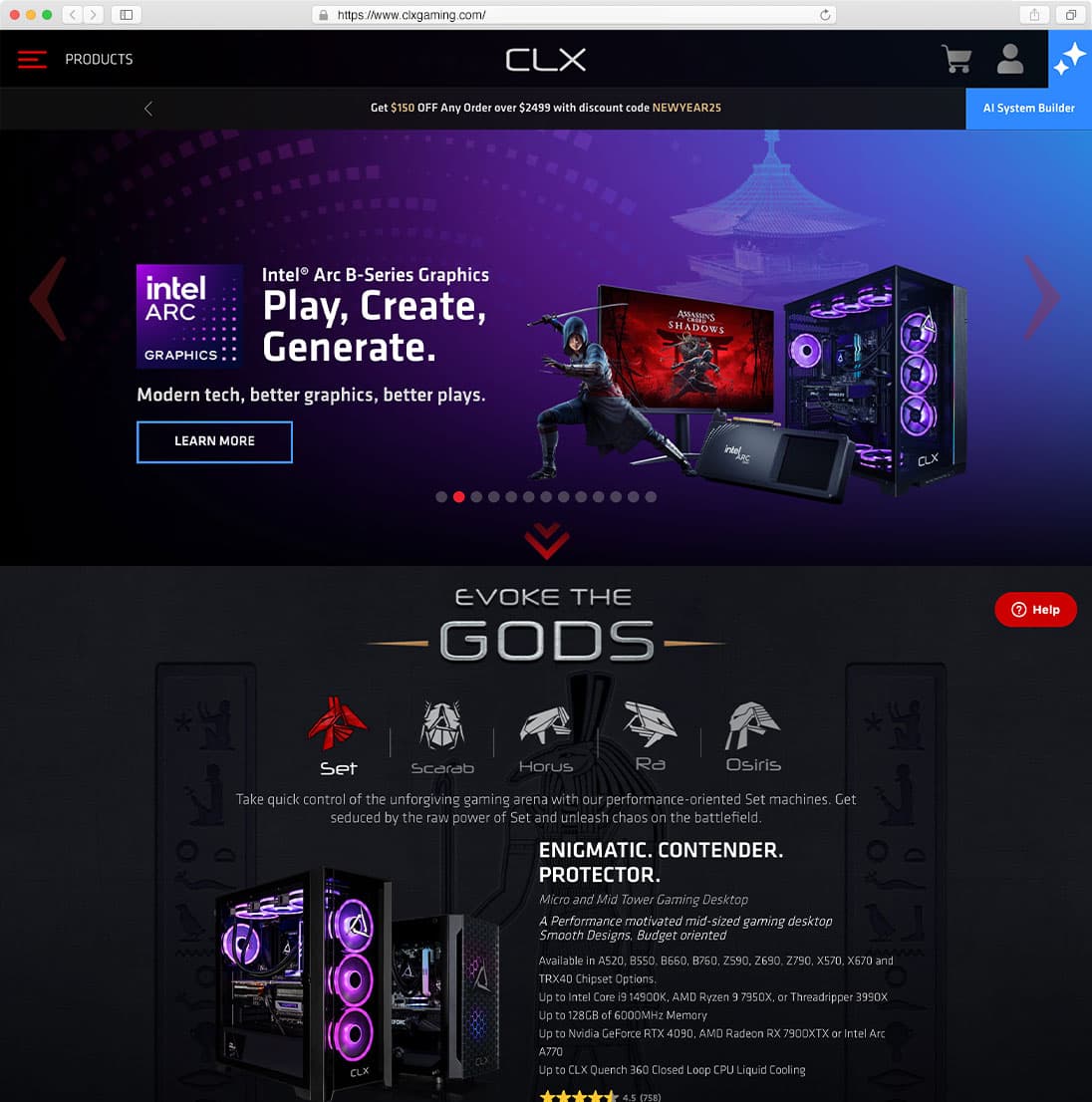
CLX Gaming
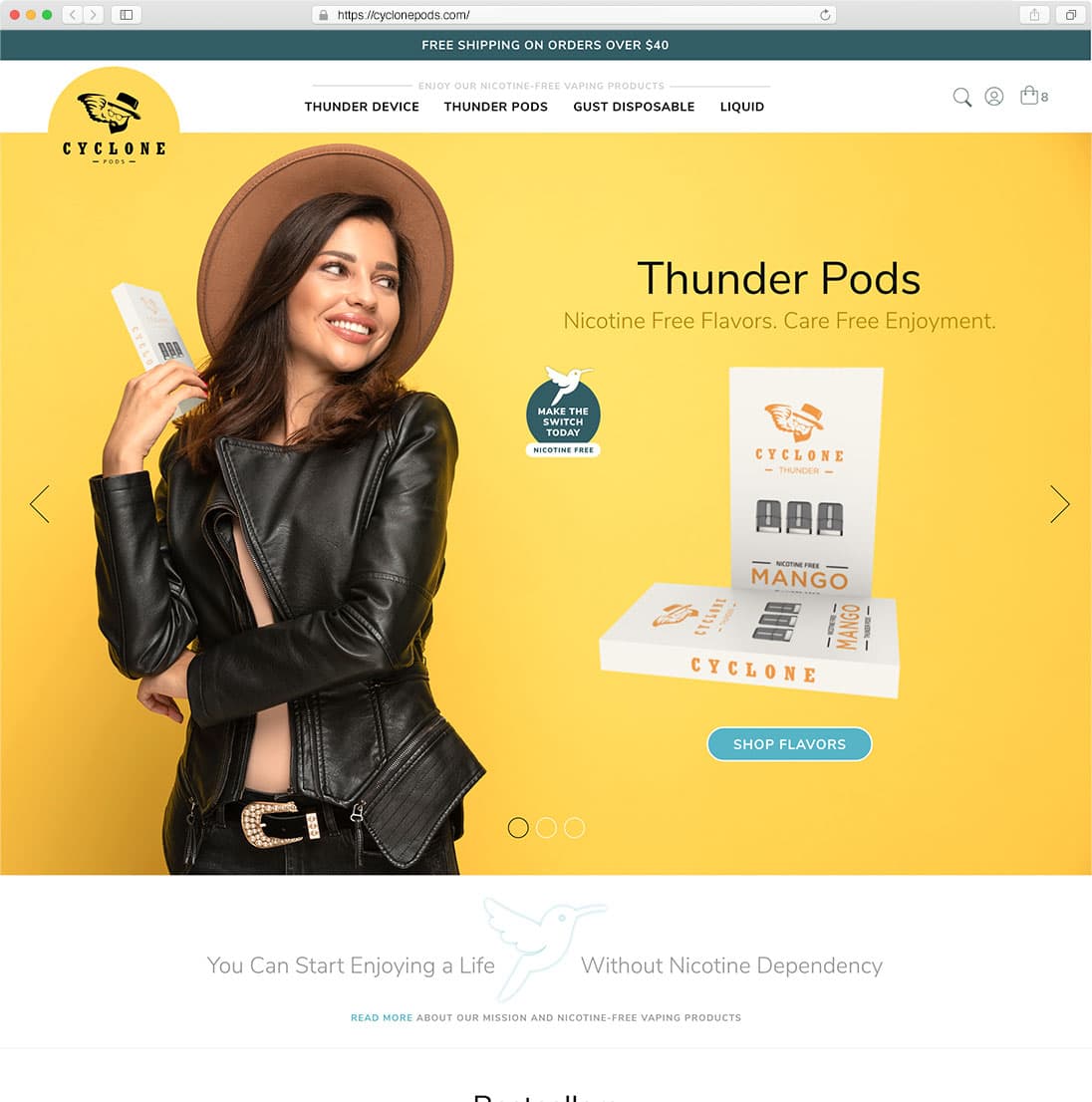
Cyclone Pods
Introducing
Your Industry. Your CMS. Managed for You.
- Unlimited managed edits - shipped on your plan's SLA
- SEO baked into every page, post, and location
- Technical SEO on every plan; AI schema and internal linking on Premium & Ultra
Note for e-commerce brands: WorkspaceCMS.ai is purpose-built for service businesses - informational, local, and professional sites. For e-commerce brands with product catalogs and shopping carts, the free CMS build applies as your headless front-end; cart and checkout integration is custom-quoted. Get a custom e-commerce quote →