

Austin SEO Agency
Helping Austin businesses win on Google and the AI engines (ChatGPT, Perplexity, Gemini, AI Overviews) that increasingly shape buyer decisions. Built on 15 years and 400+ brands of search experience.
Last updated: May 2026
Trusted by 400+ Brands · Certified Partners




Years in eCommerce
Of results, scale, and quality at the enterprise level.
Expert Team
Specialists across SEO, AI SEO, PPC, design, dev, and strategy.
US Core + Global Talent
US core team for clear communication; vetted global specialists for international client work.
Reputation Score
Rated 4.9/5 across 941+ verified client reviews.
Ask AI for a business like yours. Are you in the answer?
ChatGPT, Claude, and Perplexity only recommend sites they can read - and most can't read yours. Scan it free and see exactly where you stand.
Free · no signup · scores the 15 signals AI uses to find you · ~20 seconds
Austin SEO, step by step
Be the business Austin finds first
When someone in Austin searches for a coffee roaster near them, the map and the first few listings get nearly all of the attention. We tune your Google profile, location pages, reviews and site so your pin moves to the top of that list and stays there.
- ›Google profile and maps listing kept current
- ›Pages written for the Austin areas you serve
- ›Reviews encouraged and answered
What the Austin market actually looks like
Austin has transformed twice in a decade. First the metro became a software and developer-tools hub anchored by Indeed, Bumble, and relocated operations from Tesla, Oracle, and Atlassian. More recently it became a semiconductor and advanced-manufacturing center, led by Samsung's Taylor fab in Williamson County and expanded Applied Materials and NXP operations.
The University of Texas and its $4-billion-plus research enterprise, plus the Dell Medical School, anchor a growing life-sciences and health base. The Domain in North Austin functions as a second downtown for tech offices and retail, East Austin holds the creative and DTC brand cluster, South Congress remains the hospitality and boutique showcase, and the Capitol and Sixth Street districts drive government and tourism search.
For SEO buyers the implication is sharp: enterprise software head terms are brutally contested by in-market content teams at scale, while vertical SaaS, professional services, and trades serving Travis, Williamson, and Hays counties still reward disciplined local SEO. 1Digital® helps Austin companies pick the fights they can win rather than burning budget on category terms dominated by venture-backed incumbents.
Serving the greater Austin metro, including
Austin by the numbers
$256B
Austin-Round Rock metro GDP in 2024 (latest BEA)
Source: BEA, December 2025 release
Inside the Austin digital economy
Economic base
Austin anchors one of the fastest-growing major metros in the United States, and its economy has reinvented itself faster than almost any peer. The software and developer-tools base - built on Indeed, Bumble, a deep open-source and infrastructure community, and relocated operations from Tesla in southeast Travis County, Oracle on the lakefront, and Atlassian - created mature in-house content teams that make enterprise software SERPs nationally competitive.
More recently the metro became a serious semiconductor and advanced-manufacturing center: Samsung's Taylor fab in Williamson County is one of the largest single foreign manufacturing investments in US history, and NXP and Applied Materials sustain a chip supply chain along the Interstate 35 and Highway 130 corridors.
The University of Texas at Austin is the gravitational center - the state's flagship, a top-tier research institution, and through the Dell Medical School the anchor of a fast-growing health and life-sciences cluster. State government at the Capitol complex is a large, recession-resistant employer that drives steady professional-services and govtech search.
Geography and buyer behavior
Geography organizes buyer behavior: the Colorado River and Lady Bird Lake split central Austin, Interstate 35 is the historic east-west economic and demographic divide, and growth has spilled into a ring of fast-expanding suburbs - Round Rock and Pflugerville and Cedar Park to the north, Kyle and Buda and San Marcos to the south, Bee Cave and Lakeway in the Hill Country to the west.
The Domain functions as a polycentric second downtown, East Austin carries the creative and DTC economy, South Congress and the Rainey Street district anchor hospitality, and the South by Southwest and Austin City Limits festival calendar produces sharp episodic spikes in lodging, events, and hospitality search.
The durable strategy here is county- and suburb-specific pages - Williamson, Hays, the Hill Country ETJ - because a metro adding residents this fast fragments into distinct local packs that one Austin template cannot serve.
Named districts and micro-geography
Austin's micro-geography rewards precision. The Mueller redevelopment on the former airport site, the East Sixth and Rainey entertainment districts, the Zilker and Barton Springs recreation corridor, the Mopac and 183 toll-road employment nodes, and the Lake Travis and Lakeway resort edge each generate distinct demand profiles a generic page flattens.
The Texas Hill Country wineries and the Highland Lakes tourism belt out toward Marble Falls and Dripping Springs add a seasonal weekend-visitor economy, while the F1 Circuit of the Americas calendar and the East Austin gallery scene drive episodic spikes. Tesla's Gigafactory near the Colorado River and the McKalla Place soccer stadium district anchor southeast and north Austin demand respectively.
A brand that maps to these named nodes - not a metro abstraction - captures intent the venture-backed content teams chasing category head terms never localize for.
The sectors that drive Austin search demand
Where Austin-area commerce concentrates - and the local context that shapes how each sector competes in organic and AI search.
Software & developer tools
Indeed, Bumble, and relocated Oracle, Tesla, and Atlassian operations create mature content teams and nationally competitive enterprise software SERPs.
Semiconductors & advanced manufacturing
Samsung's Taylor fab plus NXP and Applied Materials sustain a chip supply chain and specialized B2B supplier demand in Williamson County.
Higher education & health
The University of Texas and the Dell Medical School anchor a fast-growing research and life-sciences cluster.
State government & govtech
The Capitol complex is a large, stable employer driving steady professional-services and govtech search.
Hospitality & events
South by Southwest, Austin City Limits, and the South Congress and Rainey Street districts drive episodic lodging and event-services spikes.
Who you're really competing with in Austin
Austin's organic competition is unusually content-team-heavy, with well-funded in-house SEO operations clustered downtown and around The Domain dominating software, fintech, and developer-tools SERPs.
The relocated-HQ wave brought national content operations with it, and state government and university-adjacent professional services are credential-sensitive.
The opening sits in the suburban ring and the trades: independent operators across Round Rock, Cedar Park, Kyle, and Bee Cave routinely run thin Google Business Profiles and weak schema, so disciplined suburb-named, vertical-specific pages can still take the map pack while venture-backed incumbents fight over category head terms that never convert for local service businesses.
Austin local-search insight
Samsung's semiconductor fab in Taylor, Williamson County, is one of the largest single foreign manufacturing investments in US history, anchoring a Central Texas chip supply chain.
The chip buildout creates high-value, low-competition B2B supplier SERPs that reward vertical-specific content far more than the saturated enterprise-software terms Austin is known for.
Source: Samsung Electronics and Texas economic development announcements; BEA Austin-Round Rock metro data
How a Austin brand should approach SEO
An Austin brand should not chase the metro as one market or fight the venture-backed content teams head-on. The disciplined approach maps demand by the Interstate 35 and river geography residents actually use.
Map central districts
Separate, genuinely differentiated pages for Downtown and the Capitol district, The Domain and North Austin, East Austin's creative corridor, and South Congress out to the Hill Country edge.
Cover the suburban ring
Dedicated pages for Round Rock, Cedar Park, Leander, Pflugerville, Kyle, and Buda tied to real service boundaries, permit jurisdictions, and Williamson or Hays county lines.
Split multi-location retail by submarket
A South Congress flagship page for walkable SoCo tourist-and-local foot traffic and a separate Domain page for North Austin office workers and suburban drivers off Mopac and 183.
Anchor episodic spikes
Pages mapped to the South by Southwest and Austin City Limits calendars, the F1 Circuit of the Americas weekend, Zilker and Barton Springs recreation, and Lady Bird Lake events.
Target the chip supply chain
Capability-specific, trade-press content aimed at the few technical buyers issuing fab contracts, sidestepping the enterprise-software SERPs national content teams already own.
Verticals strong in Austin
The categories where Austin-area eCommerce concentrates - and where our playbooks already have reps.
SEO & digital marketing services we offer in Austin
- ✓Local SEO & Google Business Profile optimization
- ✓Technical SEO audits & site architecture
- ✓On-page SEO & content production
- ✓Link building & digital PR
- ✓AI Search Optimization (AEO/GEO) - ChatGPT, Perplexity, Gemini, AI Overviews
- ✓Paid media (Google Ads, Meta, retargeting)
- ✓Web design & development (Shopify, BigCommerce, WordPress, headless)
- ✓Conversion rate optimization & GA4 analytics
Free Build Offer
Get Your Austin Business Website Built Free by 1Digital®
We design & launch your site at no cost - AI-first, SEO-first, live in a few days to a few weeks. Plans from $89/mo.
Your Austin SEO partner - founded 2012, still independent.
- →Founded 2012 in Philadelphia, PA. Privately held. US-based core team plus vetted global specialists.
- →400+ brands grown across eCommerce, B2B, SaaS, local service, and lead-gen since launch.
- →4.9/5 average across 941+ verified reviews on Google, Clutch, and industry directories.
- →Proprietary platform: WorkspaceCRM - AI tooling for AEO/GEO tracking, content production, and reporting.
- →Recognized partner: Shopify, BigCommerce, Google Partner, Meta Business Partner.
- →Senior US strategist on every account, serving the greater Austin metro and clients in all 50 states.
Win the Map Pack in Austin
Map Pack positions drive the highest-intent local clicks. We optimize your Google Business Profile, build accurate citations, and craft locally relevant content so your business shows up when Austincustomers search.
Before you hire an SEO agency
Common questions Austin businesses ask
Will SEO work for my business in Austin?
Yes - for almost every category. If buyers in Austin are searching for what you sell, a well-executed SEO program compounds visibility, leads, and revenue. The honest exception is hyper-niche B2B with fewer than ~50 monthly searches in your category - we'd recommend paid + outbound there and tell you so on the audit call.
What does the first 90 days with 1Digital® look like in Austin?
Days 1–14: technical + GBP audit, competitor benchmark, GA4/Search Console/rank-tracking baseline. Days 15–45: quick-win fixes deployed, strategy + content roadmap delivered. Days 46–90: monthly content + outreach cadence live, first ranking and traffic movement measured.
Discover our expertise
Austin SEO - Quick Answers
How competitive is SEO for SaaS and tech companies in Austin?
Extremely competitive at the category level.
Austin hosts thousands of software companies with mature content programs, so head terms like CRM software or project management tool are effectively closed to newcomers. What still works is vertical positioning, comparison and alternative pages, integration content, and bottom-funnel commercial queries. 1Digital® typically recommends Austin SaaS clients build topical authority inside a narrow ICP-defined cluster rather than chasing broad category visibility - the ROI math is far better and the content compounds faster.
Are there Texas-specific sales tax issues for Austin eCommerce stores?
Yes - Texas requires sales tax collection from remote sellers exceeding $500,000 in Texas revenue.
Origin-based sourcing applies to in-state sellers, so an Austin-based store generally collects at the Austin combined rate near 8.25% for Texas buyers, with local-jurisdiction nuance across Travis, Williamson, and Hays counties. Marketplace facilitator law covers Amazon and Etsy, but Shopify and BigCommerce stores register and file independently. Getting this right matters indirectly: surprise checkout taxes drive cart abandonment and negative reviews that feed behavioral and reputation signals.
How does Austin's semiconductor buildout create B2B SEO opportunities?
Yes - the chip buildout has created sustained demand for specialized suppliers with shallow incumbent-relationship SERPs.
Samsung's Taylor fab, the broader Williamson County chip corridor, and expanded NXP and Applied Materials operations have created sustained demand for cleanroom contractors, industrial gases, precision machining, calibration, semiconductor staffing, and EHS consulting. For an Austin or Round Rock B2B operator, ranking for terms like cleanroom contractor Central Texas or semiconductor logistics Austin can produce high-value contract leads with modest content investment relative to consumer categories.
Does Austin's growth and traffic geography affect local SEO segmentation?
Yes - Austin's geography fragments the metro into distinct local-pack submarkets.
Real demand has pushed into Round Rock, Cedar Park, Leander, Pflugerville, Kyle, and Buda, and the Colorado River plus Interstate 35 split the metro - a North Austin Domain resident and a South Austin or Hays County resident surface different local packs entirely. Multi-location businesses need dedicated, differentiated pages per city rather than one Austin page that competes against itself.
How much does an SEO agency cost in Austin?
SEO retainers typically run $1,500–$10,000+/month, consulting $100–$300/hour, and one-time technical or migration projects $5,000–$30,000. Pricing scales with scope (local-only vs. national), keyword competitiveness, and content/link volume. 1Digital® publishes scoped, fixed-fee proposals after a free audit, so there are no hourly surprises.
How long does SEO take to show results for a Austin business?
Local SEO results (map pack movement, Google Business Profile leads) typically appear within 30–90 days. Competitive organic rankings take 4–9 months, and authority-driven national terms 9–18 months. Sites with clean technical foundations move faster - onboarding starts with a technical audit specifically to shorten that runway.
Do agencies in Austin optimize for ChatGPT, Perplexity, and Google AI Overviews?
Most do not - AI search optimization (AEO/GEO) is still rare in 2026. 1Digital® offers it through our proprietary WorkspaceCRM platform, which monitors brand mentions and citation share across ChatGPT, Perplexity, Gemini, and Google AI Overviews and structures content to be cited by them, not just ranked by Google.
Request your complimentary Austin local SEO audit
Share a few details and a US-based senior strategist will review your site, GBP, citations, and local rankings - then send back a prioritized roadmap. No sales script. No junior account manager.
Brands We've Helped Grow

Eloquence
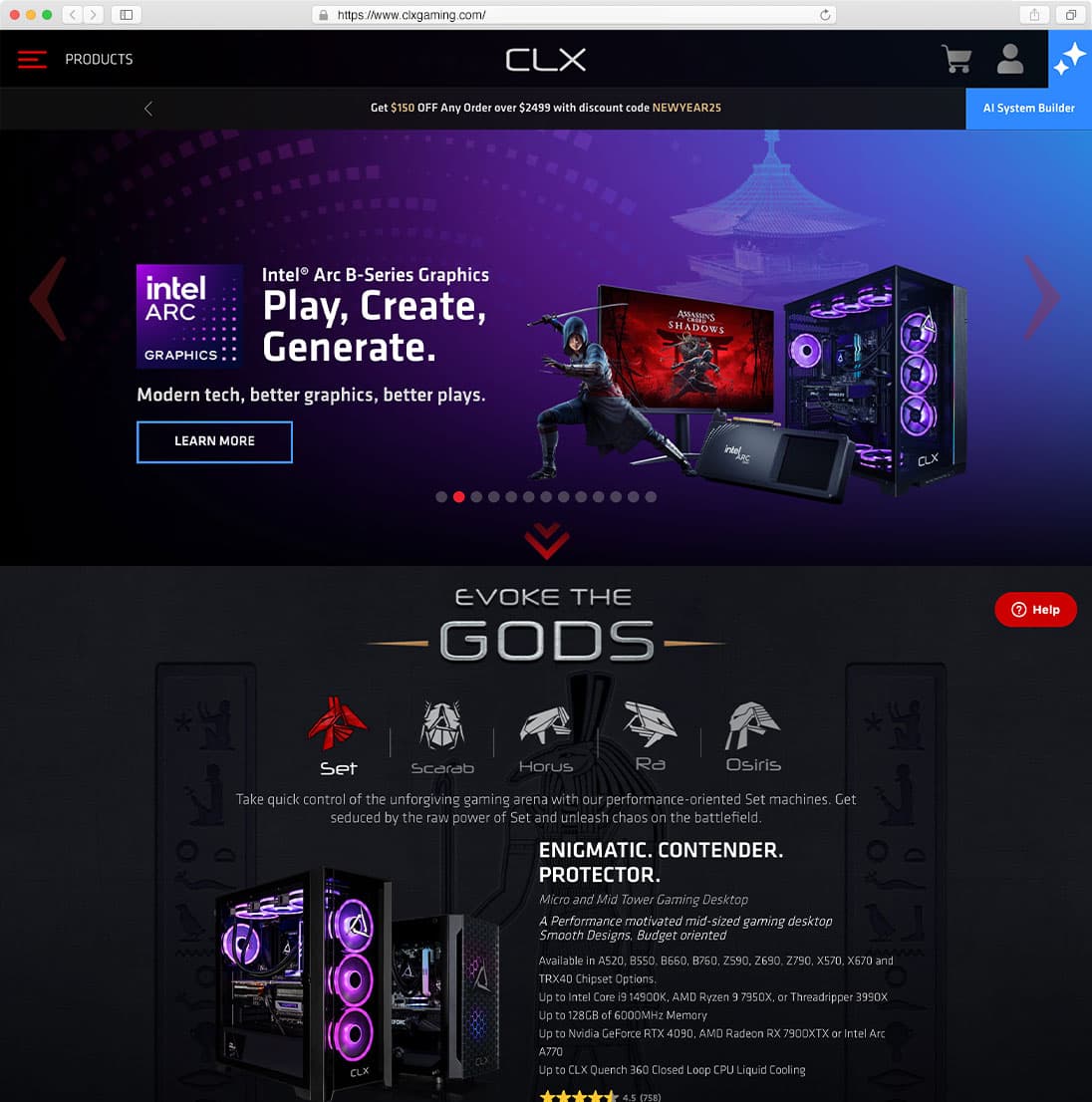
CLX Gaming

Cyclone Pods
Introducing
Your Industry. Your CMS. Managed for You.
- Unlimited managed edits - shipped on your plan's SLA
- SEO baked into every page, post, and location
- Technical SEO on every plan; AI schema and internal linking on Premium & Ultra
Note for e-commerce brands: WorkspaceCMS.ai is purpose-built for service businesses - informational, local, and professional sites. For e-commerce brands with product catalogs and shopping carts, the free CMS build applies as your headless front-end; cart and checkout integration is custom-quoted. Get a custom e-commerce quote →