

Pittsburgh SEO Agency
Helping Pittsburgh businesses win on Google and the AI engines (ChatGPT, Perplexity, Gemini, AI Overviews) that increasingly shape buyer decisions. Built on 15 years and 400+ brands of search experience.
Last updated: May 2026
Trusted by 400+ Brands · Certified Partners




Years in eCommerce
Of results, scale, and quality at the enterprise level.
Expert Team
Specialists across SEO, AI SEO, PPC, design, dev, and strategy.
US Core + Global Talent
US core team for clear communication; vetted global specialists for international client work.
Reputation Score
Rated 4.9/5 across 941+ verified client reviews.
Ask AI for a business like yours. Are you in the answer?
ChatGPT, Claude, and Perplexity only recommend sites they can read - and most can't read yours. Scan it free and see exactly where you stand.
Free · no signup · scores the 15 signals AI uses to find you · ~20 seconds
Pittsburgh SEO, step by step
Be the business Pittsburgh finds first
When someone in Pittsburgh searches for what you sell, the first few results get nearly all of the attention. We tune your Google profile, location pages, reviews and site so your business climbs into those spots and stays there.
- ›Google profile and maps listing kept current
- ›Pages written for the Pittsburgh areas you serve
- ›Reviews encouraged and answered
What the Pittsburgh market actually looks like
Pittsburgh pivoted from steel to an eds-and-meds and robotics economy without leaving its manufacturing base behind, and that split defines its search market. Carnegie Mellon University and the University of Pittsburgh anchor a robotics, AI, and autonomous-systems corridor running through the Strip District, Lawrenceville, and Hazelwood Green, with Aurora Innovation, Duolingo, and a deep CMU spinout network.
UPMC is the metro's largest employer and a vast integrated health-and-insurance system, and PNC Financial keeps its headquarters downtown in the Golden Triangle. Legacy advanced manufacturers and metal fabricators along the Monongahela and Ohio river valleys still run a long-tail B2B economy.
The terrain itself - three rivers and steep hillsides splitting the city into more than ninety distinct neighborhoods linked by bridges, inclines, and tunnels - makes hyper-local search behavior unusually strong here. 1Digital® builds Pittsburgh programs that separate research-heavy enterprise content from neighborhood-level local intent across the South Side, Squirrel Hill, and the suburban river valleys.
Serving the greater Pittsburgh metro, including
Pittsburgh by the numbers
$175B
Pittsburgh metro GDP in 2024 (latest BEA)
Source: BEA, December 2025 release
Inside the Pittsburgh digital economy
Economic base
Pittsburgh anchors a metro that rebuilt itself around eds, meds, and robotics without abandoning its industrial base, and the result is a genuinely split search market. Carnegie Mellon University and the University of Pittsburgh sit together in Oakland and anchor a robotics, AI, and autonomous-systems corridor that runs through the Strip District, Lawrenceville, and the Hazelwood Green redevelopment - Aurora Innovation, Duolingo, and a deep bench of CMU spinouts produce research-stage, technical search demand unlike any other Rust Belt city.
UPMC is the metro's largest employer and a vast integrated provider-and-insurer that dominates the YMYL healthcare SERPs, and PNC Financial keeps its headquarters in the downtown Golden Triangle. Beneath the knowledge economy, advanced manufacturing, specialty metals, and energy-services firms along the Monongahela, Allegheny, and Ohio river valleys still run a long-tail B2B economy that broad consumer keywords never reach.
Geography and buyer behavior
Geography drives buyer behavior here with unusual force. Three rivers, steep hillsides, and a fabric of more than ninety named neighborhoods linked by bridges, inclines, and the Fort Pitt and Squirrel Hill tunnels mean Pittsburghers search by neighborhood and by valley, not by city.
The East End carries the dense independent economy - Shadyside along Walnut Street, Squirrel Hill, Bloomfield's Little Italy, East Liberty, and Lawrenceville's Butler Street tech-and-retail corridor; the South Side Flats along East Carson Street and Mount Washington carry hospitality; downtown's Golden Triangle and the Cultural District hold finance, law, and the event economy around PPG Paints Arena and Acrisure Stadium.
The suburban river valleys are distinct markets in their own right - the North Hills through Cranberry, Wexford, and the airport corridor; the South Hills through Mount Lebanon and Bethel Park; and the Monongahela Valley mill boroughs. The durable strategy is neighborhood- and valley-specific pages - Lawrenceville, Shadyside, Cranberry, Mount Lebanon - rather than one Pittsburgh template that ignores how steeply this city is segmented by terrain.
Named districts and micro-geography
Pittsburgh micro-geography rewards precision. The Strip District's transformation from produce warehouses to a robotics-and-food corridor, the Oakland institutional core, the Hazelwood Green innovation campus on a former mill site, and the airport-corridor logistics and energy node out toward Robinson each generate distinct demand a metro abstraction erases.
Episodic spikes track the Steelers and Penguins calendars, the Pittsburgh Marathon, and the Picklesburgh and arts-festival schedule downtown. The terrain means a North Side or North Hills resident and a South Hills resident genuinely inhabit different local-search worlds separated by the rivers and tunnels. A brand mapping to these named neighborhoods, river valleys, and tunnel-and-bridge catchments reaches intent national content teams chasing generic Pittsburgh head terms never localize for.
The sectors that drive Pittsburgh search demand
Where Pittsburgh-area commerce concentrates - and the local context that shapes how each sector competes in organic and AI search.
Robotics & AI
Carnegie Mellon and Pitt anchor a robotics, AI, and autonomous-systems corridor through the Strip District, Lawrenceville, and Hazelwood Green with deep spinout density.
Healthcare
UPMC is the metro's largest employer and a vast integrated provider-insurer that dominates the YMYL healthcare SERPs region-wide.
Finance & professional services
PNC Financial's headquarters anchors a downtown Golden Triangle finance, law, and professional-services economy.
Advanced manufacturing & energy
Specialty metals, fabrication, and energy-services firms along the Monongahela and Ohio valleys run a durable long-tail B2B economy.
Independent retail & hospitality
Lawrenceville, Shadyside, the South Side, and Bloomfield sustain a dense neighborhood economy where hyper-local SEO is decisive.
Who you're really competing with in Pittsburgh
Pittsburgh organic competition is institution-heavy at the top and wide open by neighborhood, where steep terrain segments the local pack block by block.
UPMC and its vendor ecosystem own the YMYL healthcare SERPs, and the CMU and Pitt research halo makes parts of the robotics and AI category credential-sensitive. PNC and the downtown professional-services base are competitive. National franchises hold broad proximity terms in the suburban valleys.
But Pittsburgh's deep independent economy - Lawrenceville and Shadyside retail, South Side and Bloomfield hospitality, East End trades, and the North Hills and South Hills suburban service businesses - routinely runs thin Google Business Profiles and weak schema, and the steep neighborhood segmentation means the local pack turns over block by block. The realistic play is neighborhood- and valley-named content where institutional teams never localize.
Pittsburgh local-search insight
Pittsburgh is built across three rivers and steep terrain into more than ninety distinct neighborhoods connected by bridges, inclines, and tunnels.
Because residents navigate and search by neighborhood and river valley, hyper-local neighborhood-named pages consistently outperform broad citywide targeting more sharply here than in flatter metros.
Source: City of Pittsburgh neighborhood planning data and regional geography references
How a Pittsburgh brand should approach SEO
A Pittsburgh brand would never treat the city as one market - the terrain forbids it. The disciplined approach maps demand by the river-valley and neighborhood geography residents actually use.
Neighborhood and valley pages
Separate, genuinely differentiated pages for downtown's Golden Triangle and Cultural District, the Strip District, Oakland, Lawrenceville along Butler Street, Shadyside along Walnut, the South Side Flats along East Carson, and Squirrel Hill - plus distinct suburban-valley pages for the North Hills through Cranberry, the South Hills through Mount Lebanon, and the Monongahela Valley boroughs, each tied to real bridges, tunnels, and corridors.
Two-store split
A retailer with a Shadyside store and a Cranberry satellite would write two substantively different pages - one for walkable Walnut Street East End foot traffic, one for North Hills suburban drivers across the rivers and tunnels.
Allegheny County trades coverage
A home-services operator across Allegheny County would publish neighborhood- and borough-level pages tied to real service boundaries and the tunnel-and-bridge catchments, then earn citations from the regional press.
Research-stage B2B content
For B2B sellers into robotics, healthcare, or river-valley manufacturing, the play is research-stage, capability-specific content and trade-press digital PR aimed at the technical buyers who issue contracts, sidestepping the institution-owned head terms entirely.
Verticals strong in Pittsburgh
The categories where Pittsburgh-area eCommerce concentrates - and where our playbooks already have reps.
SEO & digital marketing services we offer in Pittsburgh
- ✓Local SEO & Google Business Profile optimization
- ✓Technical SEO audits & site architecture
- ✓On-page SEO & content production
- ✓Link building & digital PR
- ✓AI Search Optimization (AEO/GEO) - ChatGPT, Perplexity, Gemini, AI Overviews
- ✓Paid media (Google Ads, Meta, retargeting)
- ✓Web design & development (Shopify, BigCommerce, WordPress, headless)
- ✓Conversion rate optimization & GA4 analytics
Free Build Offer
Get Your Pittsburgh Business Website Built Free by 1Digital®
We design & launch your site at no cost - AI-first, SEO-first, live in a few days to a few weeks. Plans from $89/mo.
Your Pittsburgh SEO partner - founded 2012, still independent.
- →Founded 2012 in Philadelphia, PA. Privately held. US-based core team plus vetted global specialists.
- →400+ brands grown across eCommerce, B2B, SaaS, local service, and lead-gen since launch.
- →4.9/5 average across 941+ verified reviews on Google, Clutch, and industry directories.
- →Proprietary platform: WorkspaceCRM - AI tooling for AEO/GEO tracking, content production, and reporting.
- →Recognized partner: Shopify, BigCommerce, Google Partner, Meta Business Partner.
- →Senior US strategist on every account, serving the greater Pittsburgh metro and clients in all 50 states.
Win the Map Pack in Pittsburgh
Map Pack positions drive the highest-intent local clicks. We optimize your Google Business Profile, build accurate citations, and craft locally relevant content so your business shows up when Pittsburghcustomers search.
Before you hire an SEO agency
Common questions Pittsburgh businesses ask
Will SEO work for my business in Pittsburgh?
Yes - for almost every category. If buyers in Pittsburgh are searching for what you sell, a well-executed SEO program compounds visibility, leads, and revenue. The honest exception is hyper-niche B2B with fewer than ~50 monthly searches in your category - we'd recommend paid + outbound there and tell you so on the audit call.
What does the first 90 days with 1Digital® look like in Pittsburgh?
Days 1–14: technical + GBP audit, competitor benchmark, GA4/Search Console/rank-tracking baseline. Days 15–45: quick-win fixes deployed, strategy + content roadmap delivered. Days 46–90: monthly content + outreach cadence live, first ranking and traffic movement measured.
Discover our expertise
Pittsburgh SEO - Quick Answers
How should Pittsburgh robotics, AI, and healthcare companies approach SEO differently?
Pittsburgh's research-driven verticals sell into long, technical buying cycles, so SEO has to target research-stage queries with technical comparison pages, whitepapers, and structured author bios.
Pittsburgh's research-driven verticals - robotics and autonomous systems, AI, and UPMC-scale healthcare - sell into long, technical buying cycles, so SEO has to target research-stage queries, not just bottom-funnel terms. That means technical comparison pages, whitepapers, and case studies that rank for problem-specific queries like sensor-fusion integration or clinical-trial recruitment platforms, plus structured author and researcher bios that signal expertise to Google's E-E-A-T systems. Pairing that technical content with schema markup and digital PR in the regional tech and business press lets emerging robotics and health-tech brands earn authority signals beyond the Carnegie Mellon and Pitt halo rather than competing on broad category head terms.
Does Pennsylvania have a data-privacy law that affects how Pittsburgh sites collect leads?
As of 2025 Pennsylvania has not enacted a comprehensive consumer data-privacy law, but privacy law follows the user, so any Pittsburgh site selling out of state must still comply with those states' rules.
Pennsylvania has not enacted a comprehensive consumer data-privacy law comparable to California's CCPA and CPRA or Virginia's VCDPA, so Pittsburgh sites are not subject to a state-level opt-out regime. However, privacy law follows the user, not the headquarters: if you sell to residents of California, Colorado, Virginia, Connecticut, or the growing list of states with active statutes, those rules apply. Pittsburgh ecommerce and SaaS sites should still run a clear cookie banner, a public privacy policy, and a Do Not Sell or Share link - table stakes for trust signals and conversion, and for avoiding enforcement in the states where buyers actually live.
How does Pittsburgh's terrain and neighborhood structure affect local SEO?
Strongly - three rivers, steep hillsides, and more than ninety named neighborhoods mean Pittsburghers search by neighborhood far more than by city.
Three rivers, steep hillsides, and a structure of more than ninety named neighborhoods connected by bridges, inclines, and tunnels mean Pittsburghers navigate and search by neighborhood far more than by Pittsburgh - Shadyside, Squirrel Hill, Bloomfield, the South Side Flats, Mount Washington, and Lawrenceville surface different local packs and behave as separate markets. The rivers and the Fort Pitt and Squirrel Hill tunnels are real behavioral barriers - a North Hills resident and a South Hills resident rarely cross for routine services. Multi-location operators need neighborhood- and valley-named pages and a verified Google Business Profile at each staffed address rather than one citywide page.
Which Pittsburgh submarkets and suburbs have the most winnable SERPs?
Openings sit in the East End neighborhood economy and the suburban river valleys - North Hills through Cranberry and Wexford, South Hills through Mount Lebanon and Bethel Park, and the Monongahela and Ohio valley boroughs.
Downtown's Golden Triangle and Oakland are saturated for professional services and anything adjacent to the UPMC and university institutional base. Openings sit in the East End neighborhood economy - Lawrenceville along Butler Street, Bloomfield, East Liberty, and the Strip District - plus the suburban river valleys: the North Hills through Cranberry and Wexford, the South Hills through Mount Lebanon and Bethel Park, and the Monongahela and Ohio valley boroughs where independents run thin Google Business Profiles. Neighborhood- and borough-named pages tied to real corridors and the tunnel-and-bridge geography typically outperform broad Pittsburgh targeting.
How much does an SEO agency cost in Pittsburgh?
SEO retainers typically run $1,500–$10,000+/month, consulting $100–$300/hour, and one-time technical or migration projects $5,000–$30,000. Pricing scales with scope (local-only vs. national), keyword competitiveness, and content/link volume. 1Digital® publishes scoped, fixed-fee proposals after a free audit, so there are no hourly surprises.
How long does SEO take to show results for a Pittsburgh business?
Local SEO results (map pack movement, Google Business Profile leads) typically appear within 30–90 days. Competitive organic rankings take 4–9 months, and authority-driven national terms 9–18 months. Sites with clean technical foundations move faster - onboarding starts with a technical audit specifically to shorten that runway.
Do agencies in Pittsburgh optimize for ChatGPT, Perplexity, and Google AI Overviews?
Most do not - AI search optimization (AEO/GEO) is still rare in 2026. 1Digital® offers it through our proprietary WorkspaceCRM platform, which monitors brand mentions and citation share across ChatGPT, Perplexity, Gemini, and Google AI Overviews and structures content to be cited by them, not just ranked by Google.
Request your complimentary Pittsburgh local SEO audit
Share a few details and a US-based senior strategist will review your site, GBP, citations, and local rankings - then send back a prioritized roadmap. No sales script. No junior account manager.
Brands We've Helped Grow

Eloquence
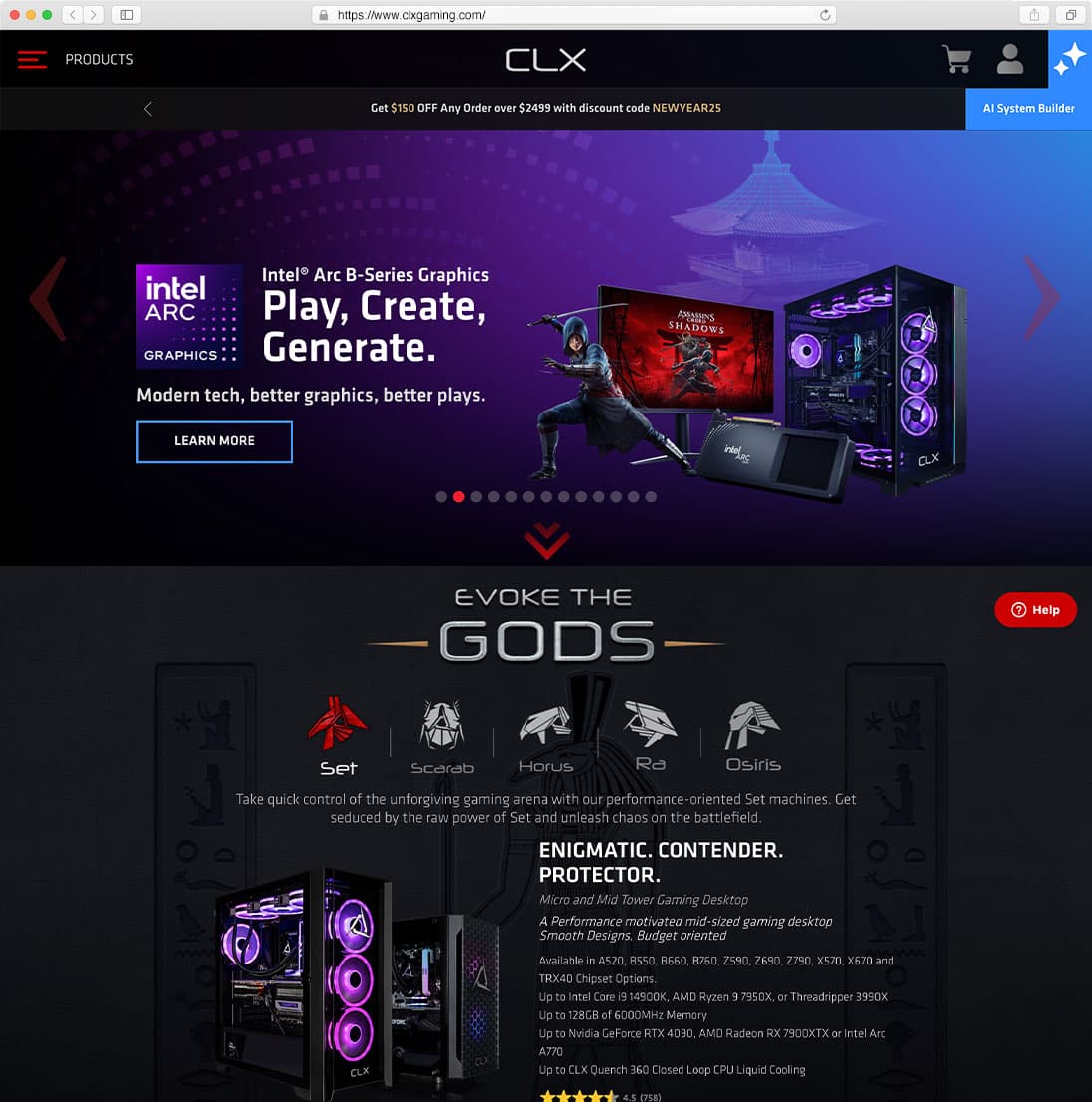
CLX Gaming
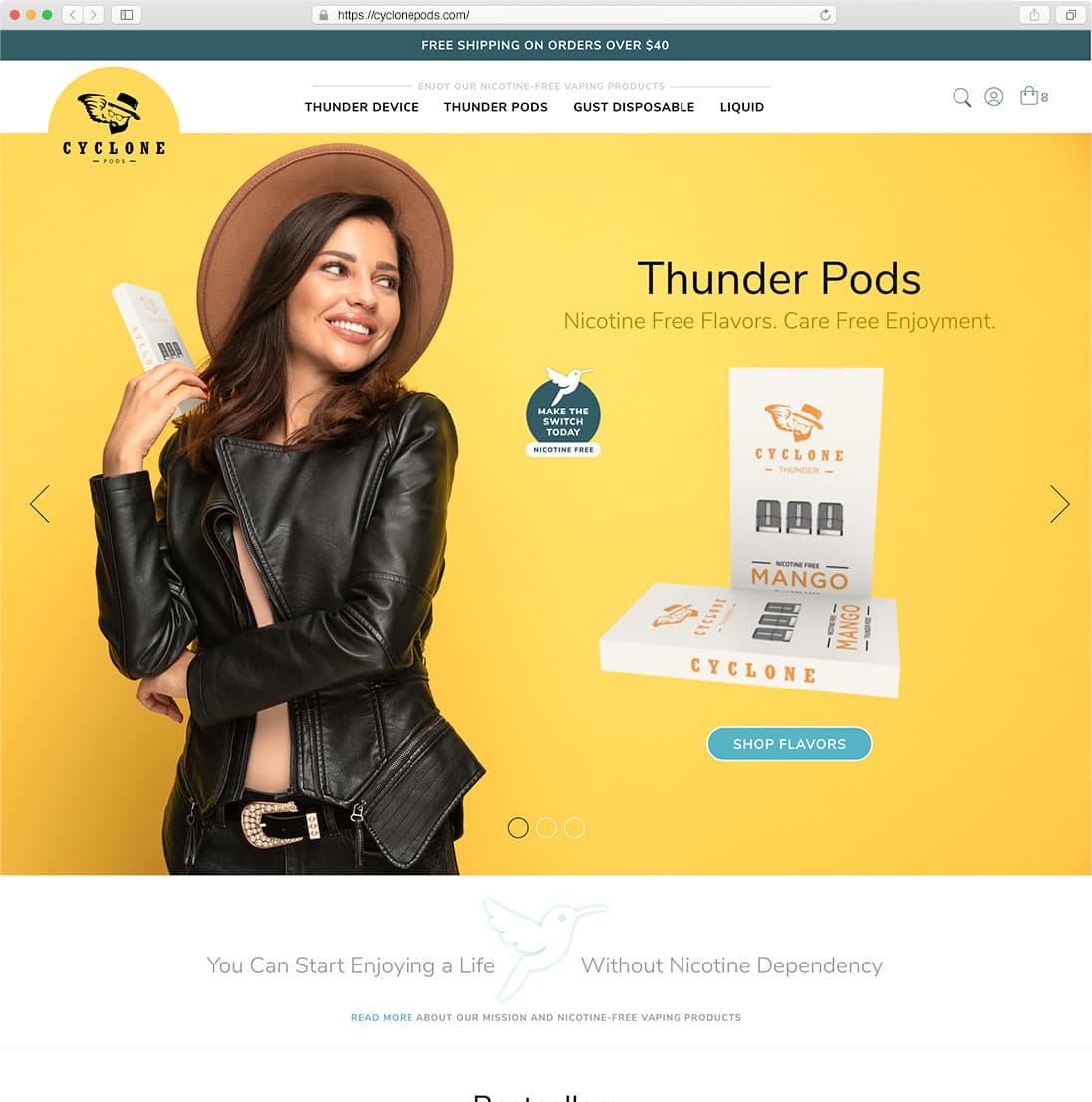
Cyclone Pods
Introducing
Your Industry. Your CMS. Managed for You.
- Unlimited managed edits - shipped on your plan's SLA
- SEO baked into every page, post, and location
- Technical SEO on every plan; AI schema and internal linking on Premium & Ultra
Note for e-commerce brands: WorkspaceCMS.ai is purpose-built for service businesses - informational, local, and professional sites. For e-commerce brands with product catalogs and shopping carts, the free CMS build applies as your headless front-end; cart and checkout integration is custom-quoted. Get a custom e-commerce quote →