
Shopify PPC Strategy: How to Align Paid Search With Your SEO for Maximum Revenue
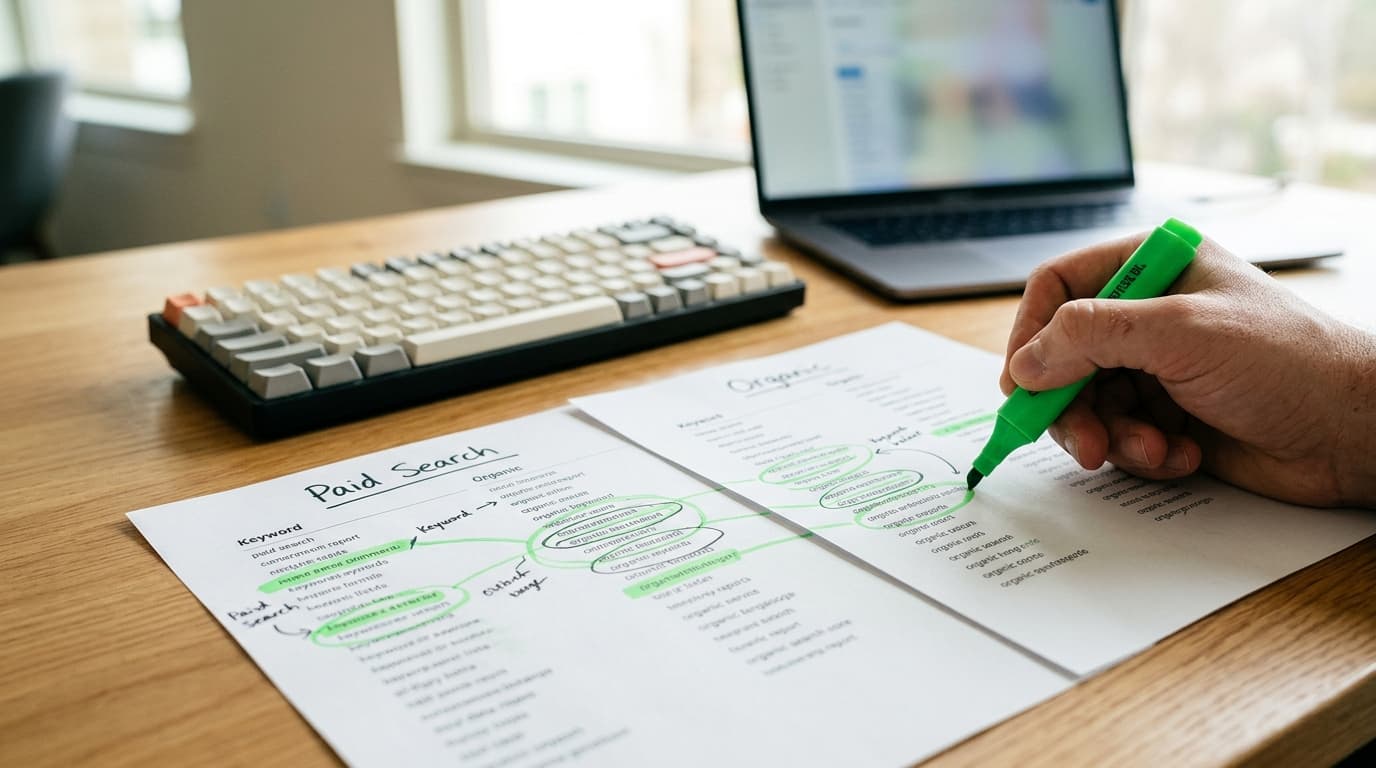
Aligning your Shopify PPC campaigns with your organic SEO creates a compounding revenue effect - paid ads capture immediate demand while SEO builds lasting authority, and the two channels reinforce each other when they share keyword intelligence, landing page signals, and conversion data. Done right, this coordination consistently lifts total channel revenue by 20–35% compared to running them in isolation.
Why PPC and SEO Work Better Together for Shopify Stores
Most Shopify merchants treat Google Ads and organic search as separate budgets managed by separate people. That's leaving money on the table. When both channels share data, you get:
- Faster keyword validation: PPC conversion data tells you which keywords actually buy, not just browse - feeding smarter SEO content priorities.
- Double SERP coverage: Appearing in both the paid and organic results for a query increases click-through rate on each listing by roughly 15–20%, according to a 2024 Google internal study.
- Stronger Quality Scores: A landing page that ranks organically signals relevance to Google's Quality Score algorithm, lowering your cost-per-click.
- Remarketing audiences built from organic traffic: Visitors who found you through organic search are warm - retargeting them with paid display or Shopping ads often delivers 3–5× higher conversion rates than cold audiences.
Step 1 - Mine Your SEO Data to Build Smarter PPC Campaigns
Google Search Console is the most underused tool in Shopify PPC strategy. Export your top organic queries monthly and sort by impressions with low click-through rate - these are high-intent searches where you rank on page one or two but still lose clicks. Bidding on those exact queries in Google Ads captures revenue while your organic position climbs.
Equally important: identify your top-converting organic landing pages inside Google Analytics 4. If your /collections/running-shoes page drives 40% of organic revenue, that page deserves a dedicated PPC campaign with its own ad group, not a generic sitewide campaign pointing to your homepage.
Step 2 - Use PPC Conversion Data to Prioritize SEO Content
Paid search gives you conversion truth, fast. Within two to four weeks of running a Shopping or Search campaign, you know which product titles, which match types, and which landing page variants convert. Use that signal deliberately:
- Pull your top 20 converting search terms from Google Ads.
- Check each term's organic ranking in Search Console.
- Terms converting in PPC but ranking below position 10 organically become your next SEO content targets - collection page optimizations, buying guides, or blog posts.
- Once those pages reach positions 1–5 organically, reallocate that PPC budget to new untested queries.
This creates a self-funding cycle: PPC validates demand, SEO captures it at zero marginal cost, and freed budget expands your PPC testing surface.
Step 3 - Align Landing Pages Across Both Channels
One of the most common Shopify PPC mistakes is running ads to pages that weren't built for conversion - or worse, pages that conflict with the organic intent you've established. Your landing page strategy should follow this framework:
Query Type Best Landing Page SEO Alignment Brand + product (e.g., "Nike Air Max 90") Product detail page Optimized product title, schema markup Category (e.g., "men's trail running shoes") Collection page Collection page with editorial intro copy Problem-aware (e.g., "shoes for plantar fasciitis") Dedicated landing page or buying guide Long-form blog post targeting same keyword cluster Competitor comparison (e.g., "Hoka vs Brooks") Comparison content page SEO comparison article with internal links to products High-commercial intent (e.g., "buy trail shoes under $150") Filtered collection or sale page Price-specific collection page with faceted SEOWhen PPC and SEO point to the same well-optimized page, Quality Score improves, bounce rate drops, and organic ranking signals strengthen - all from the same page investment.
Step 4 - Coordinate Keyword Match Types With SEO Coverage Gaps
Exact match campaigns protect your highest-value branded and category terms where you already rank organically. Broad match and Performance Max campaigns are better used for discovery - finding new queries your SEO hasn't targeted yet. Set up a weekly search term audit to catch converting broad match queries, then route those into your SEO pipeline immediately.
A practical rule: if a search term has generated more than 10 conversions in PPC and you have zero organic presence for it, that term gets added to your content calendar within 30 days.
Step 5 - Use Seasonal PPC Data to Front-Run SEO Trends
Shopify merchants with seasonal catalogs - apparel, gifts, outdoor gear - can use Google Ads seasonal data to predict SEO content needs before peak traffic arrives. If your Q4 PPC data from the previous year shows "personalized gift baskets under $75" converting at 4.2%, you need that collection page optimized organically before November, not after. Build your SEO editorial calendar around last year's top PPC search terms, 90 days ahead of each peak season.
Step 6 - Build Remarketing Audiences From Organic Traffic Segments
Shopify's Google Ads integration allows you to build remarketing audiences from specific URL paths. Create separate audiences for:
- Organic visitors who viewed a product but didn't add to cart
- Organic visitors who started checkout but abandoned
- Organic blog readers who never visited a collection page
- Past purchasers who arrived via organic search (target for repeat purchase campaigns)
These segments convert at 2–6× the rate of cold PPC audiences because organic visitors have already demonstrated brand intent. Your ad spend goes further, and your blended CAC drops.
Measuring the Combined Impact
The biggest mistake in measuring a unified PPC-SEO strategy is measuring each channel in isolation. Instead, track:
- Total search revenue (paid + organic combined) as the primary KPI
- Impression share by keyword- are you dominating the full SERP for your priority terms?
- Assisted conversions- what percentage of paid conversions were assisted by an earlier organic touchpoint, or vice versa?
- Blended CPA- total marketing spend divided by total search-attributed conversions
In Google Analytics 4, set up a custom channel grouping that combines Paid Search and Organic Search into a "Search" macro-channel. Report on that combined view weekly alongside your individual channel metrics.
The Compounding Advantage Over Time
PPC spend stops when the budget stops. SEO compounds - a collection page that ranks for 200 product keywords in year two generates revenue without incremental spend. When you fund SEO content investment with PPC-validated keywords, you're essentially building a revenue asset with the highest-probability returns your category offers. The stores winning in competitive Shopify niches today run integrated search strategies, not siloed ones.
How quickly can I see results from aligning my Shopify PPC and SEO strategies?
PPC improvements show within days of implementing changes. SEO improvements from PPC-informed content typically surface in search rankings within 60–120 days, with meaningful revenue impact from new organic pages appearing in three to six months. The data-sharing benefits - better keyword targeting, smarter budget allocation - start immediately once you connect Search Console and Google Ads under the same Google account.
Should I pause PPC for keywords where I already rank #1 organically?
Not automatically. For brand terms, pausing PPC rarely saves meaningful budget because CPCs are low and competitors may steal the paid slot. For non-brand category terms where you hold a stable #1 organic ranking, pausing PPC and monitoring revenue impact for 30 days is a reasonable test - but expect a net revenue dip of 10–20% even with strong organic rankings, since paid ads capture users who scroll past organic results or prefer the ad label for transactional queries.
What Shopify apps or tools help connect PPC and SEO data?
Google's native tools - Search Console, Google Ads, and GA4 - cover the core data connection. For deeper Shopify-specific analysis, tools like Semrush's Shopify integration, Triple Whale, and Northbeam provide cross-channel attribution that surfaces the organic-to-paid assist paths most Shopify merchants miss. Link Google Ads and Search Console directly inside Google Ads settings to unlock the Search Terms report with organic position data alongside paid click data.
How do I structure my Google Ads campaigns for a Shopify store with hundreds of products?
Use a three-tier structure: (1) Brand campaigns protecting your own brand terms at low CPC, (2) category campaigns organized around your Shopify collection structure - one campaign per major collection, one ad group per sub-collection, and (3) a Performance Max campaign for discovery and feed-based Shopping. Mirror this structure in your SEO site architecture so collection pages and ad groups target identical keyword clusters. This alignment is what drives Quality Score improvements and organic ranking synergy.
Is Performance Max compatible with a Shopify SEO strategy?
Yes, with guardrails. Performance Max handles landing page selection algorithmically, which means it can route traffic to pages that aren't SEO-optimized. To prevent this, use URL exclusions to block low-quality pages (thin product variants, tag pages, search result pages) and use page feeds to direct Performance Max toward your core collection and product pages - the same pages your SEO prioritizes. This way both channels reinforce the same high-quality landing pages rather than competing with or diluting each other.