

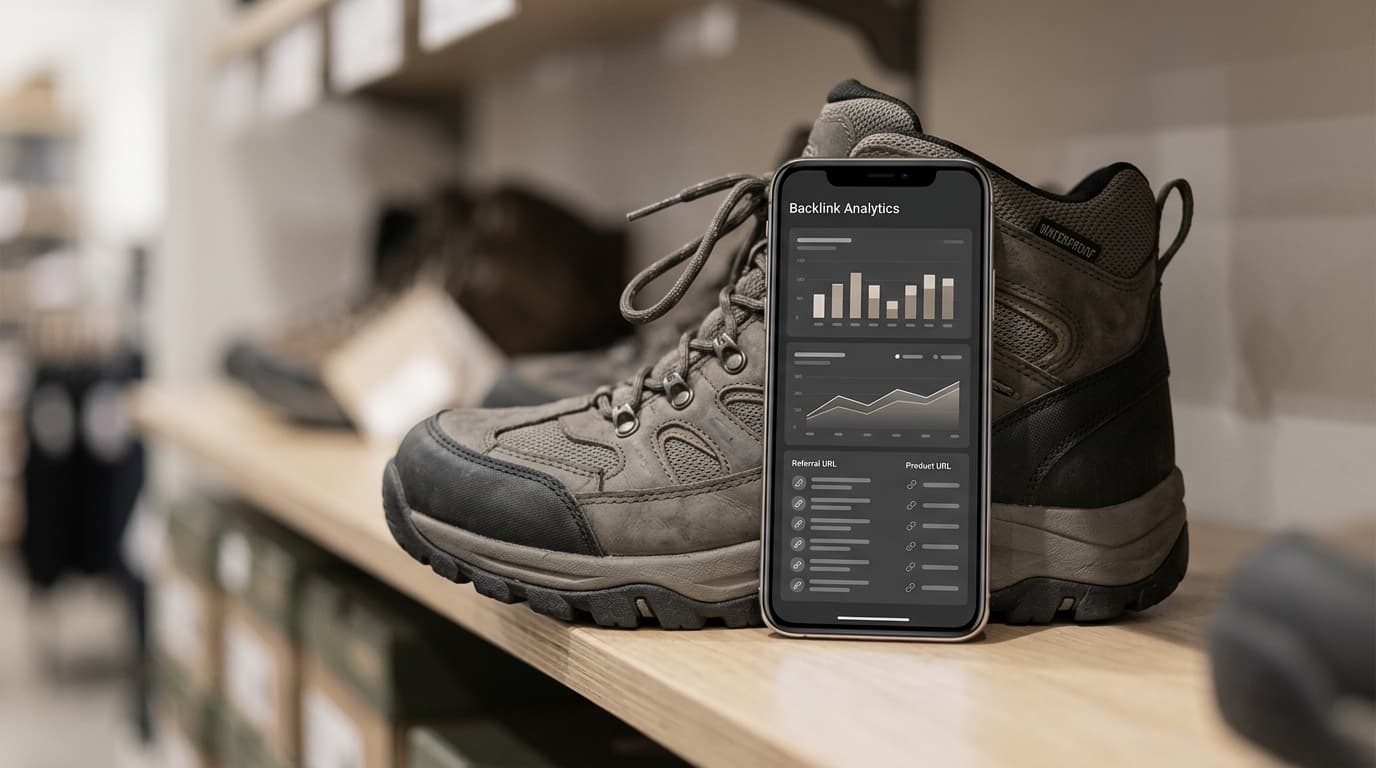
Building links to your blog is a solved problem. The internet is flooded with guides on the Skyscraper Technique, digital PR, and content-driven outreach. But for an eCommerce business, a link to a blog post is a secondary prize. You want links to the pages that actually make money: your product and category pages.
The conventional wisdom says this is impossible or, worse, spammy. That you should funnel all link equity through your blog and hope it trickles down. This is an incomplete strategy born from a misunderstanding of why people link to things in the first place.
Getting high-quality backlinks directly to your product detail pages (PDPs) and category pages is difficult, but not impossible. It just requires a different approach. You have to stop thinking like a content marketer and start thinking about your product as the content.
The Core Problem: Your Product Page Isn't a Resource Guide
Most link building outreach fails because it relies on a faulty premise. The standard email praises a piece of content and offers another "resource" as a complementary link. This transaction works when you're offering an in-depth guide; it completely falls apart when you're offering a product page.
The mistake to avoid: sending a content-style outreach email for a commercial page. An editor or blogger who receives an email saying "I loved your article on hiking, you should add a link to our new waterproof boots" sees it for exactly what it is: a ham-fisted request for free advertising. It offers no value to their audience that a dozen other boot companies couldn't also offer. It gets deleted, or worse, marked as spam.
People link to blog posts to cite a source or provide further reading. People link to products to recommend, curate, or showcase them. A blog post earns a citation; a product page earns an endorsement. These are not the same thing, and they cannot be pursued with the same tactics.
The Mindset Shift: Your Product Must Be the Content
You cannot bolt a link-building campaign onto a generic product page. The page itself - and the product on it - must be remarkable enough to warrant a link on its own merits. If your product is a commodity dropshipped from the same catalog as a thousand other stores, this will be nearly impossible. If your product is unique, exceptionally well-made, or presented in a truly novel way, you have a foundation to build on.
The work doesn't happen in the outreach email. It happens on the page. The page must provide a reason to be linked to beyond the simple fact that it sells something. This sounds hard because it is. The honest version of this work is slower and more product-focused than churning out blog posts, but the links it generates have a direct impact on commercial intent keywords.
Alright. Coffee's ready. Let's talk about the tactics that actually work.
Four Viable Tactics for Linking to Commercial Pages
Once you have a product worth talking about, the goal is to find the right contexts for that conversation. Here are four strategies that our teams use to secure links to commercial pages, moving from highest to lowest volume.
1. Target Curated Lists and Product Roundups
These are the "Best X for Y" articles, holiday gift guides, and "essential gear" lists that populate the top of the funnel for many keywords. Getting included is highly competitive but incredibly valuable.
- What It Is: Identifying existing, high-quality articles that curate products in your niche and pitching your product for inclusion.
- Failure Mode: Sending a generic "please add my product" email, especially during the height of the holiday season when editors are swamped. Another common failure is pitching a $500 product for a "Best Gifts Under $50" list - it shows you haven't even read the article.
- What to Do About It: Do your prospecting year-round, not just in November. Build a relationship with the editor or writer first, if possible. Your pitch should focus on how your product improves their article and serves their audience. Does it fill a price point they're missing? Does it have a unique feature the other products lack? Offer to send a review unit, no strings attached. Make their job easy.
2. Pursue Strategic Partnerships and Collaborations
The most natural links come from real-world business relationships. A link is often the digital artifact of a handshake.
- What It Is: Working with non-competing brands, influencers, or organizations that share your audience to create something mutually beneficial.
- Failure Mode: Treating the relationship as a simple link exchange. This is a business development activity, not an SEO tactic. Asking a partner to "add a link to our site" out of the blue feels transactional and cheapens the relationship.
- What to Do About It: Identify a brand that sells something complementary. If you sell high-end coffee beans, partner with a company that makes premium grinders. Co-author a definitive brewing guide that lives on your category page, with their grinder featured prominently. They, in turn, will be happy to link to the guide from their site. The link is the byproduct of genuine collaboration, not the goal.
3. Create a Linkable Asset on the Commercial Page
This is the most powerful - and most difficult - tactic. It involves making your product or category page a primary source of information, not just a point of sale.
- What It Is: Embedding a genuinely useful tool, calculator, comprehensive guide, or unique dataset directly onto a PDP or category page, giving journalists and bloggers a reason to cite it.
- Failure Mode: Creating a flimsy "asset" that provides no real value. A "size guide" with three bullet points is not a linkable asset. A generic FAQ section is not a linkable asset. The effort has to be substantial. -
- What to Do About It: Go deep. If you sell running shoes, build an interactive tool on your trail running category page that helps users choose a shoe based on terrain, arch type, and running distance. If you sell kitchen knives, embed high-resolution videos on your product pages demonstrating specific cutting techniques that only that knife can do well. This gives a writer a reason to say "...and for a great demonstration, see the video on [Your Product Page]" - a perfect, contextual link.
4. Reclaim Unlinked Brand and Product Mentions
This is the lowest-hanging fruit. People are already talking about you; they just forgot to add a link.
- What It Is: Using monitoring tools to find mentions of your specific products or brand name online, then reaching out to request that the mention be converted into a link.
- Failure Mode: Sending an automated, demanding email. You are not owed this link. Acting entitled is the fastest way to get your request ignored.
- What to Do About It: Be human. Thank the author for mentioning your product. Keep the request short and polite: "Thank you so much for featuring our Model X coffee grinder in your morning routine roundup! We were wondering if you'd be open to adding a link to the product page so your readers can find it easily." It's a simple, low-pressure request that has a surprisingly high success rate when done manually and sincerely.
The Honest Truth: These Links Are Earned, Not "Built"
Each of these tactics shares a common thread: they work because you are offering clear, undeniable value. The value might be a superior product for a roundup, a collaborative piece of content, a unique on-page tool, or simply making a writer's life easier.
The honest version is slower but compounds; the deceptive version that relies on spammy outreach or paid placements carries platform risk and collapses under scrutiny. These product-level links are more valuable than a dozen blog post links because they carry direct commercial authority. They tell Google that your page is not just a source of information, but a destination for commerce. That is a signal worth working for.
The next step is not to launch a massive outreach campaign. It is to perform an honest audit of your own product catalog. Find the one or two products that are truly unique, interesting, or best-in-class. Start there. That is where the real work of link building begins.
How to Get Links to Product and Category Pages (Not Just FAQ
How many links does a product page need to rank?
There is no magic number. It depends entirely on the competitiveness of the keyword. Instead of focusing on a quantity, focus on the quality and relevance of the links. A single, powerful link from a highly respected industry publication's "best of" list can be more impactful than dozens of low-quality links. The goal is to build a natural link profile that demonstrates your product's authority.
Are affiliate links good for SEO?
Affiliate links are primarily for tracking sales, and they are almost always "nofollow" or "sponsored," meaning they don't directly pass SEO authority (PageRank). However, a strong affiliate program can lead to indirect SEO benefits. Popular affiliates often write detailed reviews and guides that can rank on their own and earn natural, followable links, which can then send positive signals and referral traffic to your product page.
Is it better to get a link to a category page or a product page?
It depends on the context of the link. If an article is reviewing or recommending a single, specific item, the link should go to that product page (PDP). If an article is a broader guide - like "A Guide to Buying Winter Jackets" - a link to your main "Winter Jackets" category page is more appropriate and often more valuable, as it helps establish authority over the entire topic.
Can I use guest posting to get links to product pages?
Almost never. Most reputable publications have strict editorial guidelines that forbid authors from placing self-serving, commercial links in the body of a guest post. Forcing a product link into a guest post is a classic spam signal that editors are trained to spot and remove. Stick to linking to genuinely valuable informational content in guest posts and use the other tactics in this guide for your commercial pages.