Professional Custom eCommerce
Website Development Services
We engineer performance, integrations, and scalable architecture across Shopify Plus, BigCommerce, Adobe Commerce, WooCommerce, and headless / composable stacks. Core Web Vitals optimized, API-first, ready for agentic commerce.
Trusted by 400+ Brands · Certified Partners




Years in eCommerce
Of results, scale, and quality at the enterprise level.
Expert Team
Specialists across SEO, AI SEO, PPC, design, dev, and strategy.
US Core + Global Talent
US core team for clear communication; vetted global specialists for international client work.
Reputation Score
Rated 4.9/5 across 941+ verified client reviews.
Reviewed by the 1Digital® Development TeamLast updated:
TL;DR
1Digital® builds custom eCommerce websites on Shopify Plus, BigCommerce, Adobe Commerce (Magento), WooCommerce, and headless / composable architectures (Hydrogen, Catalyst, Next.js, React). Core Web Vitals-optimized, API-first, integration-ready. 15 years, 400+ brands, 941+ verified reviews, 4.9/5 average.
Related pages: Custom Website Design · Platform Migrations · Data Migration · BigCommerce Developer · Shopify Developer · Adobe Commerce Developer · Conversion Optimization · Custom Platforms (Headless) · ADA Compliance
Why Choose
Custom Website Development
Templates can't cover edge cases. Custom development aligns UI, content, and data flows to your business model — not the other way around. You get cleaner performance, purpose-built components, and flexible integrations that won't crumble when you scale, replatform, or add channels. Our builds are engineered for Core Web Vitals (LCP, INP, CLS), AI-era discoverability (schema graphs, llms.txt, entity clarity), and the third-party app stack modern eCommerce requires.
What's Included in
Professional Custom Development
Discovery & IA
Goals, user journeys, content mapping, technical architecture plan.
Design Systems
Reusable components, WCAG 2.2 AA accessibility, brand consistency.
Performance First
Core Web Vitals tuning, edge caching, media optimization, minimal JS.
SEO / CRO Foundations
Semantic HTML, internal linking, JSON-LD schema graphs, A/B testing.
Integrations
Payments, ERP / OMS / CRM / PIM, subscriptions, loyalty, search, analytics, feeds.
Headless / Composable
Hydrogen, Catalyst, Next.js, React, GraphQL, headless CMS options.
Custom Website Development by 1Digital® Agency
Bespoke Designs for Your Brand
Custom designs reflect your unique brand identity — design systems built from atomic components, ensuring visual consistency while remaining flexible for future expansion.
Fully Responsive and Mobile-Optimized
Engineered for the 75%+ of eCommerce that happens on mobile. Accelerated checkout via Shop Pay, Apple Pay, Google Pay, and Link built in.
Optimized for Speed and Core Web Vitals
LCP under 2.5s, INP under 200ms, CLS under 0.1 — engineered with edge caching, code-splitting, and image optimization at the architecture level.
Tailored Functionality and Integrations
Bespoke product configurators, B2B wholesale portals, subscription flows, loyalty mechanics, deep ERP / OMS / CRM integrations.
Scalable for Future Growth
Headless and composable options scale with your business. API-first architecture means new channels plug in without platform rebuilds.
AI-Era Discoverability Built In
Schema graphs, entity clarity, llms.txt, server-side rendering for ChatGPT Shopping, Perplexity Shop, Amazon Rufus, and Google AI Overviews.
The Future of Shopping
AI-Integrated Development
AI-Powered Customer Support & Assistants
Integrate AI-driven assistants and chatbots — Shopify Magic, Rebuy, Octane AI, Gorgias AI — to reduce response times, answer FAQs 24/7, and analyze shopping behavior for intelligent product recommendations in real time.
AI-Driven Personalization & Recommendations
Sophisticated AI personalization logic — Nosto, Dynamic Yield, Rebuy, Klaviyo AI, Algolia Recommend — automatically determines the best upsells and cross-sells at every touchpoint, learning from purchase history and browsing patterns.

Platform Expertise
Multi-Platform Development Depth
Shopify Plus Partner, BigCommerce Elite Partner, senior Adobe Commerce engineers, and WooCommerce engineers — deep experience on every major platform, from traditional themes to headless/composable builds.


Custom Development
Built to Your Exact Specifications
Every integration, custom checkout extension, headless CMS connection, and B2B portal — engineered to your operational model. No template constraints.
Get a Custom Dev ProposalBespoke Solutions for Exceptional eCommerce Development
Platform & Data Migration Solutions
Overcoming the limitations of your current platform is often the highest-leverage move. We handle platform migrations and data migrations — preserving SEO equity, data integrity, and customer experience.
MoreMobile-First & Core Web Vitals
With 75%+ of eCommerce on mobile, mobile-first engineering is the baseline. We build for Core Web Vitals, accelerated checkout, and mobile-optimized conversion paths.
MoreADA / WCAG 2.2 AA Compliance
Comprehensive accessibility services aligned to WCAG 2.2 AA, Section 508, and AODA — engineered into design systems, not retrofitted.
MoreProfessional Mobile App Development
Native and progressive web app development — intuitive apps that enhance customer relationships, support push notifications and personalized offers.
MoreAPI Development & Integrations
REST, GraphQL, and webhook-driven connections across ERP, CRM, OMS, PIM, and custom endpoints — data flows flawlessly in the background.
MoreHeadless & Composable Development
Shopify Hydrogen, BigCommerce Catalyst, Next.js, React, GraphQL, and headless CMS platforms — for performance, flexibility, and multi-channel reach.
MoreLeading in Advanced eCommerce Web Development
Custom eCommerce Websites for BigCommerce Stores
BigCommerce is a robust SaaS eCommerce platform with strong B2B capabilities, native multi-storefront, and Catalyst for headless builds. Our BigCommerce developers are Elite Partners with deep experience across traditional Stencil, headless Catalyst, and multi-storefront enterprise builds.
Learn More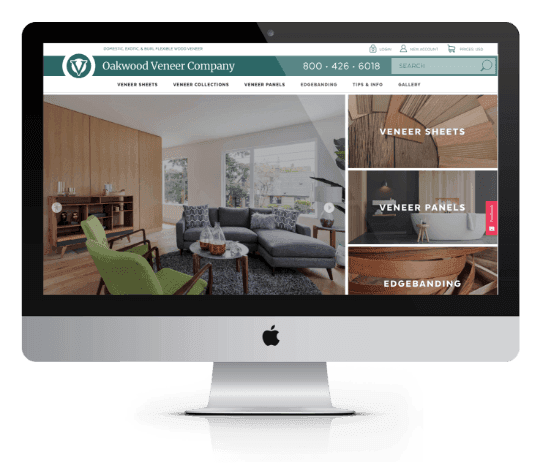
Custom Website Development for Shopify Stores
Shopify and Shopify Plus are the most widely-adopted eCommerce platforms in the world, recognized for security, uptime, developer ecosystem, and Hydrogen for headless builds. Our Shopify experts integrate apps, build Shopify Functions and Checkout Extensibility extensions.
Learn More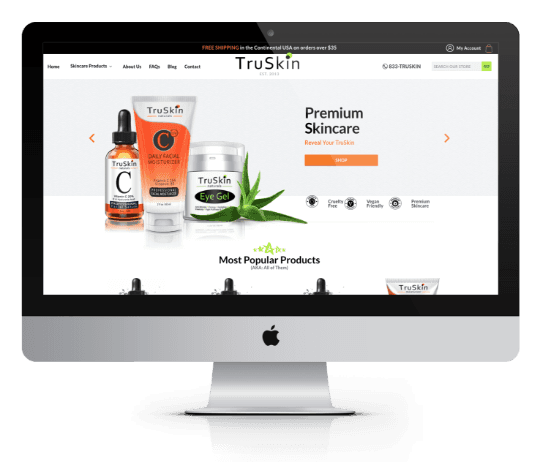
Why Entrust 1Digital®
Why Entrust 1Digital® for Expert eCommerce Custom Website Development?
Certified Partner Status
Shopify Plus Partner, BigCommerce Elite Partner + BigDev Certified, Google Partner — the credentialing platforms actually look for when they recommend agencies. Plus 15 years on Adobe Commerce.
15 Years of Specialization
Founded 2012. 400+ brands. 941+ verified reviews (4.9/5). 50+ in-house specialists. We've shipped custom builds across every major commerce platform and seen every edge case.
Full-Stack Team Under One Roof
Strategy, UX, design, development, SEO, AI-search, PPC, lifecycle — coordinated from a single engagement. No multi-vendor handoff tax.
AI-Era Engineering Standards
Schema graphs, llms.txt, entity clarity, server-side rendering, Core Web Vitals at the 75th percentile, accessibility to WCAG 2.2 AA — first-class deliverables on every build.
Modern Scope
Unraveling the Scope of Modern Custom Web Development
Custom development in 2026 spans far more than a theme. It is the engineering of every layer your business runs on — from the storefront customers interact with, through the APIs that sync your operations, to the AI engines and shopping agents that increasingly drive discovery. The list at right is what a modern, complete custom development engagement actually covers.
- Custom theme / front-end development (Liquid, Twig, Handlebars, React, Vue)
- Headless and composable storefronts (Hydrogen, Catalyst, Next.js, Remix)
- Custom platform extensions (Shopify apps, BigCommerce apps, Magento modules, Woo plugins)
- API development and integration (REST, GraphQL, webhook-driven, middleware)
- Custom checkout extensions (Shopify Functions, Checkout Extensibility, payment, shipping)
- B2B portals (customer accounts, company pricing, gated catalogs, quote workflows)
- Subscription flows (Recharge, Bold, Shopify Subscriptions, native PWA)
- ERP / OMS / WMS connectors (NetSuite, SAP, Microsoft Dynamics, Brightpearl, Cin7)
- Headless CMS integrations (Contentful, Sanity, Storyblok, Builder.io)
- Schema graphs, llms.txt, AI-engine SEO infrastructure
- WCAG 2.2 AA accessibility engineering
- Performance hardening (Core Web Vitals, edge caching, image optimization)
How to Choose
Selecting the Right Custom Web Development Services for Your Project
Custom website development engagements compound — or unravel — over years. The criteria below filter out partners that look good on a deck but underperform on a real production catalog.
Match the agency's stack to your platform.
BigCommerce Elite Partner for Stencil + Catalyst, Shopify Plus Partner for Online Store 2.0 + Hydrogen, and senior Adobe Commerce engineers for Hyvä / PWA Studio — pick a partner with deep experience on the platform you'll actually run on.
Verify technical breadth on real builds.
Ask for case studies that include the integrations you need: ERP, OMS, CRM, subscription, B2B, headless CMS, custom checkout. Custom development quality is most visible in the corners — multi-region tax, B2B price tiers, subscription renewal logic, complex returns.
Confirm AI-era SEO ownership.
Schema graphs, llms.txt, entity clarity, server-side rendering for AI Overviews — these should be first-class deliverables, not afterthoughts. Confirm the developer team (not just an SEO team) owns the technical SEO and AI-search hand-off.
Insist on accessibility & Core Web Vitals.
WCAG 2.2 AA, LCP under 2.5s, INP under 200ms, CLS under 0.1 at the 75th percentile — engineered into design systems, not bolted on after QA.
Pressure-test the post-launch model.
A custom build is only as good as its first 90 days in production. Look for a partner with structured post-launch monitoring, A/B testing infrastructure, and a clear escalation path for production issues.
Transform Your Store
Transform Your Online Store with Our eCommerce Development Agency
Global eCommerce is on pace to reach approximately $6.88 trillion in 2026 — with mobile driving 75%+ of transactions, AI engines reshaping discovery, and agentic shopping clients (ChatGPT Shopping, Perplexity Shop, Amazon Rufus) acting as a new front-of-funnel. Templates can't keep pace. Custom development is how you stay ahead — purpose-built UX, schema graphs AI engines can parse, server-rendered performance, and integrations that scale with your operations.
Custom Website Development — Quick Answers
What is custom website development?
Why invest in custom vs. off-the-shelf themes?
How does custom dev improve SEO and conversions?
What integrations do you handle?
What is headless or composable commerce?
Excellence in eCommerce Web Development Across Diverse Industries
Our professional web development services have helped shape successful eCommerce websites across:
Frequently Asked Questions
What is custom website development?
Why invest in custom vs. off-the-shelf themes?
How does custom dev improve SEO and conversions?
What integrations do you handle?
What should a custom dev roadmap include?
What is mobile-first responsive web development?
What is headless or composable commerce?
Why choose a custom web development company?
How long does a custom eCommerce build take?
Do you support headless on BigCommerce, Shopify, and Adobe Commerce?
Introducing WorkspaceCMS
Your Industry. Your CMS. Managed for You.
- Unlimited managed edits — shipped on your plan's SLA
- SEO baked into every page, post, and location
- AI SEO ranking tools + schema automation included
Ready to build, replatform, or scale?
Global eCommerce is on pace to reach approximately $6.88 trillion in 2026 — with mobile driving 75%+ of transactions and AI engines reshaping discovery. Stay ahead by partnering with a top-rated eCommerce development agency.