

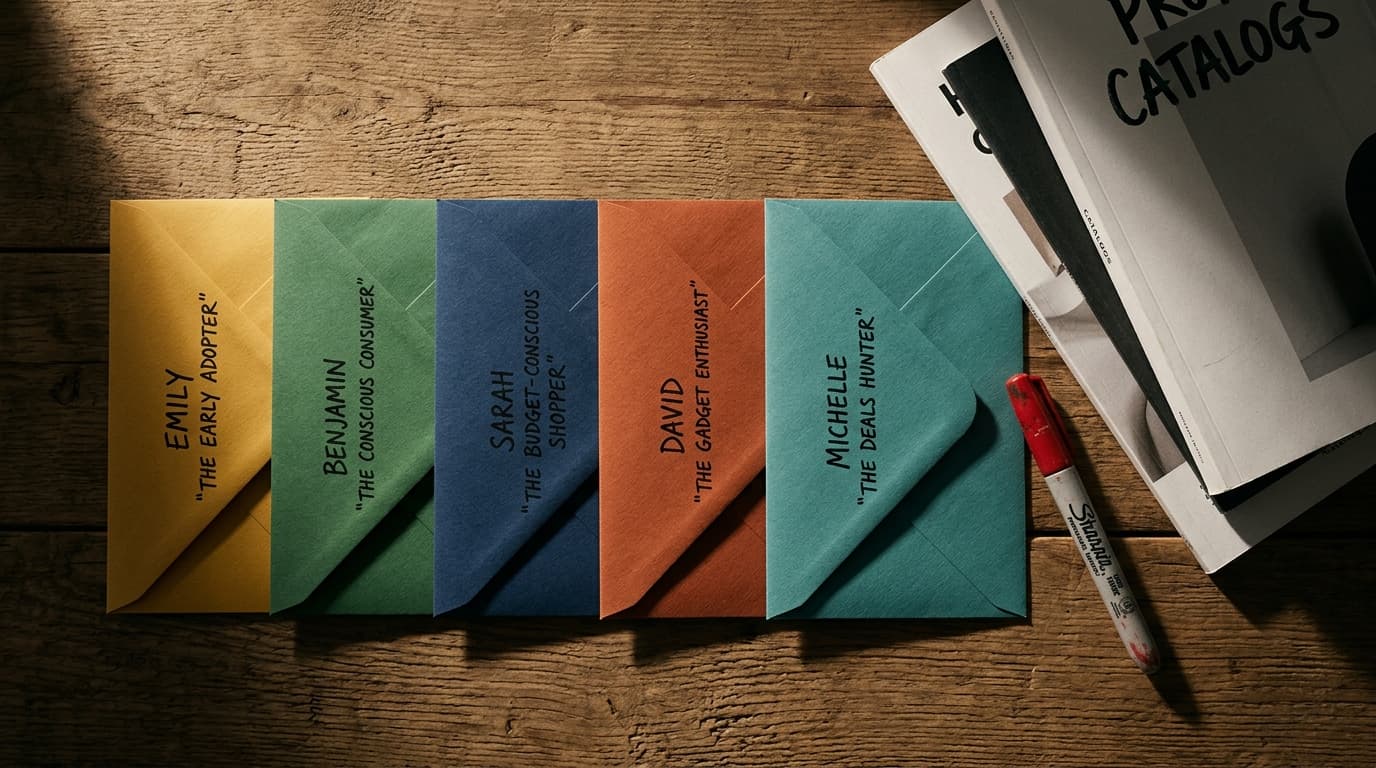
Email segmentation is the single most effective way for an ecommerce business to increase revenue from its email list. For most stores, a basic segmentation strategy can lift email revenue by 15-25% without any changes to product or ad spend. It separates healthy email programs that drive profit from noisy ones that train customers to ignore you.
But the conversation around it is often wrong. It gets wrapped up in buzzwords like "hyper-personalization" and "one-to-one marketing," promising a future where every customer gets a unique, handcrafted email. It is none of that. Segmentation isn't about creating a million tiny audiences; it’s about creating a handful of meaningful ones.
The Failure Mode: An Unmanageable Tangle of Good Intentions
Most stores that try segmentation and fail make the same mistake. They build dozens of hyper-specific segments based on every possible data point: viewed this category, bought that SKU, lives in this zip code, opened the last three emails. The intention is good, but the result is a brittle, unmanageable system. Campaigns become a nightmare to execute, segments are too small to produce statistically significant results, and the team burns out.
The mistake to avoid: believing that more segments automatically means better results. The opposite is often true. A simple, robust framework built on a few core business drivers will outperform a complex one every time. Batch-and-blast emails generate noise; thoughtful segmentation generates revenue.
Start with Five Foundational Ecommerce Segments
Instead of boiling the ocean, start with a core framework based on the two most important signals in ecommerce: purchase behavior and engagement level. In our experience, these five segments cover 80% of the revenue-generating opportunities for most stores. Build these first, master them, and only add more when you have a clear business case.
-
VIPs / High-Value Customers
Who they are: Your best customers. This can be defined by lifetime value (e.g., spent over $500 total) or purchase frequency (e.g., placed 3+ orders). Pick a threshold that represents the top 10-15% of your customer base.
Why they matter: These customers are the bedrock of your business. Your goal is retention and advocacy, not aggressive discounting. Make them feel seen and valued.
What to send: Early access to new products, exclusive offers (not necessarily discounts), invitations to community events, and requests for reviews or user-generated content.
Klaviyo Segmentation Example:
(Placed Order at least 3 times over all time) OR (Revenue is greater than $500 over all time) AND (is not suppressed for email) -
Recent First-Time Buyers
Who they are: Customers who placed their first order within the last 30-45 days.
Why they matter: This is the most critical window to turn a one-time buyer into a repeat customer. The experience they have immediately post-purchase determines their future value. Your goal is to build trust and encourage a second purchase.
What to send: A post-purchase flow that includes product education, use cases, cross-sells of complementary products, and a gentle prompt to buy again after an appropriate interval.
Klaviyo Segmentation Example:
(Placed Order equals 1 over all time) AND (Placed Order at least 1 time in the last 30 days) AND (is not suppressed for email) -
Repeat Purchasers (Non-VIP)
Who they are: Customers who have bought more than once but haven't hit your VIP threshold yet.
Why they matter: They’ve already demonstrated loyalty. The goal here is to nurture them toward VIP status and maintain their buying habit. They trust you enough to come back; don't take it for granted.
What to send: Standard campaigns, new product announcements, and targeted promotions based on their purchase history. They are your core audience for most general campaigns.
Klaviyo Segmentation Example:
(Placed Order is between 2 and 4 over all time) AND (is not suppressed for email) -
Lapsing Customers / At-Risk
Who they are: Customers who used to buy from you but haven't in a while. The timeframe depends on your product's natural buying cycle (e.g., 90 days for consumables, 180 days for apparel).
Why they matter: It is almost always cheaper to win back a past customer than to acquire a new one. A targeted effort can reactivate a significant percentage of this group before they churn for good.
What to send: A win-back campaign. Start with a gentle "we miss you" message, followed by highlighting what's new, and finally, a compelling offer or discount as a last resort to get them back.
Klaviyo Segmentation Example:
(Placed Order at least 1 time over all time) AND (Placed Order zero times in the last 120 days) AND (is not suppressed for email) -
Engaged Non-Purchasers
Who they are: People on your list who have never bought, but show high intent. They open emails, click links, have viewed products, or even abandoned a cart.
Why they matter: They are on the verge of converting. Something is holding them back - price, shipping, or unanswered questions. Your job is to remove that friction.
What to send: Abandoned cart flows are the classic example. You can also send them social proof (reviews, testimonials), address common objections, or offer a small new-customer incentive to get them over the finish line.
Klaviyo Segmentation Example:
(Placed Order zero times over all time) AND (Added to Cart at least 1 time in the last 14 days) AND (is not suppressed for email)
Shopify Data Is the Fuel for Your Klaviyo Segments
Alright. The segments make sense on paper. Let's talk about the plumbing. This entire strategy works because platforms like Klaviyo have deep, lossless integrations with ecommerce platforms like Shopify. Your Shopify store is constantly generating the raw data - the behavioral signals - that power every segment.
When a customer places an order, views a product, or abandons a cart in Shopify, that event is passed to Klaviyo in near real-time. This allows for dynamic segmentation. A customer can be a "Recent First-Time Buyer" today and automatically move into the "Repeat Purchaser" segment the moment they place their second order. You don't manage the lists; you define the rules, and the integration handles the movement. The key is trusting that the platform substrate will handle the data transfer cleanly. Shopify and Klaviyo do this exceptionally well.
The Honest Tradeoff: More Upfront Work for Compounding Returns
Let's be real. This is more work than hitting "send" on a single campaign to your entire list. It requires thinking about your customer lifecycle and planning your campaigns with more intention. You'll spend more time in the strategy phase and less time in the email editor.
But the effort is front-loaded. Once your foundational segments and core automated flows are built, the system works for you. The honest version is slower to set up but compounds; the lazy version gives you a sugar high of vanity metrics but flattens out. You're not just sending emails - you're building a retention engine that increases customer lifetime value, which is the only way to sustainably grow an ecommerce brand.
Your Next Step: Build One Segment
Don't try to implement this entire framework tomorrow. That leads back to the failure mode of over-complication. Instead, pick one segment. The "Recent First-Time Buyers" segment is the best place to start because it has a clear and immediate impact on long-term value.
Go into your ESP. Build the segment using the logic described above. Then, create a simple, two-email flow designed to get that second purchase. That's it. Start there. Measure the result. The initial success will provide the momentum to build out the rest of the framework.
Email Segmentation for Ecommerce: How to Send the Right FAQ
What is the difference between an email list and a segment?
A list is the entire collection of contacts who have opted in to receive your emails. A segment is a dynamic subgroup of that list defined by a specific set of rules or conditions, such as purchase history, engagement level, or location. A contact can be in many segments at once.
How many email segments are too many for an ecommerce store?
There's no magic number, but complexity is the enemy. For most stores, starting with 5-7 core, behavior-based segments is ideal. Only add a new segment when you have a distinct messaging strategy for that group that cannot be accomplished with your existing framework. If a segment has fewer than a few hundred people, it's often too small to be worth the management overhead.
Can I do effective ecommerce email segmentation without Klaviyo?
Yes, though Klaviyo is a leader for a reason. Most modern Email Service Providers (ESPs) built for ecommerce, like Drip or Omnisend, have deep integrations with Shopify and support sophisticated segmentation. The key is an ESP that can ingest and act on real-time behavioral data from your store, such as `Viewed Product` or `Added to Cart` events.