

FOR CHIROPRACTIC PRACTICES
Chiropractor PPC That Books New Patients
A chiropractic practice does not check out a cart - it answers a phone, usually from someone whose back went out this morning. So we build paid media around cost per qualified lead and cost per new patient who actually arrived. Search, call-only, and local placements run as separate acute, auto-injury, and elective funnels, with call tracking and outcome coding wired in so bidding chases booked visits instead of clicks. 1Digital® has run local healthcare marketing since 2012.
Trusted by 400+ Brands · Certified Partners




Years in eCommerce
Of results, scale, and quality at the enterprise level.
Expert Team
Specialists across SEO, AI SEO, PPC, design, dev, and strategy.
US Core + Global Talent
US core team for clear communication; vetted global specialists for international client work.
Reputation Score
Rated 4.9/5 across 941+ verified client reviews.
The 1Digital® Difference
AI in our toolkit. Humans in the driver’s seat.
Our strategists, designers, developers, and writers are human. The proprietary AI we built makes them faster and sharper - not the other way around.
- Human strategy
- Human copywriting
- Our own AI tools
- Real growth
Why Paid Search Behaves Differently for a Chiropractic Practice
Most industry PPC advice is written for retailers, and none of it survives contact with a clinic. There is no feed to optimize and no revenue attached to a click, because the money is decided days later at a front desk and then again across a plan of care. What a chiropractic account produces is calls and new-patient requests. Our PPC services team runs practice accounts on that basis and pairs them with chiropractor SEO so the map pack and credential content compound while paid carries this month’s schedule.
The first structural difference is urgency. A large share of chiropractic demand is closer to emergency plumbing than to elective healthcare: someone lifted wrong, slept wrong, or was rear-ended, and they will call whoever can see them today. That collapses the entire funnel into a single mobile session. Ad copy that leads with technique names, philosophy, or the doctor’s certifications loses to copy that says open today, walk-ins welcome, and here is the number. It also means the account is judged partly on operations you own rather than on bidding - if the phone rings out at 4:50 p.m., the auction did its job and the practice lost the patient.
The second is that one practice carries several economically incompatible demand types on one domain. Acute pain is cheap to reach and converts instantly. Auto-injury and whiplash queries are the most valuable leads in the vertical and the most expensive clicks, contested by dedicated injury clinics and attorney-referral marketing. Elective and wellness services - spinal decompression programs, prenatal and pediatric care, sports performance, corrective-care packages - are cash-pay, researched over weeks, and priced against membership-model chains with national media budgets. Same website, four different bid logics, four different landing pages, four different lags to conversion. Blending them into one campaign is the most common way a chiropractic account quietly fails: the expensive terms eat the budget, everyday new-patient volume drops, and the blended cost-per-lead number looks fine the entire time.
The third is the ceiling. A retailer scales by widening its catalogue; a chiropractic practice is capped by drive time and by treatment-room hours. Your addressable auction is finite, so growth comes from taking a larger share of a fixed local market and converting more of the calls you already pay for - not from spending more. That reframes budget as an allocation problem: which ZIP codes, which hours, which service lines, which office.
Chiropractic PPC, step by step
Pay for the clicks that become leads
Every click moves from the ad to your page to a lead, and some fall away at each step. The search terms report shows why: the chiropractic searches that turn into calls earn more budget, and job seekers and freebie hunters are added as negatives.
- ›Search terms read by a senior strategist, not left to automation
- ›Negative keywords that stop paying for searches that never convert
- ›Budget moved toward the services and searches that book
Campaign mix
The Channels a Practice Account Actually Needs
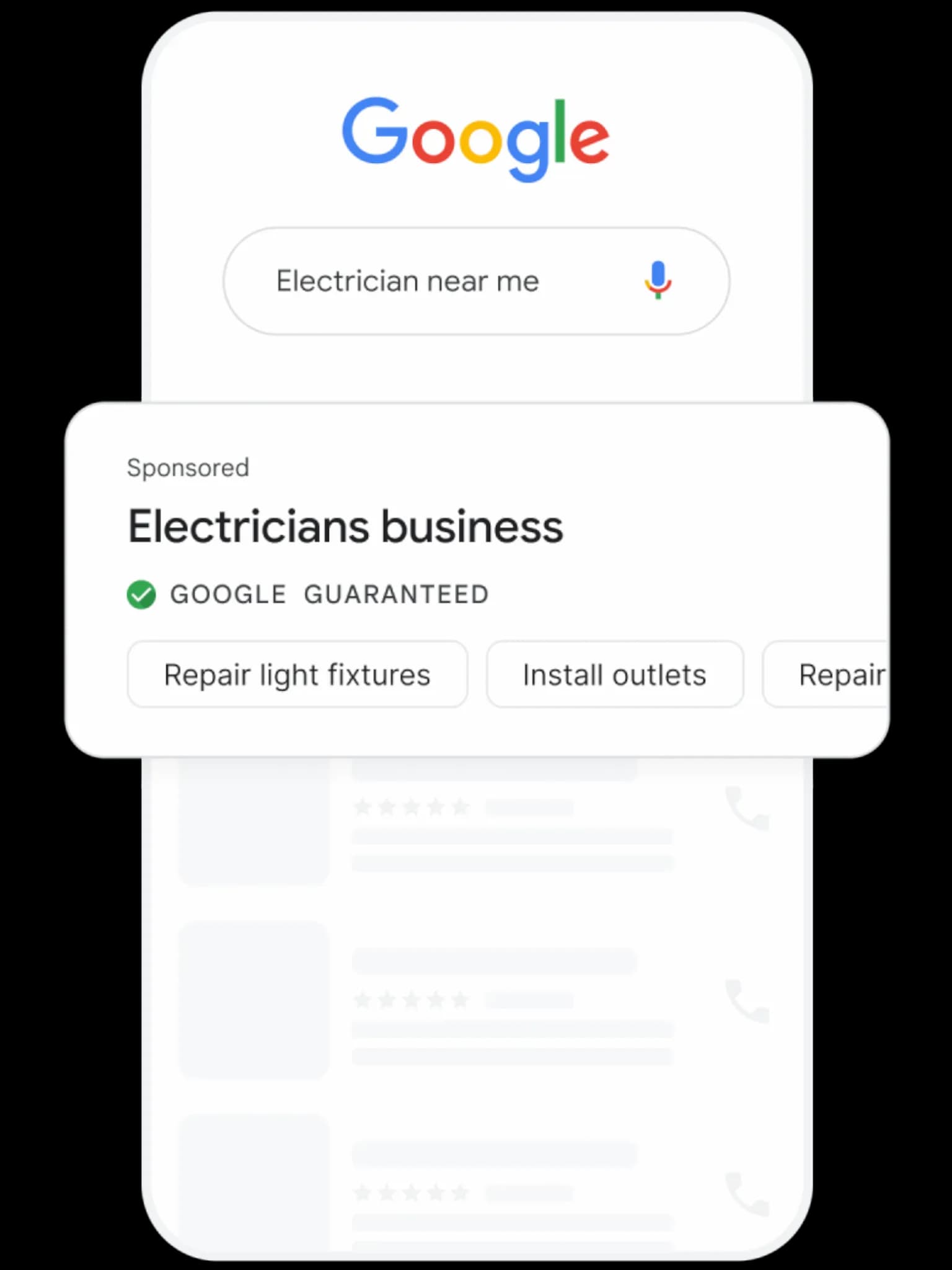
No Shopping campaigns, no product feeds, no retail Performance Max. A chiropractic account is built from search intent, phone calls, and verified local placements. Where the category is offered in your market, Google Local Services Ads sit above the paid results and bill per lead rather than per click - we confirm eligibility for your ZIP before we build a plan that depends on them.
Acute-Pain Search (Same-Day Intent)
“back pain chiropractor near me,” “walk-in chiropractor open now,” “threw my back out.” This is emergency-shaped demand: the patient calls whoever can see them today, and the decision is made within minutes. Tight radius, exact and phrase match, ad copy that leads with same-day availability and hours rather than technique names.
Auto-Injury / Personal-Injury Search
“chiropractor after car accident,” whiplash, and MVA-related terms carry the highest lead value in the vertical and, predictably, the highest click costs - you are bidding against injury clinics and attorney-adjacent marketers. These run as their own campaign with their own cost-per-lead ceiling, never blended into the general back-pain budget.
Call-Only + Call Assets
Someone in acute pain searches on a phone and wants to talk to a person, not fill in a form. Call-only campaigns remove the website from the path during staffed hours; call assets and location assets carry the rest. Dayparting follows when your front desk actually answers, not your published hours.
Branded + Defensive Search
Directories, aggregator lead-sellers, and nearby membership-model clinics bid on practice and doctor names. A tightly capped brand campaign keeps the patient who already chose you - usually from a referral or a review - from being intercepted on the last click. Almost always the cheapest new patient in the account.
Local Services Ads Where the Category Exists
LSA inventory sits above Search and bills per lead with a Google-verified badge. Category coverage for chiropractic is inconsistent and varies by market, so we check eligibility for your ZIP in the Local Services signup flow before building any plan that depends on it - and put that budget into Search and map-pack work when it is not offered.
Demand Gen + Remarketing for Elective Care
Decompression, prenatal and pediatric care, sports performance, and wellness plans are researched over weeks, not minutes. Demand Gen and remarketing keep the practice present through that window - sequenced against consult requests, and written without the outcome claims that draw board and platform scrutiny.
Lead quality
Counting New Patients, Not Raw Leads
A chiropractic account can look healthy and still be failing, because the number most agencies report - calls and form fills - includes existing patients rescheduling, people forty minutes outside the service area, price shoppers working down a list of new-patient specials, and callers who wanted a massage. We instrument the account so those distinctions are visible, then let bidding learn from the outcome rather than the inquiry. A senior strategist owns the account day to day; WorkspaceCRM, our proprietary AI, watches search-term drift and call-outcome patterns between reviews so nothing rots unnoticed for a month.
Call Tracking With Outcome Coding
Dynamic number insertion on every paid session, recordings tied back to campaign and search term, and calls coded by outcome: new patient booked, existing patient, out of service area, insurance mismatch, price shopper, vendor, wrong number. Only the first bucket is a conversion.
Arrived, Not Just Booked
Chiropractic no-show rates on first visits are the quiet leak in most accounts. We import booked-and-arrived status back into Google Ads so Smart Bidding optimizes toward patients who walked through the door - not toward whichever keyword generates the most appointments that evaporate.
Negative Keyword Hygiene
Chiropractic search is thick with “how to crack your own back,” at-home stretch videos, inversion tables and massage-gun shopping intent, chiropractic school and salary queries, and people looking for a massage rather than an adjustment. A maintained negative list is the largest single lever on cost per qualified lead here.
Insurance vs. Cash-Pay Segmentation
An insurance-billed visit under a plan’s annual cap and a cash-pay decompression program are worth very different amounts and behave differently in the auction. We split them into separate campaigns and landing paths so the cheaper lead never gets credit for economics it did not produce.
Offer Testing Inside Board Rules
The new-patient exam offer is the highest-leverage creative variable in the vertical - and the most regulated. State chiropractic board advertising rules and state insurance statutes constrain discounted and free-exam offers, in some states differently for insured patients. Offers get routed through your board’s rules before they run.
After-Hours and Weekend Coverage
Acute back pain does not respect office hours, and paid clicks keep arriving Sunday night. We shape spend around when calls are genuinely answered and route the remainder to a scheduler, form, or answering service - an unanswered ring is a lead you paid full price for and lost to the next listing.
What a wasted click looks like
- A broad match sends “chiropractic school tuition” to a new-patient ad.
- The tap lands on a slow page with the phone number below the fold.
- The caller lives forty minutes outside the radius the clinic draws from.
- It still counts as a conversion, so bidding buys more of the same.
What a converting click looks like
- An acute-pain campaign matches the search to same-day availability.
- The tap reaches a fast page leading with the number and hours.
- A front-desk human answers inside the schedule the campaign runs on.
- The booked-and-arrived outcome is fed back as the conversion action.

Budget & service area
Spend Shaped by Drive Time and Table Hours
Budget in this vertical is a geography question before it is a keyword question. Nobody in acute pain drives past two closer clinics to reach you, so we map the radius each office realistically draws from, cut the outer ring where inquiries never become arrivals, and weight spend toward the ZIP codes and hours that actually produce first visits. Multi-location groups get location-level campaigns and location-level reporting, so a strong flagship never masks a satellite clinic buying leads it cannot serve. When a doctor’s schedule fills, we throttle that service line instead of paying for demand you would have to turn away.
Paid and Organic, Pulling in the Same Direction
Paid search buys the schedule you need this month; local organic visibility lowers what that schedule costs next year. Run together, each informs the other - converting paid search terms become the content roadmap, and the condition pages that already rank tell you which terms you can stop paying full price for. See how the organic side is built on our chiropractor SEO page, compare approaches across verticals on PPC by industry, or start with a free PPC audit of the account you are running now.
Practices running a broader patient-acquisition program - listings, reputation, and referral-network work alongside paid media - can fold this into our wider medical marketing services. Whichever scope fits, a senior strategist owns the account: AI accelerates the analysis, humans make the bidding, creative, and compliance calls.
Managed Websites by 1Digital®
The Site Your Chiropractic Ads Point At
Every campaign on this page ends at a web page, and that page decides whether a paid click becomes a booked new patient. Someone whose back went out this morning will leave a slow or unconvincing site before it finishes loading. WorkspaceCMS builds and manages that site for you - free on a 12-month plan - so the money you spend on chiropractic clicks lands somewhere built to answer it.
- Tap-to-call and today’s hours in the first screen, on every page
- Fast mobile pages built for a patient searching in acute pain
- Service area, locations and insurance handling stated plainly up front
- New-patient forms and calls routed straight to your front desk
Free build on a 12-month plan. Managed hosting and updates included.
 Explore Ridgeline Chiropractic & Wellness →
Request a proposal
Tell us about your practice and service area
Share your locations, service lines, and the markets you draw from. A senior strategist replies within one business day with a pricing band and a draft campaign plan.
Chiropractor PPC - FAQ
How is chiropractor PPC different from eCommerce PPC?
There is no cart, no product feed, and no ROAS figure to report. What the account produces is phone calls and new-patient requests, and the honest scoreboard is cost per qualified lead and then cost per new patient who actually arrived. Value is also spread over a plan of care rather than a single transaction, so a first visit can cost more to acquire than it bills and still be a good buy. And the ceiling is geographic: your auction is capped by drive time to the clinic, not by how many SKUs you can add.
Do chiropractors qualify for Google Local Services Ads?
Sometimes, and it depends on your market rather than on your practice. Local Services Ads categories are rolled out unevenly by industry and geography, and chiropractic coverage is inconsistent enough that we treat it as something to verify rather than assume. We check eligibility for your specific ZIP in the Local Services signup flow before proposing any budget that leans on it. Where the category is offered, LSAs complement Search rather than replace it - they capture the ready-to-book call, while Search still carries research-stage and elective service lines.
Should auto-injury keywords run in the same campaign as back pain?
No. Motor-vehicle-accident terms attract injury clinics and attorney-adjacent bidders, so their click costs sit far above general back-pain terms. In a shared campaign they will consistently outbid “chiropractor near me” and quietly drain the everyday new-patient pipeline while the blended cost-per-lead number still looks acceptable. We run them as separate campaigns with separate daily budgets, separate cost-per-lead targets, and separate landing pages - which also makes reporting honest about what each patient type really costs you.
Is chiropractic paid search seasonal?
It has a clear rhythm, driven as much by benefits as by injuries. Plan-year deductibles reset in January, so patients who have already met a deductible often push to use care before year-end, then defer at the start of the new year. Layered on that are activity cycles - school and youth sports seasons, snow shoveling and winter falls, the first heavy weekend of spring yard work, and race-training peaks. We build a budget calendar around those curves instead of running a flat monthly number and being surprised twice a year.
What does call tracking actually change in the account?
It turns an unreadable phone number into a feedback loop. Dynamic number insertion attributes each call to a campaign, ad group, and search term; recordings and outcome coding then separate booked new patients from existing patients, price shoppers, out-of-area callers, and vendors. Without it, bidding optimizes toward whatever generates the most ringing, which is usually the vaguest and cheapest terms. With it, bidding chases the terms that produced patients. It also exposes missed-call rate by hour - frequently the biggest leak in a chiropractic account.
What compliance limits apply to chiropractic ad copy?
Two layers, and both bite. Platform health policies restrict claim language and limit personalized advertising for health-related audiences, which narrows some remarketing options. Above that sits your state chiropractic board, which governs professional advertising: guarantees of outcome, unsubstantiated superlatives, and misleading credential or specialty language are the common violations, and several states regulate discounted or free new-patient exam offers specifically. Patient photos and testimonials need marketing-specific written authorization. We write and route creative assuming those constraints, because a suspension or a board complaint costs far more than the click it saved.