


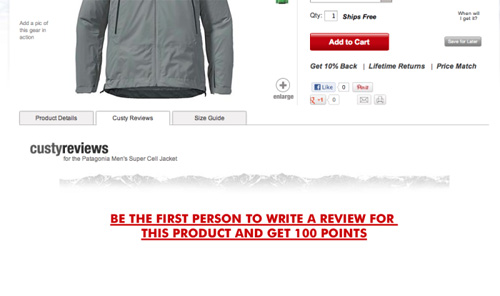
According to data from PowerReviews, increasing a product's review count from zero to one increased conversion by 20%. The mechanism is simple: the very first review breaks the trust barrier. A product page with zero reviews asks the shopper to be the first person to take a risk; a single credible review removes that "am I the only one?" hesitation and also unlocks the visible star rating on category, search, and product pages - which lifts clicks before the visitor even lands on the product.
That makes the highest-ROI review optimization not "get hundreds of reviews," but "make sure no product is sitting at zero." Below is a practical playbook for getting that first review on every product, ethically and at scale.
Get the First Review From Real Customers First
Before writing staff reviews, exhaust the most credible source: actual buyers. Send a post-purchase review request timed to after the customer has had time to use the product, not the moment it ships. Make leaving a review frictionless - no account wall, a direct link straight to the review form, mobile-friendly, photos encouraged. A small, disclosed incentive (loyalty points, entry into a draw) is acceptable and effective, provided it rewards the act of reviewing, not a positive review specifically. Under the U.S. FTC's rules on consumer reviews and testimonials, you may not condition an incentive on the review being positive, and incentivized reviews must be disclosed.
When to Use a Staff Review - and How to Do It Right
For brand-new products with no buyers yet, a well-written, clearly disclosed staff review is a legitimate way to break the ice. Done badly it reads as marketing and erodes trust. Done well it genuinely helps the shopper. The rules:
1. The reviewer must have actually tried or owned the product. Integrity is the whole point - a staff review of a product nobody on staff has used is just disguised copy.
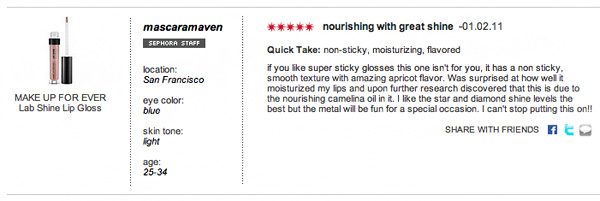
2. Don't make it a sales pitch. An authentic review doesn't read like a spec sheet. Instead of "This camcorder features built-in Wi-Fi for wireless transfer, AVCHD recording, and 32x optical zoom," describe the lived experience: "The video quality is excellent and it's easy to set up on both Windows and a MacBook Pro. It downloads straight to an external drive, bypassing the computer. It lacks dual card slots and battery life is short - a power user should grab an extended battery - but for casual use at this price it's a good deal." The second version informs a decision; the first just restates the product page.
3. Mention the negatives. Reviewers who name pros, cons, and even alternative products (by name) when the cons are dealbreakers are far more trustworthy than uniformly glowing ones. Counterintuitively, an honest drawback increases conversion because it makes every positive claim believable.
4. Tie features to benefits, sparingly. You can still surface a genuine value prop - "the camelina oil is super moisturizing" - as long as it's framed as the reviewer's experience, not a bullet lifted from marketing.
5. Disclose that it's a staff review. Major review platforms offer staff-reviewer badges; use them. If your tool doesn't, include a clear signature or disclosure in the text itself. This is both an FTC expectation and the thing that keeps the review credible.
6. Stick to one staff review per product. The job of the first review is to provide one non-marketer opinion and to light up the star rating across category, search, and product pages. Once the ice is broken, let real customers take over. You can add more staff reviews later, but the outsized impact is the first one - so spend limited staff time writing for products that still have zero.
Build the Zero-Review Workflow
Turn this into a repeatable process rather than a one-off push. Pull a report of every product with zero reviews, sorted by traffic and revenue. For the high-traffic zero-review products, trigger or escalate post-purchase requests first, and only assign a disclosed staff review where there are genuinely no buyers yet. Re-run the report monthly - new products constantly enter the catalog at zero, and a feed import or seasonal range can quietly create dozens of trust-barrier pages overnight. The store that never lets a trafficked product sit at zero reviews captures the largest, cheapest conversion gain available.
Frequently Asked Questions
Can I offer an incentive for reviews? Yes, for the act of reviewing - never conditioned on the review being positive, and the incentive must be disclosed, per FTC rules.
Are staff reviews allowed? Yes, when the reviewer actually used the product and the staff relationship is clearly disclosed.
Why is the first review worth so much more than the tenth? The first review removes the "nobody else has bought this" risk and unlocks the visible star rating sitewide. Subsequent reviews add reassurance with diminishing marginal impact.
Don't Stop at the First Review - But Start There
The zero-to-one jump is the biggest single conversion gain, but the strategy doesn't end once a product has one review. After the ice is broken, the priorities shift to volume, recency, and richness: a product whose newest review is two years old reads as stale and quietly suppresses conversion, while a steady trickle of recent reviews - ideally with photos and a mix of ratings - keeps the social proof credible and feeds fresh, unique, keyword-relevant content onto the page that helps it rank as well as convert. Practically, that means keeping the post-purchase request running indefinitely (not as a one-time campaign), surfacing the most recent and most helpful reviews near the buy button rather than oldest-first, and responding publicly to critical reviews so prospective buyers see that problems get handled. The first review unlocks the gain; an always-on review program compounds it.
For help implementing review collection, schema, and a higher-converting product page, see our conversion optimization and ecommerce SEO services. (Original source attribution: Get Elastic / PowerReviews data via TechCrunch, linked above.)