

A key component of an eCommerce marketing strategy is building dedicated landing pages for ads and email promotions – not pointing paid traffic at your homepage and hoping.
Many retailers assume the homepage is the best place to send ad clicks: it shows everything for sale and is usually the most polished page on the site. That assumption is wrong, and it’s expensive. The best place to land after clicking an ad is the page most relevant to that specific ad. Relevant landing pages keep prospects engaged and convert far better than the homepage or a broad category page – and on paid search they also lower your cost per click, because relevance improves Quality Score and Quality Score reduces what you pay per click.
Editorial note: this article was originally a third-party walkthrough using 2013 paid-search screenshots. It has been rewritten as an original, evergreen guide to landing-page relevance; the dated, image-dependent examples were removed because they no longer resolved and the principles, not the 2013 screenshots, are what matter.
Why ad-to-page relevance is the whole game
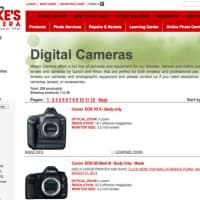
Every paid click is bought. The job of the landing page is to honor the promise the ad made – same product, same message, same intent – within the first screen. When someone clicks an ad for “Nikon mirrorless camera” and lands on a generic “all cameras” page showing Canon models and premium prices, the mental disconnect drives an immediate bounce. Land them on a page scoped to exactly what the ad promised – the Nikon mirrorless range – and they keep moving toward purchase. Relevance isn’t a nicety; it is the single biggest lever on paid conversion and paid efficiency.
The anatomy of a high-converting eCommerce landing page
- Message match – the headline and hero echo the ad’s exact wording and offer, so the visitor instantly knows they’re in the right place.
- Scope match – show the specific products the ad implied, not a broader catalog the visitor now has to filter down themselves.
- One clear primary action – a single obvious next step (add to cart, shop the collection) rather than competing calls to action.
- Trust at the decision point – reviews, returns, shipping, and security cues visible without scrolling, because paid visitors are colder than organic ones.
- Speed and mobile – most paid clicks are mobile; a slow or awkward mobile landing page wastes the click you paid for before it renders.
- Continuity of design – for email and display, reuse the creative’s imagery and terminology so the landing page visibly belongs to the ad.
Match the page to the campaign’s intent
Not every promotion wants the same landing page, and copying one pattern everywhere is a common mistake. A discovery or “what’s new” email is meant to invite browsing, so its landing page should be an inspiring, well-merchandised collection that mirrors the email’s look. A direct-response ad for a specific product a buyer already knows they want should remove friction entirely – land them as close to the cart as possible, because extra browsing only adds opportunities to leave. The right design follows the intent: exploratory campaigns get exploratory pages, closing campaigns get closing pages.
Common landing-page mistakes that quietly waste ad spend
The recurring failures are predictable: sending all ads to the homepage; landing on a category far broader than the ad’s promise; mismatched messaging between ad and page; burying the relevant products below the fold; ignoring mobile performance; and presenting too many competing actions so no single path stands out. Each one is invisible in a campaign report except as a low conversion rate and a high cost per acquisition – which is exactly why ad-to-page relevance should be audited as deliberately as the ads themselves.
How to test and improve landing pages
Treat landing pages as something measured, not assumed. For each campaign, compare conversion rate and cost per acquisition by landing destination; A/B test the elements that carry the most weight (headline and message match, hero, primary CTA, the amount of pre-cart friction); and use session recordings or heatmaps to see where paid visitors hesitate or leave. Let the data, not internal preference, decide which page a campaign points at. Small relevance improvements compound, because they raise conversion and lower cost per click at the same time.
Landing pages for SEO vs. paid – a key distinction
Paid landing pages and organic landing pages are not the same job, and conflating them wastes both. A paid landing page can be tightly scoped, lighter on copy, and singularly focused on the one action, because the visitor arrived from a specific ad with known intent and you control the entrance. An organic landing page (typically a category or content page) has to satisfy a wider range of search intent, carry the depth and internal links that earn rankings, and serve visitors at different stages – so stripping it down the way you would a paid page actually hurts it. The principle “match the page to how the visitor arrived” holds for both; the resulting page looks different because the arrival is different.
Post-click is only half – align it with the offer and the cart
A perfectly relevant landing page still fails if the journey after it breaks. Continuity has to extend through to checkout: the price and promotion promised in the ad must match what the cart shows, the product the ad featured must be in stock and prominent, and any code or discount referenced must apply cleanly. A surprising amount of wasted ad spend isn’t a bad landing page at all – it’s a great landing page leading to a cart that contradicts the ad’s promise. Audit the whole path from click to confirmation as one unit, because the prospect experiences it as one.
Dedicated landing pages vs. existing category pages
A frequent question: should you build a purpose-made landing page for a campaign, or just point ads at an existing category page? The honest answer depends on the campaign’s scope and value. For a broad evergreen campaign that maps cleanly to a well-built, well-merchandised category page, that page is often the right destination – it already has structure, inventory, and SEO value, and a redundant standalone page just fragments effort. For a specific promotion, a narrow product set, a seasonal offer, or a high-spend campaign where every conversion point matters, a dedicated page tailored to that exact message will almost always out-convert a general category page. The decision rule: the more specific the ad’s promise and the higher the spend behind it, the more a purpose-built page pays for itself.
The takeaway
Use dedicated, relevant landing pages in every paid promotion. You are paying for that traffic in almost every case, so the return depends on sending each prospect to the page that matches what they clicked – not the homepage, and not a generic catalog. If you want help building and testing landing pages that convert your paid campaigns and align with your broader marketing, contact 1Digital® Agency.