
FOR FURNITURE BRANDS
Furniture SEO Company: High-AOV PDPs, White-Glove Trust & Local Showrooms
Furniture shoppers research for weeks before a $2,000+ purchase. We build SEO programs around the long consideration window - image-optimized PDPs, white-glove delivery trust signals, custom and made-to-order content, and local showroom visibility - so you win against Wayfair, Pottery Barn and Amazon. 1Digital® has scaled furniture brands on Shopify Plus, BigCommerce and Magento since 2012.
Ready to get your Furniture CMSbuilt - free?
1Digital® builds your furniture CMS front-end on WorkspaceCMS.ai at no cost - AI-first, SEO-first, live in a few days to a few weeks*. Shopping cart and checkout integration is custom-quoted. Your free build credit applies toward any package.
No setup fees · 12-month commitment · 4.9★ from 941+ reviews
* Timing depends on how quickly we receive your questionnaire answers and content.
Trusted by 400+ Brands · Certified Partners




Years in eCommerce
Of results, scale, and quality at the enterprise level.
Expert Team
Specialists across SEO, AI SEO, PPC, design, dev, and strategy.
US Core + Global Talent
US core team for clear communication; vetted global specialists for international client work.
Reputation Score
Rated 4.9/5 across 941+ verified client reviews.
Ask AI for a business like yours. Are you in the answer?
ChatGPT, Claude, and Perplexity only recommend sites they can read - and most can't read yours. Scan it free and see exactly where you stand.
Free · no signup · scores the 15 signals AI uses to find you · ~20 seconds
How Furniture SEO Wins A 30-Day Consideration Cycle
Furniture is a high-AOV, high-anxiety purchase. The buyer journey runs 14–60 days, spans Pinterest, Instagram, Google Image Search, AI Overviews and 4–7 retailer tabs, and ends only when the shopper trusts the delivery, return, and quality story. Search volume is concentrated in style queries ('mid-century walnut sideboard'), dimension queries ('72-inch dining table seats 8'), and material-plus-use queries - none of which Wayfair or Amazon answer particularly well on their PDPs.
1Digital® builds furniture SEO programs around three pillars: PDPs that load fast despite heavy imagery (Core Web Vitals matter more here than almost any vertical), trust content that handles freight, white-glove, returns and assembly objections head-on, and local SEO for showrooms when applicable. We work in Shopify Plus, BigCommerce and Magento, and use WorkspaceCRM to monitor which retailer pages get cited in AI shopping answers - typically the gap we close first.
- ›Style and dimension-led category architecture that captures research-phase queries
- ›Core Web Vitals tuning for image-heavy, high-AOV product detail pages
- ›White-glove, freight and assembly trust content that reduces objection-stage exits
- ›Custom and made-to-order configurator SEO with proper indexation control
- ›Local showroom SEO with GBP, location pages and review-velocity programs
- ›WorkspaceCRM citation tracking vs Wayfair, Pottery Barn, West Elm and Amazon
Furniture SEO, step by step
Climb the searches your buyers make
Here is a typical furniture search playing out. Expert writers and strategists build the category and product pages that move your store up the results, and the clear answers that get it cited in Google's AI Overview above them.
- ›Pages written by people who know the search behind the sale
- ›Structure and schema that AI Overviews can read and quote
- ›Rankings tracked search by search, not as one blended average
The Furniture market
What we cover in Furniture SEO
Named sub-verticals and buyer segments inside the Furniture category that we map keyword strategy and content programs to:
Last updated: October 2026
Furniture by the numbers
$252 billion
US furniture and bedding industry shipments in 2024
Source: Home Furnishings Association / Furniture Today, 2025 Industry Forecast
Furniture SEO - buyer questions
Common questions in the Furniture vertical
How does SEO work for high-AOV furniture e-commerce?
Furniture SEO compounds powerfully because the high average order value (often $800-$5,000+) supports long buyer journeys, deep content investment, and white-glove logistics signals.
Buyers research for weeks across queries like best [material] sofa, [room] furniture ideas, dimension calculators, and delivery FAQs before converting. Build category pages with rich filters (material, dimensions, style, price), pair them with editorial guides and room-design hubs, and surface clear delivery, white-glove, and return information. 1Digital® designs furniture sites around an evidence-first PDP - measured dimensions, materials sourcing, construction details, and 360-degree imagery - which materially lifts both rankings and conversion on a vertical where trust drives every transaction.
How do you handle SEO for custom and made-to-order furniture?
Custom and made-to-order furniture requires a hybrid SEO approach combining product configurators with content authority.
Each base model should have a canonical product page indexed for the core query, while configuration variants generally remain noindexed to avoid duplicate-content sprawl. Build trust signals around lead times, craftsmanship process, materials sourcing, and shipping logistics - these are top-of-funnel objections that determine conversion at high price points. Long-tail informational content (how long does custom upholstery take, kiln-dried hardwood vs engineered) captures research-phase traffic. Custom furniture sellers that publish workshop and process content routinely outrank mass-market retailers on style- and material-specific queries.
What technical SEO challenges are unique to furniture sites?
Furniture sites face three persistent technical SEO challenges: heavy imagery, complex faceted navigation, and large product catalogs with frequent inventory variation.
Use next-gen image formats (AVIF/WebP), lazy-load below-the-fold imagery, and serve responsive sizes - furniture PDPs often exceed 30 images and benchmark poorly on Core Web Vitals without discipline. Apply faceted-navigation rules that index high-demand combinations (leather sectional sofas) while blocking thin or duplicative facets. For seasonal items like patio furniture, keep category pages permanent year-round with content depth so they accumulate authority for spring search spikes rather than starting from zero each March.
How does white-glove delivery affect SEO and conversion?
White-glove delivery is both a conversion lever and a ranking signal on furniture queries.
Surface delivery options, room-of-choice placement, assembly, debris removal, and lead times on PDPs and category pages with structured data where applicable. Local SEO matters more than most furniture brands realize: ZIP-code-aware delivery messaging and metro-specific landing pages can capture significant geo-modified search volume (sofa delivery [city]). Sites that clearly communicate delivery scope, white-glove options, and accurate lead times convert at 30-50% higher rates on premium furniture compared to sites with vague or buried logistics information.
Should furniture brands invest in showroom and brick-and-mortar SEO?
Yes - hybrid retailers should treat each showroom as a distinct local SEO asset.
Build a dedicated location page for each showroom with NAP consistency, hours, store-specific inventory, embedded Google Business Profile content, locally tagged imagery, and clear directions. Furniture purchases frequently involve at least one in-person visit, so geo-modified queries (leather sofa store near me, [city] furniture showroom) drive substantial high-intent traffic. Pair location pages with structured data (FurnitureStore + LocalBusiness schema), localized reviews, and integration with delivery zones - this captures both organic local-pack visibility and downstream e-commerce sessions from in-market researchers.
Furniture SEO - FAQ
How do you compete with Wayfair, Amazon and Pottery Barn?
You don't out-scale them - you out-specialize them. Wayfair wins broad commodity queries but loses on style depth, material specificity, and trust-stage content. We position furniture clients to own narrower, higher-intent SERPs: specific style + material + dimension queries, designer-led content, and the trust-stage queries Wayfair listings can't satisfy ('is [brand] furniture good quality,' 'how does white-glove delivery work'). For AI engines, citation goes to the source with clean, extractable detail - a well-structured boutique brand PDP routinely beats a Wayfair listing for citation in Perplexity. 1Digital® has run this play across dozens of furniture catalogs since 2012.
Why is Core Web Vitals more critical for furniture sites?
Furniture PDPs carry 12–25 high-resolution images, video walkthroughs, room scenes, and swatches - all of which crush LCP and INP scores if not handled correctly. Slow pages don't just hurt rankings; they collapse conversion on a $1,500+ purchase where shopper anxiety is already high. We audit and optimize image pipelines (modern formats, responsive sizing, lazy-load priorities), defer non-critical scripts, and tune theme code so PDPs hold sub-2.5s LCP without sacrificing visual quality. This single workstream often lifts both organic traffic and on-site conversion measurably.
How should custom and made-to-order furniture be handled for SEO?
Configurator URLs should generally not be indexed - they create infinite combinations of low-value pages. Instead, index a curated set of canonical 'base' PDPs (one per silhouette or core SKU) and use editorial content to surface popular configurations and materials. Schema should reflect the configurable product as a single entity with variant pricing ranges. We've found this approach captures the high-intent custom queries ('custom sectional in performance velvet') without flooding the index with crawl traps.
Does local SEO matter if we sell nationwide online?
Yes, if you have any physical showroom or design-studio presence. Furniture has unusually strong in-person research behavior - even online buyers want to sit on a sofa before a $3,000 commitment. Local SEO drives showroom visits that convert at 3–5x online rates and provides a major branded-search lift in the surrounding metro. We build location pages, Google Business Profile programs, and review-velocity systems for every showroom. For pure-play DTC furniture brands, we shift the budget to brand search and AI citation instead.
What schema is most important for furniture PDPs?
Product schema with materials, dimensions (including assembled and packaged), weight, color, and clear price/availability is the floor. Layer in AggregateRating once you have credible review volume, Offer with shippingDetails reflecting freight realities, and FAQPage on PDPs covering assembly, delivery and returns. For showrooms, LocalBusiness with full hours and geo. Properly structured shippingDetails is especially undervalued - it directly influences Google Shopping placement and AI-engine trust scoring for high-AOV items.
How long does furniture SEO take to show results?
Long-tail style and dimension queries can move within 60–90 days; competitive head terms ('sectional sofa,' 'dining table') take 9–18 months and require sustained editorial plus authority work. The honest answer is that furniture is a patient vertical - but it rewards patience because LTV is high and branded search compounds. We instrument every program so leadership sees citation share, branded-search lift, and assisted-conversion data within the first quarter, not just rank reports.
Get a free proposal
Talk to our Furniture marketing team
Tell us about your business and goals. A senior strategist replies within one business day with a pricing band and a draft plan. No long-term contracts.
4.9/5 from 941+ reviews
Managed Websites by 1Digital®
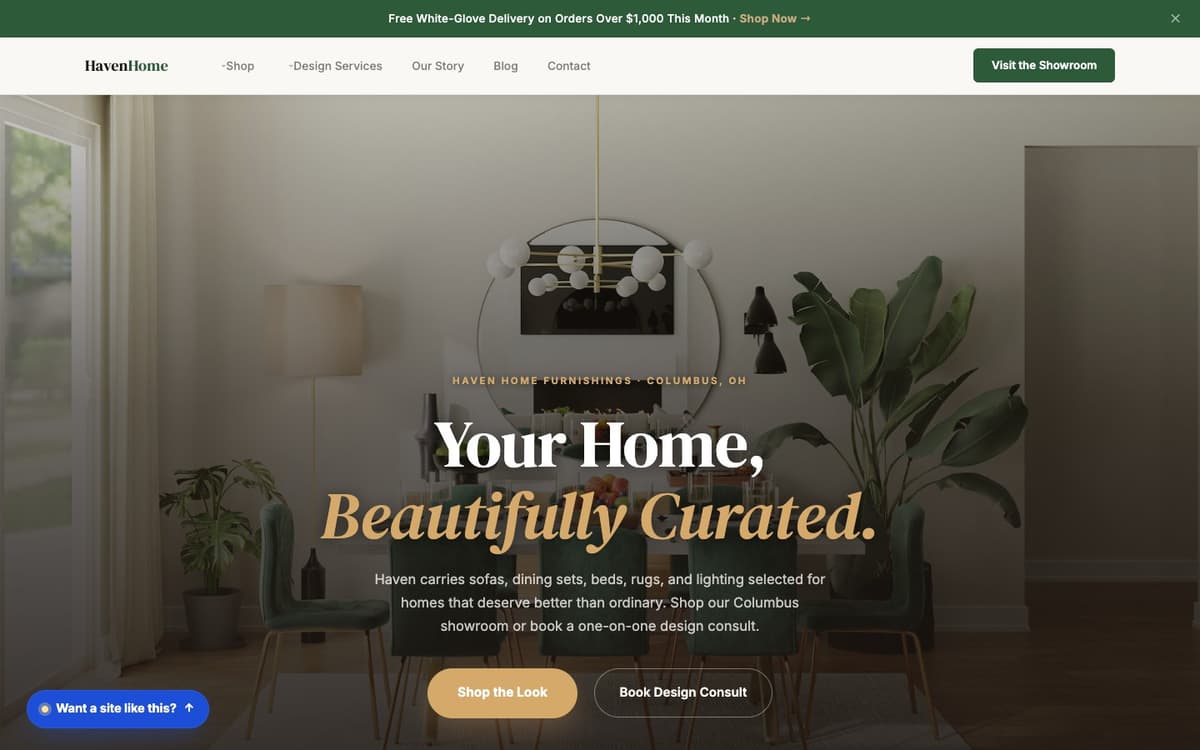
A Managed Website Built for Furniture Businesses.
- Room-size and interior-style guide pages reducing returns and boosting AOV
- Material and durability comparison pages with Product schema
- Custom order and lead-time transparency pages building buyer confidence
- Trade and designer account portal with Net-30 quoting flow
- Built so AI assistants can read and cite you when buyers ask LLMs for furniture recommendations
Lighthouse
Visible in Google · ChatGPT · Claude · Perplexity
Powered by
Your Furniture CMS Is One Call Away.
1Digital® builds your furniture site’s CMS front-end on WorkspaceCMS.ai at no cost - AI-first, SEO-first, and ready for Google and every major LLM from day one. Shopping cart and checkout integration is custom-quoted. Your free build credit applies toward any custom package.
15+ yrs · Google Partner · 4.9★ · 941+ reviews · Live in days to weeks*
* Timing depends on how quickly we receive your questionnaire answers and content.