
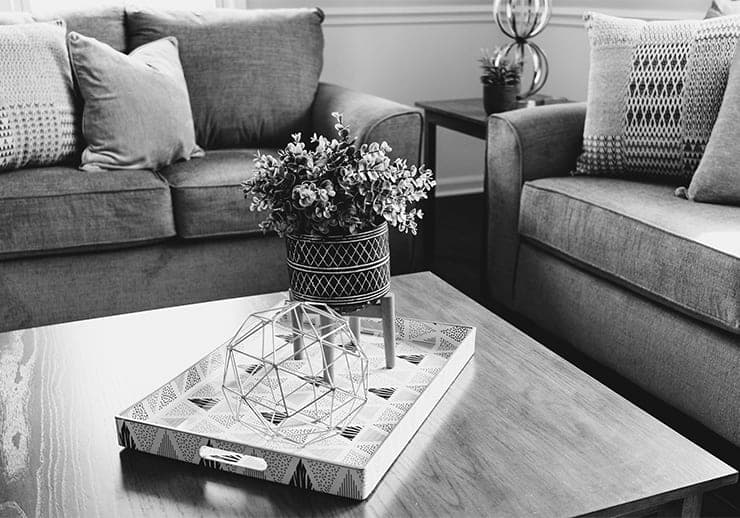
FOR HOME DECOR BRANDS
Home Decor SEO Agency: Visual Search, Seasonal Cycles & Style Curation
Home decor lives on Pinterest, Google Image Search and AI shopping answers - not on text-only SERPs. We build SEO programs around visual search, seasonal demand cycles (spring refresh, fall, holiday) and style curation (Japandi, coastal, maximalist) so your collections show up before Wayfair or Pottery Barn do. 1Digital® has scaled decor brands on Shopify Plus and BigCommerce since 2012.
Ready to get your Home Decor CMSbuilt - free?
1Digital® builds your home decor CMS front-end on WorkspaceCMS.ai at no cost - AI-first, SEO-first, live in a few days to a few weeks*. Shopping cart and checkout integration is custom-quoted. Your free build credit applies toward any package.
No setup fees · 12-month commitment · 4.9★ from 941+ reviews
* Timing depends on how quickly we receive your questionnaire answers and content.
Trusted by 400+ Brands · Certified Partners




Years in eCommerce
Of results, scale, and quality at the enterprise level.
Expert Team
Specialists across SEO, AI SEO, PPC, design, dev, and strategy.
US Core + Global Talent
US core team for clear communication; vetted global specialists for international client work.
Reputation Score
Rated 4.9/5 across 941+ verified client reviews.
Ask AI for a business like yours. Are you in the answer?
ChatGPT, Claude, and Perplexity only recommend sites they can read - and most can't read yours. Scan it free and see exactly where you stand.
Free · no signup · scores the 15 signals AI uses to find you · ~20 seconds
How Home Decor SEO Works In A Visual-First Market
Home decor buyers discover through images first and search second. A Pinterest pin, an Instagram reel, or a Google Image result kicks off the journey, then becomes a branded or specific search ('rattan pendant light boho,' 'Japandi nightstand'). Volume is seasonal and style-cycle driven - spring and fall refresh peaks plus a Q4 holiday surge - and AI engines are increasingly cited for style guidance ('what's Japandi style,' 'coastal grandmother decor ideas').
1Digital® builds home decor SEO programs around image SEO done correctly (filenames, alt text, structured data, Pinterest-ready aspect ratios), style hub content that captures discovery-stage queries, and seasonal editorial calendars timed to demand. We work natively on Shopify Plus and BigCommerce, and WorkspaceCRM tracks which style queries cite your collections vs Wayfair, West Elm and Pottery Barn so the editorial calendar is steered by real citation gaps.
- ›Image SEO and Pinterest-ready visual content for discovery-stage demand
- ›Style hub pages (Japandi, coastal, maximalist) that capture aesthetic queries
- ›Seasonal editorial calendars timed to spring/fall refresh and Q4 cycles
- ›UGC and customer-photo galleries with proper schema and indexation
- ›Collection architecture by style, room, color and material
- ›WorkspaceCRM citation tracking on style and inspiration queries in AI Overviews
Home Decor SEO, step by step
Track every search your buyers make
These are the kinds of home decor searches your buyers type. Expert writers and strategists build the category and product pages that move your store up each one, and we track every search on its own as it climbs toward page one.
- ›Pages written by people who know the search behind the sale
- ›Structure and schema that AI Overviews can read and quote
- ›Rankings tracked search by search, not as one blended average
The Home Decor market
What we cover in Home Decor SEO
Named sub-verticals and buyer segments inside the Home Decor category that we map keyword strategy and content programs to:
Last updated: October 2026
Home Decor by the numbers
$220 billion
US home decor market revenue in 2025
Source: Statista Market Insights, Home & Living 2025
Home Decor SEO - buyer questions
Common questions in the Home Decor vertical
How does SEO work for home decor e-commerce?
Home decor SEO is image-driven and style-driven, with buyers searching by aesthetic (mid-century modern lamp, boho rug), room (living room wall art), and color or material rather than brand.
Visual search via Google Lens, Pinterest, and Google Images drives substantial discovery, making image SEO - descriptive filenames, alt text, structured data, and high-resolution responsive imagery - as important as text content. Build category pages organized by style and room, pair them with lookbook-style editorial content, and use Product schema with detailed visual attributes. 1Digital® treats decor PDPs as a visual-first experience with measured dimensions, room-context imagery, and styling guidance that compounds organic discoverability.
How seasonal is home decor SEO, and how should you plan?
Home decor follows two major refresh cycles - spring (March-May) and fall (September-November) - plus holiday-specific surges around Christmas, Halloween, and Easter.
Holiday decor demand spikes 8-12 weeks before each holiday, so content and category pages should be live and indexed at least 90 days early. Keep seasonal category pages permanent year-round with current product rotation rather than building and tearing down pages each season - permanent URLs accumulate authority and rank faster when demand returns. Plan editorial content (how to decorate for fall 2026, Christmas mantel ideas) to publish 10-14 weeks ahead of peak search demand for best ranking outcomes.
How do you compete with Wayfair, Amazon, and Pottery Barn in home decor?
Compete on style curation, niche aesthetics, and visual content depth rather than head terms or price.
Specialty decor retailers win by owning specific style verticals (Japandi, coastal, dark academia, maximalist) with deep curation, named-designer collaborations, and editorial authority. Build comprehensive style hubs with shoppable lookbooks, designer interviews, and room-by-room guides. Pinterest is a major top-of-funnel channel for decor - optimize for Pinterest SEO with rich pins, vertical imagery, and idea pins linked to landing pages. Independent decor brands routinely capture 30-50% organic share on style-specific long-tail queries that Wayfair and Amazon treat too generically.
What role does user-generated content play in home decor SEO?
User-generated content (UGC) is a high-leverage SEO and conversion asset in home decor because buyers want to see products in real homes, not styled studio settings.
Surface verified-buyer photo reviews on PDPs with schema markup (Review and AggregateRating), and build dedicated customer homes or as styled gallery sections that aggregate UGC by product and style. UGC pages accumulate long-tail rankings around styling queries (how to style [product] in a small living room) and improve PDP dwell time, both of which feed positive ranking signals. Sites with robust UGC programs routinely show 20-35% higher PDP conversion than those without.
How important is local SEO for home decor retailers with showrooms?
Local SEO is increasingly important for home decor retailers with physical showrooms because buyers often want to see textures, scale, and color in person before committing.
Build dedicated location pages for each showroom with NAP consistency, store-specific imagery, embedded GBP content, and locally tagged inventory or designer events. Optimize for geo-modified queries (home decor store [city], [neighborhood] interior design shop) and maintain a robust Google Business Profile with weekly photo updates and posts. Local-pack visibility drives high-intent foot traffic that converts at materially higher rates than pure online sessions for premium decor categories.
Home Decor SEO - FAQ
How important is Pinterest for home decor SEO?
Pinterest is the discovery layer that feeds branded search for home decor. Pins index in Google and increasingly surface in AI shopping answers, so a strong Pinterest presence directly lifts organic discovery and branded-query volume 60–90 days later. We treat Pinterest as a parallel SEO channel: optimized pin descriptions, Rich Pins enabled, board structure aligned to style and room categories, and pin-to-PDP attribution tracked. For home decor specifically, neglecting Pinterest leaves 20–35% of addressable discovery traffic on the table.
How do you handle seasonal demand cycles?
Home decor has two reliable peaks (spring refresh in Feb–April, fall and holiday in Sept–Dec) plus style microcycles tied to trend shifts. We build editorial and on-page work 90–120 days ahead of each peak, refresh evergreen seasonal collection pages annually (rather than creating new URLs each year), and use schema to signal current availability. Seasonal collections should be permanent URLs with year-agnostic naming - a 'Fall Decor Collection' page accruing authority across seasons outperforms 'Fall 2024' pages every time.
Which style queries are worth targeting?
Whichever match your actual catalog and have genuine search volume - not whatever's trending in design blogs. Japandi, coastal grandmother, modern organic, dark academia, maximalist, quiet luxury and warm minimalism all have measurable, durable search demand. We map your inventory against query clusters with real volume, build style hub pages that double as inspirational editorial and collection landing, and link them tightly to PDPs that fit the aesthetic. Targeting styles your catalog can't credibly support hurts conversion and bounce metrics.
How do you compete with Wayfair, Pottery Barn and Amazon?
On taste, specificity and trust - not breadth. The three giants win broad commodity queries ('throw pillows,' 'area rug') but lose long-tail style and aesthetic queries where curation matters. We position decor brands to own style + room + material combinations, build editorial that reflects real design literacy (which generic retailer content lacks), and surface founder, designer or buyer voice for E-E-A-T signals AI engines reward. Branded search lift typically follows once the discovery layer is doing its job.
Does user-generated content help home decor SEO?
Significantly, when structured properly. Customer photos of products in real rooms drive on-site engagement, give Google fresh content signals, and provide the contextual imagery AI engines need to understand product use. We implement UGC galleries with schema, encourage hashtag-driven submission, and surface UGC on PDPs and style hubs. The key is making UGC crawlable and reviewable - gated or JavaScript-only UGC widgets don't deliver the SEO value.
Which platform is best for home decor SEO?
Shopify Plus suits most decor brands - fast theme performance, strong app ecosystem for UGC and Pinterest, and clean Merchant Center integration. BigCommerce works well for larger catalogs with complex faceting. We've migrated decor brands between platforms successfully, but only when the business case justifies it - platform churn for its own sake is rarely worth the lost SEO equity. 1Digital® is certified on both and will recommend honestly based on catalog and ops.
Get a free proposal
Talk to our Home Decor marketing team
Tell us about your business and goals. A senior strategist replies within one business day with a pricing band and a draft plan. No long-term contracts.
4.9/5 from 941+ reviews
Managed Websites by 1Digital®
A Managed Website Built for Home Decor Businesses.
- Room-by-room style guide pages ranking for high-intent interior design queries
- Seasonal collection launch pages timed to home décor buying cycles
- Gift and registry builder pages with curated product schema
- Trade and designer program portal with account-tier pricing
- Built so AI assistants can read and cite you when shoppers ask LLMs for home decor inspiration
Lighthouse
Visible in Google · ChatGPT · Claude · Perplexity
Powered by
Your Home Decor CMS Is One Call Away.
1Digital® builds your home decor site’s CMS front-end on WorkspaceCMS.ai at no cost - AI-first, SEO-first, and ready for Google and every major LLM from day one. Shopping cart and checkout integration is custom-quoted. Your free build credit applies toward any custom package.
15+ yrs · Google Partner · 4.9★ · 941+ reviews · Live in days to weeks*
* Timing depends on how quickly we receive your questionnaire answers and content.