

FOR ESTABLISHED ETSY SELLERS READY TO BUILD A DTC BRAND
Etsy To Shopify:
Migration & SEO For Established Sellers
Etsy is a great place to start. It's a hard place to scale. Established Etsy sellers above $250K–$500K GMV start to feel the stacked-fee math, the brand-control limits, and the SEO ceiling on marketplace listings. 1Digital® migrates established Etsy brands to Shopify and Shopify Plus with SEO equity preservation, listing-to-product mapping, review and customer migration, and the DTC-brand architecture that makes the next chapter possible.
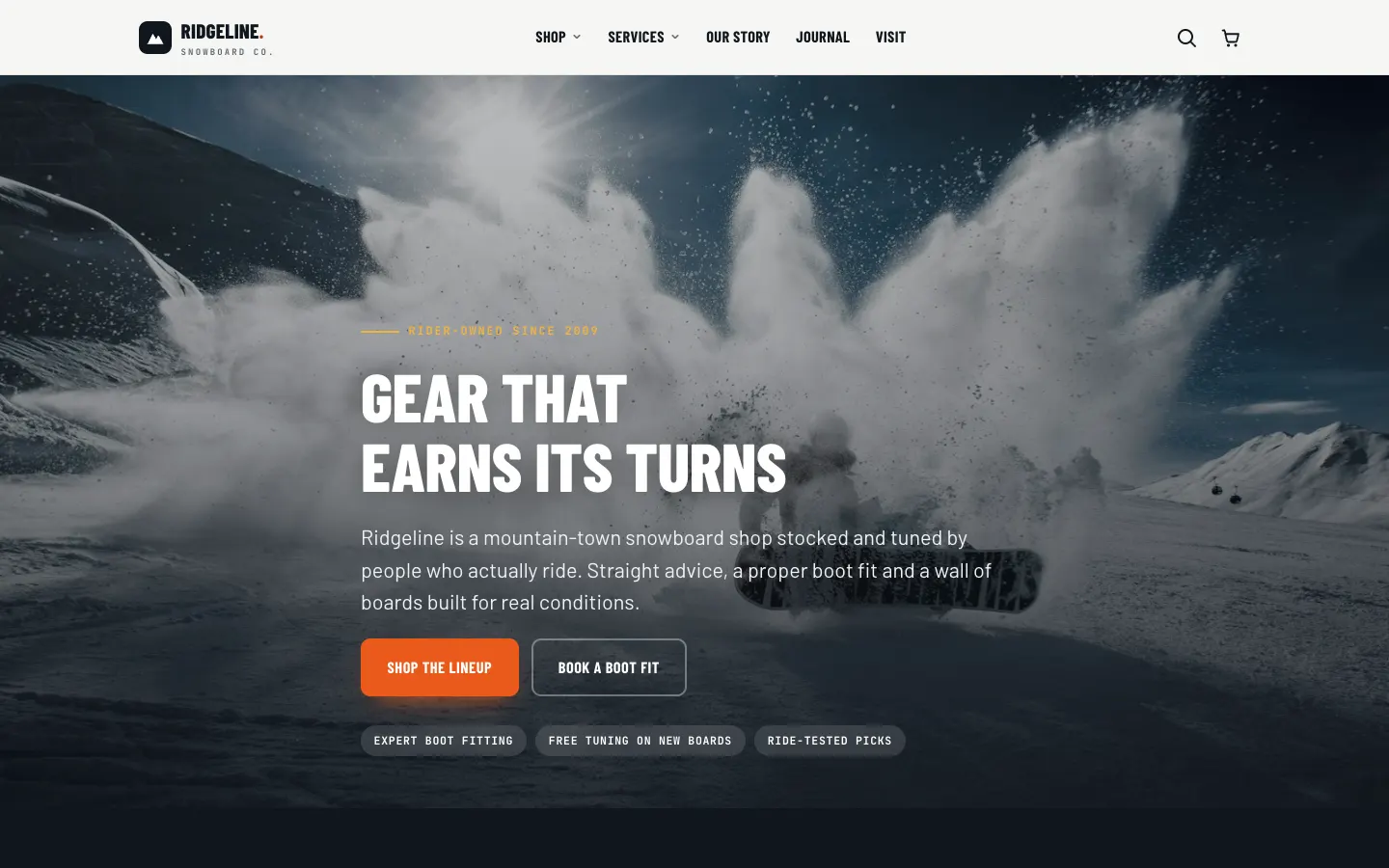

eCommerce Website Plans for etsy shop
A new etsy shop storefront, designed free and managed for you
On your Shopify or BigCommerce store, from $499 a month. Pictured: Ridgeline Board Co., a demo store built on WorkspaceCMS.


Trusted by 400+ Brands · Certified Partners




Years in eCommerce
Of results, scale, and quality at the enterprise level.
Expert Team
Specialists across SEO, AI SEO, PPC, design, dev, and strategy.
US Core + Global Talent
US core team for clear communication; vetted global specialists for international client work.
Reputation Score
Rated 4.9/5 across 100+ verified client reviews.
Ask AI for a business like yours. Are you in the answer?
ChatGPT, Claude, and Perplexity only recommend sites they can read - and most can't read yours. Scan it free and see exactly where you stand.
Free · no signup · scores the 15 signals AI uses to find you · ~20 seconds
When To Leave Etsy
Most Etsy sellers should stay on Etsy. The marketplace is a genuinely strong starting surface - Etsy's discoverability engine matches makers with buyers in a way that's hard to replicate at small scale on a DTC site. But there's a recognizable inflection point where the platform stops being a fit. The five triggers below tend to appear together; when two or more apply, the migration math usually works.
Revenue is bumping the marketplace ceiling
Established Etsy sellers above $250K–$500K annual GMV start to feel the platform ceiling - Etsy's algorithm rewards new sellers and low-priced listings, while Etsy Ads and platform fees compound to where a 25–40% effective take rate is common once shipping, processing, transaction, and ad spend stack. The numbers eventually justify a DTC stack.
Margins are getting compressed by stacked fees
Etsy's listing fee ($0.20) + transaction fee (6.5%) + payment processing (3% + $0.25) + Offsite Ads (12–15% on attributed orders) + Etsy Plus ($10/mo) means a $50 sale can give back 25%+ before COGS. On Shopify Plus with Shop Pay, the same sale gives back closer to 2.5–3.5% in processing. The migration pays back fast at meaningful volume.
Brand control is constrained by marketplace rules
Etsy controls the customer relationship, the post-purchase email flow, the brand presentation, and the discoverability ranking. Established makers want a brand site that reflects their full creative range, captures the customer email, runs lifecycle marketing, and surfaces collaborations and bespoke work - none of which Etsy supports the way a DTC site does.
The SEO ceiling on Etsy listings is real
Etsy listings have a hard ceiling on what's possible for Google SEO. Listing URLs include shop-tied paths the merchant doesn't control, schema is locked to Etsy's templates, and external link acquisition to a marketplace listing helps the marketplace as much as the merchant. A Shopify or Shopify Plus storefront with full schema graph control and AI-engine readiness clears that ceiling.
Wholesale, B2B, or licensing is on the roadmap
Etsy doesn't support B2B / wholesale / quote-to-cash flows in any meaningful way. Brands that have reached the point where wholesale pickups (retailers, hospitality, corporate gifting) are part of the strategy need a stack that supports tiered pricing, NET terms, custom catalogs, and B2B-specific checkouts - first-class on Shopify Plus B2B and BigCommerce B2B Edition.
Etsy SEO, step by step
Get your listings in front of ready buyers
Etsy search reads your titles, tags, attributes and categories, then weighs listing quality and shop reviews. We rewrite each listing around the words buyers use, fill every attribute, and improve photos and descriptions so more shoppers who see you choose you.
- ›Titles and tags written around buyer searches
- ›Every attribute and category filled in
- ›Photos and descriptions improved to win the click
What The Migration Preserves (SEO-Wise)
Marketplace-to-DTC migrations have a different SEO equity preservation playbook than platform-to-platform migrations. Etsy doesn't allow listing-level 301 redirects to external domains, which means the playbook leans heavily on brand-authority transfer, off-Etsy backlink retargeting, and review-and-Pinterest preservation rather than on URL-level redirect mapping. Here's what actually carries over.
✓ External backlinks to the brand domain
Backlinks earned to your Etsy shop URL or your custom etsy.com/shop/[brand] vanity link can be partially redirected and rebuilt to the new domain. Most established brands have meaningful link equity from gift guides, blogger reviews, Pinterest pins (when tied to a brand domain), and press coverage - much of which survives the migration with the right 301 strategy.
✓ Brand-name and brand-query authority
Google has indexed your brand name as an entity tied to your Etsy shop, your social profiles, your Pinterest, and any press. The Knowledge Graph entity migrates with the brand, not with the marketplace listing - so brand search authority survives the move cleanly and consolidates further once the brand-owned domain becomes the canonical surface.
✓ Reviews and AggregateRating
Junip, Loox, and Yotpo support direct Etsy review imports (with verified-purchase attribution). The total review count and AggregateRating can be carried over, which preserves the review-volume signal both Google and AI engines weight heavily. Per-product reviews map to per-product Shopify reviews where the SKU correspondence is clean.
✓ Pinterest authority (when set up correctly)
Established Etsy sellers usually have Pinterest authority - pins, board followers, repins on signature designs. Pinterest pins can be re-pointed from Etsy listing URLs to Shopify product URLs through pin URL updates, and the underlying Pinterest authority transfers with the boards rather than with the destination URL.
✓ Email list and customer relationships
If you've been collecting customer emails through Etsy's order flow (within Etsy's TOS) or through inserts in physical orders, that list moves with you to Klaviyo on Shopify. Lifecycle marketing, win-back, and post-purchase flows become first-class - which is the largest single conversion lift most Etsy→Shopify migrations see in the first 90 days.
And What's Lost
On-Etsy search ranking
Your Etsy shop's position in Etsy's internal search is gone. Some brands keep a maintenance-mode Etsy presence for marketplace-only buyers (a few flagship listings, no new SKUs), which preserves a tail of marketplace demand without splitting brand focus.
Direct 301-redirect from Etsy listing URLs
Etsy doesn't permit listing-level 301 redirects to external domains. Migrated brands can leave their Etsy shop active with a banner pointing to the new domain, but Google won't carry listing-level rank as a redirect - the new Shopify URLs need to earn their own ranking signals (which they typically do faster than expected once the brand authority is in place).
Etsy-specific algorithmic boosts
Free-shipping eligibility, Etsy's seller-quality score, and Etsy Plus features all stop applying. Most established sellers find that the value those features provided was already being eaten by stacked fees; on Shopify the levers are different (Shop Pay conversion uplift, Klaviyo retention, owned discoverability) and typically net positive.
Managed Websites by 1Digital®
A Managed Website Built for Etsy Businesses.
- Shop audit and listing optimization guide pages ranking for '[craft] Etsy SEO'
- Seasonal Etsy trend pages timed to gift-buying peaks
- Handmade and artisan differentiation pages building brand beyond the marketplace
- Multi-channel strategy pages helping sellers diversify off Etsy dependence
- Built so AI assistants can read and cite you when sellers ask LLMs how to grow on Etsy
Lighthouse
Visible in Google · ChatGPT · Claude · Perplexity
Etsy → Shopify Data & Asset Mapping
The data migration covers every field that matters - products, customers, reviews, policies, and ad attribution. The mapping below is the playbook we run for every Etsy → Shopify or Etsy → Shopify Plus engagement.
Etsy listings → Shopify products
Listing → Product. Listing variations → Product variants (size, color, material, customization options). Listing personalization fields → Shopify line item properties or product custom fields. Listing photos → Product media (preserving order and primary-image designation). SKU consolidation where Etsy listings represented the same physical product across multiple variations.
Etsy customer data → Shopify customers + Klaviyo
Customer profiles with order history (preserved within Etsy's data-export tools), address books, and shipping preferences. Email contacts (within Etsy TOS - customers who consented to marketing emails) imported to Klaviyo segments with marketplace-origin tagging.
Etsy reviews → Junip / Loox / Yotpo
Junip (Shopify-native), Loox (photo reviews), and Yotpo (mid-market UGC) all support Etsy review import with verified-purchase attribution. Reviews map per-product where the SKU mapping is clean; shop-level reviews carry as AggregateRating signal. Total review count typically preserves at 85–95% after de-duplication.
Etsy shop policies → Shopify storefront
Shipping policy, return policy, processing time, custom-order policy, and FAQ content all migrate to Shopify pages (legal pages template) and to Shopify shipping profile configuration. Most established Etsy sellers find their policies need updating during the migration - the marketplace constraints that shaped Etsy policies don't all apply on a DTC stack.
Etsy Ads attribution → Shopify Ads + Klaviyo + Meta
Etsy Offsite Ads (which take 12–15% of attributed orders) end at migration. Shopify Plus brands typically replace them with Meta Ads (Instagram + Facebook with Shop integration), Pinterest Ads (high-fit for maker / lifestyle brands), and Klaviyo flows. The attribution model shifts from marketplace-controlled to brand-controlled.
The 301 Redirect Strategy (Given Etsy's Constraint)
Etsy doesn't allow site-wide redirects from listing URLs to external domains. This is the structural limitation of every marketplace migration - and the reason marketplace migrations need a different equity-preservation playbook than platform-to-platform migrations like Volusion → BigCommerce or WooCommerce → Shopify Plus. Here's how we work around it.
The constraint: Etsy doesn't allow site-wide redirects
Etsy locks the listing URLs and the shop URL. You can't put a 301 redirect on etsy.com/shop/[brand] pointing to your new domain. This is the structural limitation of marketplace migrations.
Maintenance-mode shop with banner + handoff
Leave the Etsy shop active with a prominent banner in the shop announcement and on top-listing photos pointing customers to the new domain. Keep 5–10 flagship listings live as discoverable entry points to the brand; remove new listings from Etsy and redirect customers to the brand site for purchase.
Off-Etsy backlink retargeting
Audit external backlinks pointing to your Etsy shop (Pinterest, blog mentions, gift guides, press). Where you control the source (Pinterest, brand-owned blogs), update URLs. Where you don't, send outreach asking for the link update - most editors and bloggers honor brand migration requests.
Brand-domain canonicalization
Make the new Shopify domain the canonical surface across all brand assets: social bios, Pinterest, Google Business Profile (where applicable), Knowledge Graph entity verification, and press kit. Within 60–90 days the new domain becomes the default brand surface and the Etsy shop becomes a secondary marketplace presence.
Search Console + AI-engine onboarding
Submit the new Shopify domain to Search Console, generate sitemap.xml + llms.txt, verify the brand entity in the Knowledge Graph, and run AI-engine citation monitoring (ChatGPT, Perplexity, Gemini, Rufus) to track when the new domain starts earning citation share. Most migrations see meaningful brand-query consolidation by month 3.
What DTC Unlocks Beyond Marketplace Constraints
The migration is half about leaving what Etsy can't support and half about unlocking what a DTC stack can. The biggest single post-migration conversion lift most established Etsy brands see is from Klaviyo lifecycle marketing on a customer list they now own and control. The second is Shop Pay conversion uplift. Beyond those, the full DTC tooling ecosystem becomes available.
- ›Owned customer email list with Klaviyo lifecycle flows (welcome, abandoned cart, post-purchase, win-back, VIP)
- ›Shop Pay conversion uplift (Shopify Plus brands typically see 1.7x checkout completion on Shop Pay vs guest)
- ›Brand storytelling pages (About, Process, Materials, Sustainability) that Etsy's shop-page constraints don't allow
- ›Direct integration with Pinterest Shopping, Instagram Shop, TikTok Shop, and Google Merchant Center Next
- ›Press / PR opportunities that require a brand site (Etsy listings are rarely featured as the linked-to destination)
- ›Subscription / membership / drop programs (Shopify Subscriptions, Recharge, Loop) that Etsy doesn't support
- ›Wholesale and B2B expansion through Shopify Plus B2B (company accounts, NET terms, custom catalogs)
- ›Markets / international expansion (multi-currency, localized checkouts, market-specific catalogs)
- ›Full schema-graph control for Google rich results and AI-engine citation eligibility
- ›Klaviyo + Shop Pay + Shopify Audiences for owned customer-acquisition compounding
Post-migration, the SEO program shifts from listing-level optimization to brand-led Shopify SEO: full schema-graph control, collection-and-product architecture designed for Google rich results and AI-engine citation, content publishing across brand storytelling and product education, and the link-acquisition program that earns external authority to the brand's own domain rather than to a marketplace listing. For Plus-tier brands ($1M+ ARR), see Shopify Plus agency for the enterprise-tier services suite.
Related
Where To Go Next
Already on Shopify and need SEO? See Shopify SEO. On Shopify Plus or evaluating Plus? See Shopify Plus Agency. Migrating from Etsy specifically onto Shopify? See Shopify Migration Services. Migrating from another platform (not Etsy)? See eCommerce Platform Migrations for the full migration playbook and per-route detail (Volusion, Magento, WooCommerce, BigCommerce, Shopify cross-migrations).
FAQ
Etsy → Shopify Migration - FAQ
When should an Etsy seller migrate to Shopify?
The honest threshold is somewhere around $250K–$500K annual GMV on Etsy, or earlier if brand control and roadmap (wholesale, subscriptions, international) matters more than marketplace discoverability. Below that revenue level, Etsy's marketplace traffic typically still outpaces the customer acquisition cost of a brand-owned DTC site. Above it, the stacked-fee math (transaction fees, Offsite Ads, platform take rate) and the brand-control limits start to make the migration clearly net-positive. We run a migration-readiness audit as a standalone engagement before recommending the move - see the platform migrations page for the audit framework.
What SEO equity transfers from Etsy to Shopify?
Brand-name authority (Knowledge Graph entity, brand-query ranking), external backlinks pointing to your Etsy shop (when you control the source - Pinterest, blogs - and can update the URLs), reviews and AggregateRating signal (through Junip / Loox / Yotpo Etsy imports), Pinterest authority (pins re-pointed to new URLs), and customer email lists (within Etsy TOS). What does NOT transfer: on-Etsy search ranking, Etsy-specific algorithmic boosts (free-shipping eligibility, seller-quality score), and listing-level URL-to-URL 301 redirects (Etsy doesn't permit them).
How do you handle the 301 redirect constraint?
Etsy doesn't allow listing-level 301 redirects to external domains. The workaround: maintenance-mode shop strategy. Leave the Etsy shop active with a prominent banner pointing to the new domain in the shop announcement and the top of each flagship listing photo. Keep 5–10 flagship listings live as discoverable marketplace entry points; remove new SKUs from Etsy and direct customers to the brand site. Separately, audit off-Etsy backlinks (Pinterest, blogs, press) and re-point or request updates where you control the source. Most migrations consolidate brand-query authority on the new domain within 60–90 days.
How does Etsy listing → Shopify product mapping work?
Etsy listings map to Shopify products one-to-one in most cases. Listing variations (size, color, material) map to Shopify product variants. Personalization fields map to line item properties or product custom fields. Listing photos map to product media with order and primary-image designation preserved. SKU consolidation happens where Etsy listings represented the same physical product split across multiple variation listings - a common Etsy pattern that's cleaner as a single Shopify product with proper variants.
Can we migrate our Etsy reviews?
Yes - Junip (Shopify-native review app), Loox (photo-first reviews), and Yotpo (mid-market UGC platform) all support Etsy review import with verified-purchase attribution intact. Per- product reviews map to per-product Shopify reviews where the SKU mapping is clean; shop-level reviews carry as the AggregateRating signal. Total review count typically preserves at 85–95% after deduplication (Etsy reviews where the buyer and product don't map cleanly). This preserves the review-volume signal Google and AI engines weight heavily.
What's the customer migration process?
Customer data exports from Etsy include order history, address books, and shipping preferences - all importable to Shopify customer profiles with marketplace-origin tagging. Email contacts (customers who consented to marketing emails within Etsy's TOS) import to Klaviyo as a tagged segment. The first post-migration email flow is typically a welcome / announce-the-move sequence that explains the new shopping experience and offers a launch discount - most established Etsy brands see 25–40% of their Etsy customer email list convert to at least one Shopify purchase in the first 90 days.
Should we keep our Etsy shop open after migrating?
Usually yes, in maintenance mode. Keep 5–10 flagship listings live with banner messaging pointing to the new domain. This captures marketplace-only buyers (customers who specifically prefer to purchase on Etsy), serves as an additional discoverability surface, and avoids closing a shop that may still have meaningful marketplace authority. Don't add new SKUs to Etsy - the brand focus and product roadmap should live on the DTC site. Some brands eventually close the Etsy shop entirely 12–18 months post-migration once brand-direct traffic exceeds marketplace traffic; others keep it indefinitely.
Why Shopify rather than BigCommerce or WooCommerce?
Established Etsy sellers almost always go to Shopify or Shopify Plus because the DTC-brand tooling ecosystem (Klaviyo, Shop Pay, Junip, Loox, Pinterest Shopping, Meta Shop, TikTok Shop) is most mature on Shopify and the migration patterns are well-trodden. BigCommerce is a stronger fit for B2B / wholesale-dominant migrations; WooCommerce is a fit for brands with deep custom-development requirements or strong WordPress content operations. We run platform-selection analysis as part of discovery - see the Shopify Plus agency page for the Plus-tier roadmap, and the Shopify SEO page for the post-migration SEO program.
How long does an Etsy → Shopify migration take?
Simple migrations (under 500 SKUs, straightforward variants, clean Etsy data) run 4–8 weeks end-to-end. Mid-complexity migrations (mid-size catalog, custom orders, multiple variation patterns, subscription / wholesale interest) typically run 8–14 weeks. Complex migrations (large catalogs, deep personalization, B2B expansion, headless storefront) can run 16–24+ weeks. The variable that compresses or expands the timeline most is data-quality on the Etsy side - clean SKU schemas and consistent variation patterns accelerate; legacy SKU sprawl and inconsistent personalization fields slow things down.
What does 1Digital® bring to Etsy migrations specifically?
15 years of eCom migration work, Shopify Plus Partner status, and 200+ completed platform migrations run on a documented no-data-loss cutover playbook. 100++ verified reviews on 1Digital® as an agency, and a 400+ brand client base across DTC, B2B, and regulated verticals. For Etsy migrations specifically, we bring the listing-to-product mapping playbook, the review-migration setup (Junip / Loox / Yotpo), the Klaviyo-from-day-one lifecycle architecture that captures the largest single conversion lift post-migration, and the Shop Pay conversion uplift implementation. The migration becomes a brand-acceleration moment rather than a marketplace-departure trauma.
Get a free proposal
Talk to our Etsy Shop marketing team
Tell us about your business and goals. A senior strategist replies within one business day with a pricing band and a draft plan. No long-term contracts.
4.9/5 from 100+ reviews
Powered by
Your Etsy Shop Storefront, Built Free and Managed for You.
1Digital® designs a new storefront for your etsy store on WorkspaceCMS.ai, built free on your plan and ready for Google and every major LLM from day one. On Shopify or BigCommerce it is an eCommerce Website Plan from $499/mo, and we make your changes every month. Other platforms are custom-quoted.
15+ yrs · Google Partner · 4.9★ · 100+ reviews · Live in days to weeks*
* Timing depends on how quickly we receive your questionnaire answers and content.