

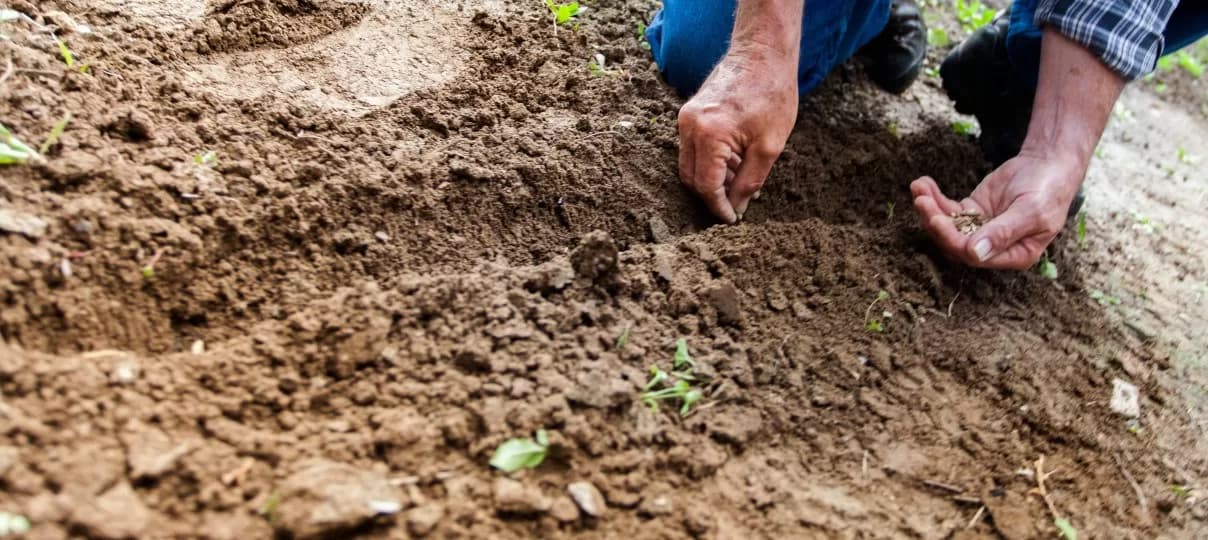
Among the many different industry-specific SEO services we offer here are gardening SEO services.
These we curate carefully to the needs of each of our clients, and this industry, like so many others, has a unique series of conditions surrounding it that make it a challenge.
That said, some of those conditions open up unique doors of opportunity to businesses that operate in the gardening, agriculture, or landscaping and lawn care industry.
Some of the following are covered in this post – but if you still have questions at the end of it, don’t hesitate to contact us. We’ll do a free SEO audit for your online store and even help you come up with a strategic plan for long-term success with custom gardening SEO strategies and other digital marketing channels.
Don’t Scatter Seeds Randomly: Do Keyword Research (or Work with a Gardening SEO Agency)
There are over 200 ranking signals that Google accounts for when assigning organic positions, and nearly all of these are determined by, or directly adjacent to, keywords.
There are a few factors, like mobile optimization and site speed, which are not attributable to keywords, but the entirety of content (which is itself a pillar) as well as both the majority of on-page and off-page SEO are products of keyword strategy.
Trying to optimize your gardening supplies website according to the principles of SEO without first performing keyword research is akin to scattering seeds on infertile earth. First, you must find the lucrative keywords, then you can start optimizing.
Conversely, uncovering high-value keywords out of the gate paves a path for success by planting seeds of optimization that will unfurl into a healthy SEO strategy, the real fruits of which will be yielded to you a year or several years down the line.
To find the right keywords for your gardening SEO strategy, first you must understand your position within your industry, who your competitors are, what your current organic standings are, and what your core value propositions are.
To see your current keyword rankings, you can use a tool such as SEMRush, or you can perform manual searches in Google. You can also use Google Search Console to determine what keywords and variants are the ones that generate the highest number of clicks and impressions for your website.
Once you are armed with this information, the next piece of the puzzle is to determine what your users are searching for, and how and where those are most relevant to your business.
For instance, you may determine that the keyword “gardening tools” generates thousands of views per month. But, if your website only sells seeds, optimizing for the former keyword will do you no good. Impressions and clicks may soar, but user metrics will not follow and that will actually be a very bad thing long term.
So, what you need to do is find the keywords that users are searching for that are most relevant to your specific business model and the products and services you sell.
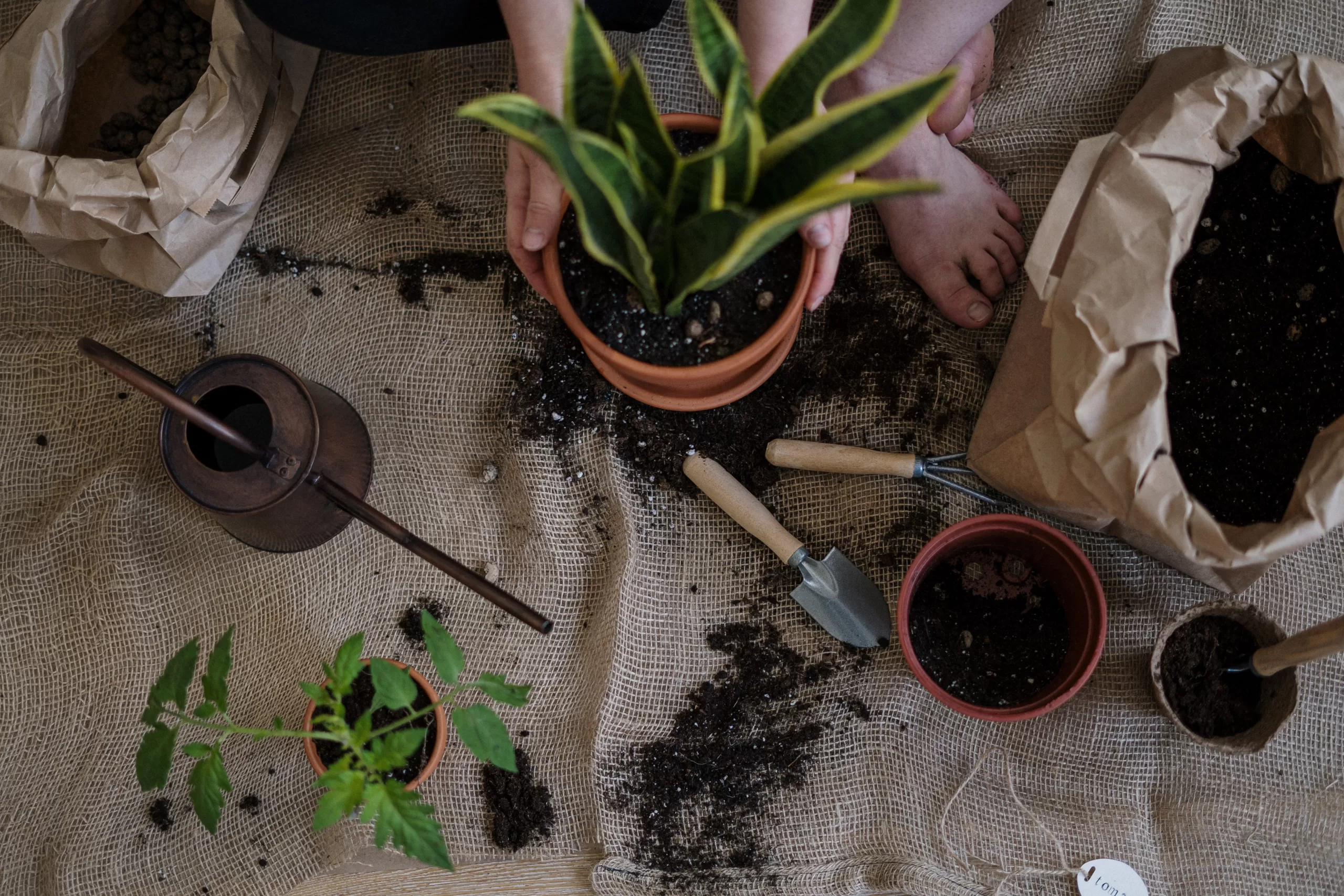 The foundation of any quality gardening SEO campaign is a set of relevant, attainable target keywords.
For instance, if your positioning is around low-cost, then keywords associated with “affordable” or even “cheap,” may be valuable. If your business sells only seeds, keywords associated with the names of different cultivars may be of the most value to you. The same goes for fertilizers, tools, pots, accessories, soil conditioners, and similar gardening accessories.
Remember also that long-tail keywords, despite the fact that they are usually associated with lower search volume, are usually much easier to qualify in terms of intent and are also usually less competitive, making it easier to vie for them.
For most online businesses, keyword research is one of the most difficult aspects of running an SEO campaign, gardening SEO or otherwise. For these, hiring an SEO agency will help scale the efforts of the campaign, while also ensuring that lucrative potential keywords are selected to begin with.
Also, keep in mind that starting with more easily attainable, lower-volume, longer-tail keywords does not preclude the possibility of going after more competitive keywords in the future. As your organic footprint grows and domain authority increases, it will become easier for you to compete for those more desirable, more competitive keywords in the future.
Seeds of SEO: Help Your Users with Quality Content
Once you’ve selected a group of keywords for your gardening SEO campaign, one of the most important SEO pillars you can go after is content.
One of the most basic and straightforward ways to optimize the content on your gardening supplies website is to optimize each product listing as thoroughly as possible. Perhaps even some of your actual product listings are target keywords for your campaign.
Don’t use manufacturer descriptions in your product listings, as this is duplicate content and will not rank well. Make sure the target keyword for that URL is in the page title as well as in the product description.
The description itself should contain the target keyword as well as other relevant associated keywords. Try to answer common user queries in the description or tout the selling points of the product. This will improve the SEO of the page as well as the user experience, which can help with conversions.
Another way to help optimize your website for gardening SEO is to create a series of useful CMS pages. Examples of practical CMS pages for gardeners include species-specific planting guides, tips for watering and fertilization, soil conditioning guides, and planting zone maps, with zone data visually portrayed.
You can also create a series of plant-care guides or a FAQ page with a whole bunch of frequently asked questions from your customers all compiled in one place. These are excellent for SEO, and you can add to them as you gather new questions from customers on an ongoing basis. When well-optimized, FAQ pages can serve as key pillar landing pages that bring in a lot of traffic to your website. As you build out the FAQ page, include links to your target or key product pages to divert traffic there once it lands on your website.
Arguably, however, the best way to optimize the content pillar of your gardening SEO page is through your blog. If your eCommerce website is built on WordPress, BigCommerce, or Shopify, a blog will come as a built-in, pre-templated feature of your website, and getting a blog launched will be as easy as clicking a few buttons.
 Blogging about relevant topics will improve not only your SEO but also your website’s authority and its value to users.
Blog on an ongoing basis instead of trying to publish a whole lot of stuff all at once. Search engines like Google like to see a stream of content being published and updated frequently, and this will improve your credibility, authority, and trust – EAT – on an ongoing basis.
Also, use your blog as a way to address customer questions over time – and remember that your blog is the greatest tool in your retinue when it comes to dealing with the seasonal nature of gardening.
Use Seasonality to Your Advantage
Growing plants may be a summer-only thing (for some gardeners) but gardening itself is not. It is, however, seasonal, but you can use your blog to take advantage of that fact.
There are so many ways to go about blogging on a seasonal basis that I truly can’t compile them all here, in one place. But, here are some tips that your gardening business may find useful.
Publish helpful articles about how and when to plant what crops in the spring, depending on where you are in the country. Additional helpful topics include depth sowing guides, spacing, thinning crops, and transplanting. Troubleshooting common issues like overwatering, underwatering, and damping-off can also be helpful to your readers, and when properly keyword-optimized, will help your SEO.
In the “off” season, you can write articles about cold weather crops, such as peas and carrots, or post articles about how to protect plants from cold weather or how to overwinter them indoors. The fall season is a great time to post articles about preservation tips and techniques, like drying and canning. You can also write about saving seeds for next year’s crops.
Even in the winter, when most gardeners are not growing, the work doesn’t end. Winter and early spring are both times to work and improve the soil, as well as to maintain your tools. Beyond these, there are even other topics you can write about at this time of year.
It’s also extremely important to remember that although your website may see spikes in traffic at certain times of the year due to the seasonality of the industry, SEO is not a one-time or even a one-season-only thing.
Publishing a blog about pinching blossoms – a springtime activity to increase crop yields – can be published in the dead of winter. By the time it’s spring, or even the next year, that post will start to bear fruit (no pun intended).
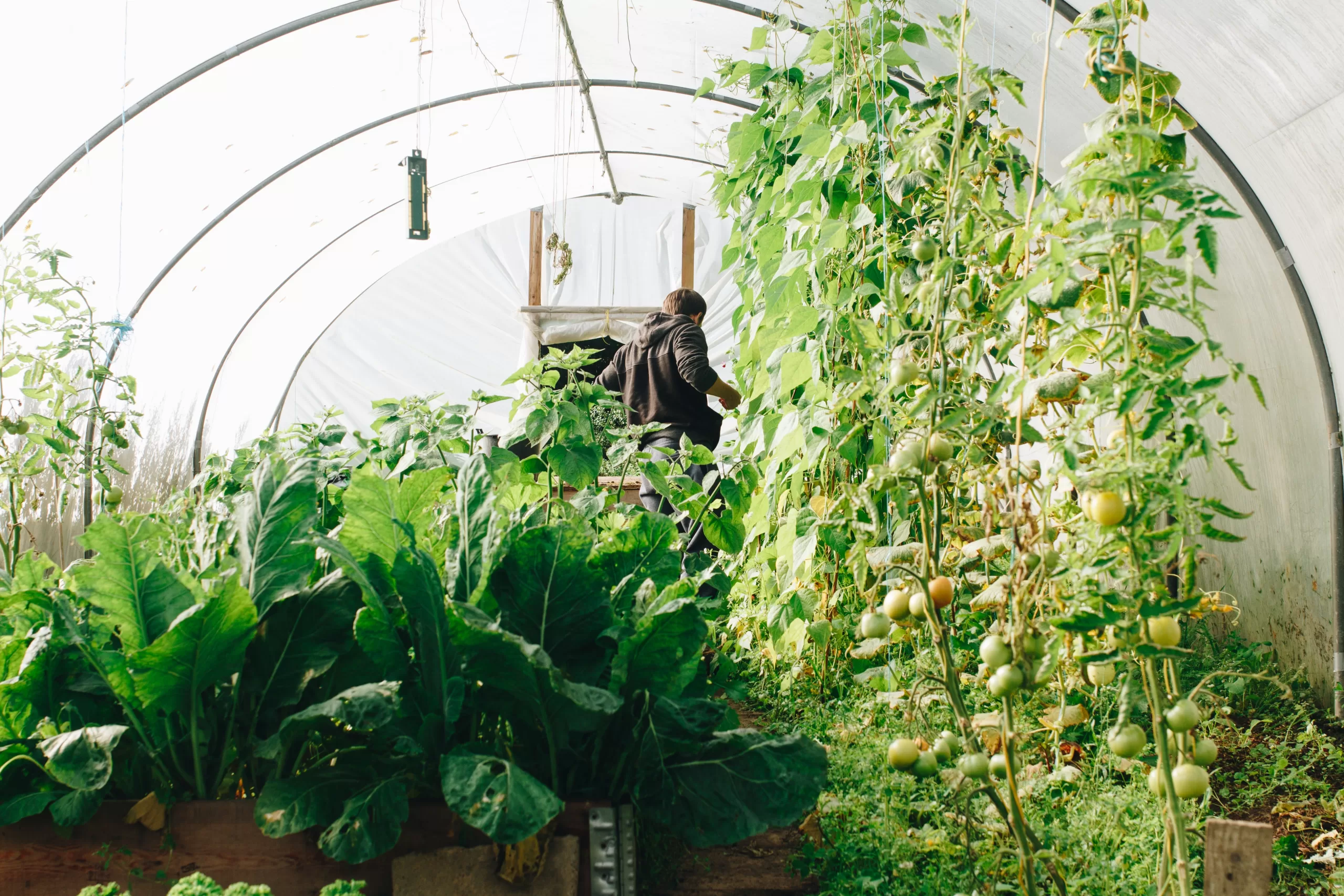 There is more than one component to a successful gardening SEO campaign.
This is because SEO hinges on evergreen content, content that, while it might be most valuable at certain times of year, continues to work season after season.
So don’t be afraid to publish something at the “wrong” time of year. Think of it this way: you’re just getting a head start on your competition.
On-Page Gardening SEO
While content is far and away the most important optimization pillar for gardening SEO, there are still three other pillars to consider, one of which is on-page SEO.
There are some basic good practices you can follow to ensure that your pages are optimized according to on-page basics. These are:
- Include keywords in page title tags, meta descriptions, and blurbs of copy.
- Optimize the URLs to include targeted keywords, where possible.
- Include internal links to other pages on your website for products that are often bought together.
- Optimize menu and page footers; this will improve site structure which directly impacts SEO, and it will also result in a greater user experience.
This is not a complete list of on-page SEO optimizations you can make for your gardening business, but even making these four optimizations will substantially improve your organic, provided you start with a suitable list of preliminary target keywords.
Optimize Your Local Listings and Get Active on Social Media Accounts
Two other things you can do to improve your gardening SEO campaign are to get active on your business social media accounts and to optimize your local listings.
First things first, if your business doesn’t have a local listing, such as a Google My Business listing (assuming it has a brick-and-mortar location) create one.
Include some of your target keywords in the listing, and make sure you also include keywords associated with your physical location to improve your local SEO.
This listing should include your phone number and other contact information, as well as hours. Expand the listing with descriptions of the products you sell or services you offer to improve its optimization. Don’t leave sections sparse or blank, and make it as easy as possible for potential customers to contact you.
Finally, you should also create a series of social accounts, such as on Facebook and Instagram. You can also create accounts for TikTok and Pinterest, or other platforms – just make sure they are compatible with your business model and that you keep them active. It’s better to have no account than to have one and not use it.
Link your social media accounts with your business and embed icons in your homepage encouraging visitors to follow you. Increasing your follower count may serve as a social cue to Google that your website is legitimate and deserves higher rankings.
Social media has other impacts in addition to the fact that it can potentially improve your SEO. You can use your social media accounts to promote sales, blog posts, and pages on your website. You can also use it to communicate directly with your followers, improving customer engagement and thereby retention.
An up-to-date social account linked to your business will also help improve credibility, image, and brand awareness, all of which will also benefit your SEO.
The Value of Working with a Gardening SEO Agency
For some gardening companies, it makes more sense to work with an SEO agency to develop a high-quality search engine optimization marketing strategy to drive traffic to their websites.
Established digital marketing agencies offer experience and insight when it comes to uncovering relevant keywords (one of the most difficult aspects of SEO) and often have teams of technical experts and professional copywriters to assist their efforts.
Gardening SEO agencies also often offer supporting digital marketing services like content marketing, email marketing, and social media management, all of which can help produce additional organic traffic to your website while SEO for your gardening business helps with standings in the search results.
Overall, the expertise of an agency can help your business leverage its resources in the most profitable fashion.
If you’re not sure about how to proceed, check out our collection of SEO case studies or consider starting with a free SEO audit that will give you a framework for how to best improve your website.