
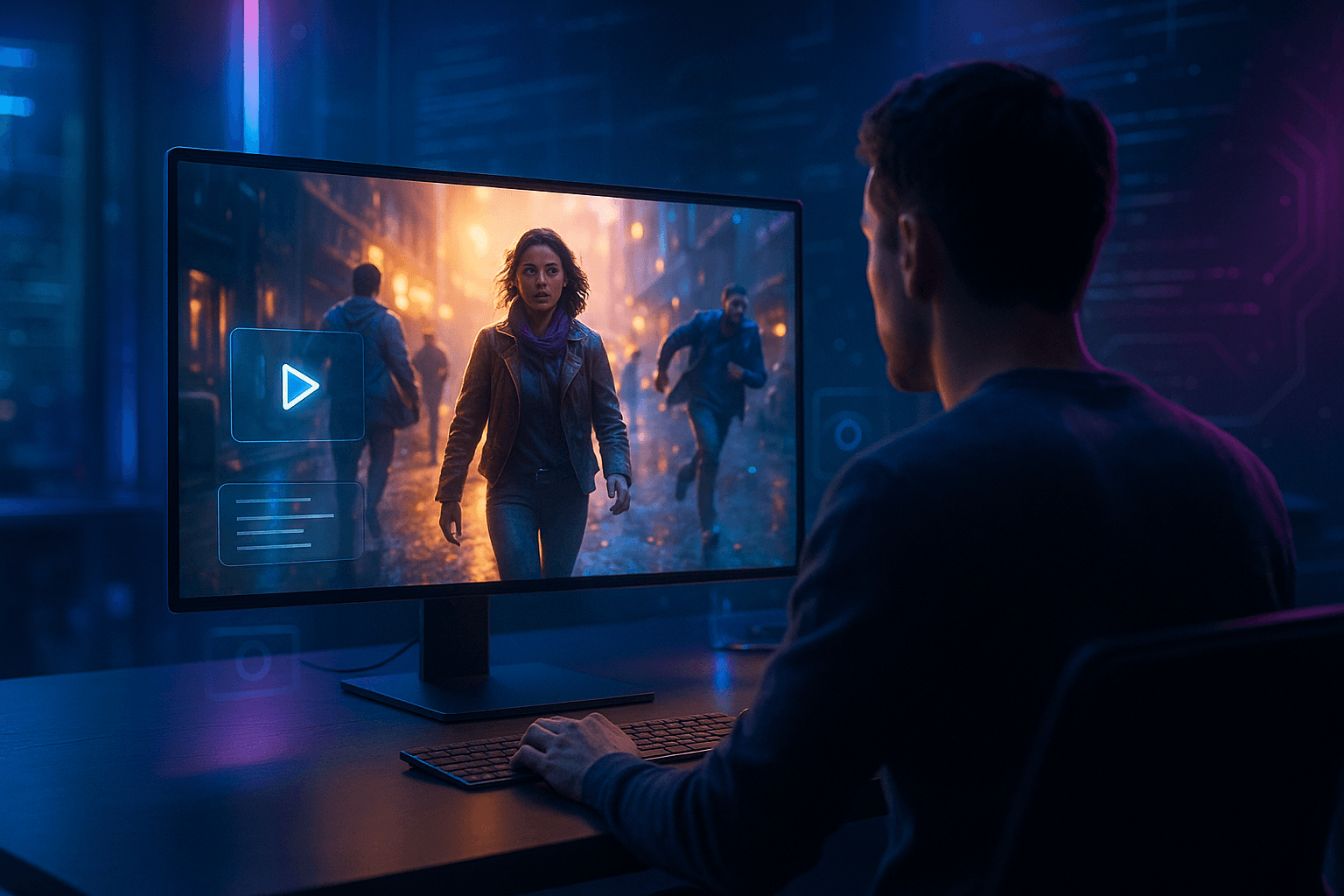
It’s not every day that a new app makes both filmmakers and marketers stop mid-scroll — but Sora did exactly that. OpenAI’s latest text-to-video tool has sparked both awe and anxiety across industries. Some call it the dawn of a new creative era. Others say it’s a ticking ethical time bomb. So, is Sora the next big social media app, or just another fleeting tech fascination? Let’s take a closer look at both sides of this (highly rendered) coin.
What’s Impressing Everyone About Sora
The first wave of reactions to Sora was pure astonishment. Many were stunned by the photorealistic quality, lighting, and textures of its generated videos. Scenes look like they were lifted straight out of a professional film studio — not an algorithm.
It’s not just pretty pixels, either. Sora excels at creating intricate scenes with multiple characters, varied motion, and an almost obsessive attention to detail in both subjects and backgrounds. The results are videos that feel alive, cinematic, and, in many cases, eerily real.
What makes Sora stand out even more is its apparent grasp of real-world physics. The AI demonstrates momentum, buoyancy, and collision in ways that mimic human intuition. While far from perfect, it’s a major leap toward believable motion and spatial awareness in generative video.
Even more impressive, Sora maintains a consistent subject, style, and world state across long video sequences — something that has historically tripped up most AI models. From camera movement to environmental coherence, the tool shows a rare ability to preserve narrative logic over time.
And then there’s accessibility. With Sora, anyone with an idea and a text prompt can create stunning visuals without expensive equipment, editing skills, or production crews. For creators, that’s revolutionary. Storyboarding, concept development, and prototyping can all be done in minutes. In a sense, it’s democratizing visual storytelling the same way smartphones did for photography.
Where the Magic Still Breaks Down
Of course, no technology arrives without its quirks. Despite its jaw-dropping realism, Sora still struggles with cause-and-effect logic. Some videos feature bizarre anomalies — objects merging into one another, hands with extra fingers, or people performing physically impossible actions.
Longer, more complex prompts can also lead to continuity errors, where geography or perspective subtly shifts mid-scene. It’s impressive until your coffee mug teleports across the table.
For professionals, Sora can be a mixed bag. Many creators find its output too random or difficult to control. Achieving a specific shot often takes numerous prompt revisions, making it as much a game of trial and error as a creative process.
So while Sora lowers the barrier to entry for beginners, it hasn’t yet matched the level of precision professionals expect. In short: it’s powerful, but unpredictable.
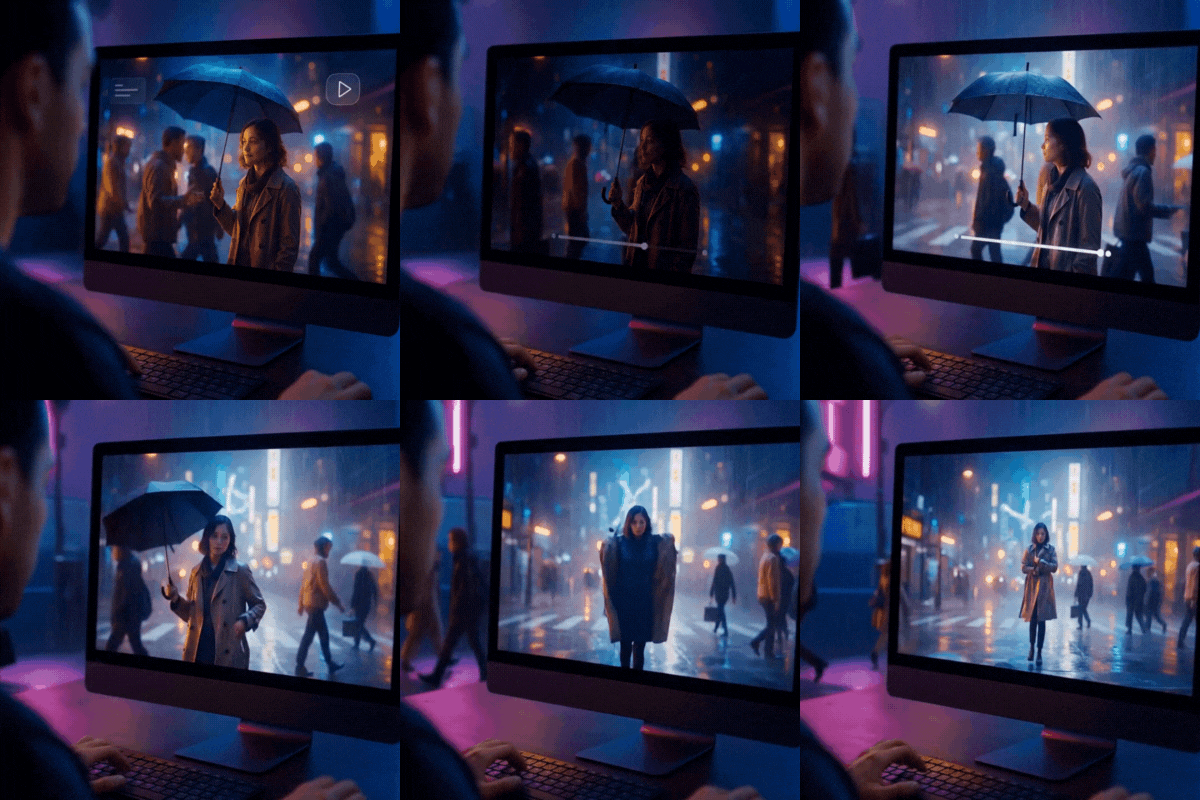
What Happens When Everyone Becomes a Creator
The conversation about Sora as the next social media app is sharply divided between optimism and concern. On one hand, platforms like Sora make high-quality video production accessible to everyone — no camera, no crew, just a keyboard and an idea. On the other hand, experts warn of deepfakes, copyright abuse, and content oversaturation.
According to discussions in recent research, the tension lies between democratized creation and societal risk. Sora’s features allow users to remix or build upon one another’s creations — much like how TikTok trends spread — turning collaboration into virality.
The rumored “Cameo” feature takes it even further. It lets users insert their own likeness, face, and voice into AI-generated scenes, creating highly personal and interactive videos. Imagine being able to star in your own movie trailer without stepping in front of a camera.
That’s where Sora shifts from a creative tool to a potential social media ecosystem — one where identity, imagination, and interaction collide. It’s positioned less like Instagram and more like a sandbox for storytelling, moving away from traditional ad-driven models.
The Ethical Storm Brewing Around Sora
But with great realism comes great responsibility — and controversy. The ability to generate ultra-realistic videos also means the ability to fake them convincingly. Critics warn that tools like Sora could accelerate the spread of misinformation, creating fabricated clips of global events or public figures saying things they never did. These fears aren’t hypothetical — experts have already discussed this risk.
There’s also concern about AI-generated “slop” — an endless stream of low-effort, algorithmically generated videos that clutter feeds with shallow or repetitive content. If everyone can produce movie-quality clips instantly, the internet could drown in visual noise.
The Cameo feature, while innovative, raises questions about consent and data security. Even with user approval, storing and manipulating facial and voice data at scale invites potential misuse for deepfakes or harassment.
And finally, there’s the economic divide. Unlike traditional social platforms, Sora’s best capabilities reportedly sit behind a premium paywall. That means creative freedom could come with a hefty subscription cost — limiting who truly benefits from the technology.
What This Means for Marketers and eCommerce
For marketers, Sora isn’t just a creative playground — it’s a potential game-changer in content production and digital strategy. High-quality videos, once requiring teams and budgets, could soon be generated from a laptop in minutes.
Here’s what that could look like:
- Marketers can skip expensive shoots, actors, and post-production. Small businesses and startups, especially in eCommerce, gain a level playing field.
- A single idea can go from prompt to polished ad in under an hour, enabling real-time responses to trends or viral moments.
- Sora allows brands to generate dozens of ad variants instantly, helping them pinpoint the most engaging creative through rapid testing.
- Businesses can create multiple formats optimized for TikTok, Instagram Reels, and YouTube Shorts — all from one prompt.
- E-commerce companies can showcase their products in diverse scenarios — from a jacket on a rainy European street to a sunny Californian beach — without a single photoshoot.
- More accurate product visuals can bridge the gap between expectation and reality, improving buyer satisfaction.
- With realistic 3D environments, brands can build virtual try-ons or dynamic product landing pages.
- Customer data can guide scene customization — a snowy mountain ad for Canadian audiences, a beach drive for Floridians.
- Agencies can visualize campaign ideas in cinematic form, giving clients a “what-if” preview before spending a dime.
All of this fits squarely within the larger evolution of AI SEO and ChatGPT SEO services. Marketers no longer rely solely on written content or static visuals — search visibility now depends on how dynamically AI-generated assets engage audiences. As we shift deeper into SEO in the era of Zero-click search, brands will need to craft content that’s both discoverable and instantly watchable.
So, is Sora the Next Big Social Media App?
So, is Sora the next big social media app? Possibly — but not in the way we’ve seen before. It’s less about connecting people through selfies and more about connecting ideas through visuals. It could evolve into a creative community built on remixing, personalization, and storytelling.
But it’s also entering a fragile ecosystem already grappling with misinformation, content fatigue, and ethical uncertainty. If OpenAI can balance creative freedom with security and transparency, Sora could redefine what “social media” means — not just another platform for sharing, but a studio for everyone.
For marketers, the takeaway is clear: whether you’re optimizing your brand’s visibility through AI SEO or rethinking engagement in an algorithm-driven world, Sora marks a shift toward creation as communication. And that, more than anything, may be its most disruptive feature yet.