


Instagram updates are no longer about flashy add-ons, they’re quietly reshaping how content gets seen, watched, and acted on. If you manage a brand account, especially in eCommerce, these changes affect everything from how people discover your posts to how ads are built behind the scenes.
We’ve been watching these shifts closely. Some are small on the surface. Others signal a deeper reset in how Instagram wants people to use the platform. Below, we’re breaking down the most important Instagram updates rolling out now - and what they actually mean for your content, your metrics, and your strategy.
The “Recent” Tag Is Subtle. And That’s the Point
One of the quieter Instagram updates gaining traction is the “Recent” label. You’ve probably noticed it without thinking much about it. When someone posts new content you haven’t seen yet, Instagram flags it as recent - essentially a soft nudge instead of a loud alert.
Why this matters for brands:
- It signals freshness without feeling intrusive
- It encourages habitual check-ins
- It rewards consistent posting, not spammy frequency
This is Instagram leaning into behavioral cues rather than notifications. For brands, it’s a reminder that showing up regularly still matters - but how you show up matters more.
Instagram AIs Are Rolling Out Inside DMs
Instagram is slowly introducing in-app AI profiles - one of the more experimental Instagram updates so far. Users can now chat directly with AI models created by other users, or build their own AI personas from scratch.
Access lives inside your inbox. Tap the smiley icon, and you’ll see featured AIs you can interact with instantly.
Right now, this isn’t a marketing tool in the traditional sense. But it is a signal.
Instagram is training users to interact conversationally inside the platform. That has long-term implications for:
- Customer support expectations
- Creator-brand interactions
- Future AI-powered brand experiences
This is early-stage, but worth watching.
Clickable Links on Reels (With Limits)
This is one of those Instagram updates that sounds bigger than it is - at least for now.
Yes, you can add clickable links to Reels. The catch:
- Links only point to other Instagram profiles or Reels
- You must use the Edits app to add them
- External URLs are not supported yet
This isn’t about driving traffic off-platform. It’s about keeping people moving within Instagram. Brands can use this to:
- Cross-promote creators
- Funnel viewers into deeper content
- Support collaborations without leaving the app
Not revolutionary, but strategically useful.
Auto Scroll Changes How Reels Are Consumed
Auto Scroll is exactly what it sounds like. Turn it on, and Reels play continuously without manual swiping.
This small toggle quietly supports one of Instagram’s biggest goals: longer watch sessions.
For brands, this means:
- The first second of your Reel matters even more
- Pacing and visual flow are no longer optional
- Content designed to “blend” into viewing sessions performs better
Another reminder that Instagram updates increasingly reward watchability over novelty.
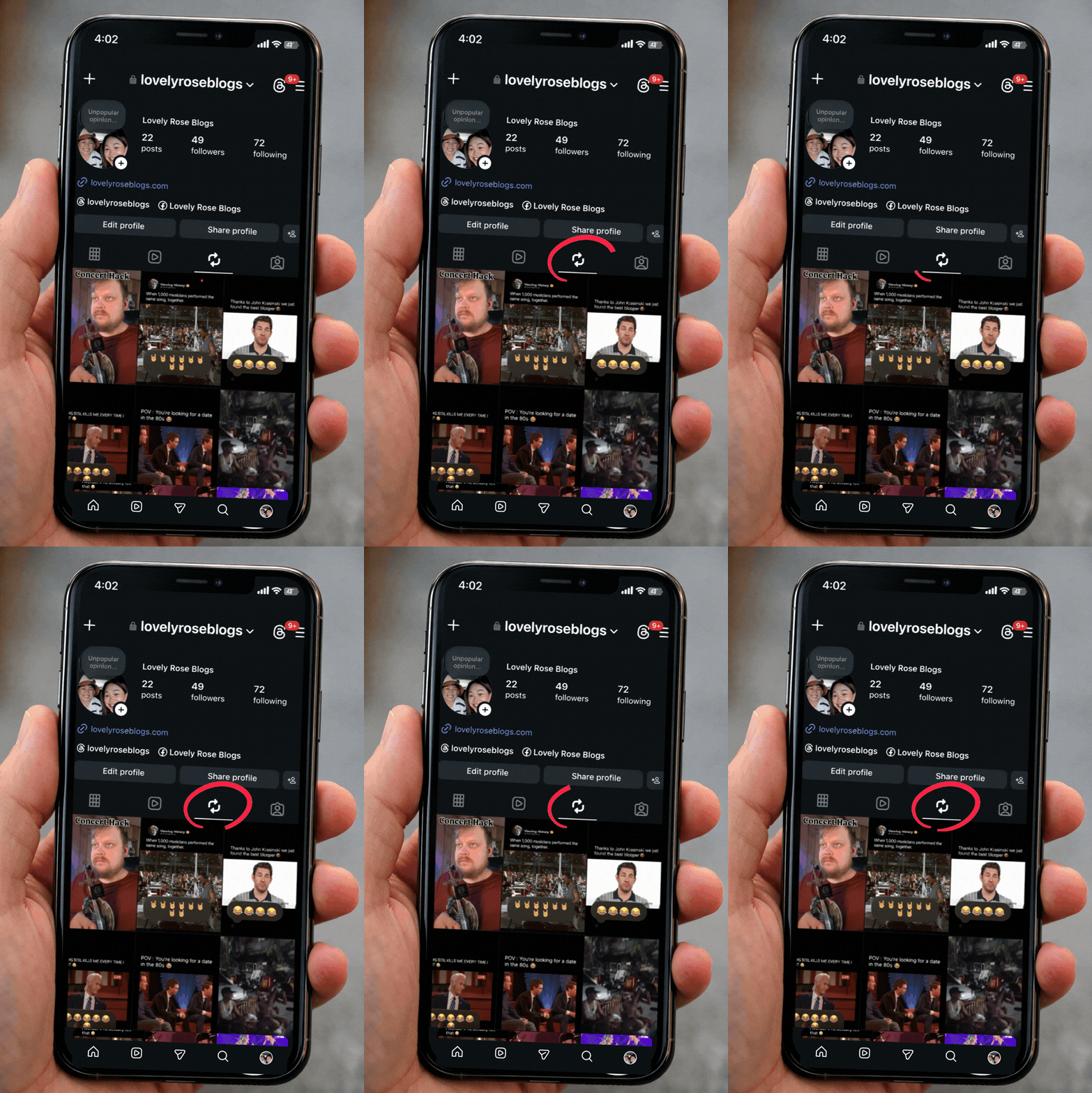
Easier Story Resharing Is Being Tested
Instagram is testing the ability to reshare other users’ Stories directly into your own Story.
If this rolls out broadly, it simplifies:
- UGC amplification
- Influencer reposts
- Community-driven storytelling
Less friction means more resharing - and more organic visibility when customers tag your brand.
You Can Now Steer Your Own Algorithm
This is one of the most under-discussed Instagram updates right now.
Users can access a “Your Algorithm” setting, where they actively tell Instagram what they want to see - and what they don’t.
From a brand perspective, this reinforces one truth:
You can’t game relevance anymore.
Content either earns engagement signals or it fades. The algorithm isn’t guessing - it’s listening.
Hashtags Are Capped at Five
Instagram users can now only use up to five hashtags per post.
Honestly? This was overdue.
Walls of hashtags weren’t helping anyone, and anyone offering serious Instagram management services has known this for a while. Instagram’s categorization systems have matured, and relevance now comes from:
- Caption language
- Visual recognition
- Engagement behavior
For brands, this update simplifies things. Choose five meaningful hashtags and move on.
Edits App Introduces AI Object-Based Effects
This is one of the more creator-friendly Instagram updates.
Instagram’s Edits app now includes AI-powered object isolation. That means:
- Automatically selecting people or objects
- Applying effects to specific elements
- Highlighting products without manual masking
What used to take time in professional editing tools now takes seconds.
For product brands, this makes short-form video more accessible - and more visually precise - without adding production headaches.
Views Replaced Reach as the Primary Metric
This shift didn’t come with fireworks, but it changed everything.
Instagram now prioritizes Views, not Reach.
That means:
- Watch time matters more than impressions
- Replays matter more than exposure
- Completion rates matter more than scroll-bys
This is one of the most consequential Instagram updates for marketers.
Content designed to be watched - and rewatched - now gets algorithmic preference. Brands chasing surface-level exposure are losing ground to brands designing for retention.
Advantage+ Ads Are Getting Smarter
On the paid side, Meta is expanding Advantage+ capabilities.
Recent upgrades include:
- AI-generated custom music tailored to your product and audience
- Automatic HDR enhancements for richer visuals
- AI-generated static images based on persona inputs
These tools streamline parts of social media advertising that used to require multiple production steps. Creative assembly is faster. Variations are easier to test. Visual quality is handled automatically in more cases.
This doesn’t remove the need for strategy - but it does change how ads are produced.
Automation is doing more of the assembly. Humans still need to decide the direction.
What These Instagram Updates Really Point To
When you zoom out, these Instagram updates all point in the same direction:
- Less noise
- More relevance
- Deeper engagement
Instagram isn’t rewarding volume. It’s rewarding clarity.
Brands that adapt quickly aren’t chasing every feature - they’re aligning content with how people actually use the platform now.
If you’re evaluating how these changes affect your organic strategy, paid media, or content production, working with a team that lives inside these updates daily makes the difference. At 1Digital Agency, we help brands interpret platform changes before they start costing performance - so strategy stays intentional, not reactive.
Instagram will keep changing. The brands that keep winning are the ones that change with it, not after it.
Turning These Updates Into an Actual Strategy
Knowing what changed is half the work; the harder half is deciding what to do differently. Read together, these updates ask brands to optimize for three things: watch time over impressions, relevance over volume, and on-platform depth over off-platform clicks. That translates into concrete production changes, not just awareness.
What to Change in Your Content This Quarter
Because Views replaced Reach and Auto Scroll rewards retention, the first second of every Reel now does the heaviest lifting: open on the payoff or the hook, not a logo or a slow build. Because hashtags are capped at five, caption language and on-screen text matter more for categorization - write the first line for a human and a classifier at once. Because clickable links on Reels stay on-platform, plan content in connected sequences (a hook Reel that points to a deeper one) rather than treating every post as a dead end. And because users can now steer their own algorithm, the only durable tactic is making content a specific audience actively wants more of; there is no longer a distribution trick that compensates for content people swipe past.
What to Change in Paid
Advantage+ moving more creative assembly into automation shifts the human job from production to direction and judgment. The practical workflow becomes: feed the system strong source assets and a clear audience definition, let it generate and test variations, and concentrate human time on choosing the strategic angle, the offer, and which automated outputs are actually on-brand. Teams that let automation also make the strategic calls tend to get cheap, generic, underperforming creative; the leverage is in pairing automation's speed with human direction.
What Stays True No Matter What Instagram Ships Next
Platform features will keep churning, but the underlying direction has been consistent for years: the algorithm rewards content that genuinely holds attention from an audience that genuinely wants it, and it keeps closing the loopholes that let volume substitute for relevance. A brand that builds its Instagram program around real audience value - clear hooks, consistent posting, content worth rewatching, and a reason to engage - adapts to each new update with minor adjustments rather than a strategy reset. A brand chasing the latest feature without that foundation rebuilds from scratch every quarter.
Frequently Asked Questions
Should brands jump on every new Instagram feature? No. Adopt the ones that fit how your audience already uses the platform; chasing every feature spreads effort thin and rarely compounds.
Did the five-hashtag cap hurt reach? For most brands, no - relevance now comes from captions, visuals, and engagement, not hashtag walls. Five well-chosen tags is sufficient.
Is organic Instagram still worth it for eCommerce? Yes, but as a trust and discovery layer that works alongside paid, not as a free replacement for it. The two reinforce each other; neither carries a serious store alone.
Instagram will keep changing, and the brands that keep winning treat platform shifts as routine adjustments rather than emergencies. If you want a team that tracks these changes daily and keeps your organic and paid strategy aligned with them, that's exactly what 1Digital Agency's Instagram management is built for.