
The impact of any social media account is based on the number of potential customers reached, as well as the quality of content posted. While both of these elements follow ‘the more the merrier’ approach to digital growth, you should be cautious of how you go about expanding your page’s readership. Websites such as Facebook often promote the ability to “boost” your page or posts to a greater number of viewers. This will always come at a price, however you may not realize how post boosting can hurt more than help.
What is a Click-farm?
After “boosting” content you will instantly begin to see growth in the number of people following or “liking” your page. However, while the increased “like” metrics look good in your reports, the quality of online community is often times reduced due to the insincere nature of the new profiles. This is due to the potential of new Facebook “likes” to come from click-farms. Click-farms are massive operations that employ poorly paid workers to click, like, and follow accounts in a seemingly random pattern. This is often with the intention to make businesses look more popular than they truly are. While some business owners make the poor decision to purchase “likes” through these click-farms intentionally, the official process of Facebook’s post boosting algorithm sells you ‘likes’ without mentioning the threat of fake accounts targeting your page. These fake-accounts make for impressive reports of increased awareness, however while the quantity of your page’s impressions may improve, the quality and rate of engagement of consumers reached is drastically decreased.
How does this affect my page?
The direct threat of click-farms is that with a greater number of fake-accounts “liking” your page, the likelihood of your post being sampled to a fake account is increased. Due to the fact that there is no one actively monitoring accounts generated via click farming, there will be no potential for engagement. This in turn decreases the likelihood of a legitimate account that “likes” your page to actually receive your post.
Page and post boosting effectively means your business is paying more for a reduced organic reach to legitimate consumers. The U.S. Department of State which, in 2013, spent $630,000 to acquire 2 million Facebook likes only to realize later that only 2% were engaged.
‘Likes’ gained directly or indirectly from click-farms reduce the number of posts available to real consumers. This is because when a business publishes any post to Facebook, it does not reach your entire following right away. Instead, it is sent to a sample of accounts where the engagement effectiveness can be gauged. The more engagement a post receives, the more accounts it will be exposed to.
The (free) power of Viral Reach:
A particularly effective way to naturally increase your page’s reach is by utilizing Facebook’s post targeting when posting original content. This allows you to filter post delivery by 8 options: gender, relationship status, education level, age, location, language, interests, and post end date. By targeting readers specifically applicable to each post, you increase the relevancy of each view the post receives, which in turn increases the likelihood of consumer engagement.
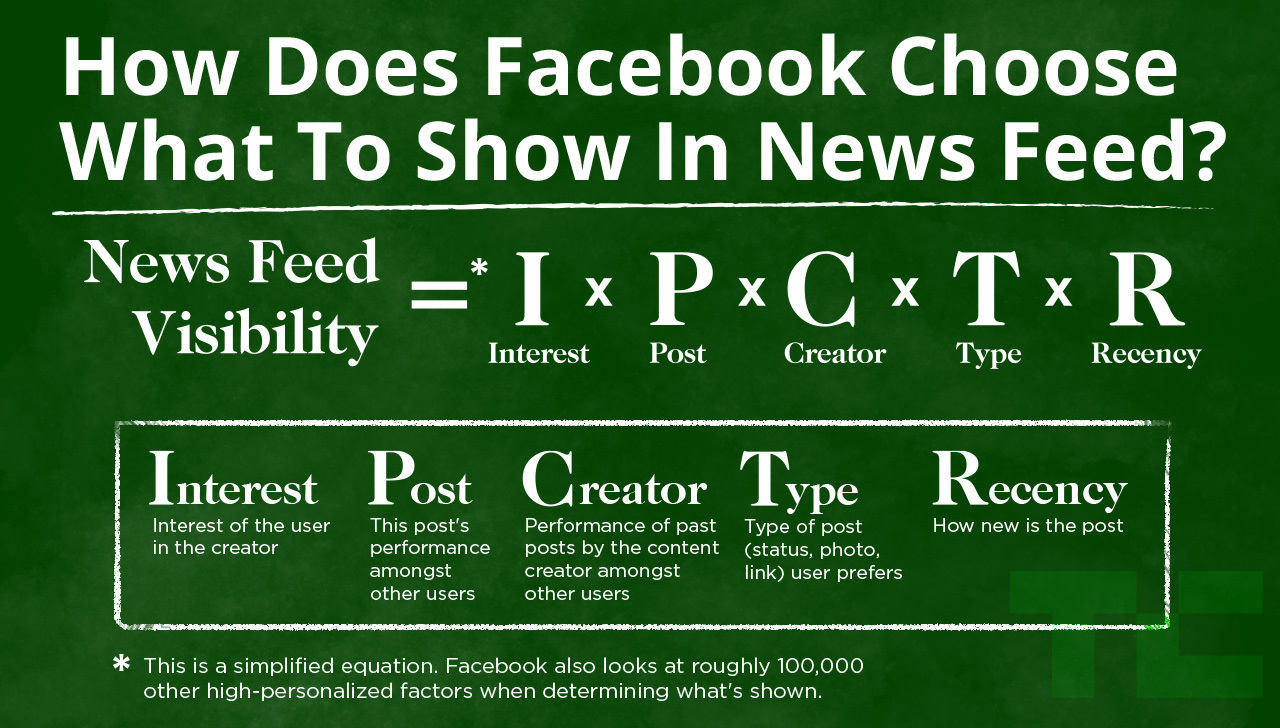
Another way to increase social media engagement is to ask questions in your posts. This naturally filters active and inactive accounts in regards to engagement. Not only can this create a new dialogue between consumers and your brand, but also it can provide valuable feedback for future engagement.a frequently cited analysis found that Facebook posts that included a question received double the number of comments as non-question posts. Greater engagement on your posts correlates to a greater degree of interest and post performance from Facebook users. See Tech Crunch’s breakdown of the Facebook News-Feed visibility algorithm below:
There are 3 forms of outreach algorithms used by Facebook:
– Organic Reach: This is when posts are viewable in the newsfeed of people already following your page. It technically also includes random visitors to your page, however this is negligible when compared to fan views. Think of organic reach as your current readership.
– Paid Reach: This is the type of reach that has been described so far, while this may be the easiest way to grow your page’s “likes”, be exceptionally cautious of fake accounts eroding the potential of legitimate viewership.
– Viral Reach: This consists of the people who see your content because their friend is an active member of your page. For example, if a fan engages with your content by liking, commenting on, or sharing your post, their friends will see your post even if they aren’t fans of your page.
Viral reach is the most effective way to grow your Facebook community in a genuinely helpful way. However, while this is the most effective and natural way to expand your following, it is dependent on pre-existing fans engaging with your original content. It takes time to develop an active online community, however by strategically increasing the rate of engagement on your posts you will in turn increase your page’s viral reach. If you don’t have the time to build upon your Facebook community on your own, drop us a line over at 1Digital Agency. Our team of digital media experts is eager to help grow your unified online community across each of your branded accounts.
How to Audit a Page for Fake Engagement
Before you decide whether boosting has hurt a page, measure the damage. Three checks expose low-quality audiences quickly:
- Engagement rate vs. follower count. Divide average post engagement by total followers. A genuine small-business page typically lands somewhere between 1% and 5%. A page with tens of thousands of likes but engagement well under 0.5% has an audience that is not seeing or not caring about its content - the signature of inflated like counts.
- Audience geography in Meta Business Suite. Open the page’s audience insights and compare follower locations to where you actually sell. A U.S.-only retailer whose followers cluster in countries known for click-farm labor is looking at purchased or boosted-into-the-wrong-audience reach.
- Reach-to-follower ratio. Organic reach for an established page commonly sits in single-digit percentages of followers. If reach has collapsed even though follower count keeps rising, the algorithm is correctly concluding that your followers do not engage - and is throttling distribution accordingly.
Why Inflated Audiences Suppress Future Reach
The mechanism is worth stating plainly because it changes how you should spend. Meta’s ranking systems decide how widely to distribute a post based on early engagement signals from the seed audience it is shown to first. If a meaningful share of your followers are inert accounts, your seed-set engagement rate is structurally low, the post is judged uninteresting, and distribution is cut - including to the real people who would have engaged. Buying or boosting into low-quality audiences is therefore not a neutral mistake; it actively taxes every future post you publish to that page.
Spending on Boosts the Right Way Instead
Paid distribution is not the problem; untargeted paid distribution is. If you are going to put money behind a post, do it through Ads Manager rather than the one-click Boost button so you can:
- Target by interest, behavior, and a custom audience built from your customer email list or site visitors (via the Meta Pixel), rather than a broad lookalike that rewards volume over fit.
- Exclude audiences from regions irrelevant to your business.
- Optimize for a meaningful conversion event (add-to-cart, purchase) instead of the “Page Likes” objective, which is the objective most prone to attracting low-intent accounts.
The goal of paid spend should be to seed content to the right people so genuine engagement triggers the viral reach described above - not to inflate a vanity metric that then depresses organic performance for months.
Editorial note: This article previously cited a 2013 U.S. Department of State Facebook spend example via a now-dead third-party link. The underlying example is documented in reporting on the State Department Office of Inspector General’s findings (covered by AdAge, July 2013), which reported the department spent roughly $630,000 building a Facebook following and that fan counts rose sharply while engagement remained very low; the dead outbound link and its stale-link marker have been removed and the point retained in general terms. We have also replaced the dead third-party citation about question-based posts with a general statement, since the original source page is no longer available.
If your page has accumulated low-quality reach and you need help rebuilding a genuinely engaged community, our social media management team and broader digital marketing specialists can audit the account and reset its targeting.