


A successful eCommerce website will have various elements that help make things easier for the customer. The less time they have to spend deciding to purchase, the more likely they are to complete the purchase.
People use online shopping for convenience and ease. A byproduct of going online to make a purchase is the idea that it should be almost instantaneous. Shoppers want to find the products they want to purchase quickly and be able to complete the purchase in just a few minutes. It’s all about making things easier, which keeps the process more enjoyable.
That is what ultimately makes your eCommerce website effective. As you consider a design or development project so that your website functions the way it should and delivers on customer experience, here are some factors you should keep in mind.
Why You Should Buy – From the beginning, you want to make sure customers are getting a sense of what you provide beyond the products. Are you offering the lowest prices? Do you have free shipping? Is your customer service better than others? You want to make sure the things that set you apart are visible and apparent so customers know why they should purchase from you. This is where you express the values of your brand, everything that should become part of the fabric of the entire website.
Make Products Easy to Find – Customers should have many ways to find the products they want to purchase. Your eCommerce website probably will have a navigation bar that categorizes products. You should have a search tool so customers can type in the products they want. You can also recommend or suggest products based on a customer’s recent history or feature new products so they are easy to find. Customers should be able to find whatever they are looking for or see the newest or best products you offer in just a few seconds.
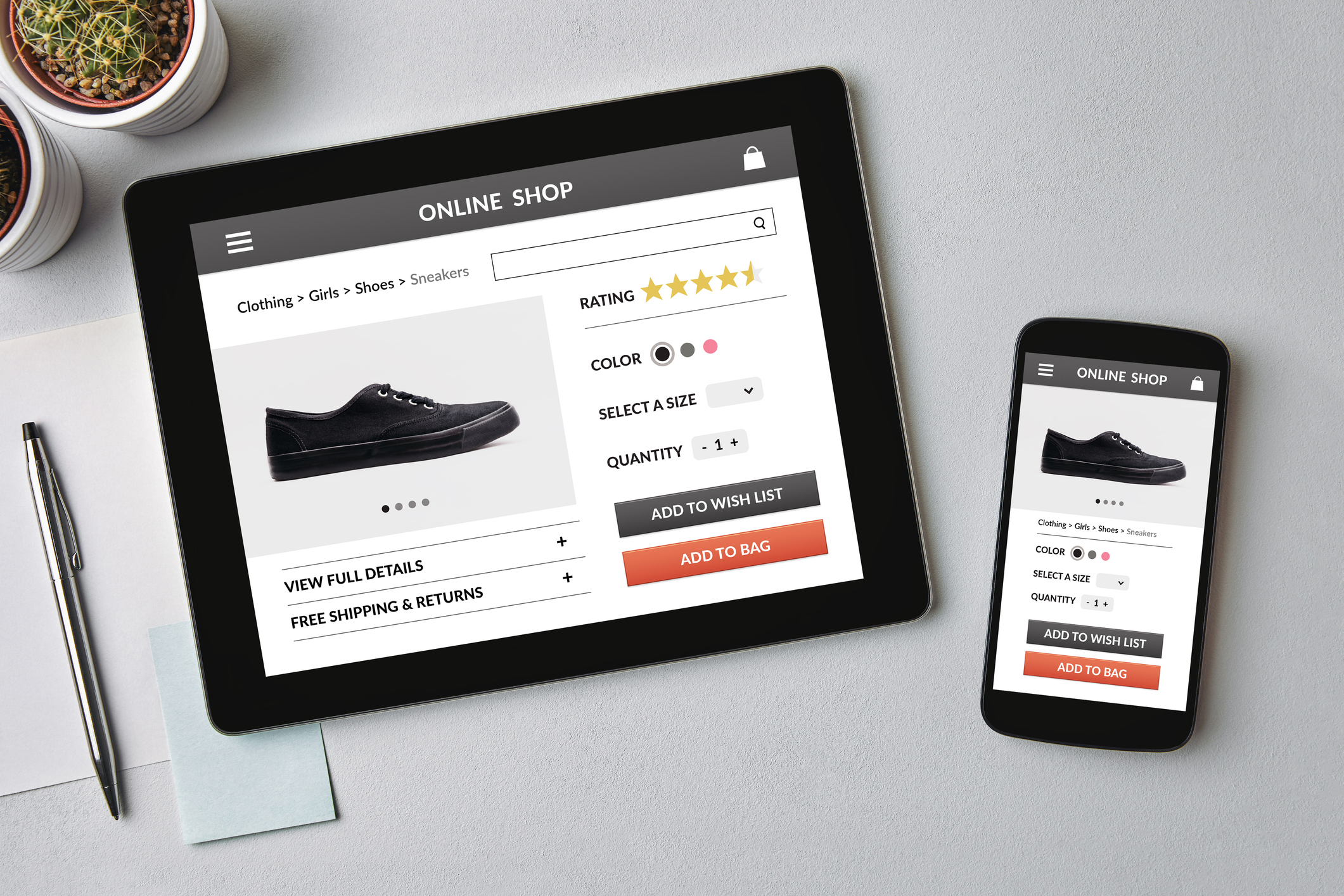
Convenience – Customers want to get the details about the products they are interested in and read up on the products before they buy. But like everything else, customers want to access it without having to go through a number of steps. Having as much information displayed without requiring additional steps like going to another page is a great start. Make it easy to get even more extensive information by providing links on all products and keeping your product pages clean.
Advanced Features – Once you have mastered the basic steps of building up your eCommerce website and making the experience a quality one, you can look into advanced features. One of the more common features is allowing customers to purchase a product as a gift.
No Surprises – The last thing customers want is for something unexpected to be a part of their shopping. They expect a private and secure shopping environment. They expect to find lower prices and don’t want additional fees to change their mind on a purchase. They want to see that returns are easy in the event that a return is needed. Full disclosure is most important here. Give as much information as you can about return policy, shipping policy, pricing, and privacy policy so that everything is in the open. No surprises mean a customer is more likely to complete a purchase.
Looking for a quality website design that represents your brand? How about a development project that makes your website run at effective speeds? What about marketing your website with SEO and content that delivers and brings people to your website to see what you are all about?
At 1Digital Agency, you can get all of these services by a team of experts that knows the ins and outs of the leading eCommerce platforms, so that you get the quality website you want. Contact us at 1Digital Agency today to learn more about what we can do for you and how you can get started.
Turning the five factors into things you can test and fix
The five factors - clear value proposition, findability, convenient information, advanced features, and no surprises - are the right pillars. Here is how to operationalize each so it is a checklist, not a sentiment.
- "Why you should buy" → a measurable above-the-fold test. A first-time visitor should be able to state what you sell, why you over a competitor, and the key trust signal (free shipping, returns, guarantee) within five seconds of landing - without scrolling. If five people cannot, the value proposition is not actually visible.
- "Easy to find" → the three-paths rule. Every product should be reachable by browsing (logical category nav), searching (a search box that tolerates typos and synonyms), and discovery (recommendations, best sellers, recently viewed). Pull your internal-search "no results" report - it is a direct list of demand you are failing to serve.
- "Convenience" → reduce decision steps. Put the decision-critical information (price, key specs, shipping, returns, stock) on the product page without requiring extra clicks. Measure it by counting the taps between landing and "I have enough to decide."
- "Advanced features" → earn them in order. Gift options, registries, subscriptions, and configurators add value only after the fundamentals convert. Adding advanced features to a store that fails the basics just adds complexity to a leaky funnel.
- "No surprises" → front-load the friction. Total cost (shipping + tax), delivery timeline, and the return policy belong before the final checkout step. Surprise cost at the last step is the single most cited cart-abandonment cause in checkout research - this factor is the highest-leverage one on the list.
A quick effectiveness audit
- Five-second test: can a stranger state what you sell and why you?
- Mobile Core Web Vitals pass on your top templates?
- Internal-search no-results report reviewed and acted on?
- All-in cost shown before the last checkout step?
- Guest checkout available; account creation optional and post-purchase?
- Return, shipping, and privacy policies one click from any product page?
Frequently asked questions
Which of the five factors should I fix first? Usually "no surprises" and findability - cost transparency and search/navigation typically recover the most lost revenue for the least effort, because they fix leaks in traffic you already have.
How do I know my site is "effective" rather than just nice-looking? Effectiveness is measured in conversion rate, add-to-cart rate, and checkout completion by device - not aesthetics. A beautiful store that fails the five-second test or hides shipping cost is not effective.
Do I need a redesign to fix these? Rarely. Most of these are targeted fixes to existing templates and flows. A full redesign is warranted only when the platform or architecture structurally prevents the fixes.
If you want these audited and fixed on your store, see our eCommerce web design and conversion optimization services, or contact us.