
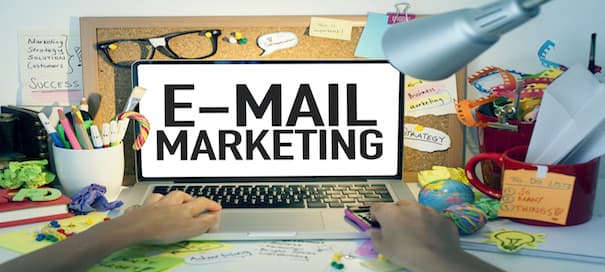
When unlocking the potential of Email Marketing, remember that incentivized content is key. Think of email marketing as the modern day equivalent of direct marketing. As flyers and other assorted promotions were once delivered to your mailbox, today it can be sent directly to your inbox. While this can be a powerful communication medium between you and your consumers, make sure that those subscribing to your newsletters have a genuine reason to read.
Every subscriber of your newsletter will have at least some degree of interest in your company’s product or service, otherwise, they wouldn’t have visited your website in the first place. Even if they’re not going to convert into a customer right away, you can still engage them by enticing them to sign up for exclusive content, offers, and promotions. By displaying the distinct value of your newsletter you are appealing to the perspective of the user interested in your product or service, not just pre-existing customers. This can be expedited by avoiding the generic term “sign up” when encouraging users to subscribe. Unless you wine and dine your visitors before attempting to sell them on a newsletter subscription, they will likely intentionally avoid your form fields, because who needs more spam flooding their inbox?
You’re not sending spam.
Once you have the email address of your user, make sure you live up to the promises made to your subscribers. If you continuously spam your readers with irrelevant information they will opt out since the content is no longer useful. Send recipients insightful updates on the latest trends and statistics within your industry. Content should provide a cohesive message with clear value. When done correctly email marketing can be incredibly effective at driving readers to your website to make a purchase. Successful email campaigns tend to deliver:
– High-quality imagery
– Concise messaging
– Clear call-to-action
– Mobile responsive design
– Captivating subject line
– Links to other content (promote your website, blog, social media, etc.)
Personalize where possible
My name is Ian, copywriter, bassist, and traveler. What a lot of marketers fail to understand is that no one, marketers and consumers alike, wants to be treated as a nameless face. Come introduce yourself on Facebook or Twitter!
Email automation is a necessary element of every newsletter (Mailchimp, Mailify, etc.) but just because you can’t send every email individually doesn’t mean you should become reliant on the software. Rather than sending the same email to everyone, use the feedback you’re receiving to segment your newsletters. Use subscriber management programs to cut out the busy work that comes with crafting and sending out an email marketing campaign, but don’t let it overpower your digital footprint.
Leave some breathing room
Your readers want to hear from you, it’s why they subscribed to your newsletter in the first place, but there is such a thing as overkill. 54% of the average person’s inbox is filled by promotional emails. If you’re sending multiple emails each week it will feel like you are harassing your readers. I personally have unsubscribed from many emails because of the imbalance between quality content and good-hearted (yet meaningless) spam. In order to effectively engage your audience, send newsletters out no more than once a week, but no less than once a month.
Email newsletter design
Welcome and lifecycle automations
The single highest-return thing most stores are missing is not a better newsletter - it is the automated sequence that fires off a behavior. A welcome series sent in the minutes and days after someone subscribes consistently outperforms broadcast campaigns because it reaches a person at peak interest: deliver the promised incentive immediately, then follow with one or two emails that introduce the brand and the bestsellers before the first hard sell. Layer on the other core lifecycle flows - an abandoned-cart sequence, a post-purchase sequence with usage tips and a cross-sell, and a win-back for subscribers who have gone quiet. These are built once and earn continuously, which is a very different economics from writing a fresh blast every week.
Segmentation that actually changes the send
Segmenting by stated interest is the floor; the higher-value segments are behavioral. Engagement (opened or clicked in the last 30/60/90 days) lets you mail your active subscribers more often and your dormant ones less, which protects deliverability. Purchase recency and frequency lets you separate first-time buyers from repeat customers and speak to each differently. Product or category affinity lets a content email about running gear go only to the people who have shown interest in it. The principle in the original article holds - relevance is what keeps people subscribed - but the mechanism is matching the message to observed behavior, not just to the form field they filled in.
Deliverability is a prerequisite, not a detail
None of this matters if the email lands in spam. Authenticate your sending domain with SPF, DKIM, and DMARC - as of 2024 the major inbox providers effectively require these for bulk senders, and messages that fail can be rejected outright. Send from a domain you own, keep a consistent sending cadence, and prune chronically unengaged addresses rather than mailing a list that no longer opens you; a smaller engaged list reaches the inbox where a large stale one gets filtered. Make unsubscribing one click and honor it instantly: a clean opt-out protects your sender reputation far more than a retained address that marks you as spam.
Measure past the open rate
Open rate became unreliable once Apple's Mail Privacy Protection began pre-loading images, so judge campaigns on what they actually drive: click-through rate, conversion rate, and revenue per recipient. Run a real A/B test on one variable at a time - subject line, hero offer, send time - let it reach significance, then keep the winner as the new baseline. The "leave some breathing room" advice in the original piece is sound, but the right cadence is the one your engagement and revenue data support for your audience, not a fixed once-a-week rule.
Editorial note: this article was originally written when Twitter was a primary brand channel; that network has since been rebranded to X and its organic reach for brands has changed substantially, so the social-introduction aside should be read in that context. The email-marketing fundamentals above reflect current deliverability requirements (SPF/DKIM/DMARC enforcement) and post-Mail-Privacy-Protection measurement practice.
Email marketing delivers one of the highest ROI’s of any eCommerce marketing activity. If you’re not actively building an email list and using it, you should be. 1Digital Agency can help by designing you an eCommerce newsletter that harmonizes with your brand, and converts subscribers into customers. Our eCommerce newsletters are designed to be stylish, professional, and effective, with call to action copy that’s focused on conversion. We’ll design your newsletter in HTML so you can customize offers, images, and copy for future email blasts.
Email blast management
We can serve as your newsletter management team, creating a new newsletter each week for special offers, corporate events, industry news, and advertorials. Just give us the offer and direction, and our creative team will come up with beautiful representative designs that are eye-catching and designed to engage and convert – increasing your sales and conveying your brand positively and consistently.