

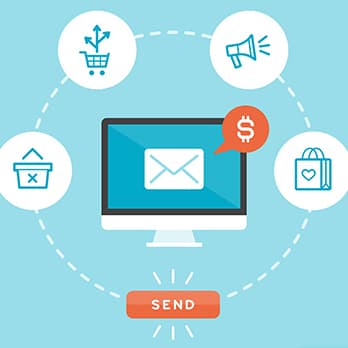
Email marketing is the practice of collecting your target customers' email addresses with permission and sending them relevant content and offers, often as newsletters and automated flows. For ecommerce merchants it remains one of the highest-return channels available, because it reaches an audience you actually own - not one rented from an algorithm - and it directly supports sales, brand awareness, and trust. This guide covers the fundamentals every merchant should master, plus the anatomy of an email that actually performs.
The core discipline is restraint and relevance. Lackluster, generic blasts waste the channel; so does poor cadence. Emailing too rarely means subscribers forget who you are and why they signed up; emailing too often drives unsubscribes and spam complaints that damage deliverability for everyone on the list. Striking the balance takes a plan: every send should clear a simple bar - "is this genuinely worth a place in their inbox?" - and, as you scale, letting subscribers choose their own frequency and topics (a preference center) protects the list far better than guessing for them.
Email marketing fundamentals for ecommerce
- Write in a personal voice. Start conversational and human, especially early on. Email is a one-to-one medium pretending to be one-to-many - the brands that sound like a person, not a press release, get read.
- Segment your list. Begin simple, then divide the list by behavior and attributes - recent buyers, browsers, lapsed customers, category interest. Relevance is the single biggest lever on engagement; the same message to everyone is the most common reason email underperforms.
- Solicit real feedback. Ask subscribers directly what they want more or less of, instead of inferring everything from open and click stats. Qualitative feedback catches problems metrics miss.
- Learn from good email, do not copy it. Study why strong programs work - their structure, cadence, and offers - and adapt the principles to your audience. Read every email from the recipient's perspective before you send it.
- Test continuously. Subject lines, send times, offers, and layouts all reward methodical A/B testing. Critically, watch your engagement trend: falling opens and rising complaints push you toward the spam folder, so kill what is not working rather than repeating it.
- Automate the high-value moments. Beyond broadcasts, the flows that consistently earn the most for ecommerce are the welcome series, abandoned-cart, post-purchase, and win-back. These are triggered, relevant, and run without ongoing effort - the highest-leverage email work most small merchants neglect.
The anatomy of a marketing email
Every element below is a deliberate decision, not a default:
- Sender name: a recognizable, consistent human-plus-brand identity (e.g. a real name at your company, or a clear brand address). Consistency trains both inboxes and recipients to trust and open you.
- Subject line: your primary hook. Clear and specific beats clever and cryptic; keep it short enough not to truncate on mobile.
- Preheader (snippet): the preview text after the subject - a deliberate second line that extends the hook, not a repeat of the subject or "view in browser."
- Design: generous white space, strong imagery, and a clean hierarchy, the same principles as a good landing page. It must render well on mobile and remain legible with images blocked and in dark mode.
- Header: immediate brand recognition through logo and color.
- Body: one focused message that flows logically from the subject line to a single primary point - not a newsletter trying to say six things.
- Call to action: one clear, prominent action (buy, read, claim). Competing CTAs dilute response; pick the one thing you want the reader to do.
- The offer: for ecommerce this is often the engine. Used sparingly it creates exclusivity and urgency; used constantly it trains customers to never buy at full price. Treat discount cadence as a strategic variable to test, not a reflex.
- Sharing and social links: obvious ways to forward or connect, extending reach beyond the inbox.
Measure what actually matters
Opens have become a noisy metric - privacy features like Apple Mail Privacy Protection pre-load images and inflate open counts - so weight clicks, conversions, and revenue per recipient more heavily when judging a campaign. Track these per segment and per flow so you know which audience and which automation drive money, then invest there. Email's ROI reputation is real, but it is earned by measurement and iteration, not by sending more.
A starter program you can actually ship
Most merchants stall because "do email marketing" is too vague to start. Here is a concrete minimum viable program, in build order. First, the welcome flow: two to three emails triggered on signup that deliver the value promised at opt-in, set expectations for cadence, and make one relevant first offer. This earns the highest engagement of anything you will send because interest is at its peak. Second, the abandoned-cart flow: one to three emails reminding shoppers who left items behind, ideally with a gentle reason to return; for most stores this is the single highest-revenue automation relative to effort. Third, the post-purchase flow: confirmation, shipping, then a follow-up that asks for a review and, later, suggests a relevant next purchase - this turns one-time buyers into repeat customers, where ecommerce profitability actually lives. Only once those three automations are live and tuned should you invest heavily in broadcast newsletters, because the automations run forever with no incremental effort while broadcasts cost you every single time. Building in this order means the channel is earning money within weeks, and the revenue funds the more time-consuming editorial work later. The mistake to avoid is the reverse - pouring effort into weekly newsletters while the cart-abandonment money sits uncollected.
Frequently asked questions
How often should I email my list? Often enough to stay familiar, rarely enough to stay welcome - and ideally let subscribers choose via a preference center. Cadence is audience-specific; test it against your own engagement data.
What is the highest-ROI email to set up first? The automated flows - welcome, abandoned cart, post-purchase - before more broadcasts. They are triggered, relevant, and run continuously with no ongoing effort.
Are discounts necessary in every email? No. Constant discounting erodes margin and trains customers to wait. Use offers strategically and test frequency; value-led content sustains engagement between them.
Should I still track open rate? Track it directionally, but make clicks, conversions, and revenue the primary scorecard, since privacy features have made raw opens unreliable.
If building and running a real email program feels like more than you can take on, our ecommerce email marketing and content marketing teams handle strategy, segmentation, automation, design, and copy - the whole channel, done to convert.