

Two Types of Content
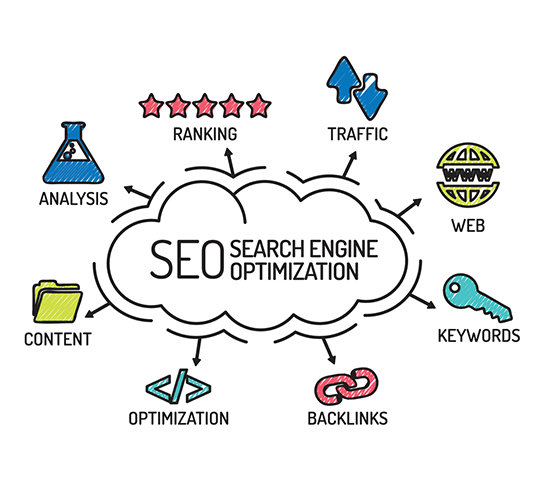
The term SEO (Search Engine Optimization) is a misnomer. Often times, when people say SEO, what they mean is SEM (Search Engine Marketing). That’s because the process of improving search engine rankings involves a lot of marketing activities that happen outside of the optimization of a website’s pages. In reality, rewriting tags, fixing broken links, optimizing images, and all the other things that go into good on page optimization, are just the tip of the iceberg. The larger part, that happens below the surface, is made up of content marketing. In this article we’re going to discuss two types of SEO content, off site and on site, and how to tell the difference between the two.
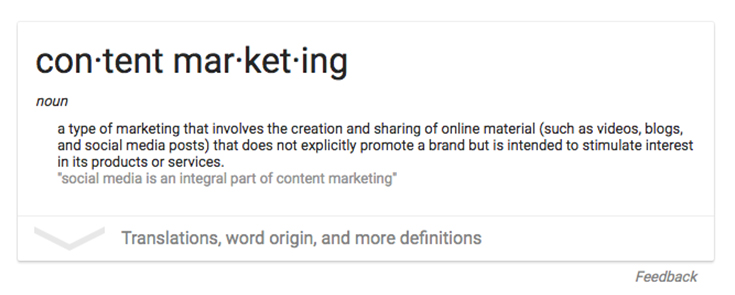
SEO needs content marketing and vice versa. The on page optimization sets the table, but good quality, interesting content is the meal. Though the majority will be blog and website copy, content marketing activities can take a number of other forms like video, infographics, or press releases. Beyond the basic benefit of providing your users something to do on your site besides buy things, Google is always on the hunt for good content. The name of their game is providing answers to the questions their users ask, and they know sites with a lot of content are more likely to provide those answers. Not only that, Google wants to see fresh content. That’s why content marketing is an ongoing process. Old content loses value quickly. Content can also help you get backlinks, which demonstrate to Google that other people on the web consider you an authority on the topics that you want to rank for.
When we do content marketing for a client, we create two types of content which compliment our other SEO activities. Even if you don’t have an agency working on your SEO right now, it’s a good idea to know the difference between on site content and off site content.
Off Site Content:
Off site content is all about building your network of backlinks. A large, healthy network of backlinks leads to higher domain authority, and better ranking. As MOZ says in their beginners guide to SEO, “Since the late 1990s search engines have treated links as votes for popularity and importance in the ongoing democratic opinion poll of the web.” Our SEO activities include cleaning up a client’s backlink network if we find any disreputable or spammy links. After that we increase the amount of backlinks, which is achieved through posting off site content. The important thing about off site content is that it discusses a keyword you want your site to rank for, and that it links back to your site. The content itself is not crucial, your customers may never see a single backlink article we create. What is important is that Google counts the link and recognizes the search term. Just like all content marketing, freshness is critical. Failure to earn new links is a signal of a once popular site in decline. That’s why link building and the creation of off site content should be an ongoing activity for the health of your site.
Does Social Sharing Count as a Backlink?
The short answer is no, but that does not mean that social sharing is not important to SEO. Search engines treat socially shared links differently than other links, but they do take them into account. If your business is getting shares on social media, keep it up! It may not be a replacement for a backlink building campaign, but it will help all your other marketing activities be more effective.
On Site Content:
On site content is the content that is written to build your readership and to demonstrate to Google that your site is a publisher of worthwhile content, worthy of ranking highly. When we write content for your blog, or the pages on your site, we think about what would be interesting to your readers, something that would actually help your customers make a buying decision. We also think about what Google likes to see in content. In 2011, Google made an update called Panda to it’s algorithm, which dramatically shifted the way web content was judged. Panda was created to root out and punish low quality content, or content written only for SEO robots. Panda’s criteria are myriad and strict, but it does things like punish keyword stuffing, or duplicate content. When we write content for a client’s pages we avoid those bad habits that Panda punishes, but maintain the SEO best practices that attract Google’s attention. On site content should be written and edited carefully. It should be great content, meant to attract customers and Google’s bots alike.
How Does Google Know if My Content is Any Good?
When Google devised Panda, they started with real people reading, and rating, thousands of articles on the web. Panda’s preferences, which are adapted and updated constantly, are based on the data from that original study. Google is able to measure a number of engagement metrics which speak to the quality of a site as a whole. For example, the long click, which measures whether a Google user found what they were looking for on a site by tracking how long they stay.
Even if you don’t know the first thing about on page optimization tactics, you can still be helping your organic ranking by putting together a basic content marketing strategy. Publishing good quality, keyword focused content on a regular basis can go a long way toward getting Google’s attention, and your customers will appreciate it too. If you want the full suite of SEO, backlink building, and Panda friendly on site content, the digital marketing geniuses at 1Digital Agency are always available to help.
What “Off-Site Content” Should Mean Today
The article’s on-site/off-site split is still a useful mental model, but one part needs a hard modern correction. Editorial note: the original described off-site content as low-quality backlink articles where “the content itself is not crucial” and customers “may never see a single backlink article.” That tactic - mass-produced articles whose only purpose is a link - is now explicitly classified by Google’s spam policies as link spam and a risk of manual action. The Panda update the article cites was an early step toward exactly the standards that now penalize this approach. Modern off-site content has to be genuinely good in its own right: contributed expert articles on relevant publications, original data and research that others cite, digital PR, and resources worth linking to on their merits. The link is earned as a byproduct of value, not as the point.
On-Site Content After Helpful Content and E-E-A-T
The article’s on-site advice - write for readers and avoid keyword stuffing - has aged well and only needs sharpening with the standards that now operationalize it:
- Match search intent. Identify whether a query wants a how-to, a comparison, a definition, or a product, and deliver that format. Ranking now depends on format-fit, not just topic coverage.
- Demonstrate E-E-A-T (Experience, Expertise, Authoritativeness, Trustworthiness): named authors with credentials, first-hand experience, and citations - especially for commercial pages where trust is decisive.
- Build topic clusters, not orphan posts. A pillar page plus internally linked supporting articles signals depth on a subject far more effectively than scattered one-off posts - this is the durable successor to “publish frequently.”
- Refresh, don’t just publish. The article’s point about freshness is right, but the highest-ROI move is usually updating and consolidating existing pages that already have authority rather than endlessly adding new thin ones.
How the Two Halves Actually Reinforce Each Other
The mechanism worth making explicit: earned links (off-site) raise the authority that lets your best on-site pages rank, while genuinely strong on-site content is the only thing that reliably earns those links in the first place. Treating either in isolation - links without content quality, or content without distribution - is why most programs stall. The compounding only happens when both are run as one strategy. Our digital marketing team runs them together for exactly that reason, and you can see the broader framework in our eCommerce SEO services.