
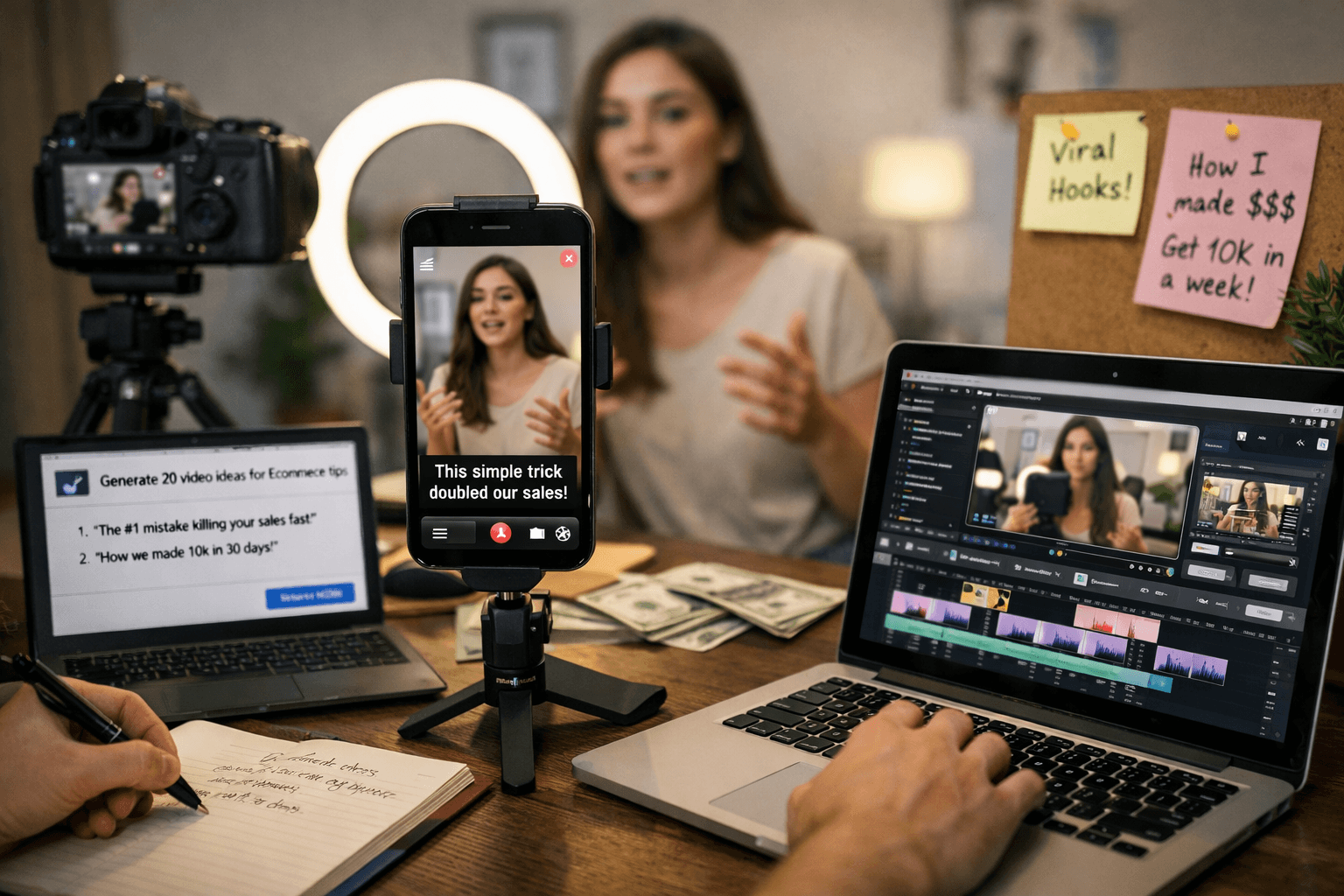
If you’ve been paying attention online, you already know why a guide to short-form videos for marketing matters right now. Short videos aren’t just popular. They’re dominating feeds, shaping buying behavior, and quietly replacing long-winded content that people don’t have patience for anymore.
Let’s start simple.
Definition of Short-Form Video in a Marketing Guide
Short form video usually means vertical videos that range from 15 seconds to about 60 seconds. Think TikTok clips, Instagram Reels, YouTube Shorts. Fast. Focused. Designed for scrolling thumbs.
And it’s always trending because attention spans are shrinking. A majority of consumers, 95 percent, watch short-form videos. Seventy-one percent of them watch daily. That’s not a niche behavior. That’s routine.
On the marketing side, the numbers get louder. Video campaigns yield high returns, with 93% of marketers reporting positive ROI, 84% increased sales, and 99% improved product understanding. This data makes visuals and video mandatory, not optional, in digital marketing.
So yes, this format isn’t going away.
Now let’s talk about how to actually use it.

The First 5 Seconds Decide Everything
You can have the best offer in the world. If your first line is weak, people scroll.
A hook isn’t an introduction. It’s a pattern interrupt. It’s a bold claim. A question. A statement that sounds slightly uncomfortable.
Instead of saying:
“Today I’m going to talk about…”
Tr:
“This mistake is costing you sales every day.”
Or:
“No one tells you this about Instagram growth.”
The first second matters more than your logo. If you don’t catch attention immediately, the algorithm assumes no one cares.
And here’s something people miss. Your hook has to visually match your message. Strong facial expression. Fast caption. Clean frame. No awkward pauses.
The scrolls is ruthless.
The Body Keep It Short Or Lose Them
TikTok allows them up to 10 minutes. YouTube Shorts max out at 60 seconds. That doesn’t mean you should aim for the limit.
Brevity wins.
Short sentences. One idea per line. Clear structure.
If you’re explaining something:
- State the problem
- Offer the solution
- Give ine clear example
- End with a direct takeaway
That’s it.
The goal isn’t to impress. It’s to hold attention long enough to trigger engagement. Comments. Shares. Saves.
If you want to use Instagram reels to drive engagement, make sure each video solves one micro problem. Don’t stack five lessons into one clip. That kills retention.
Retention is what makes you go viral on social media. Not random luck.
Look At What’s Trending Then Adapt It
This is where people overthink.
You don’t need to invent a brand new format. You need to observe.
Scroll your niche. See which sounds are trending. Which editing styles repeat. Which hooks are getting recycled.
Then adapt the format to your brand.
If a trending video style says, “How I made $$$ from a faceless Instagram account,” you don’t copy it exactly. You reinterpret it.
Maybe your becomes:
“How we booked 20 clients from one 30-second video.”
Or:
“How this tiny tweak doubled our leads.”
It should feel slightly too good to be true. That curiosity gap works because it makes people stay to see if the claim holds up.
Marketing psychology hasn’t changed. The packaging has.
Use AI To Generate Ideas That Fit Your Niche
If you’re stuck on ideas, AI is your brainstorming assistant.
But generic prompts give generic results. Be specific.
Here’s how you can structure a useful prompt:
“Generate 20 short form video hooks for a [your niche] brand targeting [your audience] who struggle with [specific pain point]. Make them bold, curiosity driven, and slightly controversial.”
If you’re in eCommerece, for example:
“Generate 15 short video ideas for a skincare brand targeting women 30 to 45 who are frustrated with dull skin. Include hooks that feel almost too good to be true.”
The key is feeding the AI context. Niche. Pain point. Tone.
Then refine the output. Don’t post it raw. Polish it so it sounds human.
AI helps you move faster. It doesn’t replace strategy.
Editing Is Where Most Brands Drop The Ball
Raw content can work. But clean editing multiplies performance.
Here’s what matters:
Vertical format. Always. Most platforms are designed for vertical viewing. If you film horizontal, you lose screen space and impact.
Captions. Most views begin on silent autoplay. If your message isn’t readable without sound, you lose attention before you even get a chance. Use dynamic captions. Highlight key words.
Pacing. Cut dead air. Remove filler words. Add subtle zooms or jump cuts every few seconds to keep visual movement alive.
Lighting. You don’t need studio gear. You do need clarity. Natural light near a window is enough.
Sound design. Even simple background audio can hold attention longer.
The editing should feel natural, not overproduced. Overly polished sometimes looks like an ad. Slightly raw feels native.
And native content performs better.
Think Of Claims That Sound Too Good To Ignore
You’ve seen them.
“How I made $10K in 30 days.”
“How this app saved my business.”
“Why no one tells you this.”
These formats work because they trigger disbelief. Disbelief leads to curiosity.
But here’s the difference between clickbait and smart marketing. Clickbait lies.
Smart marketing teases a real insight. Instead of exaggerating numbers, frame the benefit clearly.
“This one change cut our ad spend in half.”
“We stopped posting for 30 days. Here’s what happened.”
If you deliver on the promise, trust builds.
If you don’t, your audience disappears.
Post Consistently Or Don’t Expect Results
Consistency isn’t glamorous. It’s repetitive.
But short form video rewards rhythm. When viewers see you regularly, they start to expect you. It takes time to build trust. Posting once a month won’t do it.
Aim for a realistic schedule. Three times a week is strong. Daily is powerful if you can maintain quality. And don’t keep content trapped on one platform. Repurpose.
Post on TikTok. Upload as a Reel. Turn it into a YouTube Short. Share it on LinkedIn if it fits.
Splintering content increases reach without multiplying effort. That’s how visuals and video in digital marketing scale without burning out your team.
Pay Attention To Trends Or Fall Behind
Short form video changes fast. Sounds trend for a week. Formats rise and fall. Editing styles evolve. You don’t need to chase every micro trend. But you do need awareness.
If the market shifts toward storytelling, adapt. If educational bite sized content performs better, lean in. Marketing isn’t static. And short form video is one of the fastest moving parts of it.
Stay observant.
Test constantly.
Adjust without ego.
If You Ignore This, You Fall Behind
If you take one thing from a guide to short-form videos for marketing, let it be this. Speed and clarity win.
Hook fast. Speak clearly. Edit tight. Post often.
The data already tells us where attention lives. Ninety five percent of consumers watch short form video. Ninety three percent of marketers see positive ROI from video campaigns.
This isn’t experimental anymore.
It’s foundational.
And the brands that understand how to use Instagram reels to drive engagement, structure content for retention, and consistently refine their message are the ones that go viral on social media without relying on luck. That’s the real power behind a guide to short-form videos for marketing.