

Seattle SEO Agency
Helping Seattle businesses win on Google and the AI engines (ChatGPT, Perplexity, Gemini, AI Overviews) that increasingly shape buyer decisions. Built on 15 years and 400+ brands of search experience.
Last updated: May 2026
Trusted by 400+ Brands · Certified Partners




Years in eCommerce
Of results, scale, and quality at the enterprise level.
Expert Team
Specialists across SEO, AI SEO, PPC, design, dev, and strategy.
US Core + Global Talent
US core team for clear communication; vetted global specialists for international client work.
Reputation Score
Rated 4.9/5 across 941+ verified client reviews.
Ask AI for a business like yours. Are you in the answer?
ChatGPT, Claude, and Perplexity only recommend sites they can read - and most can't read yours. Scan it free and see exactly where you stand.
Free · no signup · scores the 15 signals AI uses to find you · ~20 seconds
Seattle SEO, step by step
Be the business Seattle finds first
When someone in Seattle searches for a coffee roaster near them, the map and the first few listings get nearly all of the attention. We tune your Google profile, location pages, reviews and site so your pin moves to the top of that list and stays there.
- ›Google profile and maps listing kept current
- ›Pages written for the Seattle areas you serve
- ›Reviews encouraged and answered
What the Seattle market actually looks like
Seattle's economy is shaped by a small set of very large anchors: Amazon's South Lake Union and Denny Triangle campus dominates the urban core, Microsoft's Redmond campus and the broader Eastside drive the cloud economy, Boeing's commercial-aircraft footprint at the Everett and Renton plants anchors aerospace, and Starbucks headquarters near the SODO district where it began at Pike Place.
Beyond those, the Fred Hutch and UW Medicine cluster around South Lake Union has made the city a serious global-health and life-sciences hub. The Amazon and Microsoft gravity well frames most B2B work - vendors sell into them, compete with them, or build on AWS and Azure. Below enterprise tech, Capitol Hill hospitality, Ballard's maritime and craft scene, and Bellevue's growing finance and consulting market compete in tight local packs.
Washington levies no personal income tax. 1Digital® helps Seattle brands separate partner-marketplace B2B work from Pacific Northwest consumer SEO across distinct Seattle and Eastside micro-markets.
Serving the greater Seattle metro, including
Seattle by the numbers
$520B
Seattle metro GDP in 2024 (latest BEA)
Source: BEA, December 2025 release
Inside the Seattle digital economy
Economic base
Seattle anchors the Puget Sound economy and is unusually concentrated around a few enormous anchors rather than a broad mix. Amazon's South Lake Union and Denny Triangle campus reshaped the urban core into a tech-employment center, Microsoft's Redmond campus and the Eastside drive the cloud and enterprise-software economy, and Boeing's commercial-aircraft operations at Everett and Renton anchor an aerospace supplier base that reaches across Snohomish and King counties.
Starbucks headquarters in the SODO district near its Pike Place Market origins, Costco headquarters in Issaquah, and Nordstrom and Expedia add to a deep retail and travel-tech layer. Global health and life sciences cluster around the Fred Hutchinson Cancer Center, the Gates Foundation, and UW Medicine near South Lake Union, making the city a serious biomedical hub.
Geography and buyer behavior
Geography is dominated by water. Lake Washington and the I-90 and SR-520 floating bridges split the region into Seattle proper and the Eastside, two genuinely distinct markets with different demand profiles - the Eastside through Bellevue, Redmond, Kirkland, and Issaquah behaves as its own affluent economy.
Within the city, Elliott Bay, the ship canal, and the hills carve sharply identified neighborhoods: Capitol Hill nightlife and hospitality, Ballard's maritime and craft economy along the canal, Fremont and Wallingford, the University District around UW, West Seattle across the bridge, and the south-end Georgetown, Columbia City, and Rainier Valley corridor that carries substantial East African, Vietnamese, and Latino communities under-served by English-only competitors.
The Sound Transit Link light-rail expansion is reshaping how residents describe location and access. Tourism concentrates around Pike Place Market, the Space Needle and Seattle Center, the waterfront, and a cruise-ship and convention economy that drives episodic spikes. The durable strategy is bridge-aware, neighborhood- and Eastside-city-specific pages tied to real Puget Sound geography, rather than one Seattle template stretched across a lake-divided region.
Named districts and micro-geography
Seattle's named districts each carry a distinct search identity. The Alaska Junction in West Seattle, Ballard's Market Street, Capitol Hill's Pike-Pine corridor, the U-District, Bellevue's downtown and Crossroads, and the Kirkland and Issaquah Eastside cores are not interchangeable to a local searcher.
Boeing's deployment of aerospace work across Everett and Renton sustains a Snohomish and south-King supplier economy, and the Microsoft and Amazon hiring cycles create recurring relocation demand for housing, moving, and professional services. A brand mapping to these named corridors, bridges, and the light-rail line reaches intent that statewide and Bay-Area-style campaigns never localize for.
The sectors that drive Seattle search demand
Where Seattle-area commerce concentrates - and the local context that shapes how each sector competes in organic and AI search.
Cloud & enterprise software
Amazon's South Lake Union campus and Microsoft's Redmond Eastside presence make cloud, AI, and partner-channel SERPs nationally competitive.
Aerospace
Boeing's Everett and Renton commercial-aircraft plants anchor an aerospace supplier economy across Snohomish and King counties.
Retail & travel tech
Starbucks, Costco in Issaquah, Nordstrom, and Expedia anchor a deep retail and travel-technology layer with credential-sensitive B2B SERPs.
Global health & life sciences
Fred Hutch, the Gates Foundation, and UW Medicine near South Lake Union make the metro a serious biomedical and global-health hub.
Multilingual south-end services
The Rainier Valley and south-end corridors carry substantial East African, Vietnamese, and Latino communities under-served by English-only operators.
Who you're really competing with in Seattle
Seattle's organic competition is anchored by the hyperscaler ecosystem, leaving the neighborhood corridors, Eastside cities, and south-end immigrant communities as the genuinely open ground.
Cloud, enterprise-software, and partner-channel categories draw well-funded in-house teams clustered in South Lake Union and on the Eastside, and Bellevue's finance and consulting market is credential-sensitive. National franchises hold the broad proximity queries across both sides of the lake.
The opening is the neighborhood and Eastside-city economy: independent operators in Ballard, West Seattle, the U-District, the Rainier Valley, and the Kirkland and Issaquah cores routinely run thin Google Business Profiles, and English-only competitors leave the south-end immigrant communities under-served - so disciplined neighborhood-named, bridge-aware, and multilingual pages can still take the map pack while the enterprise-tech giants ignore that grain.
Seattle local-search insight
Washington's My Health My Data Act imposes opt-in consent and a private right of action for consumer health data, with penalties up to $7,500 per violation under the state Consumer Protection Act.
A private right of action on broadly defined health-adjacent data makes consent architecture a real liability question for Seattle wellness and DTC brands, not a checkbox, and it shapes how analytics and remarketing can be deployed.
Source: Washington State My Health My Data Act and Consumer Protection Act enforcement provisions
How a Seattle brand should approach SEO
A Seattle brand would not treat the metro as one market or ignore the lake that splits it. The disciplined approach maps demand by bridge and neighborhood rather than a name-swapped clone.
Bridge-and-neighborhood mapping
Separate, genuinely differentiated pages for Ballard and Fremont along the canal, Capitol Hill's Pike-Pine corridor, West Seattle's Alaska Junction across the bridge, the U-District and Wallingford, and distinct Eastside-city pages for Bellevue, Redmond, Kirkland, and Issaquah - each tied to real crossings, the Link light-rail line, and commercial streets like Market Street and California Avenue.
Multilingual south-end content
Where the brand reaches the Rainier Valley and the south end, multilingual pages with correct hreflang capture East African, Vietnamese, and Latino demand English-only competitors miss.
Partner-program-aligned B2B work
For B2B sellers in the hyperscaler ecosystem, the play is partner-program-aligned content and co-marketing tied to named competencies, capturing marketplace-driven discovery rather than fighting cloud giants for category head terms.
Two-shopper retail pages
A retailer with a Capitol Hill flagship and a Bellevue satellite would write two distinct pages - one for transit-and-nightlife Pike-Pine walkers, one for Eastside suburban drivers across the 520 bridge - instead of cloning a template across a lake-divided, anchor-tenant region.
Verticals strong in Seattle
The categories where Seattle-area eCommerce concentrates - and where our playbooks already have reps.
SEO & digital marketing services we offer in Seattle
- ✓Local SEO & Google Business Profile optimization
- ✓Technical SEO audits & site architecture
- ✓On-page SEO & content production
- ✓Link building & digital PR
- ✓AI Search Optimization (AEO/GEO) - ChatGPT, Perplexity, Gemini, AI Overviews
- ✓Paid media (Google Ads, Meta, retargeting)
- ✓Web design & development (Shopify, BigCommerce, WordPress, headless)
- ✓Conversion rate optimization & GA4 analytics
Powered by WorkspaceCMS.ai · Free Build Offer
Get Your Seattle Business Website Built Free by 1Digital®
We design & launch your site at no cost - AI-first, SEO-first, live in a few days to a few weeks. Plans from $89/mo.
Your Seattle SEO partner - founded 2012, still independent.
- →Founded 2012 in Philadelphia, PA. Privately held. US-based core team plus vetted global specialists.
- →400+ brands grown across eCommerce, B2B, SaaS, local service, and lead-gen since launch.
- →4.9/5 average across 941+ verified reviews on Google, Clutch, and industry directories.
- →Proprietary platform: WorkspaceCRM - AI tooling for AEO/GEO tracking, content production, and reporting.
- →Recognized partner: Shopify, BigCommerce, Google Partner, Meta Business Partner.
- →Senior US strategist on every account, serving the greater Seattle metro and clients in all 50 states.
Win the Map Pack in Seattle
Map Pack positions drive the highest-intent local clicks. We optimize your Google Business Profile, build accurate citations, and craft locally relevant content so your business shows up when Seattlecustomers search.
Before you hire an SEO agency
Common questions Seattle businesses ask
Will SEO work for my business in Seattle?
Yes - for almost every category. If buyers in Seattle are searching for what you sell, a well-executed SEO program compounds visibility, leads, and revenue. The honest exception is hyper-niche B2B with fewer than ~50 monthly searches in your category - we'd recommend paid + outbound there and tell you so on the audit call.
What does the first 90 days with 1Digital® look like in Seattle?
Days 1–14: technical + GBP audit, competitor benchmark, GA4/Search Console/rank-tracking baseline. Days 15–45: quick-win fixes deployed, strategy + content roadmap delivered. Days 46–90: monthly content + outreach cadence live, first ranking and traffic movement measured.
Discover our expertise
Seattle SEO - Quick Answers
How does proximity to Amazon and Microsoft affect SEO for Seattle-area B2B vendors?
It reorders priorities toward partner directories, marketplace listings, certification content, and co-marketing tied to AWS and Azure programs rather than generic service pages.
Selling into Amazon or Microsoft, or onto AWS and Azure marketplaces, reorders SEO priorities. Buyers research through partner directories, marketplace listings, and certification-driven content, so the target surface is partner-tier consulting, marketplace-integration, and competency-keyed queries. Co-marketing content tied to hyperscaler programs, named partner competencies, and case studies with recognizable enterprise customers carry outsized weight. Aligning organic search with partner-program visibility captures both direct demand and marketplace-driven discovery in a way generic service content does not.
Does Washington State have a consumer data-privacy law that affects Seattle ecommerce sites?
Yes - the My Health My Data Act requires explicit opt-in consent for broadly defined health data, with penalties up to $7,500 per violation and a private right of action that materially raises stakes.
Washington has not enacted a broad CCPA-style statute, but the My Health My Data Act imposes strict consent requirements on any business collecting consumer health data from Washington residents - defined broadly enough to include data inferring health status from fitness, wellness, or reproductive-related activity. Seattle ecommerce, wellness, and DTC brands should audit collection, implement explicit opt-in consent for health-adjacent data, and update privacy policies; penalties run up to $7,500 per violation under the state Consumer Protection Act, with a private right of action that materially raises the stakes versus opt-out-only regimes.
How does the Seattle and Eastside split affect local SEO segmentation?
Lake Washington and the I-90 and SR-520 bridges divide the metro into two genuinely different markets, so multi-location businesses need dedicated, differentiated pages per city and submarket.
Lake Washington and the I-90 and SR-520 bridges divide the metro into two genuinely different markets. Seattle proper - Capitol Hill, Ballard, Fremont, West Seattle, the U-District - searches and converts differently from the Eastside, where Bellevue, Redmond, Kirkland, and Issaquah carry their own affluent suburban demand and a fast-growing finance and consulting base. Multi-location businesses need dedicated, differentiated pages per jurisdiction and Metro corridor rather than one Seattle page that competes against itself across the lake.
Which Seattle submarkets have the most winnable SERPs?
Ballard and Fremont, West Seattle's Alaska Junction, the U-District and Wallingford, Georgetown and Columbia City, and the Eastside's Kirkland and Issaquah trades where Google Business Profiles are frequently thin.
Downtown, South Lake Union, and Bellevue are saturated for professional services and anything tech-adjacent. The openings sit in the neighborhood commercial districts: Ballard and Fremont along Market Street and the canal, West Seattle's Alaska Junction, the U-District and Wallingford, Georgetown and Columbia City in the south end, and the Eastside's Kirkland and Issaquah trades where Google Business Profiles are frequently thin. Pages tied to real corridors - the Ballard Bridge, the I-90 and 520 crossings, the Link light-rail line, California Avenue in West Seattle - plus disciplined review velocity typically beat paid spend for Puget Sound SMBs.
How much does an SEO agency cost in Seattle?
SEO retainers typically run $1,500–$10,000+/month, consulting $100–$300/hour, and one-time technical or migration projects $5,000–$30,000. Pricing scales with scope (local-only vs. national), keyword competitiveness, and content/link volume. 1Digital® publishes scoped, fixed-fee proposals after a free audit, so there are no hourly surprises.
How long does SEO take to show results for a Seattle business?
Local SEO results (map pack movement, Google Business Profile leads) typically appear within 30–90 days. Competitive organic rankings take 4–9 months, and authority-driven national terms 9–18 months. Sites with clean technical foundations move faster - onboarding starts with a technical audit specifically to shorten that runway.
Do agencies in Seattle optimize for ChatGPT, Perplexity, and Google AI Overviews?
Most do not - AI search optimization (AEO/GEO) is still rare in 2026. 1Digital® offers it through our proprietary WorkspaceCRM platform, which monitors brand mentions and citation share across ChatGPT, Perplexity, Gemini, and Google AI Overviews and structures content to be cited by them, not just ranked by Google.
Request your complimentary Seattle local SEO audit
Share a few details and a US-based senior strategist will review your site, GBP, citations, and local rankings - then send back a prioritized roadmap. No sales script. No junior account manager.
Brands We've Helped Grow

Eloquence
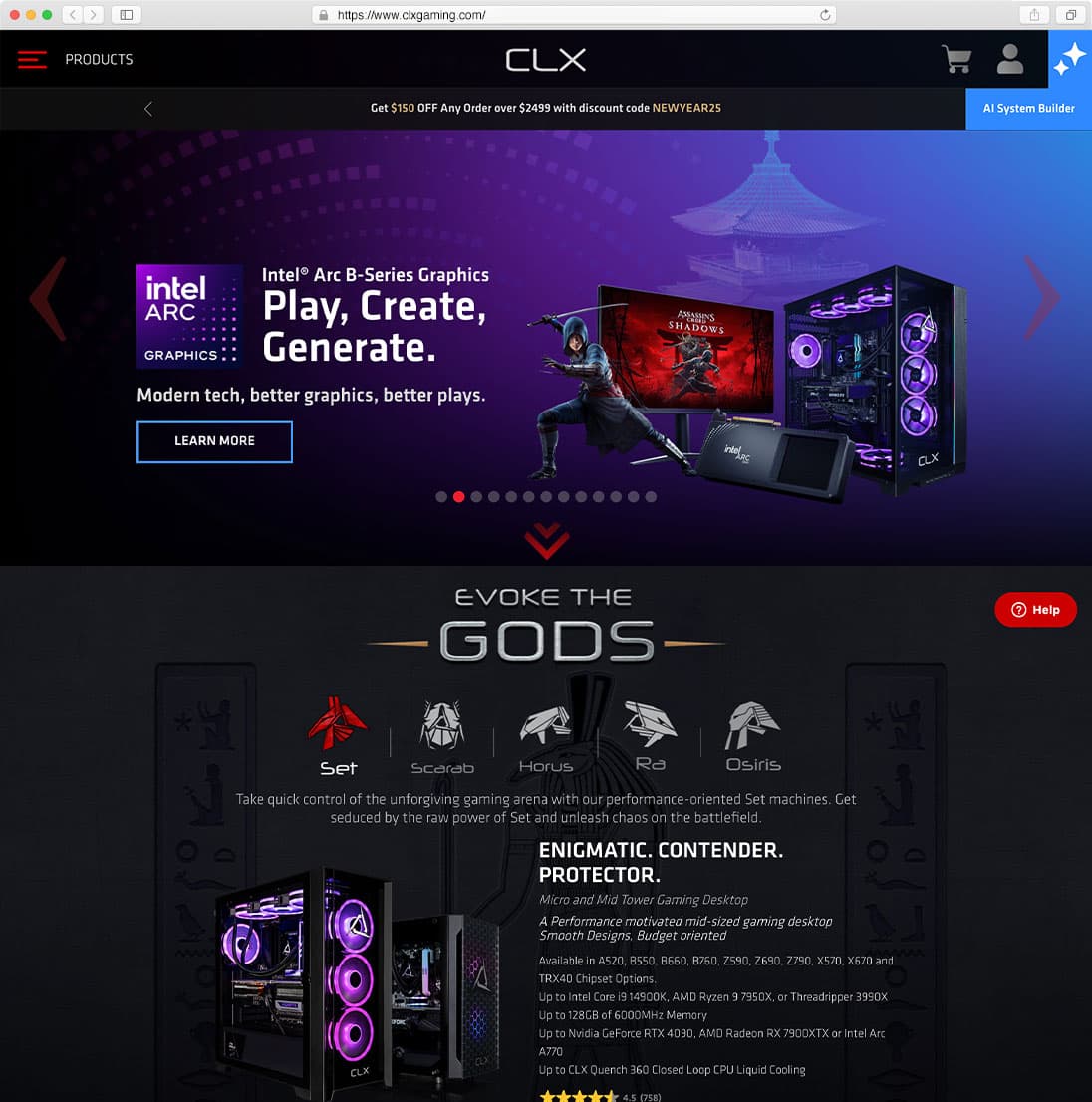
CLX Gaming
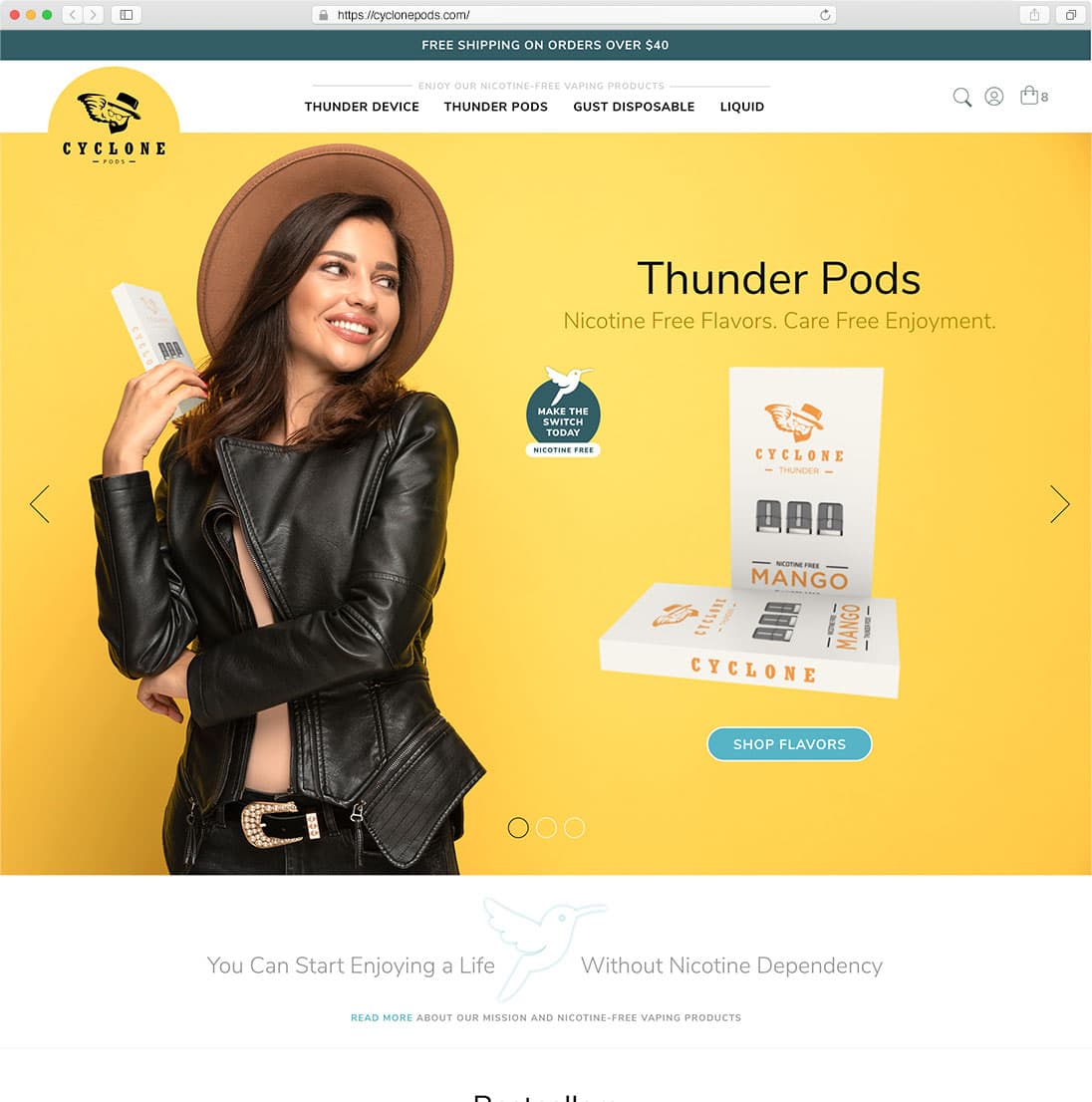
Cyclone Pods
Introducing WorkspaceCMS
Your Industry. Your CMS. Managed for You.
- Unlimited managed edits - shipped on your plan's SLA
- SEO baked into every page, post, and location
- Technical SEO on every plan; AI schema and internal linking on Premium & Ultra
Note for e-commerce brands: WorkspaceCMS.ai is purpose-built for service businesses - informational, local, and professional sites. For e-commerce brands with product catalogs and shopping carts, the free CMS build applies as your headless front-end; cart and checkout integration is custom-quoted. Get a custom e-commerce quote →