

FOR PREMIUM & LUXURY APPAREL BRANDS
Designer Clothing SEO:
Premium, Luxury & Heritage Apparel SEO
Designer apparel buyers search by designer name, collection, season, and silhouette - not generic terms. The brands that compete with Net-a-Porter, MyTheresa, Mr Porter and Saks do it on designer-entity authority, season-and-collection architecture, materials and craftsmanship narrative, and the structured-data depth that surfaces premium SKUs in Google Shopping and AI shopping engines.
Ready to get your Designer Clothing CMSbuilt - free?
1Digital® builds your designer clothing CMS front-end on WorkspaceCMS.ai at no cost - AI-first, SEO-first, live in a few days to a few weeks*. Shopping cart and checkout integration is custom-quoted. Your free build credit applies toward any package.
No setup fees · 12-month commitment · 4.9★ from 941+ reviews
* Timing depends on how quickly we receive your questionnaire answers and content.
The 1Digital® Difference
AI in our toolkit. Humans in the driver’s seat.
Our strategists, designers, developers, and writers are human. The proprietary AI we built makes them faster and sharper - not the other way around.
- Human strategy
- Human copywriting
- Our own AI tools
- Real growth
Trusted by 400+ Brands · Certified Partners




Years in eCommerce
Of results, scale, and quality at the enterprise level.
Expert Team
Specialists across SEO, AI SEO, PPC, design, dev, and strategy.
US Core + Global Talent
US core team for clear communication; vetted global specialists for international client work.
Reputation Score
Rated 4.9/5 across 941+ verified client reviews.
Ask AI for a business like yours. Are you in the answer?
ChatGPT, Claude, and Perplexity only recommend sites they can read - and most can't read yours. Scan it free and see exactly where you stand.
Free · no signup · scores the 15 signals AI uses to find you · ~20 seconds
How Designer Clothing SEO Holds Margin In A Marketplace-Heavy Vertical
Premium and designer apparel is one of the most brand-entity-driven verticals in retail. Buyers search by designer (“The Row Margaux 17”, “Toteme cocoon coat”, “Khaite Linda boot”), by collection and season (“Bottega Veneta FW25”), and by material and silhouette - and the SERPs reward deep designer-and-collection hubs with founding history, atelier and sourcing narrative, season-by-season editorial, and current and past-season inventory archives.
Layered on top: the marketplaces (Net-a-Porter, MyTheresa, Mr Porter, Saks, Bergdorf, FarFetch, SSENSE) compete on inventory breadth and brand authority - independents win on designer-and-collection narrative depth that the marketplaces don't produce, plus structured-data discipline that surfaces premium SKUs in Google Shopping and the new AI shopping engines (ChatGPT Shopping, Perplexity, Gemini). Editorial backlinks from fashion press compound brand authority in a way paid acquisition can't replicate.
- ›Designer entity hubs with founding history, atelier narrative, and current-collection inventory
- ›Season-and-collection architecture that survives drop cycles without losing authority
- ›Past-season archive permanence - sold styles stay indexed for historical-pricing queries
- ›Product schema with material, fit, country-of-origin, and craftsmanship attributes
- ›AI-shopping optimization for ChatGPT Shopping, Perplexity, and Gemini surfaces
- ›Fashion-publisher digital PR for editorial backlinks that compound brand authority
Designer Clothing SEO, step by step
Climb the searches your buyers make
Here is a typical designer clothing search playing out. Expert writers and strategists build the category and product pages that move your store up the results, and the clear answers that get it cited in Google's AI Overview above them.
- ›Pages written by people who know the search behind the sale
- ›Structure and schema that AI Overviews can read and quote
- ›Rankings tracked search by search, not as one blended average
The Designer Apparel market
What we cover in Designer Apparel SEO
Named sub-verticals and buyer segments inside the Designer Apparel category that we map keyword strategy and content programs to:
Last updated: October 2026
Designer Apparel by the numbers
$400B+
global luxury apparel market in 2024
Source: Bain & Company / Altagamma Luxury Goods Worldwide Market Study, Fall 2024
Designer Apparel SEO - buyer questions
Common questions in the Designer Apparel vertical
How is designer clothing SEO different from mass-market apparel SEO?
Designer clothing SEO leads with designer name and collection, while mass-market apparel SEO leads with category and style.
Mass-market terms look like 'women's wrap dress' or 'men's slim chino.' The designer SERP rewards deep designer-and-collection hubs with founding history, atelier content, fabric sourcing, and season-by-season editorial - not generic category templates. Designer buyers also have longer research journeys, so editorial content that captures research traffic and surfaces the brand in '[designer] vs [designer]' comparison queries drives meaningful share of high-AOV conversions.
How do independent designer boutiques compete with Net-a-Porter, MyTheresa, and SSENSE?
Independents compete by going deeper on designer-and-collection narrative than the marketplaces bother to.
Net-a-Porter and MyTheresa optimize for breadth and inventory turn; SSENSE leads on emerging-designer discovery; Saks and Bergdorf lean on department-store brand authority. Independents win on craftsmanship narrative, atelier and sourcing depth, designer-founder editorial, and curation rationale that the marketplaces don't produce. Long-tail designer-and-style queries reward that depth, and the resulting fashion-publisher backlinks compound authority over years.
How important is past-season archive permanence?
Past-season archive permanence is significantly important because past-season URLs accumulate backlinks, internal-link equity, and topical authority that mature over years.
Sold or discontinued styles should stay indexed with clear status and contextual links to current available collections by the same designer. Sites that delete past-season pages forfeit substantial organic equity, particularly on long-tail designer-and-collection queries that historical-research buyers consistently run.
How do you optimize designer apparel for AI shopping engines?
Optimize designer apparel for AI shopping engines by exposing clean structured-data feeds and extractable spec content that the engines can synthesize into recommendations.
Designer apparel wins citations by exposing complete Product schema with material, fit, dimensions, country-of-origin, and care attributes; editorial designer content with Organization and Person schema; and authoritative craftsmanship and authenticity content. Avoid PDP designs that bury specs in image-only carousels - extractable text wins in the AI-shopping surface.
What schema and structured data matter most for designer apparel?
Product schema with brand, material, color, size, country-of-origin, and detailed offer information is the foundational schema for designer apparel.
AggregateRating from verified reviews drives rich-result eligibility. Organization schema for the brand with sameAs links to official social channels and authentic-retailer designations supports entity authority. For multi-variant lines (color, size), ProductGroup schema consolidates the variants. Breadcrumb schema improves SERP appearance and reinforces designer-and-collection hierarchy.
Designer Clothing SEO - FAQ
How long does Designer Apparel SEO take to drive measurable results?
Most Designer Apparel SEO programs show initial ranking lift in 3–5 months and meaningful traffic and revenue impact in 6–12 months. Timeline depends on existing domain authority, competitive density of the target sub-vertical, the depth of foundational technical work needed before content scales, and seasonal demand cycles in the category. We measure progress monthly against agreed KPIs and adjust strategy quarterly based on what's actually moving the needle - not against vanity ranking reports.
Which ecommerce platforms do you support for Designer Apparel brands?
Shopify Plus, BigCommerce, Magento (Adobe Commerce), and WooCommerce, plus headless implementations across all four. 1Digital® has been an ecommerce-specialist agency since 2012, with deep platform-specific SEO experience including each platform's structured-data quirks, sitemap behavior, faceted-navigation handling, and migration-path implications. If a Designer Apparel brand is mid-platform-decision or planning a re-platform, we consult on the platform comparison alongside the SEO program.
What does an engagement look like - retainer or project-based?
Most Designer Apparel SEO programs run on monthly retainer with quarterly strategy review and annual deep-audit cycles. Retainer scope is calibrated to the brand's catalog size, content-velocity needs, and competitive density. Project-based engagements (technical SEO audits, migration support, one-time content sprints, conversion-rate optimization deep-dives) are also available where a defined-scope deliverable fits better than ongoing retainer. We don't lock clients into multi-year contracts - relationships compound or they don't.
Get a free proposal
Talk to our Designer Clothing marketing team
Tell us about your business and goals. A senior strategist replies within one business day with a pricing band and a draft plan. No long-term contracts.
4.9/5 from 941+ reviews
Managed Websites by 1Digital®
A Managed Website Built for Designer Clothing Businesses.
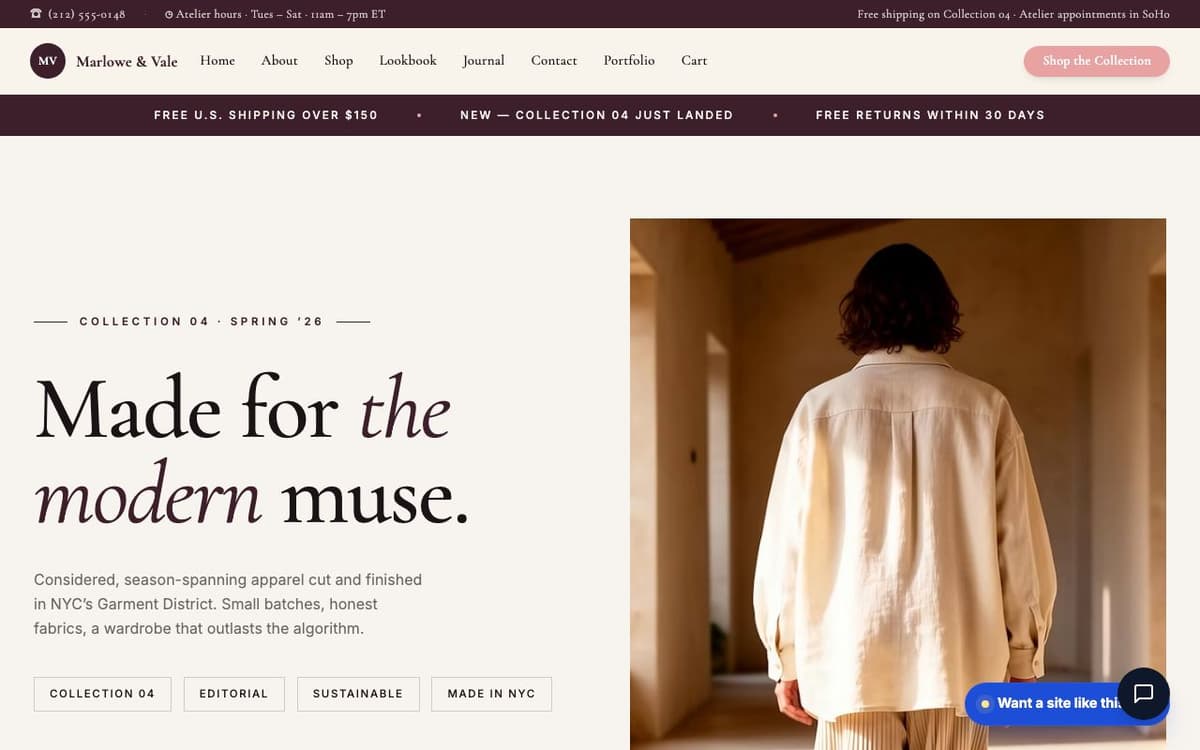
- Editorial lookbook layout with atelier brand storytelling
- Shop-by-collection and quick-filter product grid
- Small-batch and limited-edition drop mechanics built in
- Garment-district or local pickup CTA wired per location
- Built so AI assistants can read and cite you when shoppers ask an LLM for fashion brands
Lighthouse
Visible in Google · ChatGPT · Claude · Perplexity
Powered by
Your Designer Clothing CMS Is One Call Away.
1Digital® builds your designer clothing site’s CMS front-end on WorkspaceCMS.ai at no cost - AI-first, SEO-first, and ready for Google and every major LLM from day one. Shopping cart and checkout integration is custom-quoted. Your free build credit applies toward any custom package.
15+ yrs · Google Partner · 4.9★ · 941+ reviews · Live in days to weeks*
* Timing depends on how quickly we receive your questionnaire answers and content.