

FOR LUMBER, DRYWALL & BUILDING MATERIAL SUPPLIERS
Building Materials SEO:
Lumber, Drywall, Roofing & Construction Supply
Building materials is a contractor-led B2B vertical where buyers search by spec, dimensional schedule, and project volume - not retail SKU lookup. The suppliers that hold organic share do it on trade-specialty depth (framing lumber, roofing, masonry, drywall, insulation), B2B account UX that handles project-volume orders and freight scheduling, and the LBM-publisher (Lumber & Building Materials) backlink ecosystem that head-term aggregators don't access.
Free Build
Ready to get your Building Materials websitebuilt - free?
1Digital® builds your building materials site on WorkspaceCMS.ai at no cost - AI-first, SEO-first, live in a few days to a few weeks*. Flat monthly plans from $89/mo.
We Design It
Questionnaire-driven, AI-first, free
You Approve
Review before launch
Go Live
In days to weeks, no cost
No setup fees · 12-month commitment · 4.9★ from 941+ reviews
* Timing depends on how quickly we receive your questionnaire answers and content.
The 1Digital® Difference
AI in our toolkit. Humans in the driver’s seat.
Our strategists, designers, developers, and writers are human. The proprietary AI we built makes them faster and sharper - not the other way around.
- Human strategy
- Human copywriting
- Our own AI tools
- Real growth
Trusted by 400+ Brands · Certified Partners




Years in eCommerce
Of results, scale, and quality at the enterprise level.
Expert Team
Specialists across SEO, AI SEO, PPC, design, dev, and strategy.
US Core + Global Talent
US core team for clear communication; vetted global specialists for international client work.
Reputation Score
Rated 4.9/5 across 941+ verified client reviews.
Ask AI for a business like yours. Are you in the answer?
ChatGPT, Claude, and Perplexity only recommend sites they can read - and most can't read yours. Scan it free and see exactly where you stand.
Free · no signup · scores the 15 signals AI uses to find you · ~20 seconds
How Building Materials SEO Wins On Contractor Spec And Project-Volume UX
Building materials buyer behavior is fundamentally B2B. Contractors search by dimensional spec (“2x6 #2 SPF kiln-dried”, “1/2" type X drywall 4x12”, “30-year architectural shingle”), by project volume (truckload, half-truckload, palletized), and by delivery window - they need accurate pricing, lead time, freight schedule, and Net-30 terms visible at first glance. Generic ecommerce templates fail because Home Depot, Lowe's, and the regional pro-yard networks (84 Lumber, ABC Supply, Beacon, US LBM) dominate broad terms on inventory and freight network depth.
The path for independents and specialty suppliers is trade-specialty depth - framing lumber to a higher spec standard, premium engineered wood products (LVL, glulam, I-joists), specialty roofing systems, historic-restoration masonry, sustainable / FSC-certified materials - paired with B2B account UX (project-quote forms, truckload pricing, delivery scheduling, contractor account tiers) that the head-term aggregators don't architect well. Trade-publication backlinks from LBM Journal, ProSales, Walls & Ceilings, Roofing Contractor compound authority in a way DTC retail SEO can't replicate.
- ›Spec-driven PDPs with dimensional schedule, grade, species, and certification depth
- ›Project-volume pricing tiers (each / palletized / truckload) and delivery scheduling UX
- ›Trade-specialty category hubs (framing, drywall, roofing, masonry, insulation, decking)
- ›Contractor account UX (Net-30, tax-exempt, multi-site ship-to, project ID per order)
- ›Sustainable / FSC-certified / LEED-eligible materials content for green-build projects
- ›Trade-publication digital PR across LBM Journal, ProSales, Walls & Ceilings, Roofing Contractor
Building Materials SEO, step by step
Track every search your buyers make
These are the kinds of building materials searches your buyers type. Expert writers and strategists build the category and product pages that move your store up each one, and we track every search on its own as it climbs toward page one.
- ›Pages written by people who know the search behind the sale
- ›Structure and schema that AI Overviews can read and quote
- ›Rankings tracked search by search, not as one blended average
The Building Materials market
What we cover in Building Materials SEO
Named sub-verticals and buyer segments inside the Building Materials category that we map keyword strategy and content programs to:
Last updated: October 2026
Building Materials by the numbers
$480B+
US lumber and building materials industry revenue 2024
Source: IBISWorld Lumber Wholesaling in the US, 2024
Building Materials SEO - buyer questions
Common questions in the Building Materials vertical
How is building-materials SEO different from general hardware SEO?
Building-materials SEO differs from general hardware SEO in two ways: project-volume buyer intent and dimensional-spec specificity.
Hardware retailers serve both contractor and DIY traffic with mixed SKU sizes; building-materials buyers are nearly all contractor with project-volume orders (palletized lumber, truckload drywall, full-house roofing) where pricing-per-piece is less important than truckload pricing, delivery-windows, and freight scheduling. PDPs and category architecture need to expose those B2B mechanics - generic ecommerce templates fail against pro-yard networks that handle freight and credit terms natively.
How do specialty material suppliers compete with 84 Lumber, ABC Supply, and US LBM?
Specialty material suppliers compete by going deep on trade-specialty depth in specific product lines rather than broad-category dominance.
Pro-yard networks have regional inventory depth and freight infrastructure independents can't replicate at scale. The path is trade-specialty depth in specific product lines: premium engineered wood (LVL, glulam, I-joists), specialty roofing systems (TPO, EPDM, metal standing-seam), historic-restoration masonry, FSC-certified or reclaimed materials. Specialty suppliers with deep product-line expertise and trade-publication relationships routinely capture 25-40% organic share on long-tail spec queries.
What spec attributes matter most for building-materials SEO?
The spec attributes that matter most are dimensional spec, grade, species, moisture treatment, pressure-treatment rating, certification, and project-volume packaging.
Dimensional spec covers nominal size, actual size, and length; grade includes #1, #2, and select structural; species covers SPF, doug fir, and southern yellow pine; moisture treatment includes KD, S-Dry, and S-Green; pressure-treatment rating includes UC1, UC2, and UC4A; certification includes FSC, SFI, and PEFC; packaging covers each / bundle / unit / truckload. Surface in both Product schema and on-page spec content.
Why is delivery and freight UX critical for building-materials ecommerce?
Delivery and freight UX is critical because building-materials orders are physically big - a single residential framing package might run 12,000-18,000 board feet of lumber on three trucks.
The contractor needs to align delivery with foundation completion, crew schedule, and storage space. PDPs and cart UX that surface lead-time, truckload pricing, will-call vs delivery options, and delivery-scheduling integration meaningfully outperform sites that treat building materials like generic ecommerce SKUs.
How long does building-materials B2B SEO take to drive measurable account growth?
Building-materials B2B SEO typically shows organic traffic lift in 4-6 months and meaningful contractor-account growth in 8-14 months.
Slower than B2C because deal cycles are project-bound (contractors spec materials weeks to months before purchase), and account-tenure economics compound over years rather than months. Success is measured in qualified contractor account applications, project-quote requests, and account-tenure LTV.
Building Materials SEO - FAQ
How long does Building Materials SEO take to drive measurable results?
Most Building Materials SEO programs show initial ranking lift in 3–5 months and meaningful traffic and revenue impact in 6–12 months. Timeline depends on existing domain authority, competitive density of the target sub-vertical, the depth of foundational technical work needed before content scales, and seasonal demand cycles in the category. We measure progress monthly against agreed KPIs and adjust strategy quarterly based on what's actually moving the needle - not against vanity ranking reports.
Which ecommerce platforms do you support for Building Materials brands?
Shopify Plus, BigCommerce, Magento (Adobe Commerce), and WooCommerce, plus headless implementations across all four. 1Digital® has been an ecommerce-specialist agency since 2012, with deep platform-specific SEO experience including each platform's structured-data quirks, sitemap behavior, faceted-navigation handling, and migration-path implications. If a Building Materials brand is mid-platform-decision or planning a re-platform, we consult on the platform comparison alongside the SEO program.
What does an engagement look like - retainer or project-based?
Most Building Materials SEO programs run on monthly retainer with quarterly strategy review and annual deep-audit cycles. Retainer scope is calibrated to the brand's catalog size, content-velocity needs, and competitive density. Project-based engagements (technical SEO audits, migration support, one-time content sprints, conversion-rate optimization deep-dives) are also available where a defined-scope deliverable fits better than ongoing retainer. We don't lock clients into multi-year contracts - relationships compound or they don't.
Get a free proposal
Talk to our Building Materials marketing team
Tell us about your business and goals. A senior strategist replies within one business day with a pricing band and a draft plan. No long-term contracts.
4.9/5 from 941+ reviews
Managed Websites by 1Digital®
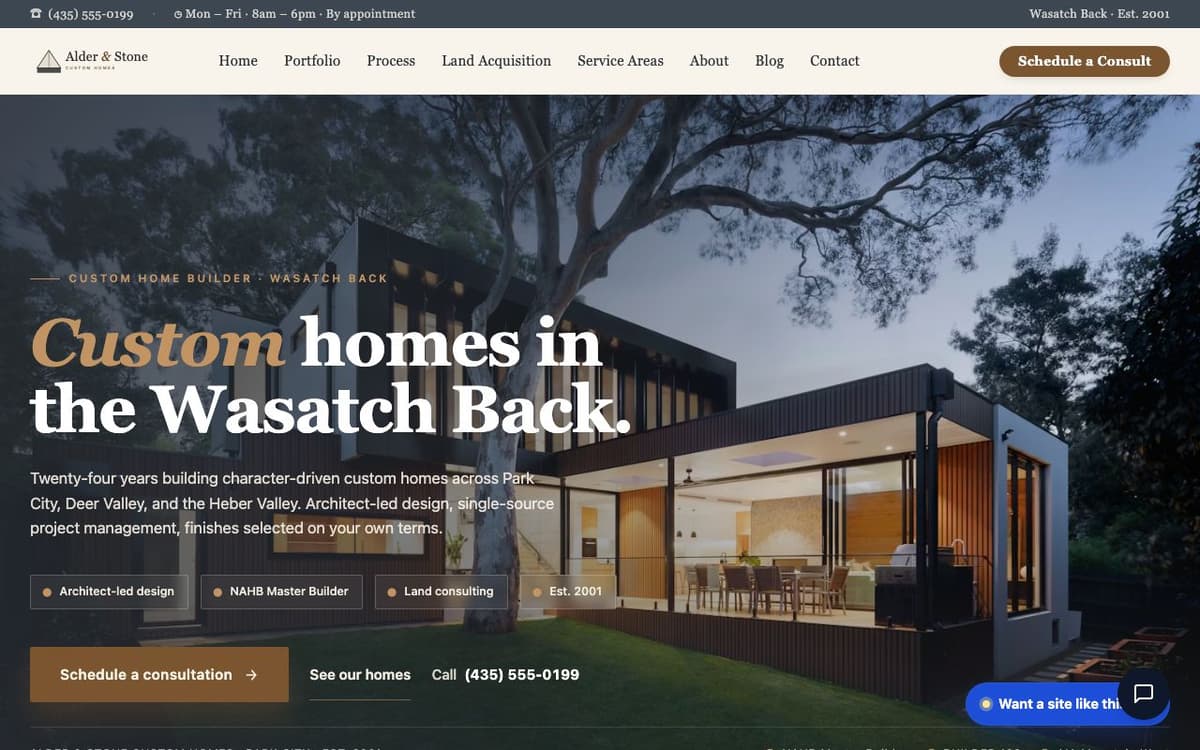
A Managed Website Built for Building Materials Businesses.
- Land and build process explainer for high-trust sales
- Project portfolio with schema and before/after gallery
- Financing and timeline pages that pre-qualify prospects
- Service-area pages with local schema
- Built so AI assistants can read and cite you when buyers ask an LLM who builds in their area
Lighthouse
Visible in Google · ChatGPT · Claude · Perplexity
Powered by
Your Free Building Materials Website Is One Call Away.
1Digital® builds your site on WorkspaceCMS.ai at no cost - AI-first, SEO-first, live in a few days to a few weeks*. Unlimited managed edits via ticket. Flat pricing. No tech skills needed.
Essentials $89 · Growth $199 · Premium $449 · Ultra $749/mo
15+ yrs · Google Partner · 4.9★ · 941+ reviews · Live in days to weeks*
* Timing depends on how quickly we receive your questionnaire answers and content.